
Laser Welding in the Automotive Industry: Applications, Fixtures and Cycle Economics
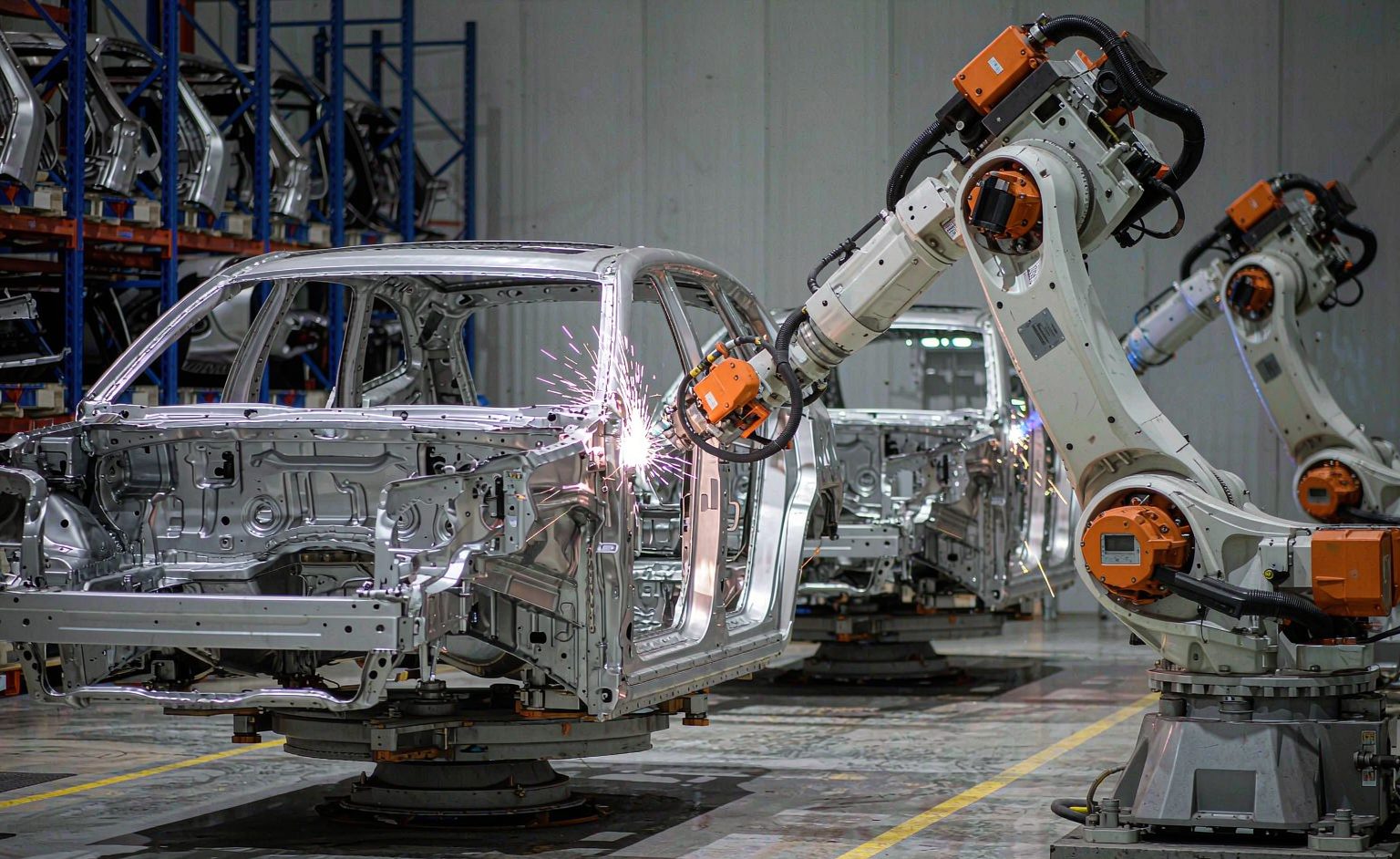
Automotive manufacturing was an early adopter of laser welding for a simple reason: car bodies concentrate exactly the conditions where laser welding outperforms arc processes — thin-gauge steel, long continuous seams, and production volumes that justify automation. This guide maps the applications that matter, the fixture engineering behind them, and the cycle economics that decide the purchase.
Where Laser Welding Wins in Automotive
| Application | Why laser | Typical cell |
|---|---|---|
| Body-in-white seam welding | Long continuous seams at line rate | Multi-robot cell with fixture carousel |
| EV battery tray & busbars | Aluminum and copper with low heat input | Fiber source + vision seam tracking |
| Exhaust & fuel lines | Leak-tight circumferential seams | Lathe-style rotary laser welding |
| Gear & transmission components | Deep narrow welds on hardened steel | Keyhole mode, high-power density |
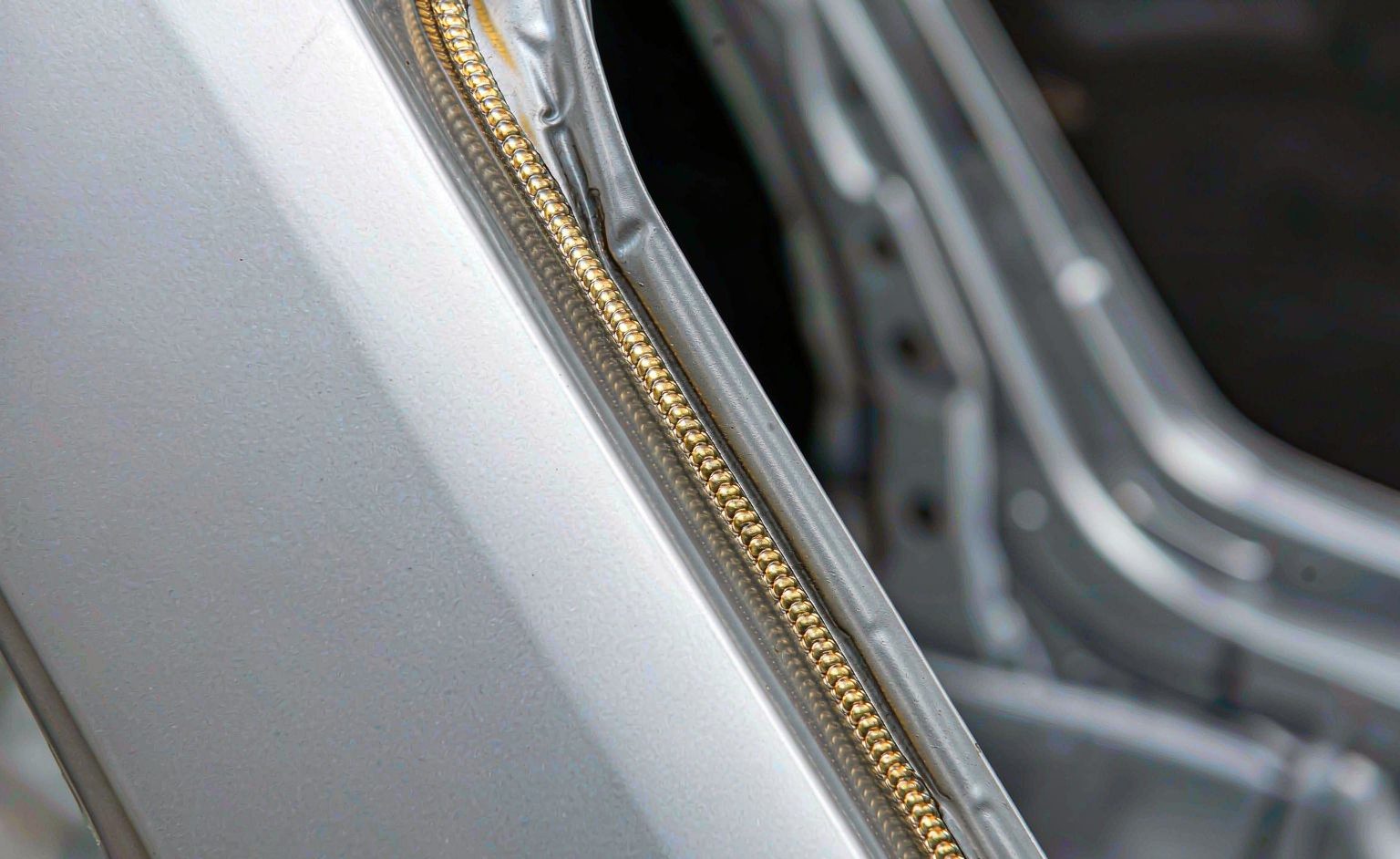
| Roof-to-body laser brazing | Visible seams without post-finishing | Wire-fed laser brazing head |
The battery row is where volume is moving: EV trays join aluminum extrusions at thicknesses where MIG distorts and TIG cannot hold rate, and the busbar joints demand the copper-handling discipline that fiber sources now deliver consistently.
Fixtures: The Half of the Cell Nobody Photographs
Automotive laser welding lives or dies on fit-up — the joint gap a laser tolerates is a fraction of what an arc process accepts, and body stampings vary. The fixture program therefore carries three responsibilities: locate each variant deterministically, clamp without shielding the seam, and change over fast enough to serve mixed-model lines. Buyers should weight the fixture engineering in a quotation as heavily as the laser source, because the source is a catalogue item and the fixture is a design.
Cycle Economics That Justify the Purchase
| Cost line | Manual/MIG baseline | Robotic laser cell |
|---|---|---|
| Weld time per body | Baseline | 3-5x faster on long seams |
| Rework (distortion) | Straightening after welding | Near-zero on thin sections |
| Consumables | Wire, tips, gas per metre | Shielding gas only |
| Consistency | Shift-dependent | Machine-rate, lot-audited |
The rework line deserves the buyer’s attention: straightening distorted thin-gauge assemblies is pure labour cost that laser welding eliminates by physics, and it compounds across every body in the run. Integration planning for the cell — source-to-controller interfaces, fixture timing, safety architecture — follows the framework in our FANUC laser welding robot integration guide, and the cobot alternative for lower-volume lines is compared in the cobot welding system guide.
Frequently Asked Questions
What laser power does automotive body welding need? Most body-seam work runs 3-6 kW fiber sources; battery tray aluminum typically 4-8 kW with oscillation. Power should be sized to the joint histogram, not the thickest rare case.
Can laser welding handle galvanized steel overlap joints? Yes with process control — the zinc outgassing problem is managed through gap engineering or oscillation, and is a standard sample-stage test.
Is a laser cell viable below full production volume? Mixed-model shops running 200+ welds per day on consistent families reach payback; below that, the cobot comparison above is the better starting point.
Standards background: laser beam welding and the automotive industry.