
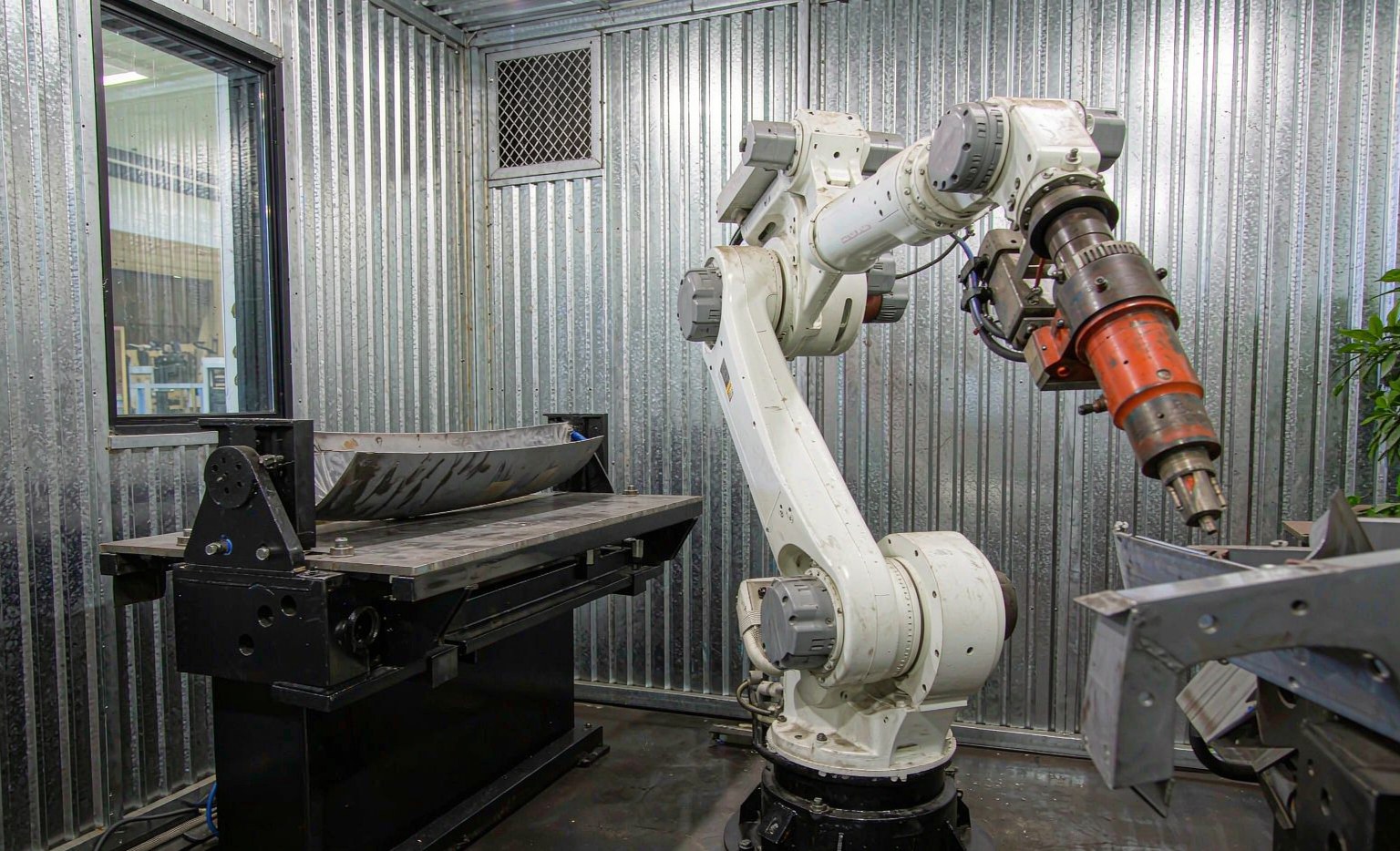
Robotic Welding Cell: Components and How to Scope One
A robotic welding cell is more than a robot with a torch. It is an integrated system where the robot, positioner, fixturing and safety must be specified together or throughput and quality suffer. Buyers who scope only the robot under-specify the rest and then wonder why the cell bottlenecks. This article breaks down the components that set a cell’s output.
The mental model to keep is simple: a cell produces one part every time the slowest step in its cycle finishes. Improving the robot alone, when the positioner or the fixture is the slow step, may raise the spec sheet and change nothing on the floor.
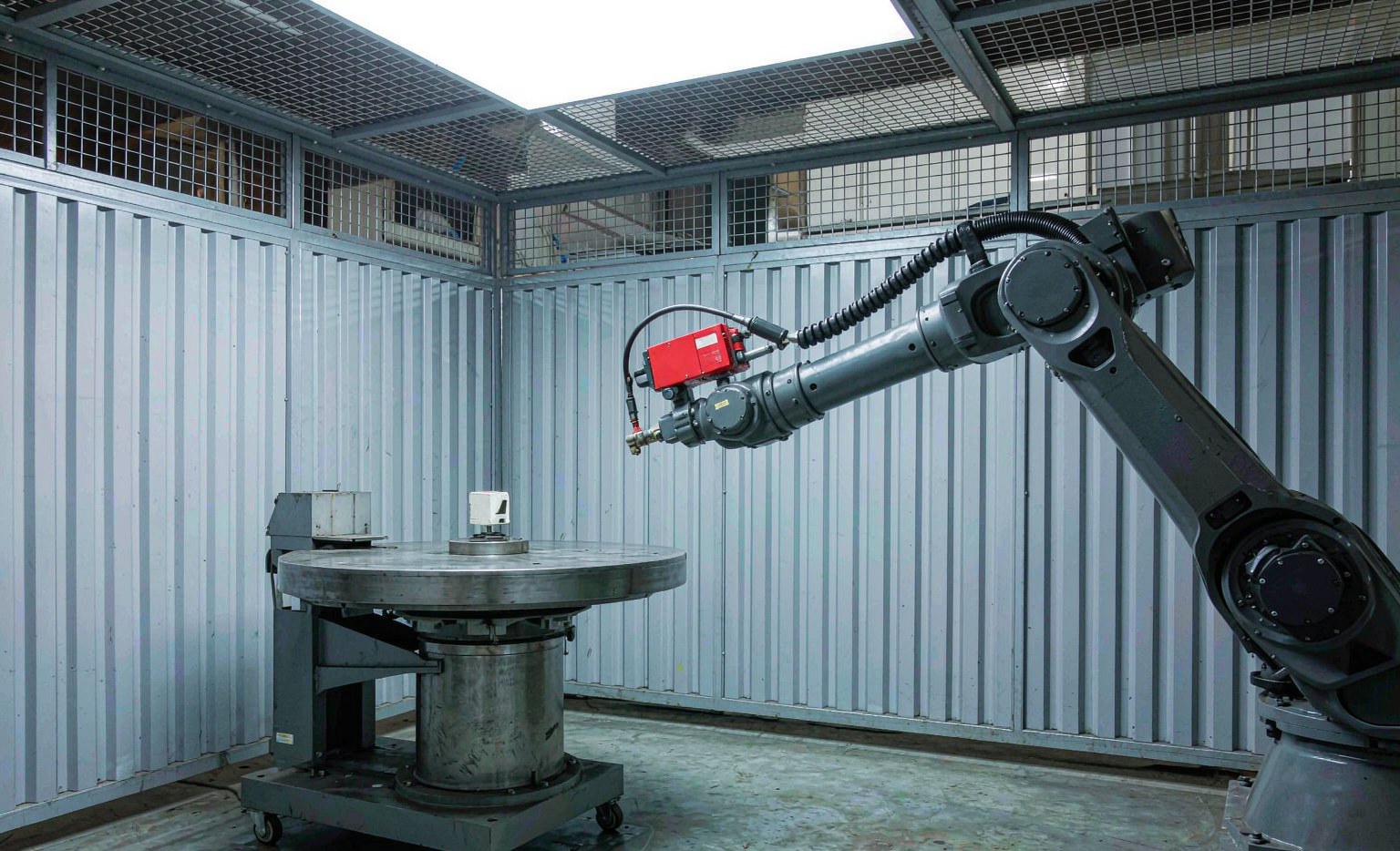
Core components
| Component | Role |
|---|---|
| Robot (6-axis) | Positions the torch or laser optics along the weld path |
| Power source | Arc (MIG/TIG) or laser source delivering the joint energy |
| Positioner / turntable | Orients the part so welds stay in the robot’s sweet spot |
| Fixturing / tooling | Holds the part repeatably; accuracy here caps weld accuracy |
| Controller (PLC) | Orchestrates robot, source and positioner sequences |
| Safety | Fences, light curtains, interlocks, fume extraction |
Robot sizing: payload and reach
Payload must cover the torch, cable package and any through-arm services, with a margin — oversizing slightly is safer than running at the limit and losing speed.
| Attribute | Typical | Why it matters |
|---|---|---|
| Payload | 6 – 20 kg | Torch + cable + services, with margin |
| Reach | 1.4 – 2.0 m | Which part size fits one cell |
| Repeatability | ±0.05 – 0.1 mm | Caps achievable weld position |
Why the positioner matters more than the robot
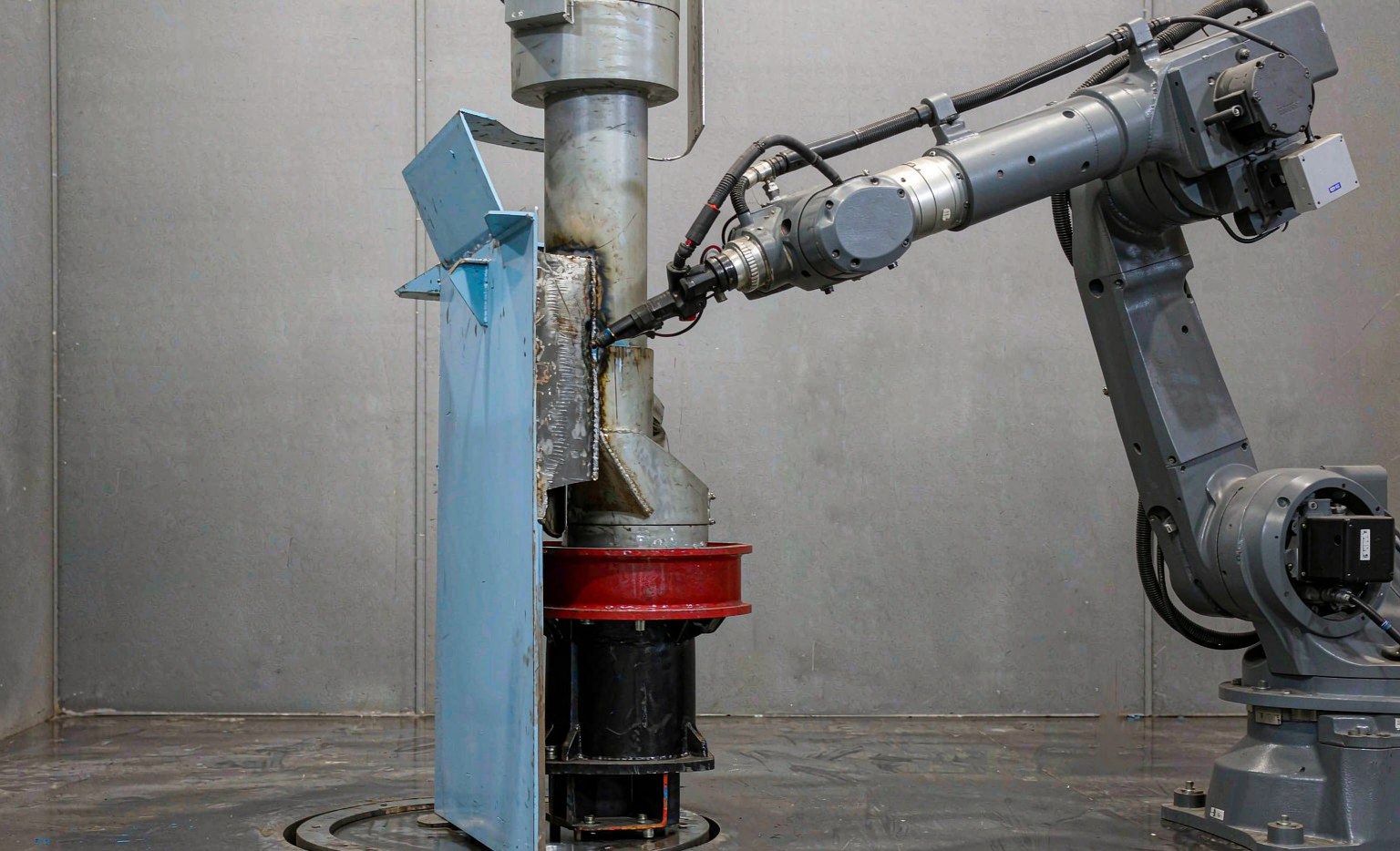
Welds done in the flat or horizontal position are faster and cleaner than overhead or vertical ones because gravity helps the pool and spatter stays managed. A two-axis positioner that keeps the joint downhand typically improves cycle time and quality more than a faster robot.
Underspec the positioner and the cell is bottlenecked no matter how quick the arm is — the part simply cannot be presented at the right angle often enough, and the robot waits at the start of every cycle.
Fixturing sets the ceiling
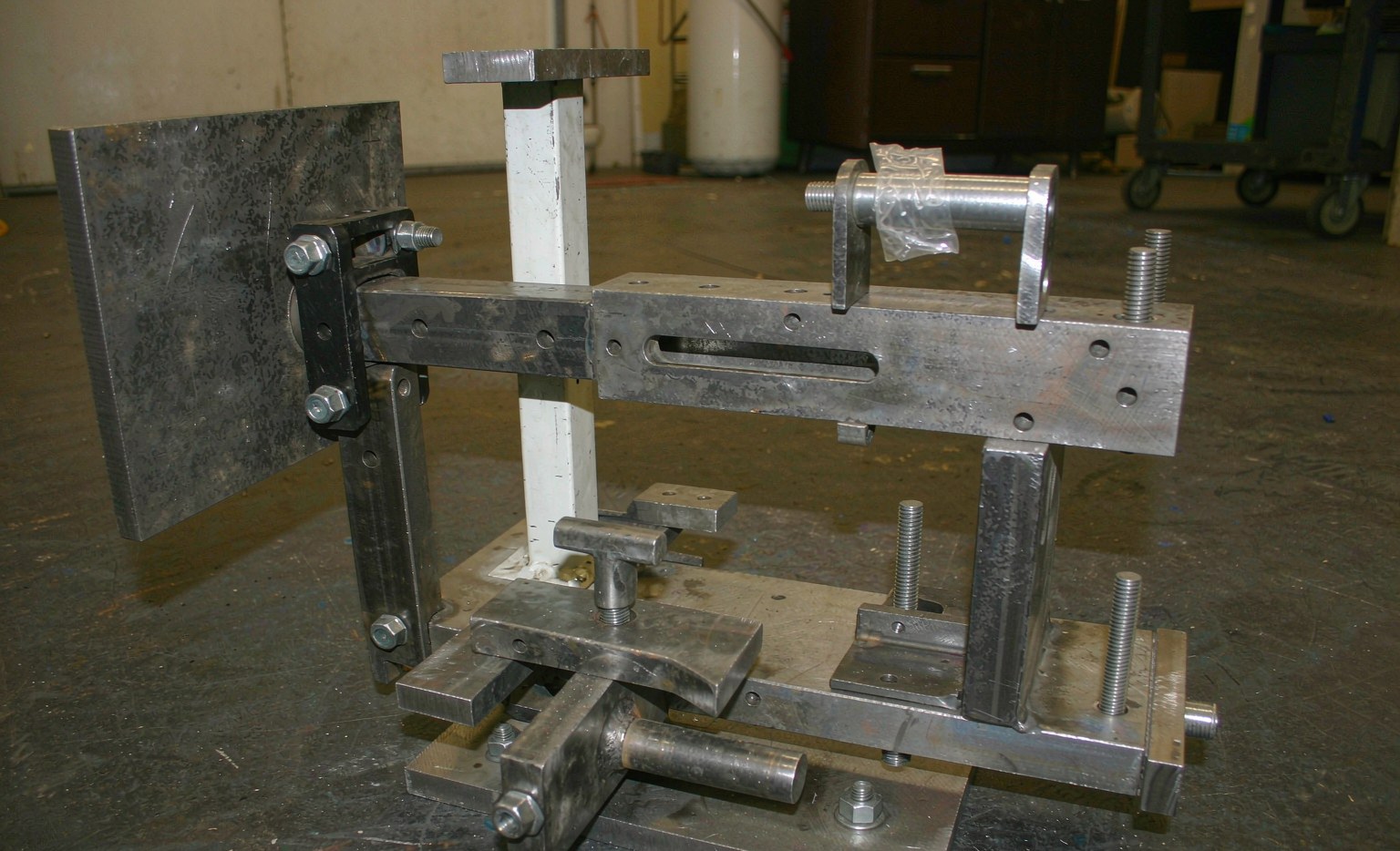
Repeatable locating, often within 0.1 mm, is what lets the robot run the same taught path every cycle. Soft or shifting fixtures force slower, safer paths and more rework.
Invest in fixturing before chasing robot speed: a rigid, well-located part lets you push the taught path to its limit. Pneumatic or hydraulic clamping that the PLC sequences with the robot keeps load/unload from stealing cycle time.
Safety and extraction
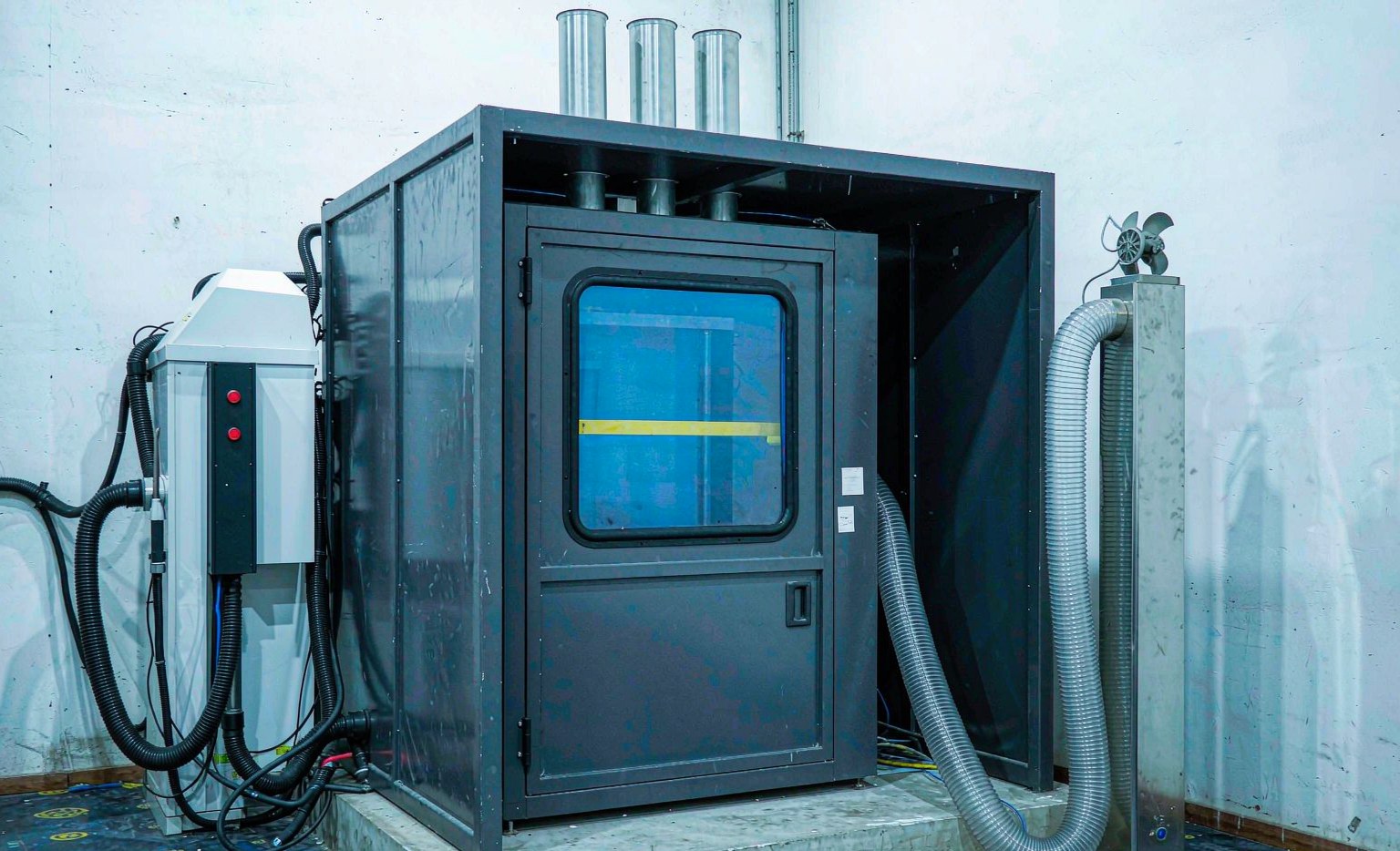
Laser and arc cells need enclosed cabins (interlocked), light curtains at load points, and fume or plume extraction sized to the process. Skipping extraction costs throughput later through sensor fouling and rework, and it is a compliance issue, not an option.
For laser cells the cabin also contains the beam, a safety requirement rather than a convenience, and the interlocks must stop the source as well as the motion.
Throughput is the slowest element
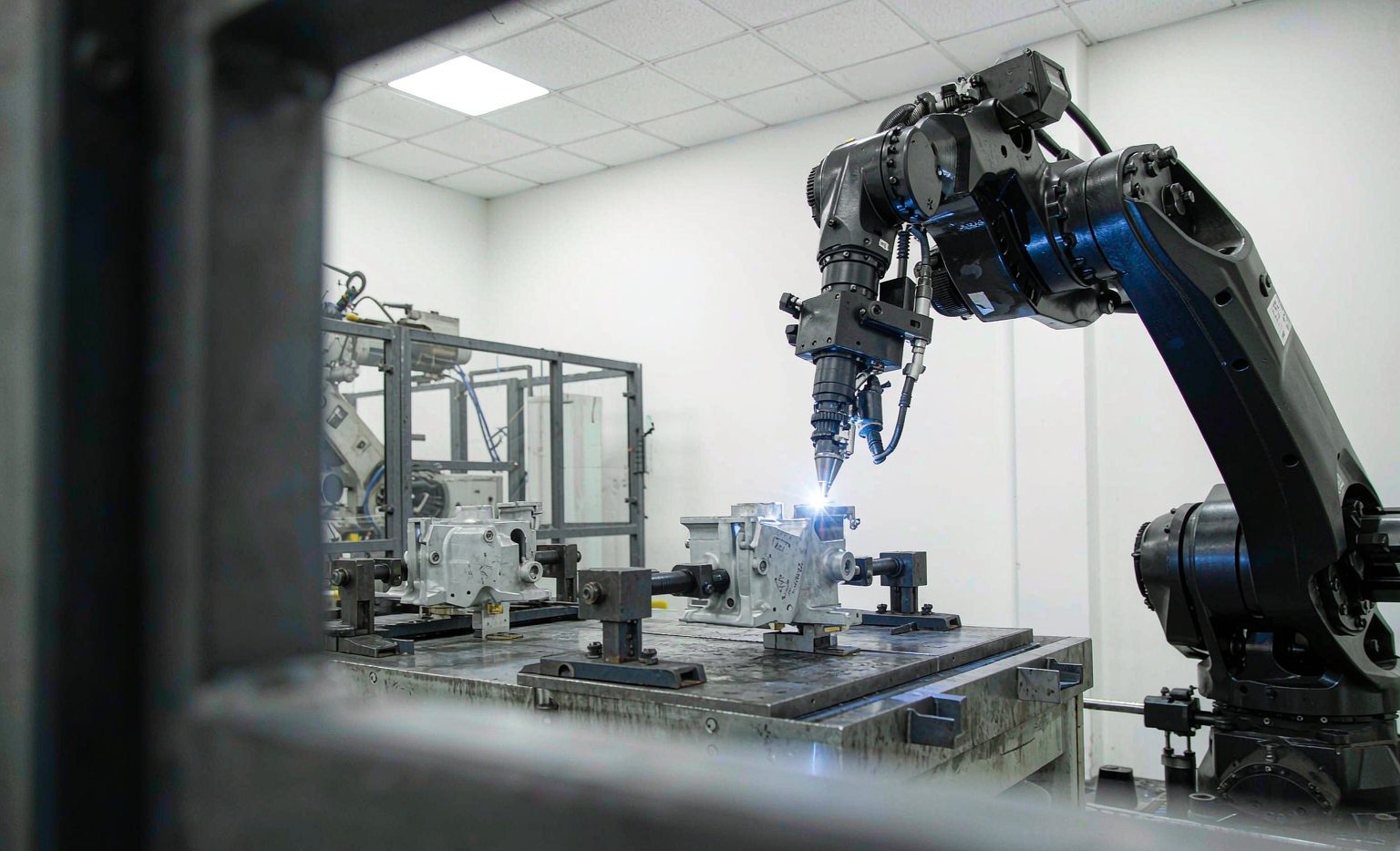
A cell’s output is set by the slowest of: robot path time, positioner index time, fixture clamp/unclamp, and part load/unload. Balancing those — often by adding a second positioner or a load station so the robot never waits — is where real gains come from, not from a marginally faster robot.
Scope a cell by timing each element and sizing the rest to the longest one, then attack that longest element first. A cell that is balanced on paper is the only one that hits its rated rate on the floor.
FAQ
Do I need a fenced cell for laser? Yes — an interlocked enclosure is required to contain the beam; arc cells similarly need guarding.
Can one positioner serve two robots? Rarely; index time usually bottlenecks. Two positioners beating one robot is the common fix.
What drives payback? Volume and the cost of manual rework. Below moderate volume a well-fixtured manual bench often still wins.
How do I pick robot reach? Size it to the largest part plus the positioner sweep, not the average part.
Is fume extraction really necessary? Yes — for worker safety and to stop sensor fouling that causes weld faults.
What is the most common scoping mistake? Buying a faster robot when the positioner or fixture is the real bottleneck.
Cell layout options
The two common layouts are a single-robot, single-positioner cell and a two-station cell where the operator loads one side while the robot welds the other. The two-station layout usually raises real output because load time hides behind weld time, which is why it dominates higher-volume work. A turntable can act as a third axis, letting the robot reach all sides of a part without repositioning.
Commissioning and ramp
Budget time for teach programming, fixture tuning and a weld-qualification coupon before production. The first parts should be checked by cross-section and destructive test to confirm penetration, then the taught path is locked. A cell that is ramped properly holds its rate; one rushed to production drifts and loses the rate within weeks.