Automatic Loading, Flipping and Unloading in One Robot System
How a Robot Automates Loading and Unloading
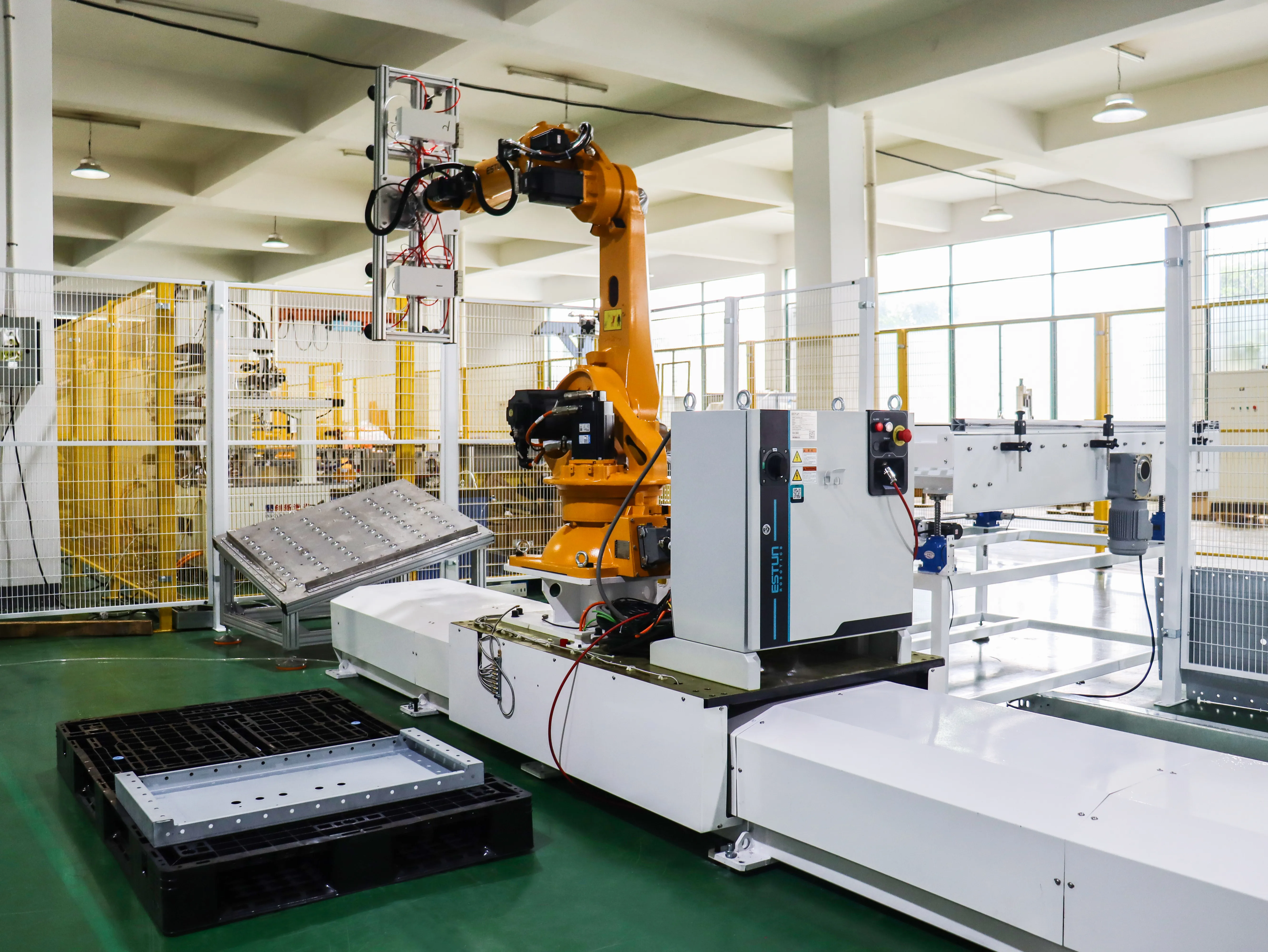
This machine tending system is designed to automate the loading and unloading process for machined parts. The robot picks the workpiece, places it into a positioning fixture with guided surfaces for accurate alignment, flips the part when required, and transfers the finished part to a lift table for unloading. Each step is designed to keep the process stable, repeatable, and ready for continuous production.
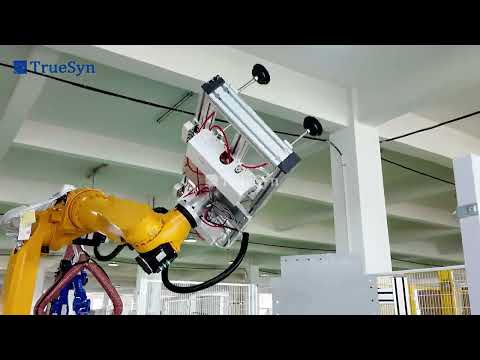
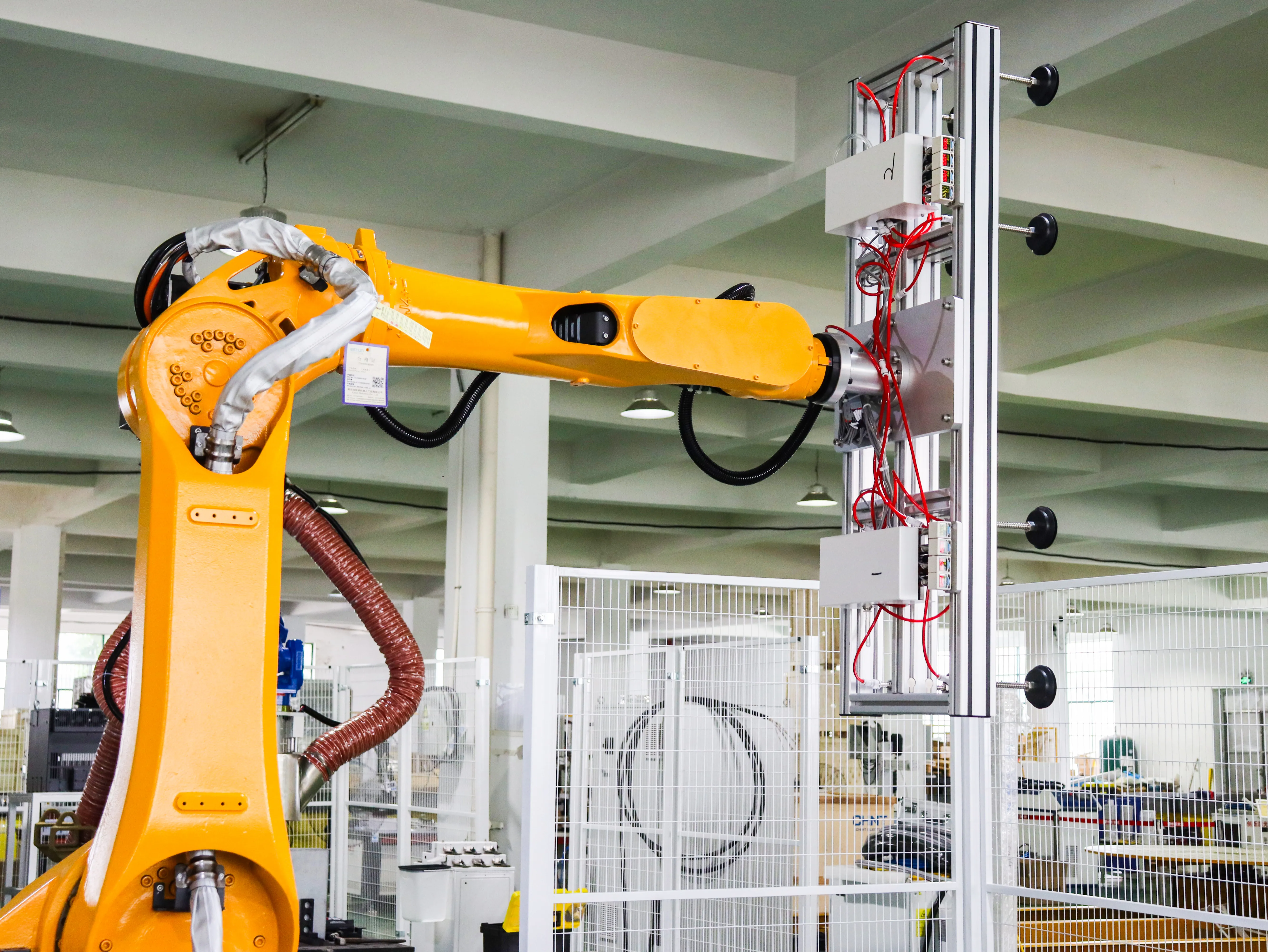
The process starts with a vacuum gripper. The suction cups hold the sheet metal securely before it is moved to the positioning station.
Vacuum Gripping
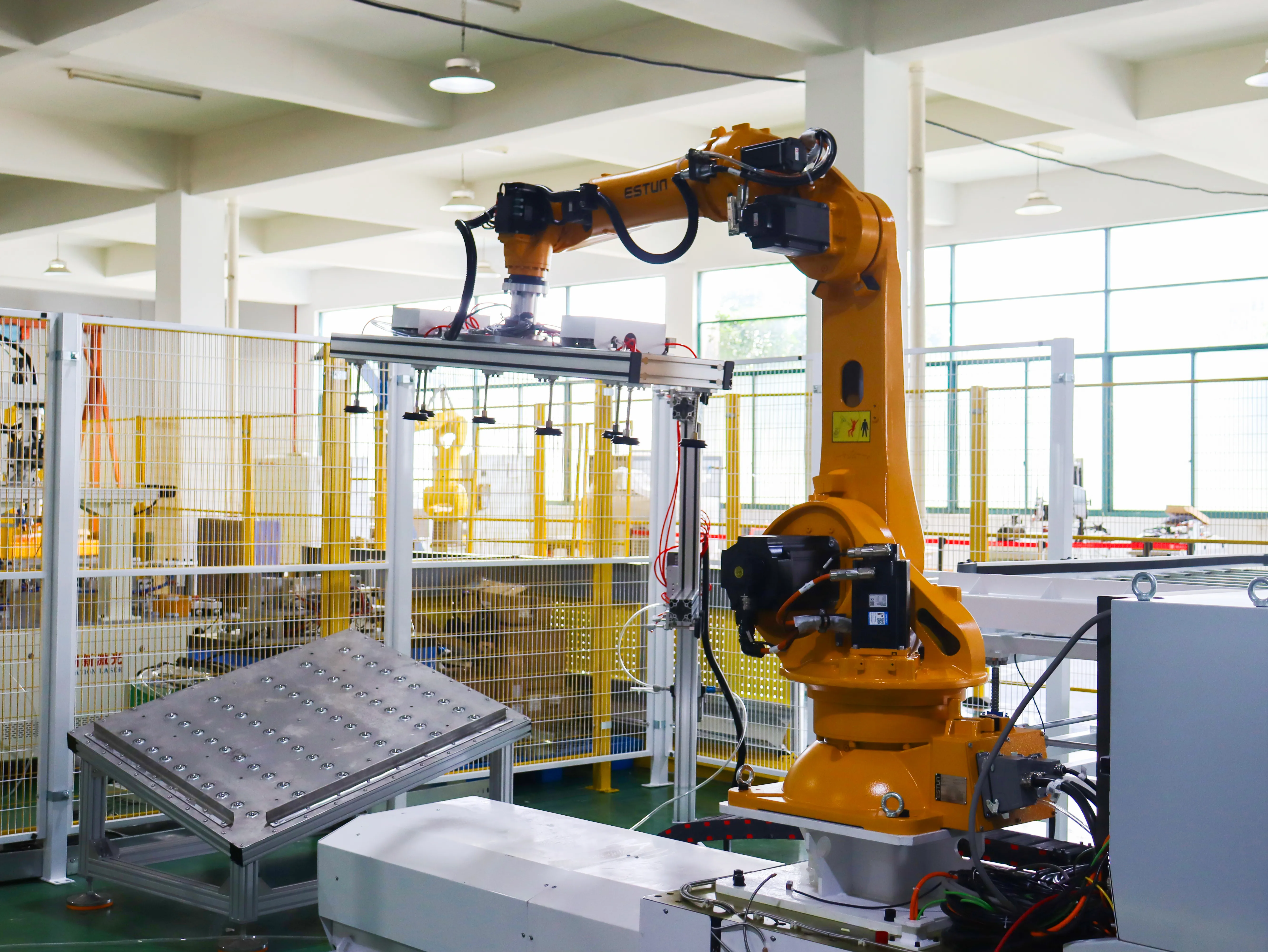
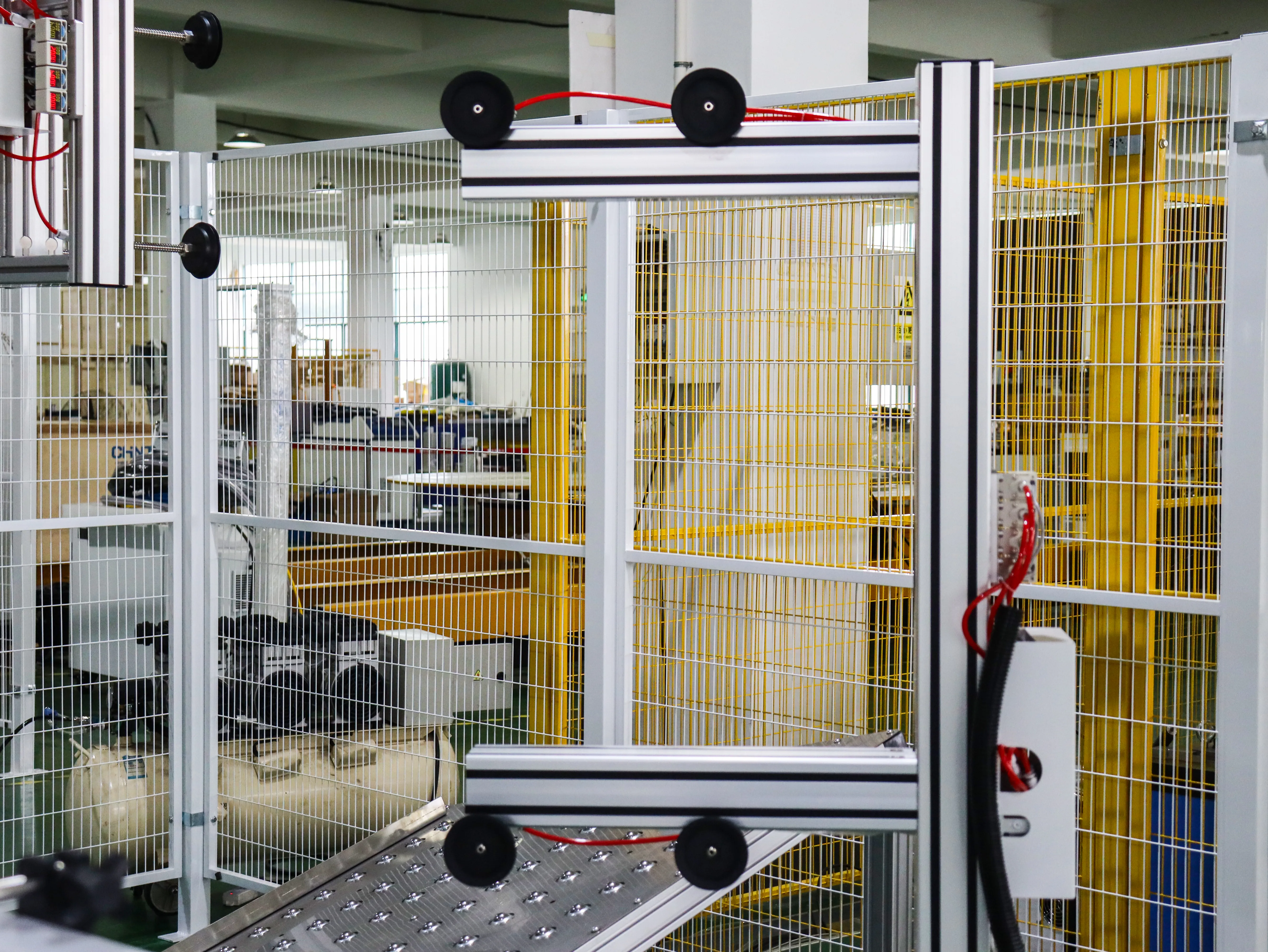
The sheet metal is handled using a vacuum gripper with 8 suction cup positions. Depending on the workpiece size, 4 suction cups are used during operation.
Vacuum handling is commonly applied to flat sheet metal parts where a stable contact surface can be maintained during transfer. The layout allows flexible configuration for different part sizes while ensuring stable gripping during robot motion.
2. Guiding Instead of Forcing — The Positioning Design
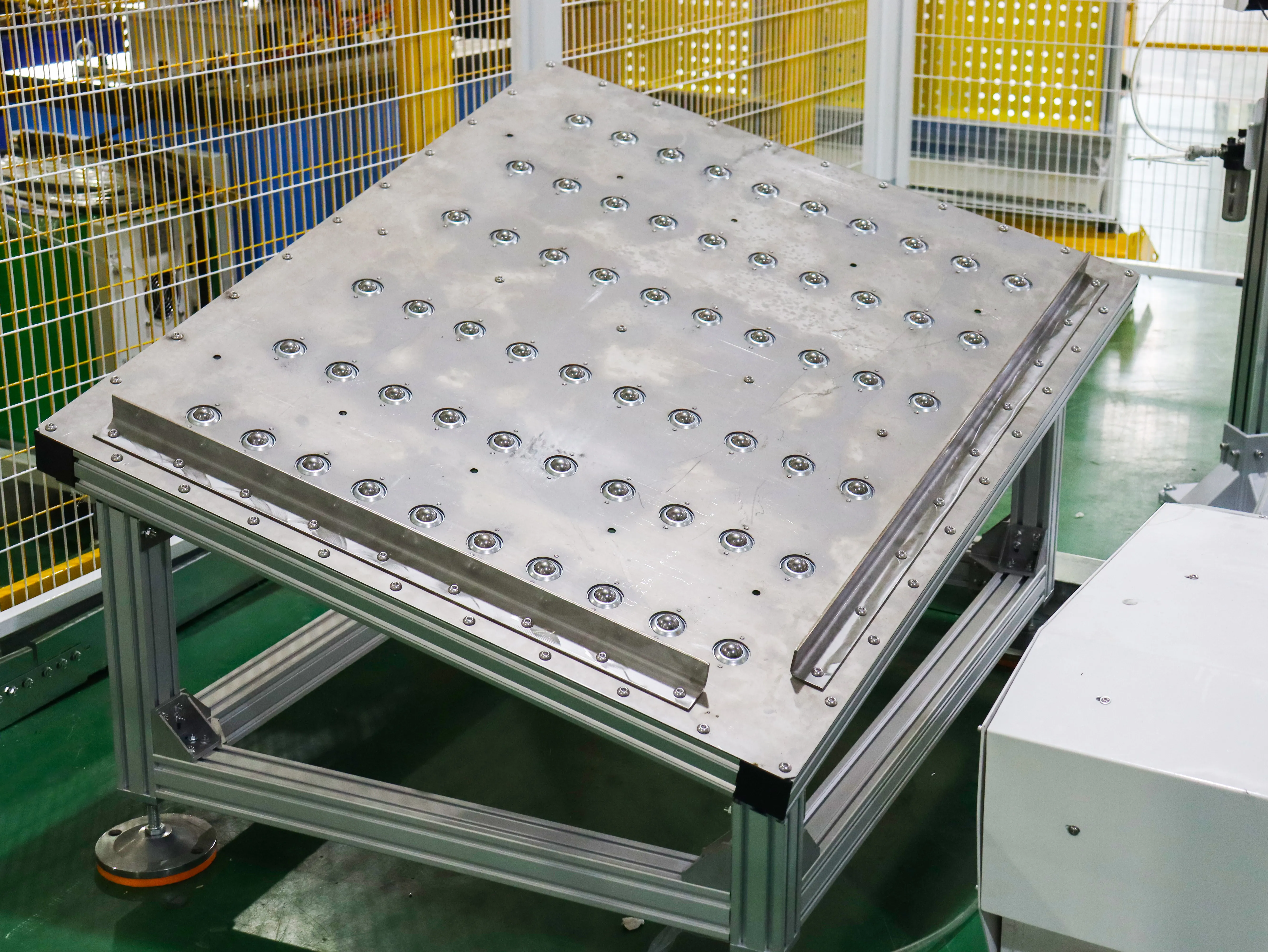
The table uses ball transfer units to let workpieces move smoothly in any direction. Side guides help keep the workpiece aligned for the next step.
Ball Transfer Table
Move the workpiece into position.
Align the workpiece with the side guides.
Prepare the part for robot picking.
3. Flip Without Losing Accuracy
The workpiece is flipped so the burr side faces the required direction for the next process.
The main reason is simple: burrs are usually on one side after cutting or stamping.
Flipping makes sure the burr side is always in a controlled direction, so it won’t affect fixture locating, assembly, or downstream processes.
It also helps keep a consistent orientation for CNC, welding, and inspection, making the whole process more stable.
In sheet metal parts, flipping can also help the part sit more naturally and improve handling consistency for robots.
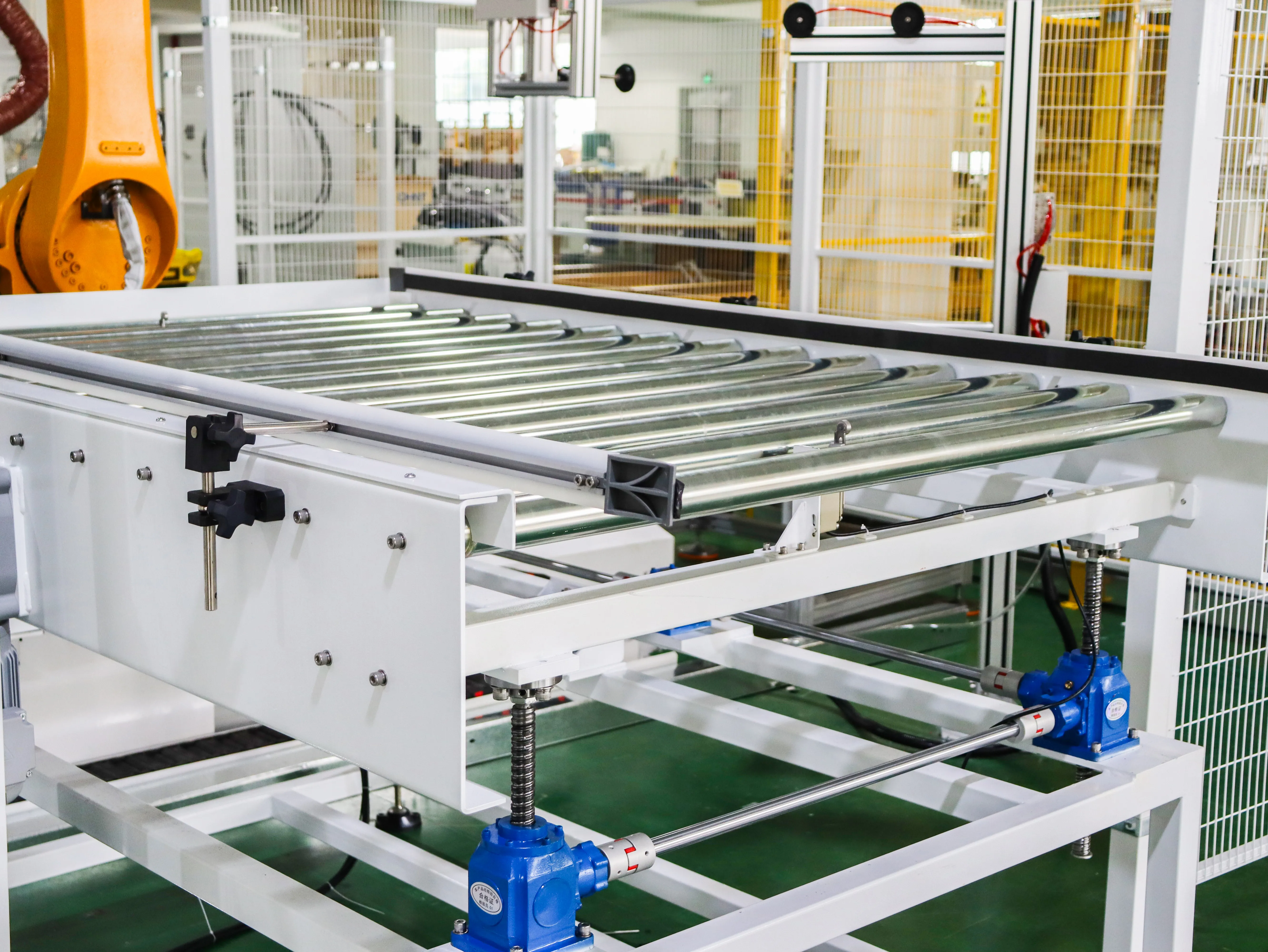
4. Height Adjustment & Roller Transfer
The synchronized lift roller conveyor bridges the height difference between stations, ensuring a smooth transfer without additional handling.
A lifting roller conveyor is used for part transfer between stations with different working heights.
It enables vertical adjustment of the conveyor level so the workpiece is always presented at a consistent transfer height for the robot, regardless of upstream or downstream equipment elevation differences.
This ensures stable handover conditions, simplifies line integration, and reduces the need for custom fixture height alignment between processes.
01
Step
Submit Requirements
Provide drawings, photos, videos, and basic project details to help us quickly understand your needs.
02
Step
Technical Evaluation
Our team analyzes your materials and proposes the most suitable laser or automation solution.
03
Step
Design & Production
We finalize the solution, start detailed design, and manufacture the required equipment.
04
Step
Delivery & Support
We install the system, train your team, and provide ongoing technical service.
Contact
Reliable After-Sales Service You Can Trust.
Our service team offers quick troubleshooting, remote assistance, on-site support, and lifetime technical guidance to keep your production stable and efficient.