

Welding Cell Remote Monitoring and OEE Reporting for Managers
A welding cell that reports nothing is managed by anecdote. Someone remembers that Tuesday was slow, nobody agrees on why, and the improvement conversation becomes a contest of recollection. Remote monitoring and OEE reporting exist to replace that conversation with data – and on a modern cell, most of the data already exists inside the controller. The project is not building instrumentation; it is deciding what to collect and who reads it.
The distinction matters. Monitoring is the plumbing of signals. Reporting is the discipline of choosing which three numbers management should actually see. Buyers who specify the first without the second end up with dashboards nobody opens.
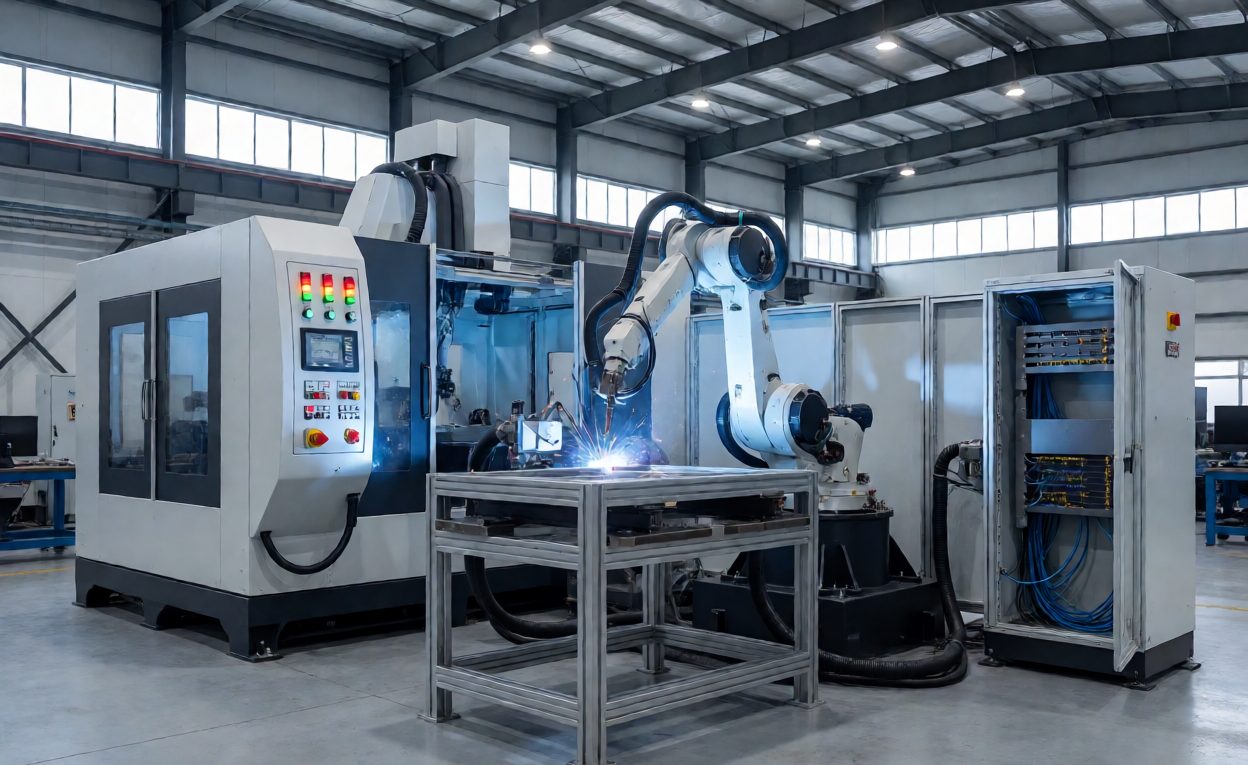
Which Signals Are Worth Collecting
A workable tag list for a laser welding cell is short and almost always includes the same items:
- State and reason code: running, idle or faulted, with a reason code for every stop. Reason codes are the difference between data and mere telemetry.
- Counters: parts completed, parts per programme and weld starts, so mixed production can be untangled later.
- Alarms: full alarm history with timestamps, retained for months rather than overwritten weekly.
- Process values: laser power, shielding gas flow and temperatures where the source exposes them. Trends in these catch drift before it becomes scrap.
- Consumable counters: window and nozzle replacement counts, which feed directly into the spares planning described in the first-year spare parts kit article.
Most robot and laser controllers expose these over standard protocols. The work is agreeing the tag list with the supplier in the specification and proving each value is correct at commissioning. A tag that reads wrong is worse than no tag at all, because it earns trust it has not deserved and poisons the reports built on it.
One collection rule is worth writing into the contract: signals must survive a network outage. Store-and-forward buffering at the cell, with a replay when the connection returns, keeps the shift record complete through the outages every plant has. Cells that drop data silently develop quiet gaps exactly on the bad days – which is precisely when the record matters most and when arguments about the data start.
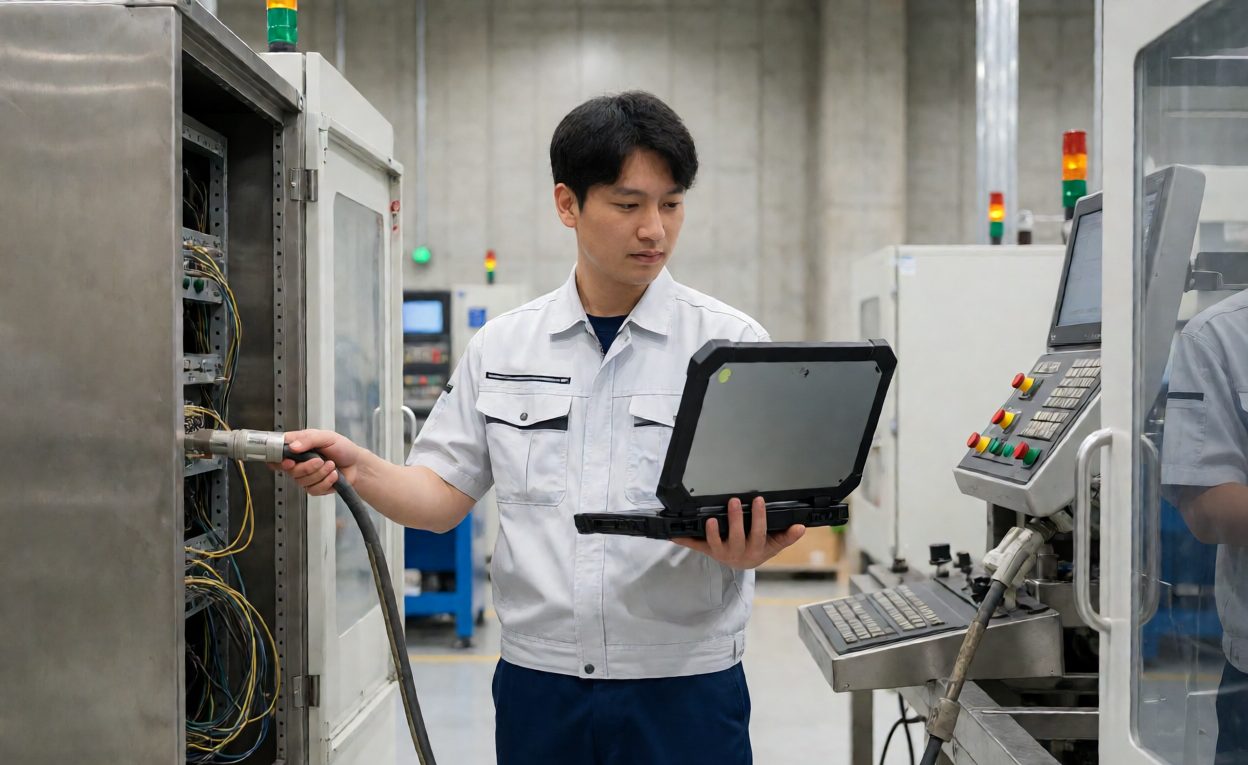
OEE Done Honestly
Overall equipment effectiveness is availability times performance times quality, and each factor is only as honest as its definitions. Before quoting an OEE number, decide:
- Availability basis: planned production time – excluding planned maintenance and shifts with no scheduled work – or calendar time. Both are defensible; mixing them is not.
- Performance basis: an ideal cycle time per part taken from a measured reference, not from an aspiration.
- Quality basis: parts accepted first time, with rework counted as a loss rather than hidden in the count.
An OEE reported as a single number invites gaming. Reported as its three factors, with the definitions on the same page, it becomes a management tool. Expect a well-run single cell to settle in a range that surprises nobody who has watched the shift patterns – the value is not the number itself but the movement in it, because movement points at causes.
Remote Access Without Opening the Factory
Remote access earns its keep in support: the supplier’s engineer can read an alarm history before travelling, push a parameter fix, or confirm a repair worked without a second visit. The security question is real and has a standard answer:
- Structured route: cell network to plant OT network, then a single controlled gateway outward – never the cell connected directly to the internet.
- Named access: per-user accounts, session logging, and access revoked when an engineer leaves the supplier.
- Least privilege: read-only by default, with parameter write access granted per case and logged.
- Segmentation: the cell network separated from office IT, so any compromise cannot wander.
Where the cell is one node of a larger automated production line, the monitoring architecture should be designed at line level rather than cell by cell. Retrofitting a common data model across six differently instrumented cells costs far more than specifying it once, and the negotiation leverage is at purchase time, not afterwards.

From Data to Decisions
Reporting closes the loop, and three reports carry most of the value. A daily shift summary with the OEE factors and the top stop reasons. A weekly trend of the two or three process values that predict quality. And a monthly review that connects availability losses to the maintenance plan. Manufacturing execution system vendors sell this capability as a product, but a modest cell can start with the controller’s own historian and a spreadsheet, provided the tag list was right at the start.
The same data feeds forward into process work. Cycle time per programme, discussed in the programming cost-per-part article, comes free from the counters. Availability losses that cluster on specific failure modes shape the next cell specification and support the case for predictive maintenance on the components that actually stop production. Monitoring is a capital-equipment decision, not an IT accessory, and it belongs in the enquiry alongside cycle time and warranty.
Frequently Asked Questions
Is OEE worth calculating for a single cell?
Yes, provided the three factors are defined and reported separately. A single blended number hides more than it reveals.
Which signals matter most?
State with reason codes, part counters and alarm history. They explain most availability losses on their own.
Is remote access a security risk?
Not if routed through a controlled gateway with named accounts, least privilege and segmentation from office IT.
Do we need a full MES to start?
No. A correct tag list and a spreadsheet deliver most of the value on a single cell; scale up when the reporting habit exists.
What is a realistic OEE for a welding cell?
It depends on definitions and product mix, which is why the definitions matter more than any benchmark figure.
Who should own the monitoring project?
Production, with IT involved for network and security. Projects owned entirely by IT rarely survive contact with shifts.
When should monitoring be specified?
In the original enquiry. The tag list and access route are cheap at purchase time and disproportionately expensive to retrofit.