
Laser Welding Shielding Gas: Selection and Consumption Control
Shielding gas is the least discussed line on a welding cell quotation and one of the few that recurs every month for the life of the machine. A single decision – which gas, at what flow, delivered how – affects weld quality, running cost and shift continuity at once. Choose it badly and the symptom is porosity that looks like a parameter problem; supply it badly and the symptom is a cell stopped mid-afternoon waiting for a cylinder.
Two questions cover the subject: what does the weld need the gas to do, and what does it cost per part once the delivery arrangement is included? The first is metallurgy and the second is arithmetic.
What the Gas Is Doing
In laser welding the shielding gas has three jobs, and different gases do them unequally well:
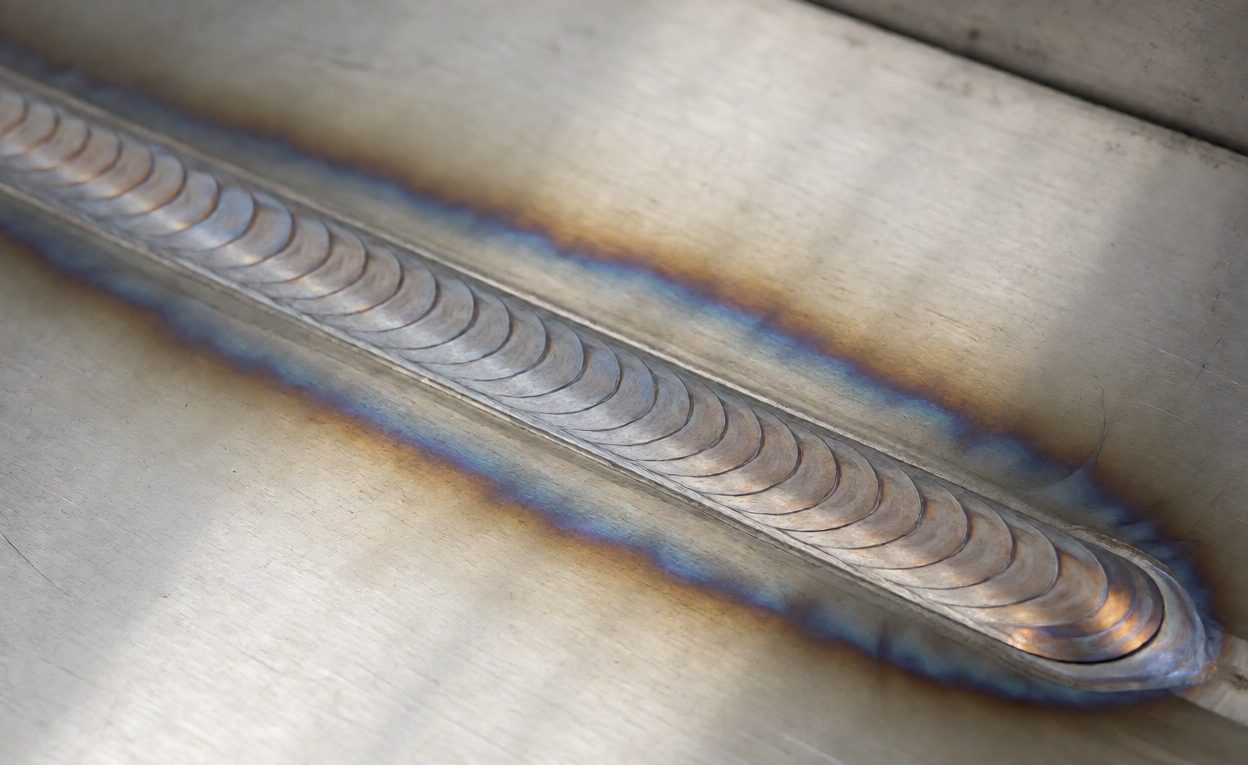
- Excluding air from the weld pool: oxygen and nitrogen cause porosity and oxidation, and loss of corrosion resistance on stainless steel. This depends on coverage more than on gas type.
- Suppressing the plasma plume: metal vapour above the keyhole ionises and absorbs laser energy. Helium suppresses the plume far better than argon and suits deep penetration work.
- Shielding the cooling bead: the solidifying weld stays reactive behind the pool, which is why trailing and back shielding exist.
- Protecting the optics: flow across the cover slide keeps fume and spatter off the lens, keeping the beam stable.
The common gases divide along those lines. Argon is dense, gives stable coverage at modest flow, and suits most stainless and mild steel work at the lowest cost per cubic metre. Helium suppresses plasma and improves penetration, at a much higher price and with a greater tendency to escape from imperfect coverage. Nitrogen suits some stainless applications but is metallurgically wrong for others. Shielding gas selection turns on this trade-off, and mixtures exist to sit between the pure gases rather than at either extreme.
Delivery: Nozzle, Flow and Coverage
Most gas-related quality problems are coverage problems, not selection problems. The gas that arrives at the pool has to be the gas that left the nozzle, and the path between them is where things go wrong:
- Nozzle geometry and standoff: coaxial flow around the beam is standard, with side nozzles and trailing shields for specific geometries. A fixture that puts the nozzle further away than the trials did produces different results.
- Flow rate: too little entrains air; too much becomes turbulent and draws air in anyway. Both produce the same porosity, so flow belongs in the parameter record rather than in operator habit.
- Cross draughts: extraction units and fans pull shielding away, so strong local extraction must be designed alongside the shielding.
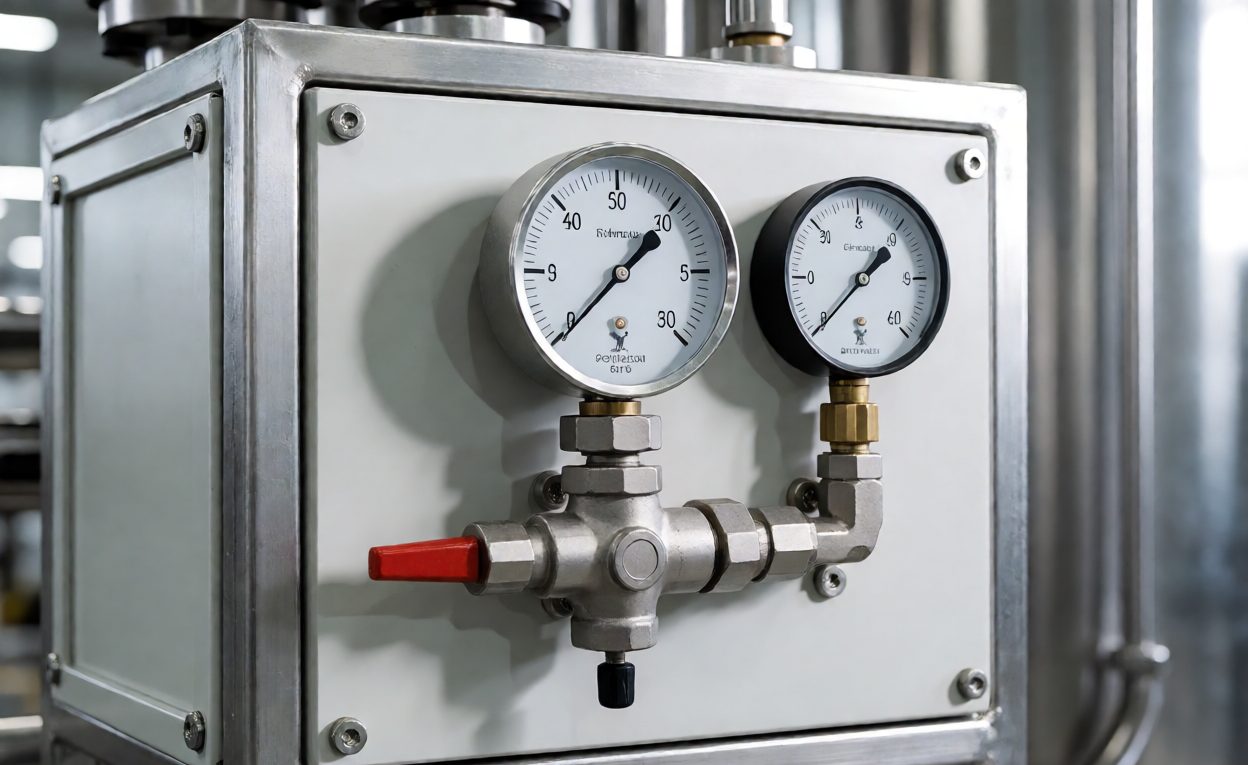
- Hose length and bore: long, narrow runs drop pressure and delay flow at weld start, which is where start porosity comes from.
Start porosity is worth isolating: a weld porous only in its first few millimetres is almost always a gas timing or hose volume issue, fixed by programming pre-flow rather than changing parameters. Where fume control is strong, the fume extraction and spatter control article explains how to balance extraction against shielding without one defeating the other.
Supply Arrangement and What It Costs
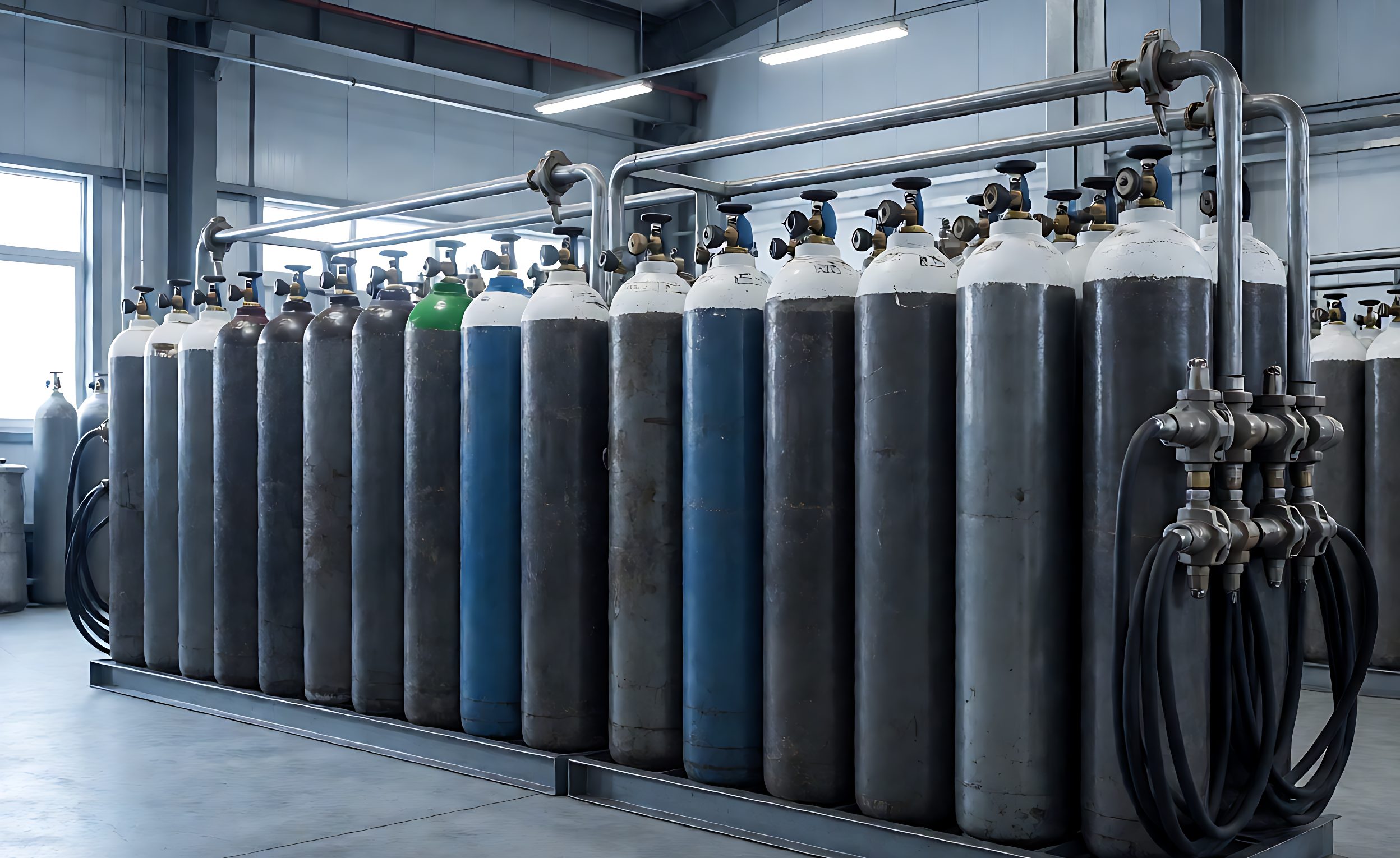
The delivery choice is a cost decision with an operational dimension. Cylinders, a manifold bank, a liquid tank or an on-site generator each suit a different consumption level, and the wrong one is either expensive or inconvenient:
- Single cylinders: lowest capital, highest handling, and a changeover that can interrupt a shift. Suits low-volume cells.
- Manifolded bundles: cylinders ganged with automatic changeover, removing mid-shift runout at moderate consumption.
- Liquid supply with vaporiser: suits high consumption and helium, with a tank footprint, rental charge and delivery access to plan for.
- Purity grade: industrial-grade gas with higher moisture or oxygen causes porosity no parameter change will remove.
Consumption per part is then arithmetic: flow rate times shielding time per weld, plus pre- and post-flow and any continuous purge. Multiply by parts per shift and the monthly figure appears, usually larger than expected on cells with generous default settings. That number belongs in the consumables cost per part calculation alongside wire, nozzles and cover slides, because gas is the consumable most often omitted and the one that scales directly with arc time.
Controlling Consumption Without Hurting Quality
Consumption reduction and quality are only in conflict when the reduction is done blindly. The safe sequence is measure, then reduce waste, then optimise settings:
- Fix leaks first: quick couplings, hose barbs and regulator seats leak continuously. A leak survey with detection spray takes minutes and typically finds several percent of consumption.
- Remove standing purge: a cell that purges all shift uses gas while welding nothing. Interlocking purge to the weld cycle is the largest saving available on most cells.
- Tune pre- and post-flow: set to what the weld needs and verify by sectioning, rather than leaving generous defaults in place.
- Track per part: once the cell reports gas duty, the monitoring and OEE reporting setup can trend consumption per part and flag drift early.

Finally, put gas into the documentation. Gas type, purity, flow, nozzle geometry and pre- and post-flow belong on the parameter sheet for every part programme, and a change of supplier or cylinder size should trigger a requalification weld rather than an assumption. Where filler is involved, the wire feed system selection interacts with shielding through nozzle geometry and stick-out. Processes compared in the laser versus TIG and MIG comparison differ in gas dependence too, and buyers moving work from manual TIG are often surprised that a laser cell is less tolerant of a marginal gas supply than the process it replaced.
Frequently Asked Questions
Which gas suits most laser welding work?
Argon for general stainless and mild steel; helium or helium-rich mixtures where deeper penetration and plasma suppression matter.
Why does more flow not always help?
Excessive flow becomes turbulent and entrains air, producing the same porosity as too little flow.
What causes porosity only at the weld start?
Usually gas timing or hose volume rather than power or speed; increase pre-flow and check the delivery path.
Cylinders, manifold or liquid supply?
By consumption: cylinders for low volume, manifolds for moderate, liquid tanks for high volume and helium-heavy use.
Does gas purity really matter?
Yes. Moisture and oxygen in lower grades cause porosity that no parameter adjustment will remove.
How is consumption per part calculated?
Flow rate times shielding time plus pre- and post-flow, summed per weld, then multiplied by parts produced.
Where do most gas savings come from?
Fixing leaks, removing standing purge and tuning pre- and post-flow, verified by sectioning rather than assumption.