
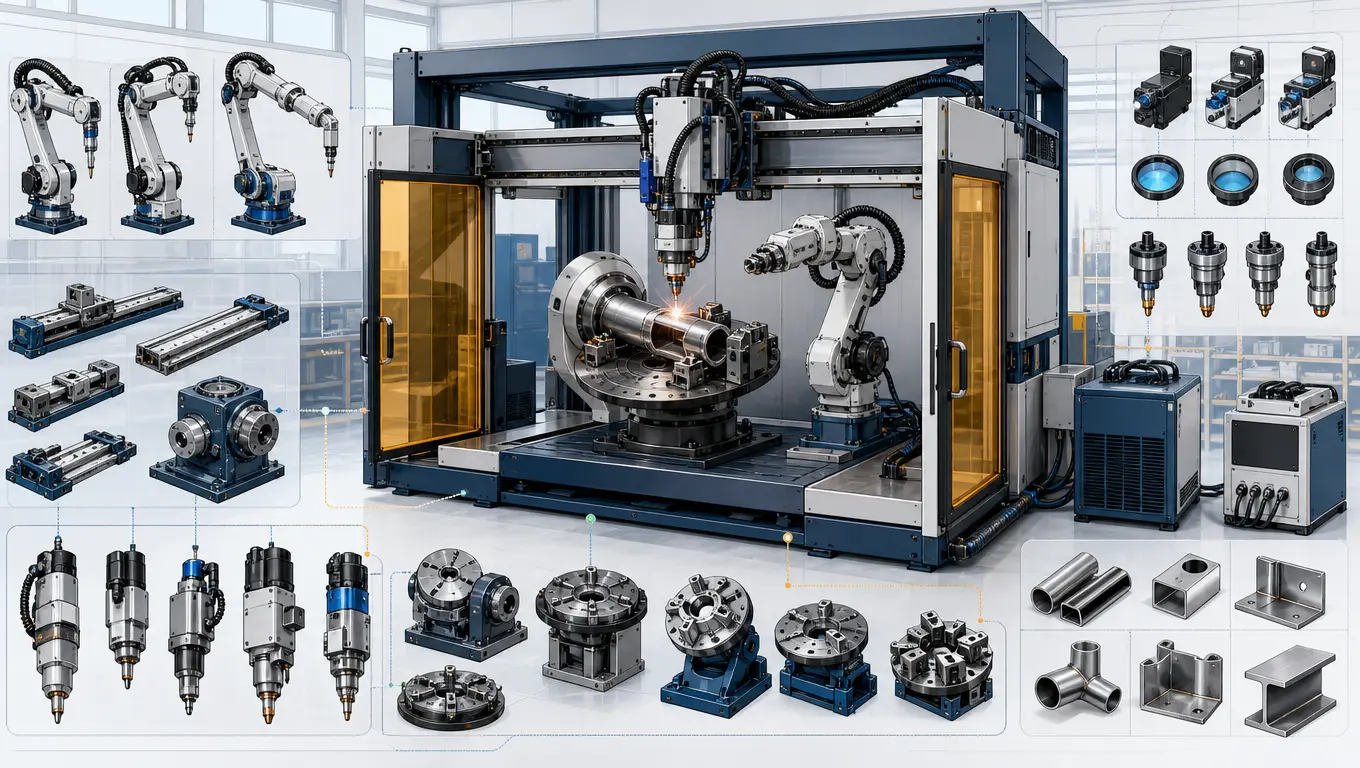
多軸CNCレーザー溶接作業ステーション:技術選定ガイド
高精度な医療機器、宇宙航空部品、電子機器筐体の製造には、再現性があり、狭くて構造強度の高い接合部が必要です。従来の手動溶接ではこれらの厳しい仕様を満たすことが難しく、多軸CNCレーザー溶接ワークステーションの導入が加速しています。自動化ワークステーションを構築するには、エンジニアが軸のレイアウト、サーボ駆動メカニズム、光路を慎重に評価する必要があります。このガイドでは、CNC 3/4/5軸レーザー溶接機, の構成に関するステップバイステップのチュートリアルを提供し、システム仕様を生産要件に合わせてマッチングするのを支援します。.
準備と作業スペースの評価
ハードウェアを選択する前に、部品の物理的および機械的要請を定義してください。不適切な軸構成は、動的追従エラー、不十分な溶接浸透、または機械的な衝突を引き起こす可能性があります。.
事前構成技術チェックリスト
- 部品形状のマッピング: 溶接シームのパスをマッピングします。単一平面内の平坦、直線、または円形のシームは、曲がった3次元空間輪郭よりも軸の複雑さが少なくて済みます。.
- 治具とクランプスペース: 空圧クランプの物理的なサイズを考慮してください。作業範囲には、部品とその 精密カスタム治具 が光学クリアランスを制限せずに収まる必要があります。.
- 動的精度要件: 許容パス許容誤差を決定します。リニアモーター駆動ステージは、標準ボールねじドライブよりも高い精度(±5ミクロン未満)を提供するため、マイクロ溶接アプリケーションに最適です。.
をご覧ください。
ステップバイステップのシステム選択と構成
アプリケーションに合わせて調整されたCNCレーザー溶接ワークステーションを構成するには、次の体系的プロセスに従ってください:
ステップ1:軸レイアウトの決定(3軸対4軸対5軸)
- 補間される軸の数は、ワークステーションの幾何学的柔軟性を決定します: 3軸構成(X、Y、Z):.
- 4軸構成(X、Y、Z+R軸): 4軸構成(X、Y、Z + R軸): 回転軸を追加します。同期された, 単一軸回転ポジショナー.
- を統合することで、システムはセンサー、モーターケーシング、または管などの円筒形部品を回転させながら、レーザーヘッドが直線追従を行います。 Incorporates two rotational axes (often a tilting table or a 2-axis tilting laser head). This configuration allows the laser beam to maintain a perpendicular angle relative to complex, curved 3-dimensional surfaces.
ステップ2:ファイバーレーザー光源と伝送光学系を選択する
材料の厚さに合わせた出力定格(通常は1kW〜3kW)のファイバーレーザー光源を選択します。電子機器や医療機器などの高精度用途では、スポットサイズが小さい(10〜50ミクロン)単一モードファイバーレーザーが、熱入力を抑えながら深い浸透を提供します。溶接強度を損なうことなく、組み立てのばらつきを補うために、 wobbling 溶接ヘッドとレーザーを組み合わせます。.
ステップ3:CNCコントローラとモーションドライブを選択する
モーションコントローラは、レーザートリガーパルスと物理的な軸座標を調整します。角部の焼き抜けを防ぐため、「レーザー電力周波数変調」をサポートするコントローラを選択してください。これにより、CNC軸の瞬時速度に応じてレーザー出力電力が自動的にスケーリングされます。.
ステップ4:カスタム治具と工具具を設計する
レーザー溶接は非常に集光されたビームを使用するため、部品間の密着性を維持することが重要です。設計 精密カスタム治具 には銅またはアルミニウムのバックプレートを使用します。これらの素材は部品を固定し、ヒートシンクとして機能して、溶接領域から熱を急速に除去し、熱変形を防ぎます。.
ステップ5:作業場を囲み、シールドガスを設定する
ファイバーレーザーは1064nmの波長で動作し、永久的な目の損傷を引き起こす可能性があります。作業場を、インターロック付きアクセスドアとレーザー対応の観察窓を備えた認定済みのクラス1レーザー安全キャビネットで囲みます。酸化を防ぐために、二重のシールドガスチャネル(溶け込み保護用の同軸と根元保護用のバックパージ)を設定します。.
作業場構成マトリックス
この比較マトリックスは、さまざまなCNC作業場構成の機能、対象アプリケーション、および投資レベルを強調しています。
| 作業場タイプ | モーションシステムの詳細 | 典型的な対象部品 | パス精度 | 投資レベル |
|---|---|---|---|---|
| 3軸ガントリーCNC | リニアボールネジステージ(X、Y、Z) | 平板金属、直線状の電子筐体、バッテリーパックのバスバー。. | ±0.02mm | エントリー〜ミドルレベル |
| 4軸ロータリーCNC | X、Y、Zリニア+ダイレクトドライブ ロータリーポジショナー | センサー、円筒形バッテリー、医療用カテーテル、円形パイプ。. | ±0.01mm | ミドルレベル |
| 5軸ガントリーCNC | X、Y、Zリニア+2軸チルト/ロータリーテーブル | 水圧成形チューブ、複雑な航空宇宙用ケーシング、自動車部品。. | ±0.015mm | ハイレベル |
| 5軸デュアルドライブリニア | ダイレクトドライブリニアモーター+高速ガルボヘッド | 高速マイクロ溶接、半導体フレーム、医療インプラント。. | ±0.005mm | プレミアム |
動的精度とパスキャリブレーション
マルチ軸構成全体でパス精度を維持するため、セットアップ時に標準的なキャリブレーション手順を実施します:
- 回転軸アライメント: ディアルインジケーターまたはレーザー干渉計を使用して、ロータリーチャックの中心線とリニア移動軸をアライメントし、回転時の振れを最小限に抑えます。.
- 動的ツールセンターポイント(TCP)キャリブレーション: 5軸システムでは、チルトおよび回転動作中にレーザー焦点スポットがシーム上に固定されたままになるよう、回転ピボットセンターをキャリブレーションします。.
- クローズドループリニアスケール: 高精度用途には光学式リニアスケールを取り付け、CNCコントローラーに直接位置フィードバックを提供し、熱膨張や機械的バックラッシュを補正します。.
多軸溶接機:構成とそれぞれが適正である場合
多軸溶接機とは、ワークピース、トーチ、またはその両方を1つ以上の制御軸に沿って移動させるあらゆるシステムを指します。構成が接合部のアクセス性を決定し、接合部のアクセス性がプロセスが再現可能かどうかを決定します。.
| 構成 | 軸数 | 典型的な用途 |
|---|---|---|
| 旋回式Positioner | 1~2 | 固定トーチに対して提示される円形または縦方向のシーム。. |
| 傾動・旋回テーブル | 2 | 重いセクションに対して溶接をフラットまたは水平な位置に保つこと。. |
| 3~5軸のガントリー | 3~5 | 大きく、長い部品は、ヘッドの下を移動させるほうが回転させるよりも簡単であること。. |
| 6軸ロボット | 6 | 複雑な3D接合部と、1つのフィクスチャーでの複数パス作業。. |
| ロボットとPositionerの組み合わせ | 合計7~9 | テーブルとロボットが協調して移動する協調運動。. |
多軸レーザービーム溶接:追加の軸が実際にもたらすもの
- パスの連続性 停止せずに溶接されるシームは、クランプし直した部品がもたらす開始・停止欠陥を回避します。.
- ビームと接合部の角度制御 レーザー溶接では、入射角が結合とキーストールの安定性に影響を与えるため、軸数の多寡よりも、接合部を一貫して提示することが重要になります。.
- 隠れた接合部へのアクセス 部品の位置を再設定できる軸は、2番目のフィクスチャーや2番目の作業工程を置き換えることができます。.
選定チェックリスト
| 判断する項目 | 理由 |
|---|---|
| 移動するのは部品か、トーチか、それとも両方の協調運動か? | マシンのクラスと制御アーキテクチャを設定します。. |
| 接合部での要求位置精度 | 蓄積された軸のエラーは、シームのミスマッチとして直接的に現れます。. |
| 協調運動が本当に必要かどうか | これはコストと据え置き段階で最も大きなものです。. |
| 較正と再較正の周期 | 多軸の精度はドリフトする;これを回復するための計画は購入前に存在すべきです。. |
よくある質問
Q: 3軸レーザー溶接機とロボット溶接アームの主な違いは何ですか?
回答: 3軸CNCガントリーは剛性の高いリニアクステージを使用しており、小〜中規模のワークエリアで一般的に高い機械的剛性とパス精度(±0.01mm)を提供します。関節型ロボットアームはより幾何学的な柔軟性と大きな到達範囲を提供しますが、一般的にやや広いパス許容差(±0.05mm〜±0.1mm)で動作します。.
Q: 自動レーザー溶接機はパルスモードと連続モードの両方で動作できますか?
回答: はい。最新のファイバーレーザーは連続波(CW)モードと準連続波(QCW)パルスモードの両方で動作可能です。QCWパルスモードは、パルス間に材料を冷却させることで熱影響域を削減できるため、熱に弱い電子部品に非常に効果的です。.
Q: チタンおよびアルミニウム合金においてシールドガス選択が重要な理由は何ですか?
回答: チタンとアルミニウムは高温で非常に反応性が高くなります。溶接中に酸素や窒素に曝露すると、脆化や気孔が発生する可能性があります。大気ガスから溶融池を隔離するためには、高純度のアルゴン(99.99%)またはヘリウムシールドガスの使用が不可欠です。.
結論とカスタム作業場設計
CNCレーザー溶接ワークステーションを構成するには、移動速度、座標の柔軟性、機械的精度のバランスを取る必要があります。高効率のファイバーレーザーと安全なクランプフィクスチャーと、最適な軸レイアウトを組み合わせることが、一貫性のある高品質な溶接を実現する鍵です。TrueSynは、アプリケーションの公差とサイクルタイムに合わせて設計・構築されるターンキーCNCレーザー溶接ワークステーションをご提供しています。今日うちの技術チームに連絡して、プロジェクトについて話し合い、部品でのテスト溶接を行ったり、カスタムシステムを構成したりしましょう。.
TrueSynの技術エンジニアにご相談ください
部品の設計と自動化の目標を確認するためにお気軽にお問い合わせください:
- メール: wangd@zjcxlaser.com
- WhatsApp(Peng氏): +86-13615855016
- WhatsApp(Wang氏): +86-13185595609
- YouTubeで当社のワークステーションをご覧ください: TrueSynレーザーオートメーションチャンネル
マルチ軸レーザー溶接ソリューション:セルとシームの適合
軸数はマルチ軸レーザー溶接ソリューションにおいて最もコストパフォーマンスの高い部分であり、統合は
軸周りでセルの成否を左右します。信頼できるソリューションは、シームの
スケジュールを4つの項目にマッピングします:運動(軸とポジショナー)、シーム追跡、フィラーとシール
戦略、そしてクランプ—そして署名する前に、部品上で組み合わせを検証します。.
| シームの種類 | 典型的な構成 | 重要な統合要素 |
|---|---|---|
| 直線、全長 | ガントリーまたは6軸、部品固定 | ヘッドを妨げないクランプ |
| 周方向 | ロボット+1軸ローテーター | ローテーター上の部品の同軸性 |
| 位置ズレ/3D | ロボット+2軸ポジショナー | 溶接中の協調運動 |
| 可変ギャップ接合部 | 上記のいずれか+シーム追跡 | トラッカーの遅延と移動速度 |
ベンダーソリューションの評価チェックリスト:シームスケジュールでのサイクルタイムシミュレーション、,
デモではなく;材料と厚みでのサンプル溶接;統合業者が管理するレーザー安全ファイル
および、セルが上位報告する必要がある場合のデータハンドオフ(フォールトコード、シームあたりのエネルギー)の明記。
これら4つを省くソリューションは、軸を販売しているだけであり、溶接を提供していません。.
ガイドインデックス:関連記事
- レーザー溶接サービス — このガイド内ですべての構成の背後にあるサービスページ
- MIG/MAG 溶接ロボット — マルチ軸ワークステーションと組み合わせるための生産可能なロボット
- コボット溶接システム:協働ロボットが勝つとき — ゲントリー型ワークステーションの低ペイロードの代替案
- EVバッテリー製造におけるレーザー溶接ロボット — 5軸補間が成果を出す大量生産アプリケーション
当社が構築するワークステーション: である FANUCシリーズレーザー溶接ロボット 大量生産自動化セル向けの 3 軸フリップ ポジショナ 多面作業向けの、および 水冷式ハンドヘルド溶接機 セルが届かない手動位置向け。.