
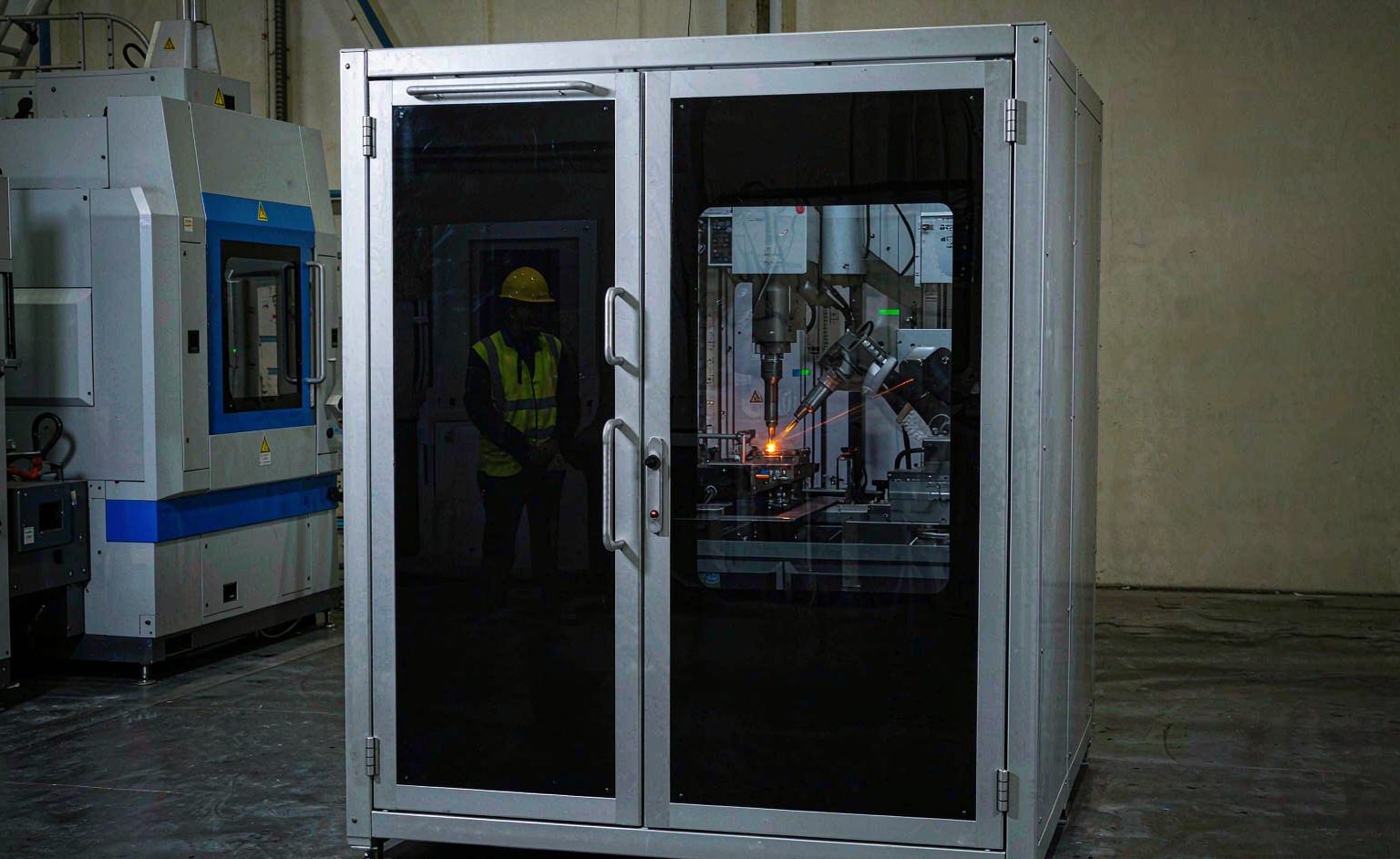
レーザー溶接の安全性:Class 4エンクロージャ、インターロックおよび排煙
Laser welding is sold on its gentleness — low heat, little distortion — but the process itself introduces hazards that are easy to underestimate precisely because they are invisible. A Class 4 beam, scattered and reflected radiation, and metal fume are present at every weld, and “it doesn’t look dangerous” is the most common cause of incidents. This guide covers laser classification, the enclosure and interlock logic, the personal protective equipment that actually matters, fume extraction, and the operating procedures that keep an operator safe.
Key Takeaways
- Most production laser welders are Class 4: direct, reflected and scattered beams are all hazardous to eyes and skin.
- Enclosure plus interlocks are the primary control; PPE is the last line, not the first.
- Standard eyewear is useless — you need wavelength-specific OD-rated laser goggles.
- Metal fume (especially on coated or galvanised steel, and on brass/copper) needs captured extraction, not room ventilation.
- Reflections off shiny parts are a real ignition and eye hazard; beam path and fixtures must be controlled.
Laser Classification: Why Class 4 Dominates
Laser safety is built around classes. Class 1 is enclosed and safe by default; Class 2 is low-power visible; Class 4 — the category almost all industrial welding lasers fall into — can burn skin and irreversibly damage eyes from direct, reflected or scattered beam paths. The danger is not the visible spot but the invisible beam and its bounce. Because Class 4 requires engineering controls, the design assumption is always “the beam can escape unless contained,” which is why enclosure and interlocks, not goggles, are the primary safeguard. The joint geometry that determines where the beam lands is covered in our joint-design guide.
| Control layer | Purpose | Notes |
|---|---|---|
| Enclosure + interlocks | Contain the beam | Primary control; stops beam on door open |
| Beam-path management | Kill reflections | Fixtures, beam dumps, non-specular surfaces |
| Warning systems | Signal active laser | Lights, signs, key control |
| PPE (goggles) | Last line of defence | Wavelength-specific OD rating required |
| ローディングおよびアンローディング | Protect lungs | Captured at source, filtered |
Enclosure, Interlocks and Beam-Path Management
The enclosure is the first control: a Class 4 cell should keep the beam inside whenever the door is closed, and an interlock must kill emission the instant the door opens. Beam-path management handles the escape that enclosure alone misses — reflections off shiny parts, especially brass, copper and polished steel, can redirect the beam toward an operator or ignite material. Fixtures, beam dumps and non-specular work surfaces reduce this. The source choice affects scattering: the comparison in CO2 vs fiber laser welding matters because wavelength changes how the beam interacts with the part surface.
PPE: Wavelength-Specific, Not Generic
Standard safety glasses do nothing against a welding laser. Protection requires wavelength-specific goggles with an optical density (OD) rating matched to the laser’s wavelength and power — the same goggles that block a 1 µm fiber beam may be transparent to a 10.6 µm CO2 beam. Fit and coverage matter: the beam is collimated and can enter around poorly sealed eyewear. PPE is the last line of defence, never the substitute for enclosure and interlocks.
Fume Extraction: Captured, Not Diluted
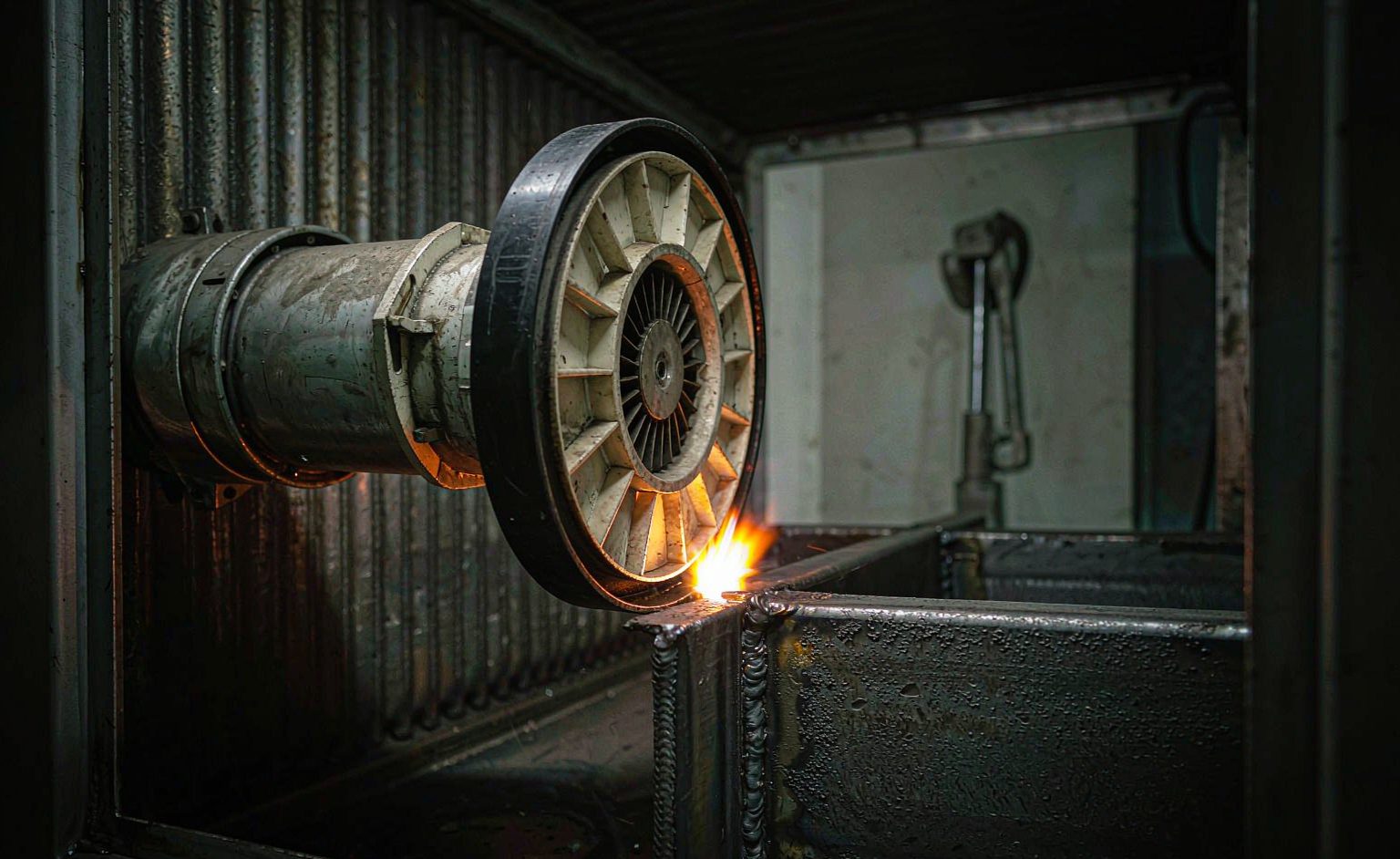
Laser welding fume is fine, inhalable and metal-specific. Welding galvanised or coated steel releases zinc oxide fume; brass and copper release their own particulates. Room ventilation dilutes but does not capture; the control is source extraction with filtration at the weld point. This is non-negotiable for repeated production welding, and it also protects optics from plume contamination that degrades the beam. The production context, including where fume control is most scrutinised, is in automotive laser-welding applications.
Operating Procedures That Prevent Incidents
Safe operation is a procedure, not a product. Key rules: never defeat an interlock, verify OD-rated goggles match the wavelength, keep the beam path enclosed, control reflections with proper fixtures, run source extraction on every weld, and train operators to treat “no visible beam” as “beam still present.” Handheld units compress all these hazards into a mobile package and demand stricter discipline — the trade-offs are in ハンドヘルド vs ロボット式レーザ溶接.
よくある質問
Do I need a fully enclosed cell?
For Class 4 production welding, yes — enclosure plus interlocks is the primary control. Handheld use demands strict procedural and PPE discipline instead.
Will normal safety glasses protect me?
No. You need wavelength-specific OD-rated laser goggles; generic eyewear is transparent to the welding wavelength.
Is room ventilation enough for fume?
No. Source extraction with filtration is required; room ventilation only dilutes and leaves particulates in the air.
Why are reflections so dangerous?
Shiny metals like brass and copper can redirect the beam toward an operator or ignite material, bypassing the intended beam path.
Does laser wavelength change the hazard?
Yes. CO2 (10.6 µm) and fiber (1 µm) beams interact differently with surfaces and require different OD-rated protection.
What is the single most neglected control?
Fume extraction at source — operators often enclose the beam but forget that repeated welding on coated metal fills the air with inhalable particulates.
Technical background: laser safety classification, laser fundamentals あんど welding health and safety cover the standards and hazards.