
レーザ自動化:その真の意味とプロジェクト評価法
Laser automation is sold as a machine but delivered as a system. The beam source is only one of five subsystems — motion, fixturing, sensing and fume extraction are what turn a laser into a repeatable production process. Buyers who spec only the wattage usually end up with a powerful source bolted to a cell that cannot hold tolerance or pass an inspection. This guide walks the architecture, shows where fiber lasers fit versus conventional welding, and explains how to scope a cell that actually pays back.
Key Takeaways
- A laser cell = beam source + motion + fixturing + sensing + extraction; the source is the smallest engineering risk.
- Fiber lasers dominate metal joining under ~6 mm because of wall-plug efficiency and minimal heat input.
- Motion accuracy (robot repeatability, ±0.03–0.05 mm) decides seam quality more than raw power.
- Seam tracking and real-time monitoring are what make a cell unattended-capable, not the laser alone.
- Payback is won on cycle time, scrap reduction and labour displacement — model all three before buying.
The Five Subsystems of a Laser Cell
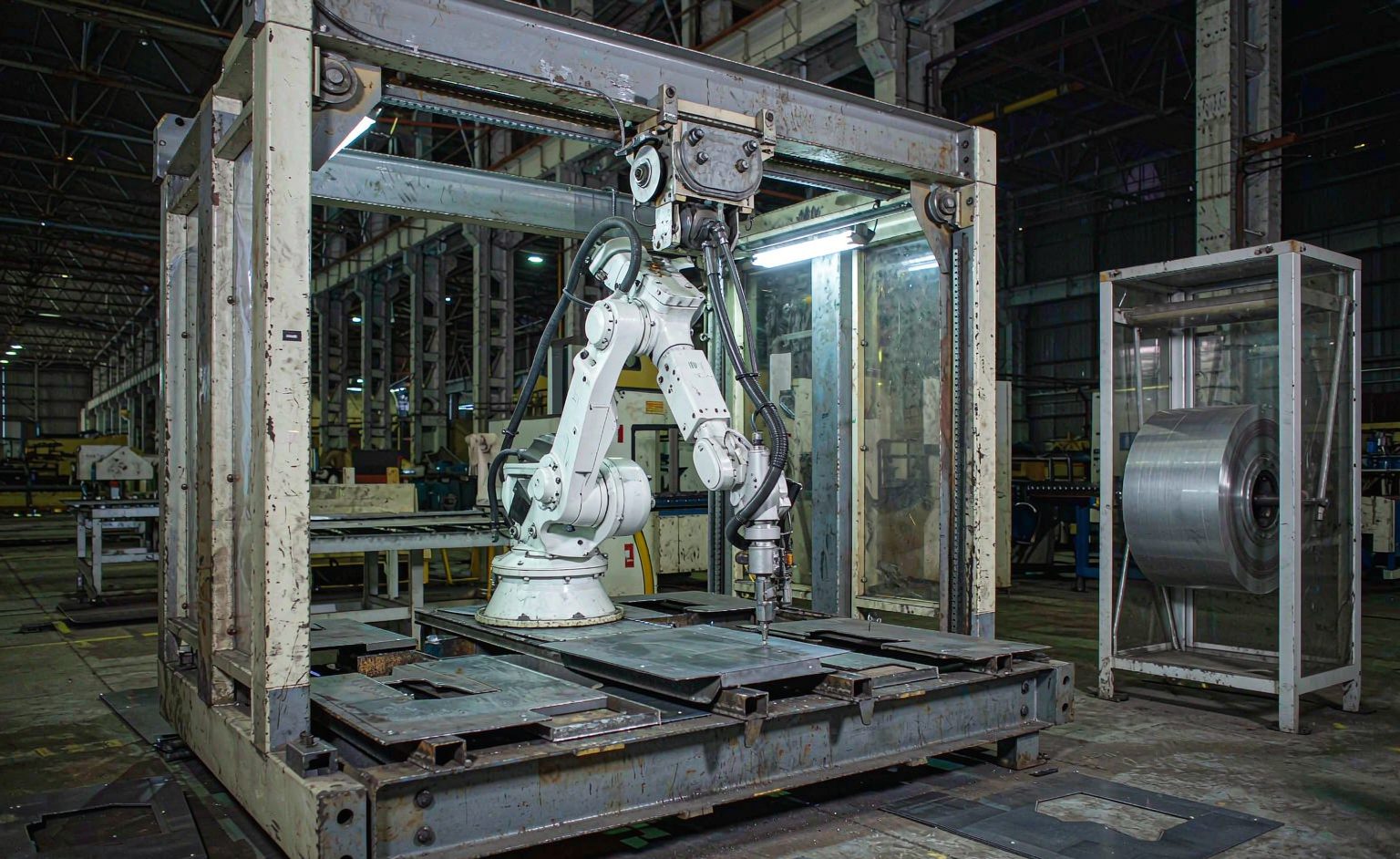
A production laser cell is an integration problem, not a component purchase. The beam source generates and delivers the energy; the motion system positions it to ±0.03–0.05 mm; the fixturing holds the part so the joint lands in the beam path every cycle; the sensing layer (seam tracking, vision, pyrometry) keeps the process centred when the part drifts; and the extraction layer removes fume and protects the optics. Drop any one and the cell underperforms. The most common failure mode is treating the source as the project and the other four as afterthoughts — which is exactly why dedicated laser-welding robots あんど full robotic welding cells are engineered as integrated packages rather than bolt-ons.
| Subsystem | 機能 | Typical spec to watch |
|---|---|---|
| Beam source | Generates and delivers the laser | Wavelength, power, beam quality (M²), wall-plug efficiency |
| Motion | Positions beam relative to part | Robot repeatability, axis count, path speed |
| Fixturing | Holds part in tolerance | Clamp force, thermal stability, changeover time |
| Sensing | Corrects for part variation | Seam-tracking accuracy, vision field, update rate |
| Extraction | Removes fume, protects optics | Airflow, filter class, negative pressure |
Where Fiber Lasers Fit
Fiber lasers have taken the bulk of metal-joining automation under roughly 6 mm thickness because of two numbers: wall-plug efficiency of 30–40% (versus under 5% for legacy lamp-pumped solid-state) and heat input low enough to minimise distortion on thin sheet. Above 6 mm, multi-kilowatt fiber and hybrid laser-arc processes extend the envelope, but the economic sweet spot remains thin-to-medium sheet where speed and low distortion dominate. The trade-off is beam sensitivity to back-reflection on highly reflective metals (copper, brass, gold), which is why process windows and proper optics matter more than headline wattage. The broader market direction is covered in our 2026 laser automation trends.
Motion and Accuracy Decide Seam Quality
On thin sheet, the robot’s repeatability governs seam consistency more than the laser’s power. A 1 kW source on a ±0.03 mm cell will out-weld a 3 kW source on a ±0.2 mm cell, because the beam stays centred on the joint. Path speed compounds this: at 2–4 m/min on thin stainless, small robot inaccuracies translate directly into burn-through or lack of fusion. This is why integrators spend more engineering on the motion and fixturing than on the source, and why the strategic case for robotic automation across the plant rests on repeatability, not raw throughput.
Sensing: What Makes a Cell Unattended-Capable
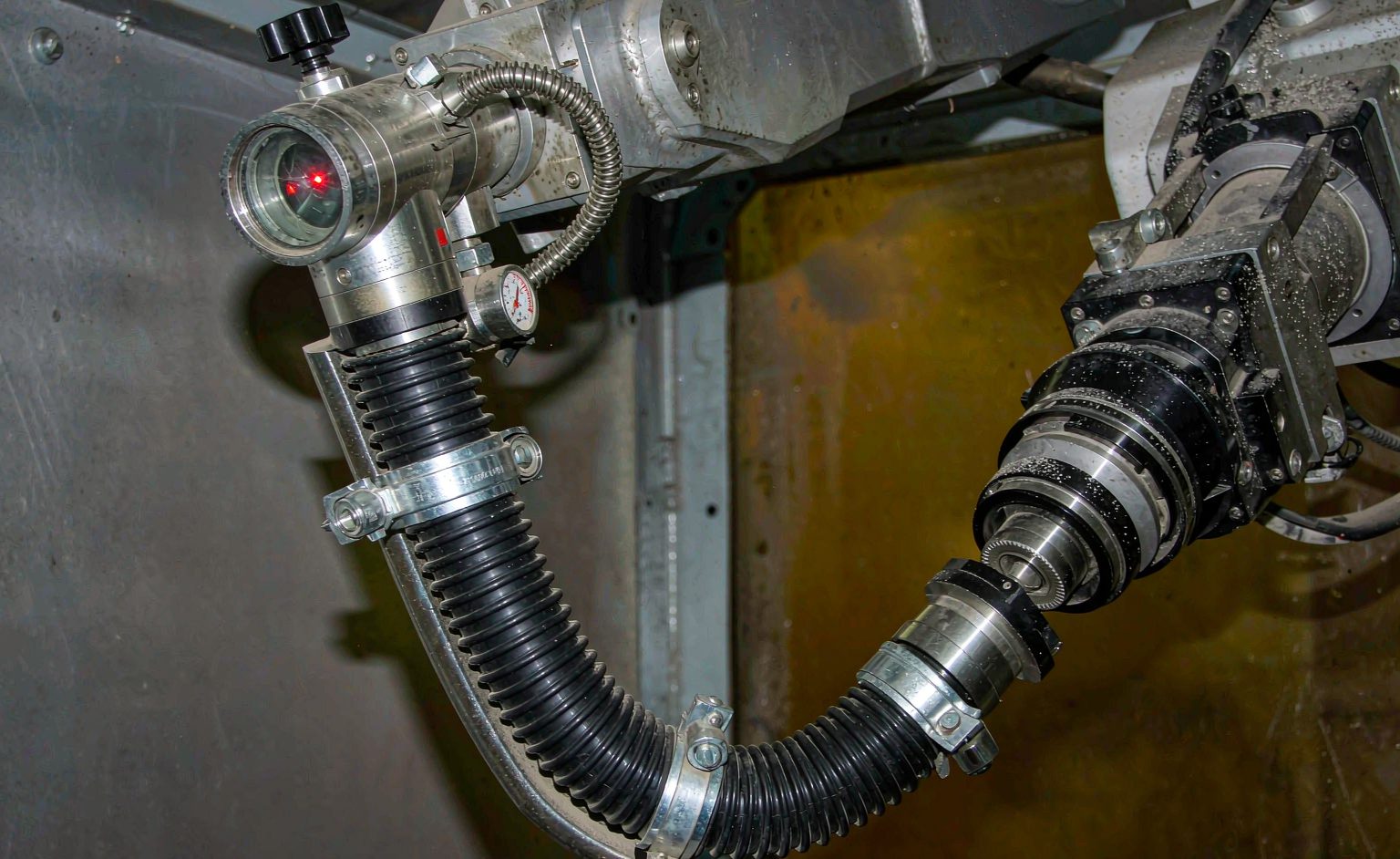
Seam tracking via laser line or vision keeps the beam on the joint when stamping variation, fixturing slack or thermal drift move the part. Real-time monitoring — pyrometry or plume analysis — flags a degrading weld before it becomes scrap. Without these, an operator must babysit every cycle; with them, the cell runs lights-out and only escalates exceptions. The monitoring layer is the difference between a machine that needs a welder and a process that needs an exception handler.
Scoping a Cell That Pays Back
Payback is rarely about the laser’s sticker price. It is won on three levers: cycle-time reduction versus the incumbent process, scrap reduction from consistent joints, and labour displacement from unattended running. A credible scope models all three against the current process’s true cost — including the hidden cost of rework — and sizes the cell to the real volume, not the peak. Over-specifying wattage is the most common way to destroy the business case; under-specifying fixturing is the second.
よくある質問
Is laser automation only for high volume?
No. Even at moderate volume, the scrap and rework reduction plus unattended running can justify a cell, provided the part family is stable enough to hold fixturing.
Does higher wattage always weld faster?
Only up to the point where heat input causes distortion or burn-through. On thin sheet, accuracy and fixturing often cap useful speed before power does.
Why does fixturing matter more than the laser?
Because the joint has to land in the beam path every cycle; if fixturing drifts, no amount of beam quality saves the weld.
What makes a cell run unattended?
Seam tracking plus real-time monitoring that catches degradation and escalates only exceptions, so an operator is not required at every cycle.
How do I avoid destroying the payback case?
Model cycle time, scrap and labour together against true incumbent cost, and size to real volume — do not over-specify wattage.
Are fiber lasers bad on copper and brass?
They are sensitive to back-reflection on highly reflective metals; proper optics and a tuned process window are required, which is why application engineering matters more than wattage there.
Technical background: laser welding principles, 産業用ロボット あんど industrial automation cover the underlying concepts.