

-
25 July, 2026
- 0 Comment
3D Robotic Cutting: A Smart Solution for Complex Metal Components

Why Are Manufacturers Choosing Robotic Cutting?
For standard metal parts, traditional CNC cutting machines remain an efficient choice. However, when manufacturers need to process complex three-dimensional components with different shapes and cutting angles, production flexibility becomes a key challenge.
A 3D robotic cutting system uses a six-axis industrial robot to control the cutting tool, allowing it to move around the workpiece and perform multi-angle processing.
1. Process Complex 3D Parts
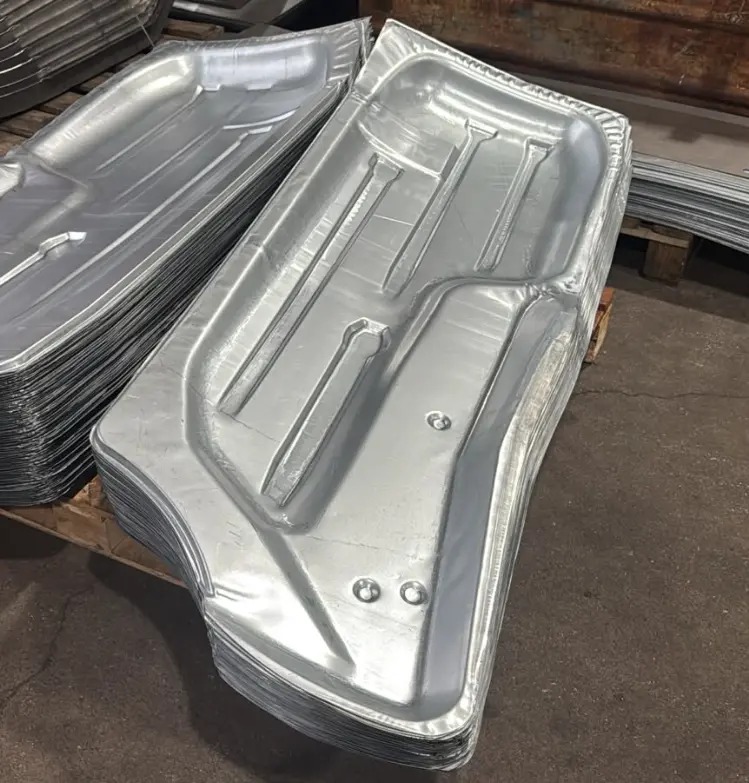
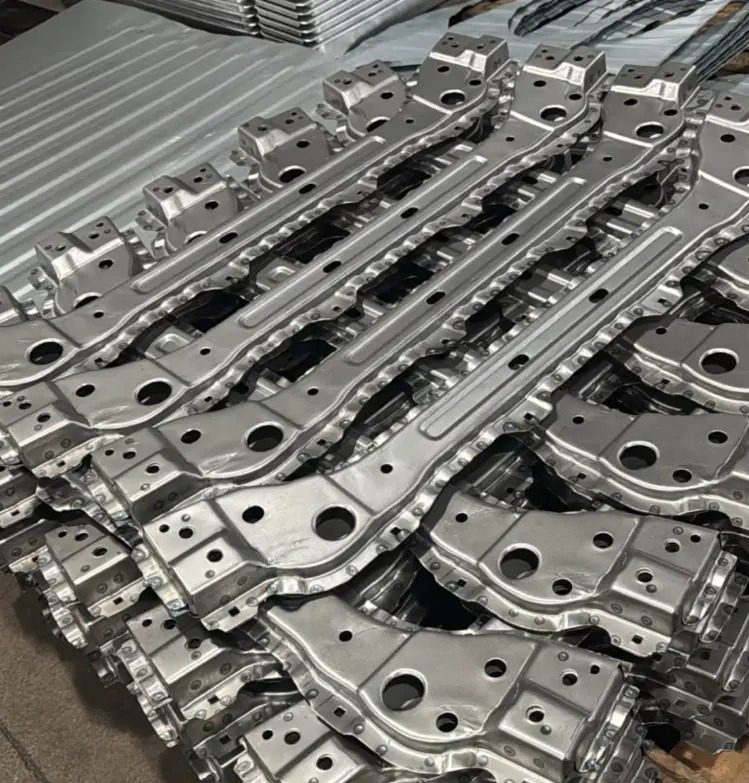
Many components cannot be easily processed with traditional cutting equipment due to their shape or accessibility requirements.
3D robotic cutting is suitable for applications such as:
- Automotive components
- Exhaust systems
- Tube structures
- Machinery frames
The robot can reach different areas of the workpiece and complete complex cutting paths with consistent quality.
2.Reduce Tooling and Setup Time
For manufacturers producing different models or customized products, dedicated tooling can increase production costs and preparation time.
With robotic cutting, production changes can often be achieved by updating the program, providing more flexibility for different products.
3. Flexible Production with Stable Quality
The value of robotic cutting is not only cutting capability, but also production flexibility.
With six-axis movement and programmable paths, manufacturers can achieve repeatable cutting results while adapting to different product designs.
Choosing the Right Cutting Solution
3D robotic cutting is not designed to replace all CNC cutting machines.
For flat sheets and standardized parts, CNC equipment remains a highly efficient solution.
However, for complex three-dimensional components that require multi-angle cutting and flexible production, robotic cutting provides an effective solution.
3D Robotic Cutting — When It Beats 2D
3D cutting earns its complexity on shaped parts, not flat sheet. The table is the honest use case.
| Part type | 2D flatbed | 3D robotic |
|---|---|---|
| Flat brackets | Wins: fast, cheap | Overkill |
| Tube/pipe profiles | Needs laser tube machine | Wins on complex miters |
| Formed/3D shells | Cannot | Wins: trimmed in fixture |
| Hydroformed parts | Cannot | Wins |
Frequently Asked Questions
Does 3D cutting need CAD of the part?
Yes — accurate surface data. Scanning a sample part works if CAD does not exist.
Accuracy expectation?
±0.1–0.3 mm on trimmed edges with good fixturing; looser on large unsupported shells.
System choice: buying guide and laser vs CNC. Reference: laser cutting.
Parts and Industries Where 3D Cutting Earns Its Keep
The economics of 3D robotic cutting are part-specific. It pays where geometry, not speed, is the constraint:
- Automotive hydroformed tubes — holes, slots and trim lines on curved tube sections in one program.
- Stamped body panels and brackets — trimming and piercing after forming, where flat-bed access is impossible.
- Sanitary and HVAC fittings — saddle cuts and branch holes on elbows and tees.
- Structural castings — gate and riser removal on irregular surfaces without dedicated dies.
| Requirement | Typical robotic capability |
|---|---|
| Positional accuracy | ±0.05–0.1 mm with calibration |
| Kerf width | 0.1–0.3 mm depending on material and power |
| Edge quality | Burr-minimized on thin sheet; dross-free with parameter tuning |
Two conditions decide success. First, part presentation: 3D cutting tolerates curvature, not chaos — fixtures that repeat position within a few tenths of a millimeter are part of the budget, not an option. Second, offline programming: the ROI collapses if every new part requires teach-pendant hours. Buyers who confirm both — fixture repeatability in the acceptance test, and offline programming included in the delivery — get a machine that cuts new variants in hours. Buyers who skip these checks often discover the robot was never the expensive part.
Budget note for first-time buyers: program a representative “worst part” offline before signing. If your hardest part programs in hours and verifies on the first try, the fleet economics hold; if it takes days, the fixture or presentation needs rework before volume matters.