
-
5 August, 2026
- 0 Comment
Automatic Laser Cutting vs CNC Cutting: What Should Manufacturers Consider?
When choosing a cutting process, many manufacturers compare CNC cutting and automatic laser cutting.
Both methods are widely used in metal processing, but they solve different production challenges. The better option depends on the product, material and manufacturing requirements.
CNC Cutting: Suitable for Stable Production
CNC cutting has been used in manufacturing for many years and remains a practical solution for many applications.
It works well when:
- Product designs are stable
- Production processes are already established
- Parts require traditional machining methods
However, when manufacturers need to handle different product shapes or frequent production changes, setup time and tooling requirements can become limitations.
Automatic Laser Cutting: More Flexibility for Modern Manufacturing
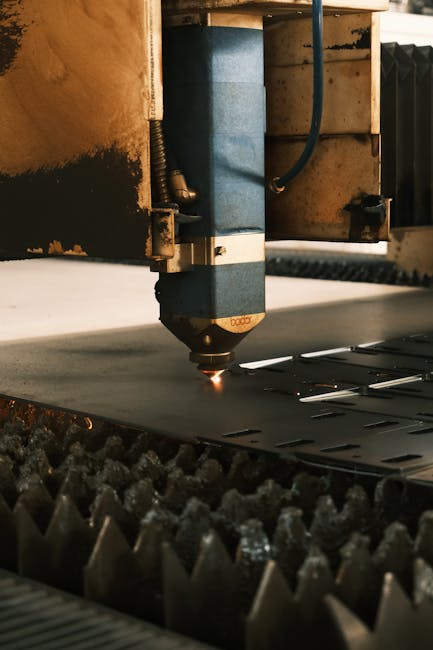
Automatic laser cutting uses a laser beam to process materials without direct contact with the workpiece.
This makes it suitable for applications such as:
- Sheet metal components
- Automotive parts
- Industrial equipment
- Customized metal structures
For manufacturers dealing with complex parts or changing production requirements, laser cutting provides more flexibility in process adjustment.
When Robot Laser Cutting Makes Sense
For large, irregular or difficult-to-position workpieces, a robotic laser cutting system can provide additional flexibility.
A typical system combines:
- Industrial robot
- Fiber laser source
- Cutting head
- Customized fixture
The robot movement allows the cutting head to reach different positions, which is difficult for some traditional fixed machines.
However, successful robotic laser cutting is not only about choosing the laser power or robot model. Fixture design, cutting path planning and process testing are also important parts of the project.
TrueSyn Laser Robotic Cutting Solutions
TrueSyn Laser develops robotic laser cutting and welding solutions for manufacturers who need more flexible automation.
By combining industrial robots, fiber laser technology and application experience, TrueSyn helps customers build systems based on their actual production requirements.
Laser Cutting vs CNC — What Actually Differs
Both are “automated cutting”; they win on different work. The table is the decision view.
| Factor | Laser (fiber) | CNC (mill/router) |
|---|---|---|
| Contour freedom | Any 2D profile fast | 3D geometry capable |
| Heat effect | Small HAZ | None (chip removal) |
| Edge finish | Cut edge, slight oxide | Machined finish |
| Material waste | Kerf ~0.1–0.3 mm | Chips, fixture loss |
Frequently Asked Questions
Can laser replace our CNC?
For flat profile work, often yes and faster. For machined tolerances and 3D features, no — they complement.
Which is cheaper per part?
Thin-sheet profiles: laser. Thick blocks with 3D features: CNC. Quote both on your top five parts.
Related: 2026 cutting trends and 3D robotic cutting. Reference: laser cutting.
Match the Process to the Part Family
The two processes are complements more than competitors. A part-family view settles most debates:
| Part family | Lean towards | Reason |
|---|---|---|
| Thin sheet, fine features, high mix | Laser | Kerf, edge quality, no tooling per profile |
| Thick plate, simple profiles | CNC plasma/oxyfuel | Cost per mm of thickness favors plasma |
| Hardened or reflective alloys | Laser (fiber) | Tool wear and reflectivity limit milling |
| Machined 3D contours | CNC mill | Laser is a 2D/2.5D cutting process |
| Tube and formed parts with 3D trim | Robot laser cutting | Curved-path capability without dies |
Many factories run both under one roof and route by thickness and geometry; the “wrong” purchase is not laser or CNC, it is buying one to impersonate the other. Total-cost comparisons should include upstream handling and downstream finishing — laser’s narrow kerf reduces secondary machining, while plasma edges on thick plate may need grinding before welding. The cleanest decision procedure: list your top ten part families by annual volume, assign each to its natural process, and let the volume-weighted result — not a general preference — decide what the next machine should be.