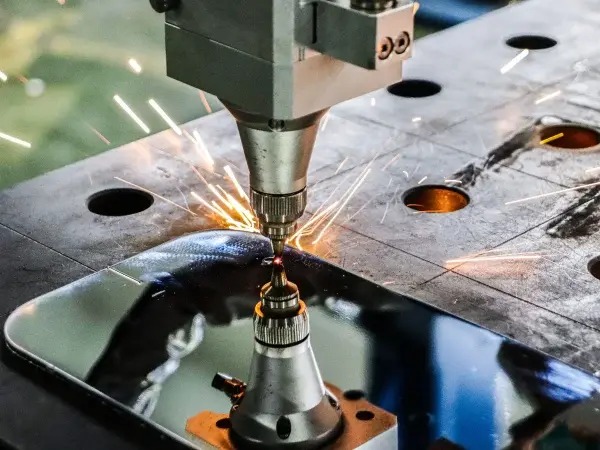
Every manufacturing process is different. A standard machine may not always be suitable for specific production requirements.
TrueSyn Laser provides robotic laser cutting systems and customized automation solutions by combining industrial robots, fiber laser technology and application experience.
Our solutions support manufacturers in industries such as metal fabrication, automotive components and industrial equipment.
Choosing the right robot laser cutting system means finding a solution that fits your production needs, not simply choosing the highest specifications.
Buying a Robot Laser Cutting System — Checklist
Five checks separate a working cell from a shelf ornament.
| Check | Pass condition |
|---|
| Demo cut | Your part, your material, your thickness |
| Nest test | Yield quoted on your DXF files |
| Cycle time | Measured, not estimated |
| Spares list | Nozzle/lens stock included |
| Training | Operator + programmer, on-site |
Frequently Asked Questions
New or refurbished cell?
Refurbished from a known integrator with a parts warranty can be fine; unknown-resale units carry hidden optics and axis wear.
What is the hidden cost?
Fixtures and programming hours. Budget them with the machine, not after it lands.
Compare routes: laser vs CNC and 3D robotic cutting. Reference: laser cutting.
Specs That Quietly Change the Quote
Headline specs sell machines; the lines below move invoices and uptime:
| Spec line | Why it matters | What to confirm |
|---|
| Work envelope vs part size | Undersized axes force re-fixturing | Envelope quoted with fixtures installed |
| Acceleration, not just speed | Real cycle time lives in cornering | Time for a representative path, not axis max |
| Chiller sizing | Undersized chillers throttle duty cycle | Continuous rating at your ambient temperature |
| Floor loading and footprint | Old buildings surprise buyers | Point loads checked against your slab |
| Dust and fume interface | Retrofit extraction costs more later | Ports, airflow figures, filter access included |
Use these lines in negotiation deliberately: two suppliers quoting the same laser power can differ 20–30% in effective productivity once acceleration and chiller derating are counted. Ask each to quote the same test part, then compare measured cycle times rather than spec sheets. The machine that wins by measurement is usually the one whose manufacturer understood your parts — and that understanding, more than any single number, predicts how the installation, training and support will go after the invoice is paid.