
Export Crating and Freight Terms for Robotic Welding Cells
A welding cell can survive design, manufacture and factory testing, and then be ruined in transit. Most buyers who import equipment have a story about a crate that arrived wet, a cabinet that arrived dented, or a shipment that sat at port for three weeks because one document was wrong. None of those are manufacturing problems, and none of them are solved by choosing a better machine.
Three documents decide whether an export shipment is uneventful: the packing specification, the delivery term, and the insurance.
What a Proper Packing Specification Contains
Standard commercial packing is designed for a domestic road journey, not for a sea voyage with transhipment. For capital equipment the specification should state:
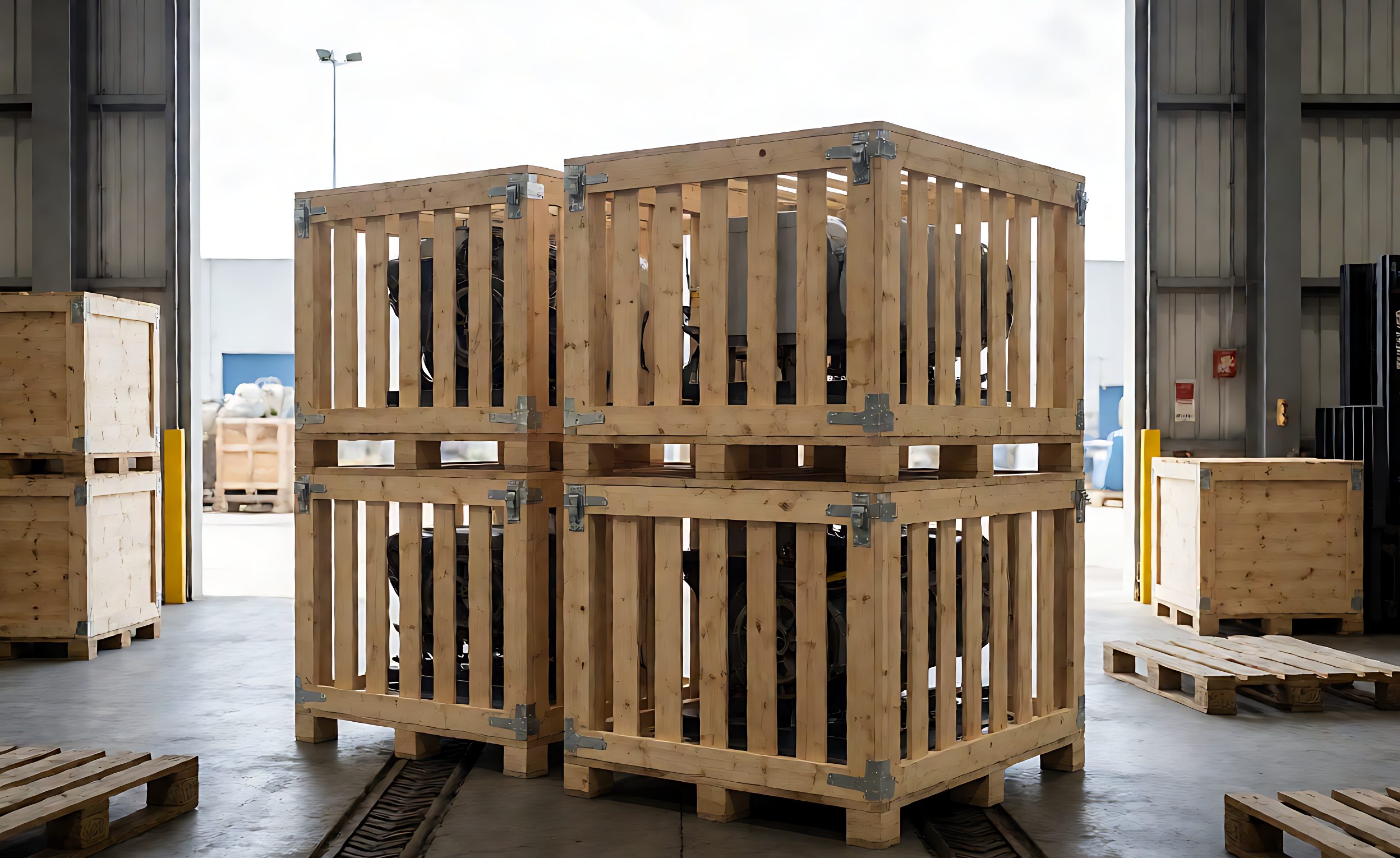
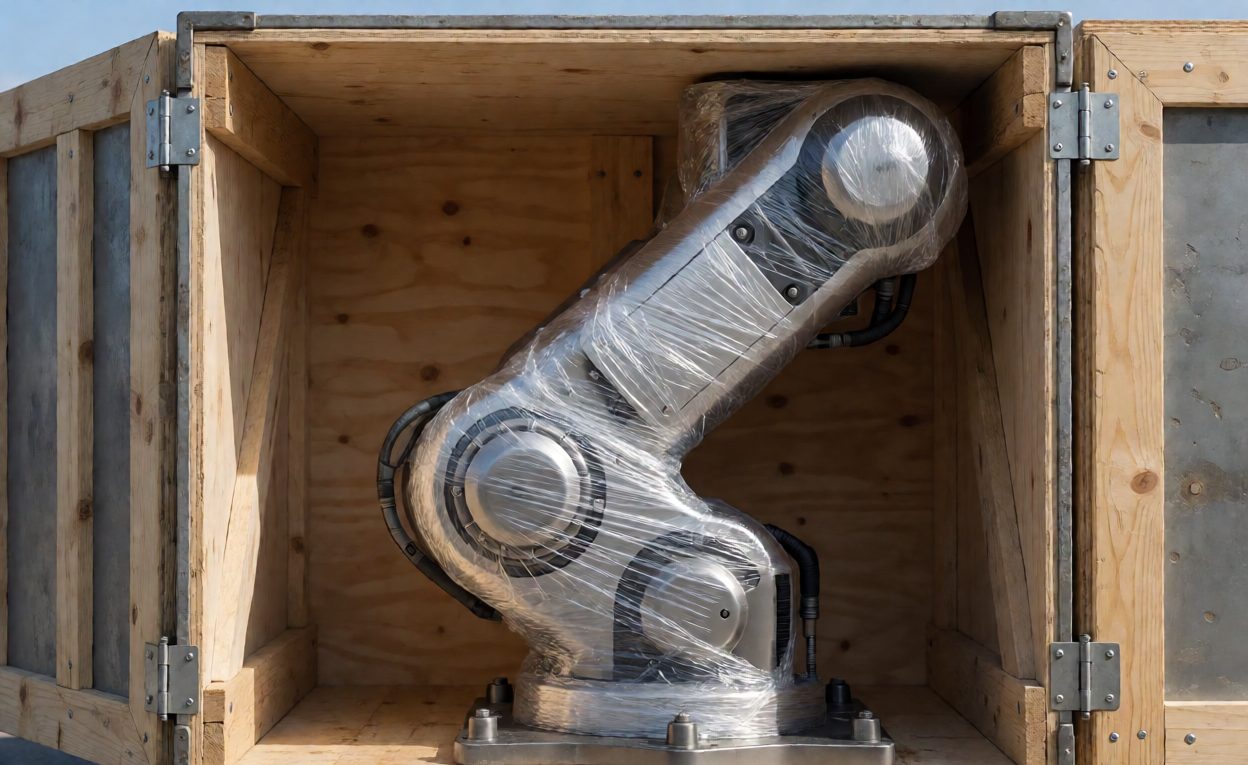
- Crate construction: heat-treated timber, ISPM 15 compliant, with a stated board thickness and a base strong enough for forklift and crane handling.
- Moisture protection: vapour barrier bag or wrapping, with desiccant quantity stated and a humidity indicator visible from outside.
- Restraint: bolted rather than merely blocked, with the restraint method described for the heaviest and the most delicate items separately.
- Shock and tilt indicators: fitted externally, with readings recorded at departure and arrival.
- Itemised packing list: per crate, with serial numbers for major components, so that a missing item is traceable to a crate.
The two items that most often get omitted are the moisture barrier and the indicators. Both are cheap. Neither is optional for a sea voyage through humid climates, where condensation inside a crate is the most common cause of arrival damage on electrical equipment.
Incoterms and What They Actually Transfer
Delivery terms are frequently agreed without being understood, and the consequences appear when something goes wrong. The relevant distinction is where risk transfers, who arranges the main carriage, and who handles import formalities.
- EXW: buyer arranges and risks everything from the supplier’s door. Cheapest quote, most buyer responsibility, and awkward for export formalities.
- FOB: supplier delivers on board; risk transfers at the ship’s rail. Buyer controls the main carriage and insurance.
- CIF / CFR: supplier arranges carriage to destination port. Insurance is the buyer’s responsibility under CFR and limited under CIF – read the clause.
- DAP / DDP: supplier delivers to a named place, with DDP including import duties. Convenient, but the buyer has little control over routing and timing.
Incoterms define these responsibilities precisely, and the practical advice is to choose the term that matches the buyer’s actual capability. A first-time importer is usually better served by DAP than EXW, even at a higher price, because the alternative is learning customs procedure during a project.
Where Damage and Delay Actually Occur
Most problems are not dramatic. They are water ingress, a shifted load, a crate opened for inspection and poorly resealed, and documentation mismatches that hold a container at port.

- Documentation mismatch: packing list, invoice, certificate of origin and bill of lading must agree on quantities, weights and descriptions. Discrepancies are the single largest cause of customs delay.
- Certification: electrical equipment may require conformity marking for the destination market. Confirm before shipment, not at import.
- Dangerous goods declarations: lasers, chillers with refrigerants and batteries can trigger declarations. Ask the supplier to confirm what the shipment contains.
- Oversize and weight: a cell may exceed standard container limits, requiring flat-rack or break-bulk handling and a different cost structure.
Insurance and the Receiving Procedure
Insure to the full replacement value including freight, and confirm the policy covers the specific handling risks – transhipment, deck stowage if applicable, and inland carriage at both ends. Marine insurance that excludes the final road leg is a common and expensive gap.
At the receiving end, the procedure matters more than people expect. Photograph crates before opening, record seal numbers, check shock and tilt indicators before unpacking, and unpack with the supplier’s representative present where possible – remotely by video if not. Damage discovered and documented immediately is a claim; damage discovered a week later is an argument.
Packing and shipping also sit on the critical path of the cutover schedule, so transit time should be planned with realistic contingency rather than best-case sailing times. Where the equipment is destined for a specific regional market, the logistics discussion in the Southeast Asia guide and the India guide covers market-specific considerations. And because freight terms change the effective price, they belong in the quotation comparison as a named line – marine insurance is not a formality when the cargo is a complete production cell.
Timing deserves a note. Transit time quoted by a freight forwarder is usually a best case, and capital equipment shipments routinely exceed it through transhipment, inspection or port congestion. Plan the arrival date with contingency and put the delivery term and the arrival window into the installation schedule as separate lines. Freight forwarders can quote both a typical and a conservative transit time; using the conservative figure for planning and the typical one for expectation is the honest way to schedule a cell installation.
FAQ
Is standard packing enough for sea freight?
Rarely. Specify crate construction, moisture barrier, desiccant, restraint method and shock indicators.
Which Incoterm should a first-time importer choose?
Usually DAP rather than EXW, even at higher price, because the alternative is learning customs during the project.
What causes the most customs delay?
Documentation mismatch between packing list, invoice, certificate of origin and bill of lading.
Do lasers and chillers trigger declarations?
They can, along with refrigerant and battery declarations. Ask the supplier to confirm the shipment contents.
Should insurance cover inland carriage?
Yes. Policies that exclude the final road leg leave a common and expensive gap.
What should be done before unpacking?
Photograph crates, record seal numbers and read shock and tilt indicators before opening.
Does a cell fit a standard container?
Often not. Check dimensions and weight early; oversize cargo changes the cost structure.