
-
30 July, 2026
- 0 Comment
Industrial Laser Welding Robot Cost in 2026: Key Factors That Affect Pricing
When manufacturers consider investing in a laser welding robot, cost is often one of the first questions.
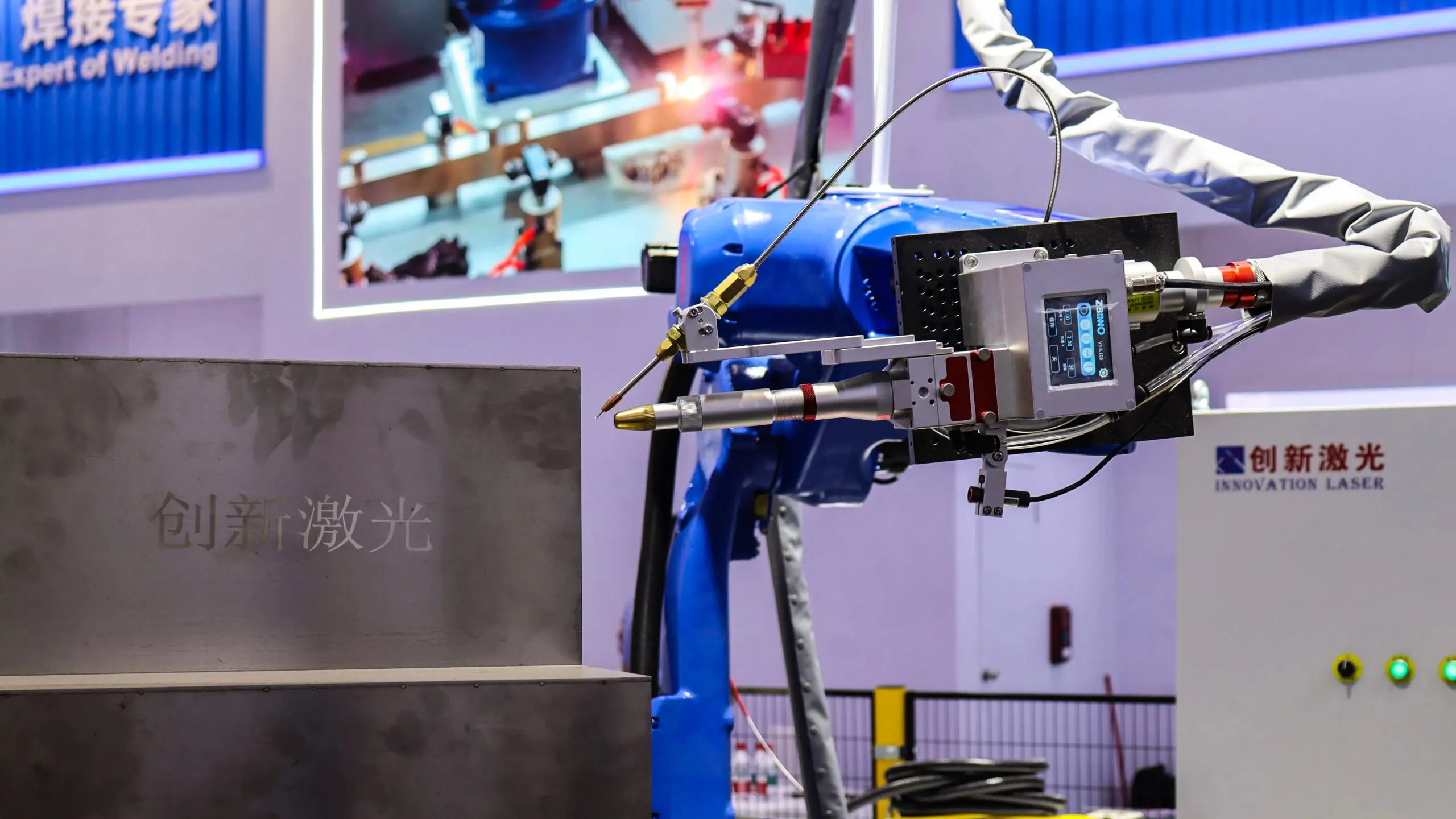
The cost of an industrial laser welding robot depends on the system configuration, welding requirements, and automation level. A complete solution includes more than just a robot, such as the laser source, welding head, fixtures, safety system, and integration.
What Affects the Cost of a Laser Welding Robot?
Laser Power and Welding Requirements
The required laser power depends on the material type, thickness, and welding speed. Different applications may require different configurations.
Robot Configuration
Robot brand, payload, working range, and system compatibility can affect the overall investment.
Automation Level
A basic robotic laser welding system may include a robot and laser welding equipment, while a complete automated cell may include fixtures, positioners, vision systems, and loading/unloading solutions.
Is a Laser Welding Robot Worth the Investment?
For manufacturers with stable products and higher production volumes, a laser welding robot can improve:
- Welding consistency
- Production efficiency
- Weld appearance
- Labor utilization
However, the right solution depends on the product design, production requirements, and expected return on investment.
How TrueSyn Helps
At TrueSyn, we help manufacturers select and integrate suitable robotic welding solutions based on their products, materials, and production goals.
Our solutions include laser welding robots, MIG/MAG robotic welding systems, fixtures, positioners, and complete automation integration.
The best welding system is not always the most expensive one — it is the one that creates the best value for your production.
What Drives Laser Welding Robot Cost in 2026
Quotes vary 2× for “the same” cell. The table shows where the money actually goes.
| Cost block | Share of quote | Lever |
|---|---|---|
| Laser source | 30–40% | Right-size power |
| Robot + positioner | 20–30% | Reach class only |
| Optics + tracking | 15–20% | Match to joint types |
| Fixtures + integration | 15–25% | Family-based design |
Frequently Asked Questions
Where do budgets overrun?
Fixtures. One fixture per part family multiplies quietly; design families to share a fixture set.
Is more power a good spend?
Only if your stock is thick. Oversized sources waste money and weld worse on thin sheet.
Cell detail: laser welding robot anatomy and robot vs traditional. Context: industrial robot.
Budget Lines Buyers Miss
Quotations anchor on the robot and the laser source. The lines below are where budgets actually break:
| Often-missed line | Typical share of project cost | Note |
|---|---|---|
| Fixtures and tooling per part family | 10–25% | Scales with variant count, not machine size |
| Fume extraction and safety enclosure | 5–10% | Mandatory in most jurisdictions; quote it explicitly |
| Commissioning and acceptance tests | 3–8% | Coupon welds, cycle-time proof, calibration |
| Operator training and documentation | 2–5% | Decides whether utilization targets are met |
| Spare optics and wire feeder | 2–4% | One unprotected lens can idle a line for days |
Payback follows the same realism. Cells welding high-volume thin parts with clean fit-up often recover cost in 12–24 months; mixed-part cells with heavy tooling needs run longer, and the difference is almost always the fixture bill. The practical defense is a line-item quote: ask each supplier to price fixtures per family, extraction sized to your floor, and a commissioning scope with named acceptance criteria. Quotes that answer those three questions are comparable; quotes that answer only “price per kW” are not — and the gap you cannot see in a spreadsheet is exactly the gap you pay for after delivery.
On timing: ordering in the first half of the fiscal year usually buys better commissioning slots, since integrator calendars fill toward year-end. Financing via equipment lease spreads the capital line and keeps the five-year table honest against monthly savings.