
-
30 July, 2026
- 0 Comment
Laser Welding Robot vs Traditional Welding: Which Is Better?
Choosing the right welding method is an important decision for manufacturers. While traditional welding is still widely used, more companies are now considering laser welding robots to improve efficiency and welding quality.
Traditional Welding
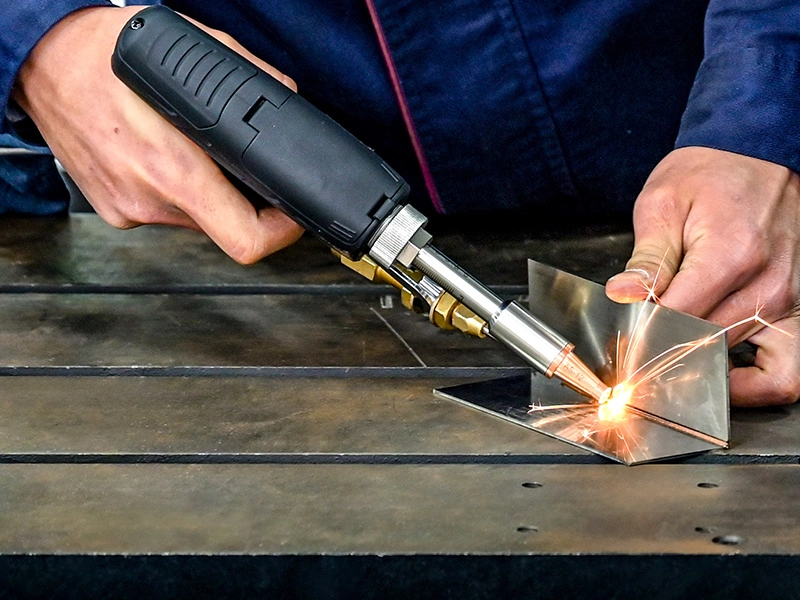
Traditional welding methods such as MIG/MAG and TIG are reliable and flexible. They are suitable for many applications, especially small-batch production, thick materials, and products with frequent changes.
However, traditional welding usually depends on operator experience and may require additional processes such as grinding and cleaning after welding.
Laser Welding Robot

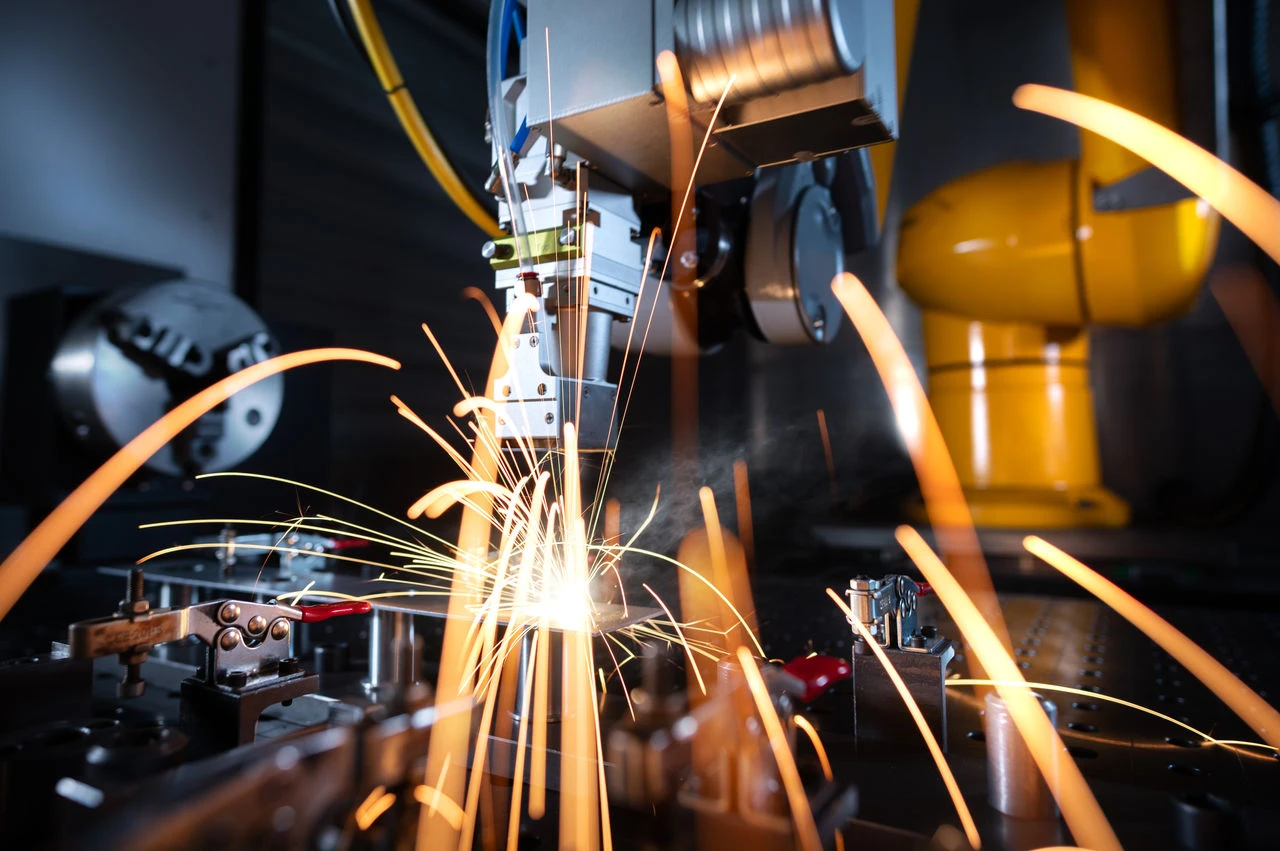
A laser welding robot combines laser technology with robotic automation to achieve faster and more consistent welding performance.
Compared with traditional welding, it offers:
- Higher welding speed
- Less heat deformation
- Cleaner weld appearance
- Better repeatability for mass production
Laser welding robots are commonly used in industries such as automotive parts, heat exchangers, battery components, and metal fabrication.
Which Welding Solution Is Better?
There is no single answer. The best choice depends on the product design, material, production volume, and quality requirements.
At TrueSyn, we provide customized robotic welding solutions, including laser welding robots, MIG/MAG welding robots, fixtures, and complete welding automation systems. We help manufacturers choose the right welding technology based on their actual production needs.
The best welding solution is not always the most advanced one — it is the one that creates the most value for your production.
Robot vs Traditional Welding — The Honest Table
Neither wins everywhere. The table is where each method is genuinely better.
| Condition | Robot laser | Traditional (MIG/TIG) |
|---|---|---|
| Thin sheet | Wins: low distortion | Prone to burn-through |
| Repeat parts | Wins: identical welds | Operator variance |
| One-off repair | Loses: setup cost | Wins: walk up and weld |
| Thick structural | Situational | Often still better |
Frequently Asked Questions
Does robot welding need a coded welder?
It needs a qualified procedure and a technician, not a production welder. Qualify the process once, then the robot repeats it.
Can we keep both?
Most shops do: robots for the repeat families, a handheld station for repairs and specials.
Decision detail: handheld vs robotic and robot cell anatomy. Process reference: laser beam welding.
Five-Year Total Cost, Line by Line
Per-hour rates mislead because they ignore what happens between joints. A five-year view is more honest:
| Cost line | Manual/TIG-MIG path | Laser robot cell |
|---|---|---|
| Welding labor | 2–3 certified welders, retention risk | 1 technician per 2–3 cells |
| Consumables | Wire, gas, tungsten, contact tips, continuously | Shield gas, occasional optics service |
| Rework and scrap | Recurring; grows with mix complexity | Falling once parameters lock |
| Capital | Low, incremental | High, front-loaded |
Traditional welding keeps real advantages in specific cases. One-off architectural work with constantly changing joints suits a skilled welder better than a fixtured robot. Field repair has no alternative. Very thick sections with wide fit-up gaps still favor an arc process with filler. The honest conclusion: laser robotic welding wins on repetition, thin-to-medium gauge and volume — the majority of serial production — while traditional methods remain the right tool for variance and thickness at the edges. Manufacturers who map their part families against this table before buying rarely regret either choice; those who buy on speed alone sometimes automate a process they should have redesigned first.
In practice many shops run both processes side by side — laser cells on the serial families, a TIG station for specials and repairs. The comparison that matters is per part family, not per factory: automate the repetition, keep craftsmanship for the variance.