
-
30 July, 2026
- 0 Comment
How to Choose the Right Laser Welding Solution for Your Application
Choosing the right laser welding solution depends on your product, material, production requirements, and welding goals.
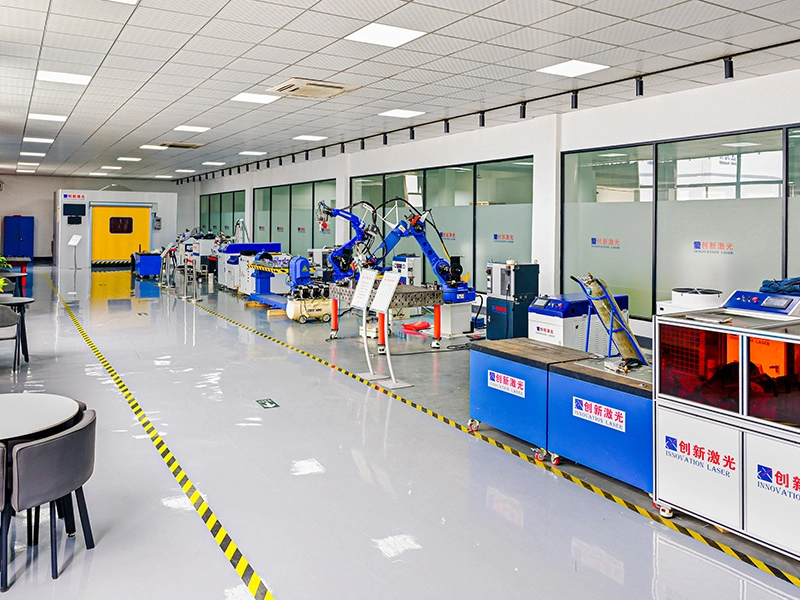
Today, manufacturers can choose between handheld laser welding machines and robotic laser welding systems. The best option is not always the most advanced equipment, but the one that fits your actual application.
Consider Your Product and Material
Before selecting a laser welding solution, consider:
- Material type and thickness
- Product structure
- Welding position
- Required welding quality
Different applications may require different laser power, welding methods, and system configurations.
Before selecting a laser welding solution, consider:
- Material type and thicknes
- Product structure
- Welding position
- Required welding quality
Different applications may require different laser power, welding methods, and system configurations.
Handheld laser welding machines are suitable for flexible production, small batches, and repair applications. They offer easy operation and lower initial investment.
Robotic laser welding systems are better for higher production volumes where consistent quality, efficiency, and automation are required.
Choose the Right Configuration
A complete laser welding solution may include:
- Laser source
- Welding head
- Cooling system
- Wire feeding system
- Robot system
- Fixtures and automation equipment
The right configuration should match your production needs instead of simply choosing the highest power or most expensive system.
At TrueSyn, we provide customized laser welding solutions based on customers’ products, materials, and production requirements — from handheld laser welding machines to robotic laser welding systems.
The best welding solution is the one that creates the most value for your production.
A Spec-Sheet Method for Picking Your Solution
Brochures are not comparable; specifications are. Score candidates on this sheet.
| Spec line | Why it decides |
|---|---|
| Power stability (±%) | Consistency on thin stock |
| Beam quality (BPP) | Spot size, penetration control |
| Duty cycle | Real throughput per shift |
| Wobble width range | Gap bridging ability |
| Cooling type | Uptime in hot shops |
Frequently Asked Questions
Which line do buyers regret ignoring?
Power stability. Two “same wattage” machines weld differently when one holds ±2% and the other drifts.
Should I test my own parts?
Always. Send your drawing and material; a demo weld on your part is worth fifty brochure pages.
Start here: laser welding robot guide and joint design guide. Reference: laser beam welding.
Run a Pilot Before You Sign
A pilot run converts supplier claims into evidence at a fraction of the cost of a wrong purchase. A useful pilot has five elements:
- Your material, your coatings — coupon welds on production stock, not showroom samples.
- Macro-etch inspection — cross-sections that show penetration and porosity, photographed and signed.
- Full-fixture cycle time — measured per part, including load and unload, not per single joint.
- Operator trial — your own technician runs recipe changes with supplier support.
- Written acceptance criteria — the numbers from the pilot become the delivery contract.
The pilot also disciplines internal expectations. Teams often discover during coupon trials that their fit-up variation, not the machine, is the quality ceiling — a finding worth more than any brochure because it redirects investment to where the yield actually lives. Suppliers who welcome a structured pilot are telling you how they handle problems after delivery; suppliers who push straight to contract are telling you the same thing, in the opposite direction.