
Handheld Fiber Laser Welder Cooling and the Refrigeration Loop
Handheld fiber laser welders are sold on power, weight and beam quality. What decides whether one keeps working after a year is the cooling loop. This is what that loop does, the four ways it fails, and the check schedule that catches each failure before it costs a weld head.
Why a handheld welder needs cooling
A fiber laser converts electrical power into a beam with meaningful efficiency, but the waste heat still has to go somewhere. In a handheld gun, that heat lands in a small volume of hardware held in the operator’s hand, which makes passive cooling impossible. A closed liquid loop carries the heat away to a chiller sitting outside the work area.
The practical consequence is that the cooling loop is a wear system with a service life. Pumps, hoses and coolant all degrade, and the laser is interlocked to stop if cooling fails — which protects the hardware but stops production. The maintenance goal is to catch degradation before the interlock does.
The loop, component by component
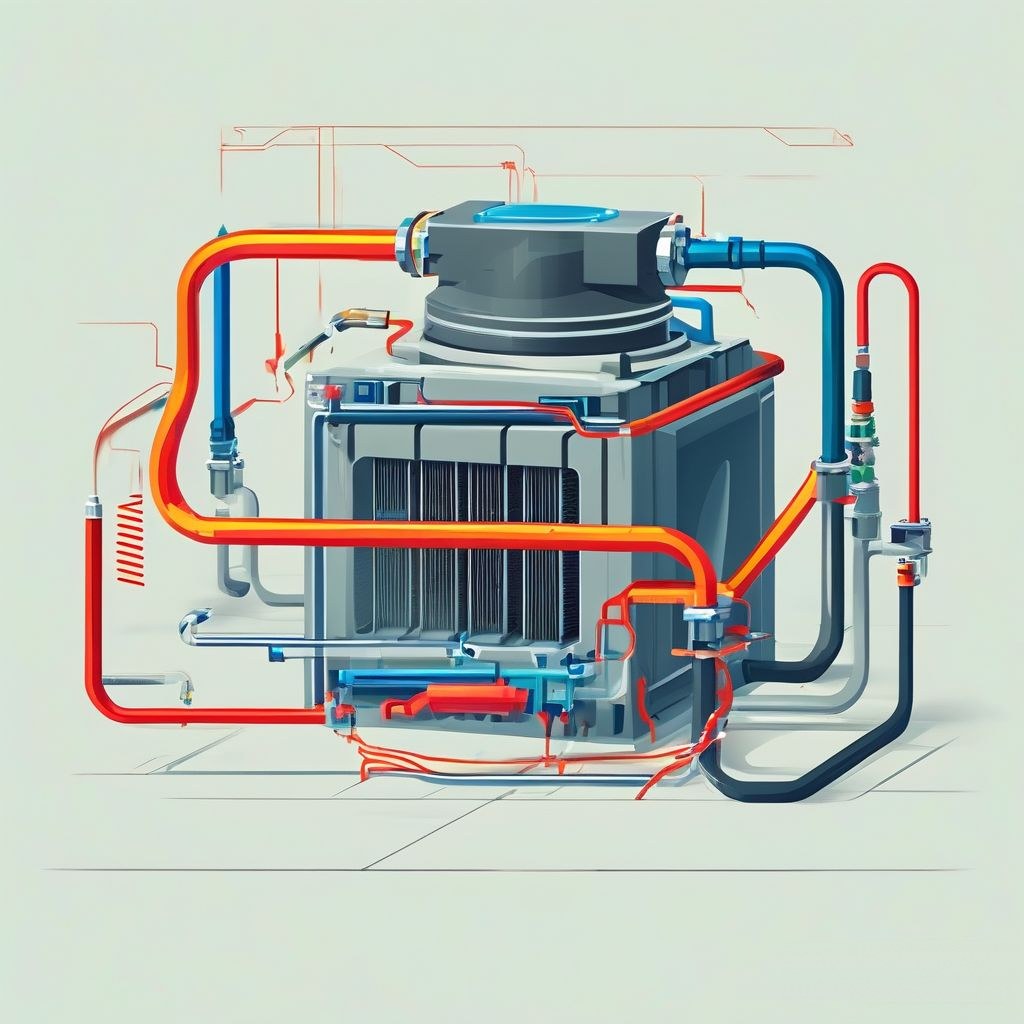
| Component | What it does | Typical failure |
|---|---|---|
| Chiller / refrigeration unit | Removes heat from the loop water | Loses capacity as the condenser fouls |
| Pump | Circulates coolant through the gun and optics | Bearing wear, then flow loss |
| Hoses and fittings | Carries coolant to and from the gun | Kinks, weeping fittings, internal scaling |
| Coolant | Transfers heat and protects against corrosion and freezing | Contamination and biological growth |
| Flow and temperature sensors | Interlock the laser if cooling fails | Drifting readings, false trips |
The optics are the reason the loop exists. A fiber laser’s efficiency is not 100%, and the waste heat that does not leave as beam has to leave as heat in the hardware. If the coolant cannot carry it away, the first thing to suffer is beam quality, and the second is the optics themselves.
Four failure modes
1. Flow loss
Usually a pump problem, sometimes a kinked hose or a clogged filter. The signature is a laser that trips its interlock under sustained welding but runs fine on short bursts, because the loop has just enough capacity to keep up between bursts and not during them.
2. Contamination
Coolant that has been in the loop too long grows biofilm and picks up particulate. The symptoms are gradual: rising pump load, falling flow, and a chiller that runs constantly without holding temperature. It is the failure mode most often mistaken for a dying chiller.
3. Temperature drift
The chiller holds temperature but the setpoint has quietly moved, or the sensor has drifted. This one is dangerous because nothing trips. The beam slowly degrades, weld quality slowly drops, and the cause is invisible until someone measures it.
4. Condenser fouling
Dust on the condenser fins reduces heat rejection. In a shop environment this is the most predictable failure of all: it is a function of airborne dust and time, and it is fixed with a cleaning, not a part.
A check schedule
| Interval | Check | Acceptance |
|---|---|---|
| Daily / before shift | Coolant level and clarity | Level in range, fluid clear |
| Weekly | Flow reading and pump noise | Flow within spec, no new noise |
| Monthly | Condenser fins and ambient temperature | Fins clean, ambient within rating |
| Quarterly | Coolant condition, hose inspection, fitting check | No discoloration, no weeping |
| Annually | Coolant change, sensor calibration check | Documented, against the manual |
The single highest-value habit on this list is writing the flow reading down. A trend line catches a failing pump weeks before the interlock does.
What to instrument
If the welder reports it, log it. Three channels are worth trending: coolant supply temperature, flow rate, and chiller duty state. When those three are logged together, every failure mode above has a distinct signature, and a maintenance conversation becomes a data conversation.
Cooling is also where handheld and fixed installations diverge. Our handheld vs. robotic laser welding comparison covers how the loop changes when the gun is mounted, and the laser welding safety guide covers the interlock and PPE side of the same system.
Frequently asked questions
What coolant should I use?
Whatever the manufacturer specifies — usually a specific coolant or a defined water-and-additive mixture. Substituting tap water or an automotive coolant is the most common way to shorten a pump’s life.
Why does my welder trip under long welds but not short ones?
Almost always flow loss. The loop keeps up between bursts but cannot sustain the heat load during a long weld. Check flow first, then the pump, then the chiller.
How often should coolant be changed?
Follow the manual, but annually is the usual starting point and more often in a dusty or high-temperature environment. Log the change date so the next one is not a guess.
Can I run a handheld welder without a chiller?
No. The cooling loop is an interlocked safety system, not an accessory. Running without it risks the optics and voids the equipment’s protection.