Automated Laser Welding Line for Energy Storage Enclosures

Automated Laser Welding Line for Energy Storage Enclosures

Automated Laser Welding Line for Energy Storage Enclosures

As energy storage systems become more widely used, the demand for reliable and consistent enclosure manufacturing continues to grow.

An energy storage enclosure usually consists of several sheet metal components, including a base plate, side plates and the main housing. These parts need to be assembled and welded in a specific sequence. For manufacturers handling large production volumes, automating material feeding, positioning and welding can help reduce manual operations and maintain consistent production quality.

In this article, we look at how an automated laser welding line can be arranged for energy storage enclosure manufacturing.

1. How Does the Production Line Work?

The production process starts with three main components: side plates, the housing and the base plate.

Side Plate Feeding

Side Plate Feeding

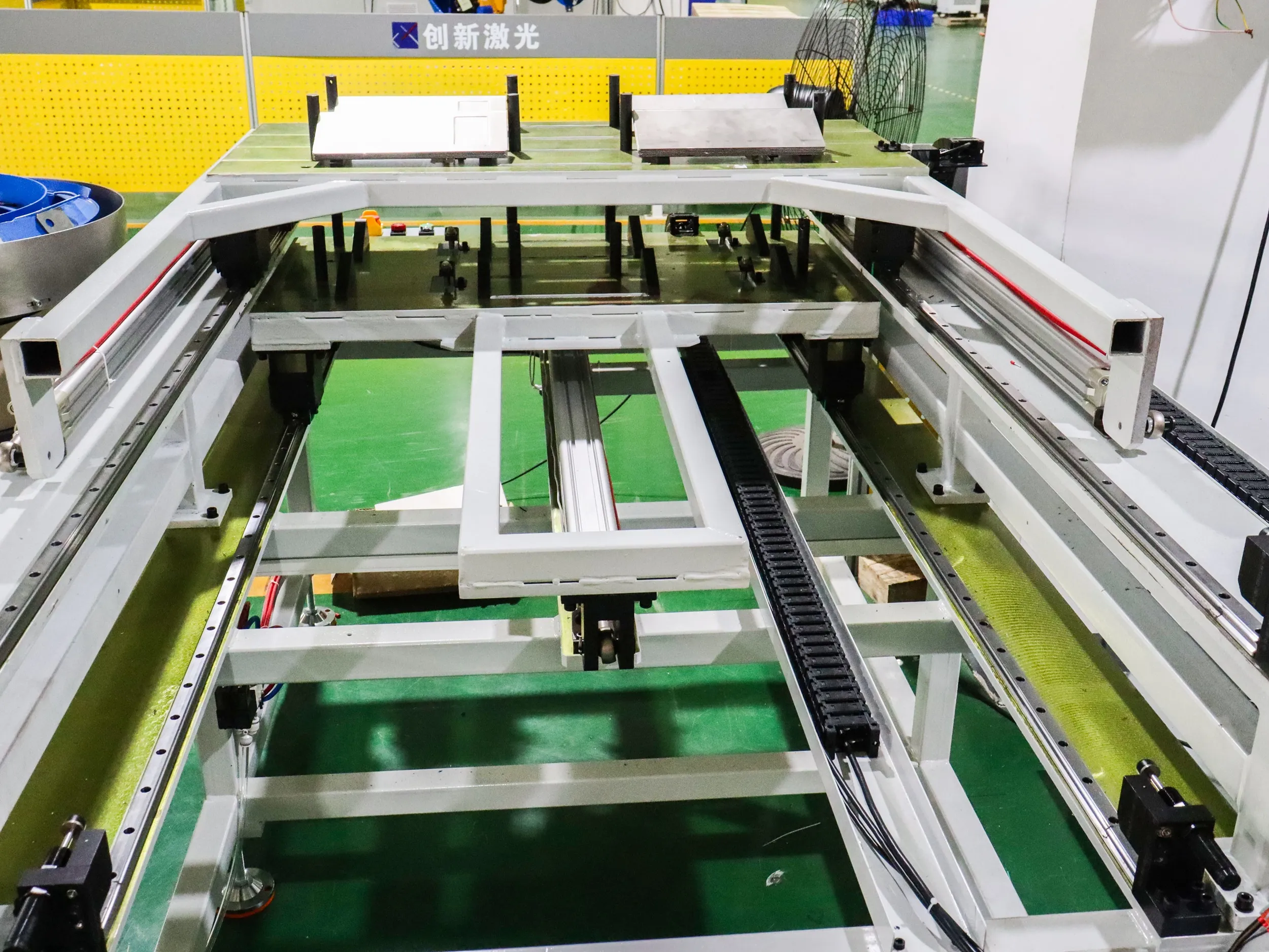
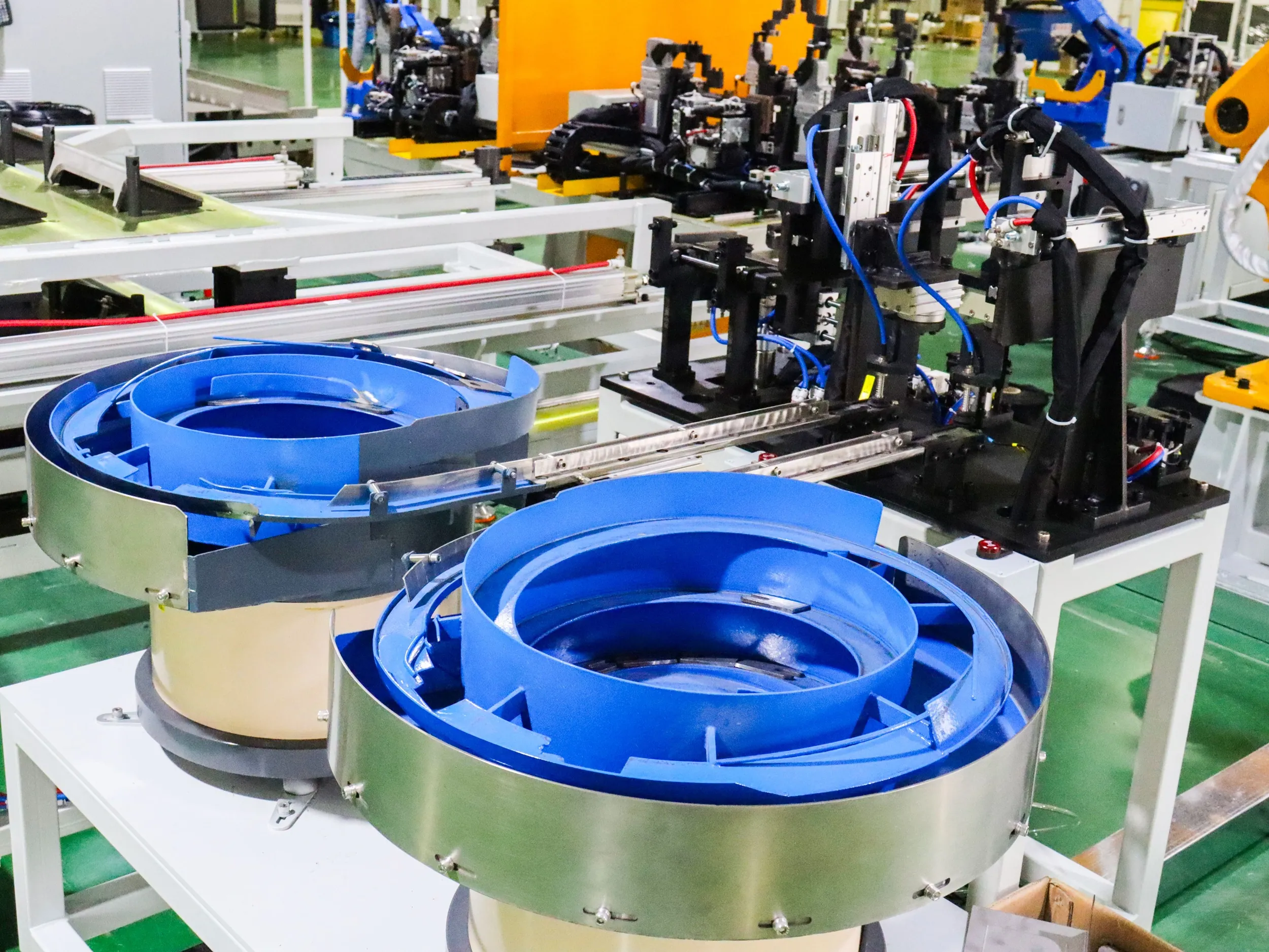
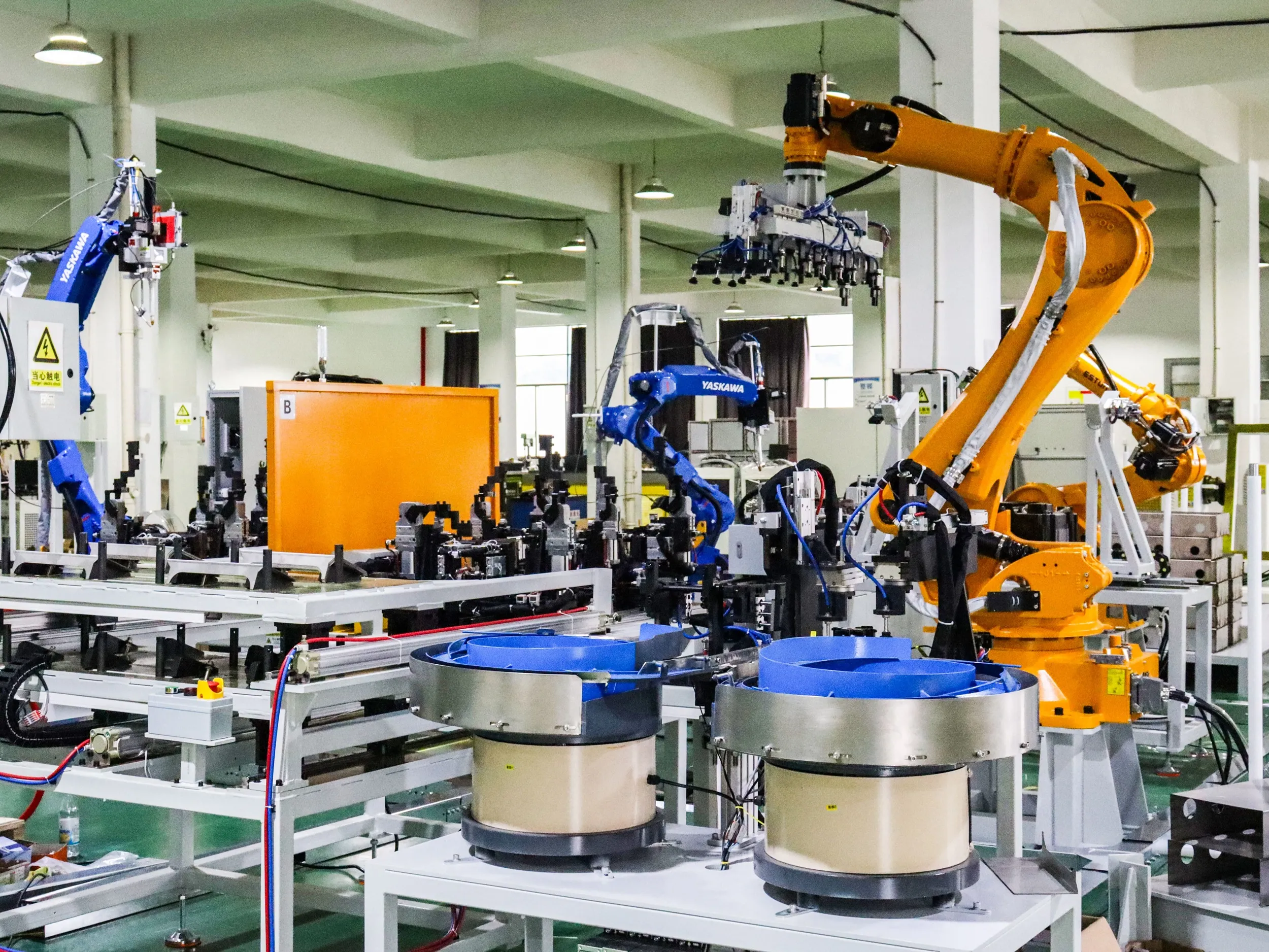
Side plates are stored horizontally and separated one by one by an automatic feeding system. A robot picks up each plate and transfers it to a positioning fixture, where the plate is turned upright and clamped.

Using horizontal feeding makes it easier to store and separate large sheet metal parts, while the separate fixture provides stable positioning for the next operation.

Housing Loading and Positioning

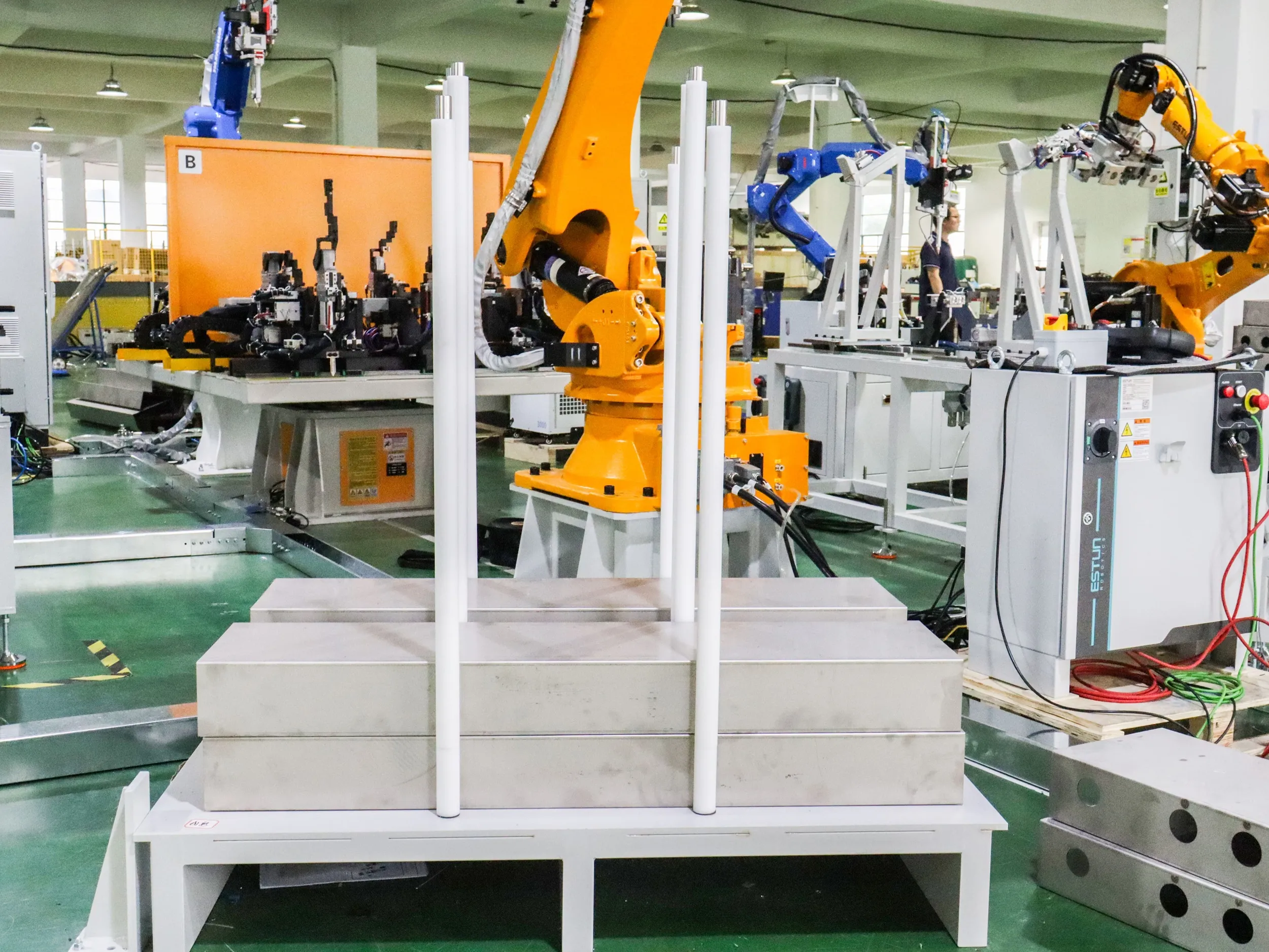
The housing is stored in a dedicated tray and picked up by a robot. It is then transferred to a separate centering station, where positioning mechanisms align it before assembly.

Keeping the storage tray and centering station separate allows material replenishment and precision positioning to be handled independently.

Housing Loading and Positioning

Base Plate Assembly

Base Plate Assembly

The base plate is automatically loaded and placed onto the housing. The fixture holds the components in the required position before welding.

Accurate positioning and a suitable assembly gap are important at this stage, as they directly affect the subsequent welding process.

2. Two-Stage Laser Welding Process

Two-Stage Laser Welding Process

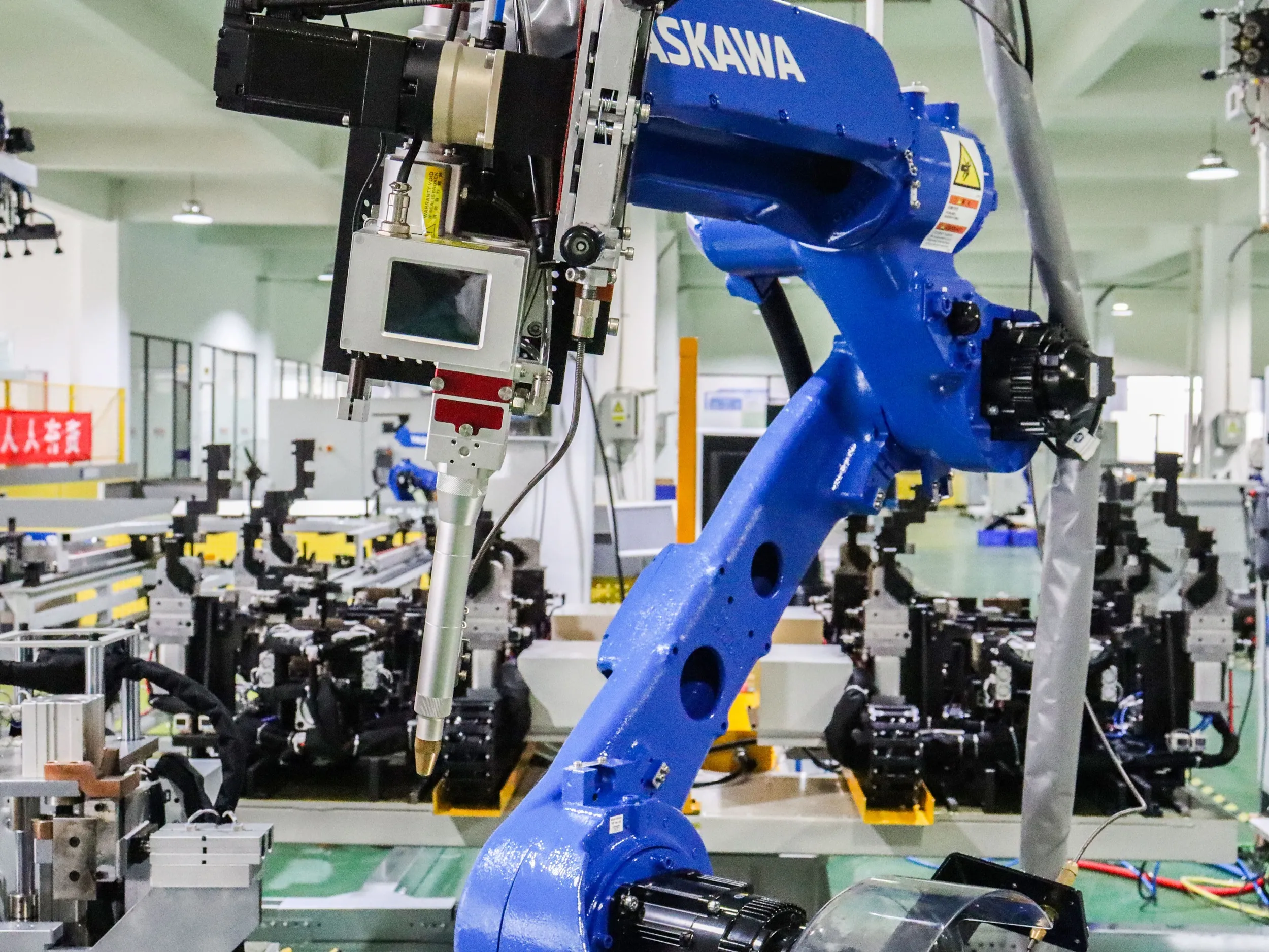
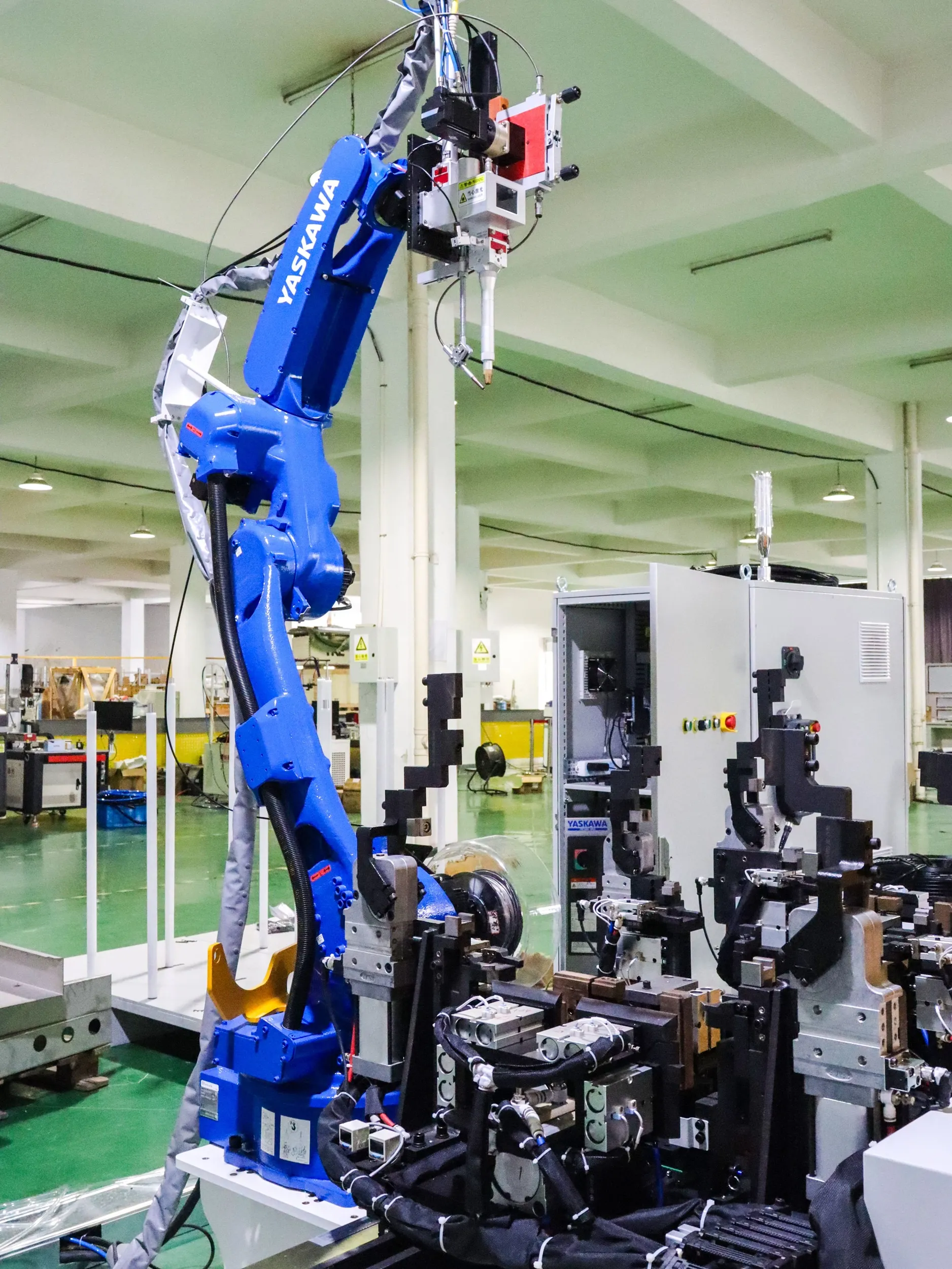
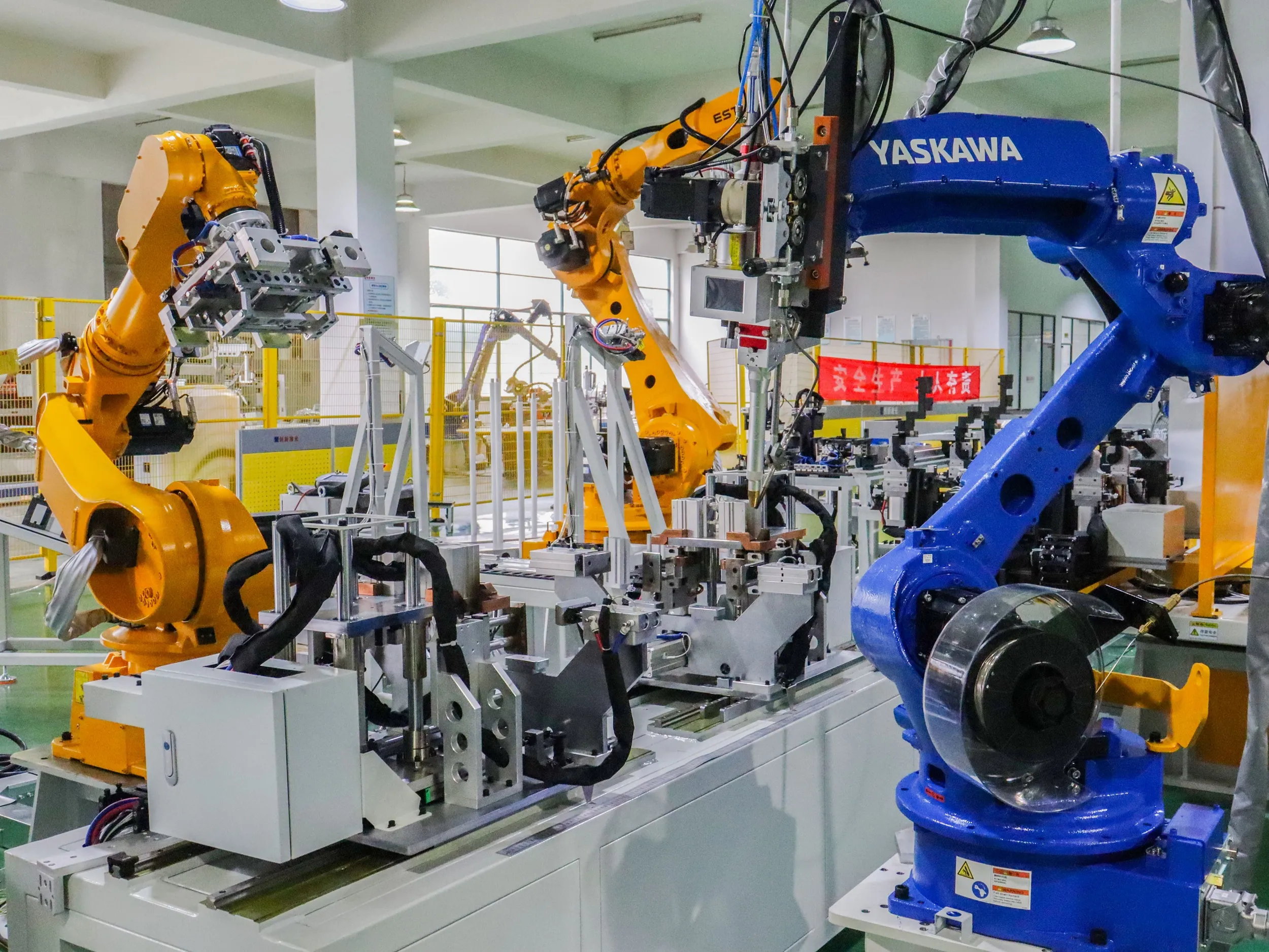
After assembly, the enclosure enters the first robotic laser welding station.

The first stage includes tack welding to hold the components in position, followed by full-seam welding of the designated sections.

Once this operation is completed, the product is transferred to an automatic turning table. The table rotates the enclosure to expose the remaining welding surfaces.

The enclosure then moves to the second laser welding station, where the remaining seams are completed.

This two-stage arrangement allows the welding operations to be organized according to the enclosure structure and the accessibility of each welding position.

3. What Should Be Considered When Designing the Line?

For large aluminum or sheet metal enclosures, several details need to be considered before selecting the equipment.

  • Material handling: Thin sheet metal parts need suitable support and gripping methods to avoid deformation or surface damage during feeding.

  • Fixture design: Positioning and clamping should keep the components stable without applying excessive force.

  • Welding sequence: The welding path and sequence should be planned according to the joint structure and heat distribution to control deformation.

  • Product turning: The turning mechanism needs to accommodate the workpiece dimensions and weight while maintaining stable positioning.

  • Product changeover: If several enclosure models are manufactured on the same line, adjustable or interchangeable fixtures should be considered.

Welding Line for Energy Storage Enclosures

Additional functions such as vision positioning, laser seam tracking and post-weld inspection can also be evaluated according to the actual application.

4. Developing the Right Welding Solution

TrueSyn – Robotic Welding and Automation Solutions.
A fully automated line is not always necessary for every manufacturer. The right configuration depends on production volume, product dimensions, welding requirements and the number of product models.

For some applications, automating the welding process may be sufficient. For larger production requirements, integrating material feeding, robotic handling, welding and palletizing can provide a more complete manufacturing solution.

At TrueSyn, we work on robotic welding and industrial automation projects, combining robots, laser welding systems, fixtures and material handling equipment according to each customer’s production requirements.

If you are planning to automate the welding of energy storage enclosures, feel free to share your product drawings or welding details with us. We can review the application and discuss a suitable approach.

TrueSyn – Robotic Welding and Automation Solutions.