
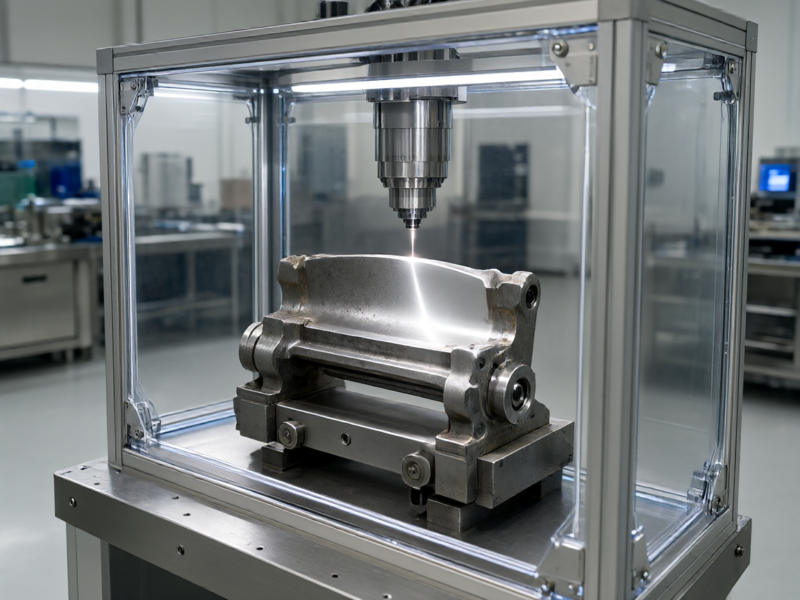
Laser Cleaning Speed: Compare Trials Without Misleading Cycle Time
Quick answer: Laser cleaning speed is meaningful only when the trial records the same substrate, contaminant or coating, required removal result, scan pattern, number of passes, part handling and inspection criteria. Compare active beam time and full part cycle time separately. A representative test report lets buyers compare equipment on a repeatable job rather than on an isolated headline rate.
1. Define the result before measuring speed
Start with the surface and the outcome that production actually needs. Identify the base material, the coating or contaminant, the condition of the incoming part, and the cleaned area. State what must be removed and what may remain. A trial that removes loose residue is not comparable with one that removes a bonded layer while preserving a specified surface condition. Put the acceptance decision in writing before the supplier adjusts the process. If the requirement is visual, define lighting, viewing distance and the areas to inspect. If a later coating or weld depends on the result, record that downstream requirement too. The speed target should follow an accepted result, not replace it.
2. Use representative parts and contamination
Select samples from the real production family. Include normal variation such as different part sizes, surface histories, edge geometry and areas that are difficult to reach. Label each sample and photograph its condition before testing. Record whether a part is new, previously processed, oily, oxidized or otherwise prepared. Do not let a convenient flat coupon stand in for a complex assembly if the production job has corners, recesses or mixed surfaces. Keep an untouched control sample so the result can be reviewed later. When one trial cannot cover the whole range, define separate test groups. This gives the engineering team evidence about where the cleaning recipe is repeatable and where it needs a separate qualification.
3. Separate active cleaning from total cycle time
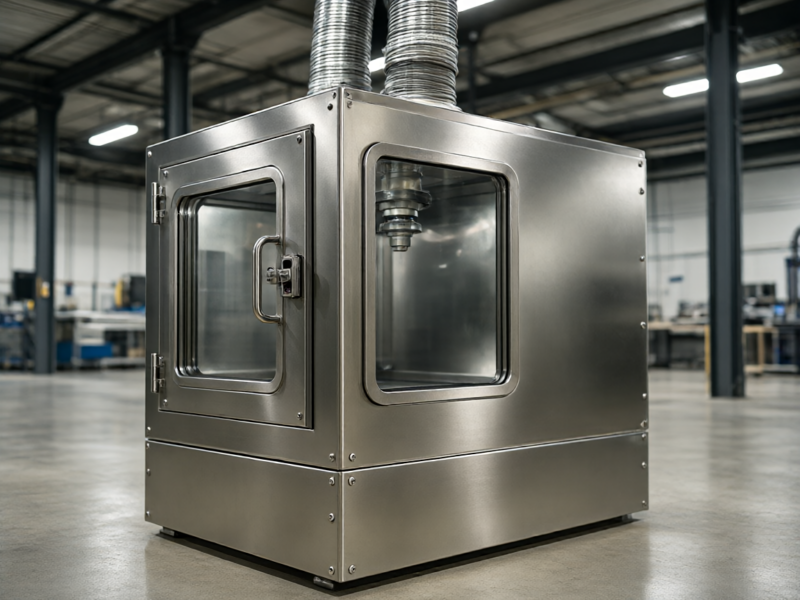
A scan timer measures only one part of a production cycle. Record the time to load, locate, clamp, scan, inspect, remove and route the part. Include pauses for repositioning or changing the scan field. For manual work, note the operator steps and whether a second pass is triggered by inspection. For an automated cell, record the robot path, fixture exchange and interlocks that affect the cycle. Report active laser time and complete part time as two different values. If a supplier quotes area per minute, ask how the area was calculated and whether gaps, overlaps and edge treatment were included. A production estimate should use the total cycle and the planned work pattern, then reserve time for checks and normal variation.
4. Record the settings that shape a valid comparison
Ask the trial team to save the recipe used for each sample. The record should identify the source and head configuration, scan pattern, path or field, focus arrangement, speed setting, overlap approach and any pass sequence. It should also capture fume extraction, shielding or other process support that was active during the test. Do not compare two trials if one used a different cleaning objective or different preparation without documenting the reason. The important output is not a screen full of machine parameters. It is a traceable link between a defined job, a saved recipe, the resulting surface and the time measurement. The production owner should be able to repeat the trial or explain why a new part family needs a separate setting.
5. Balance throughput with surface quality
A faster scan is not automatically a better process. Review whether the cleaned surface meets the downstream requirement, whether edges and recesses are handled, and whether there is visible discoloration, residue or unwanted change to the substrate. Use the inspection method agreed for the application. Where a product team needs laboratory or destructive confirmation, include that step in the acceptance plan instead of relying only on a quick visual check. Compare quality at the same inspection points for each trial. If one recipe is faster but creates rework or a second inspection loop, include that time in the comparison. A balanced report helps buyers understand the operating window and shows whether the equipment can meet the real quality gate consistently.
6. Include extraction, guarding and operator workflow
A trial area should represent the intended operating arrangement as far as practical. Record the extraction approach, enclosure or local guarding, viewing arrangement, fixture access and operator position. Confirm that the proposed production layout has a clear method for loading parts and keeping the cleaning zone controlled. Ask who owns safety review and what documents or training are expected before commissioning. Do not treat those tasks as optional extras outside the speed calculation. Poor access, awkward presentation or frequent manual handling can reduce actual throughput even when beam-on time looks good. Include the steps that the plant will need to operate safely and reliably, and make the responsible roles visible in the project plan.
7. Check repeatability across shifts and part variation
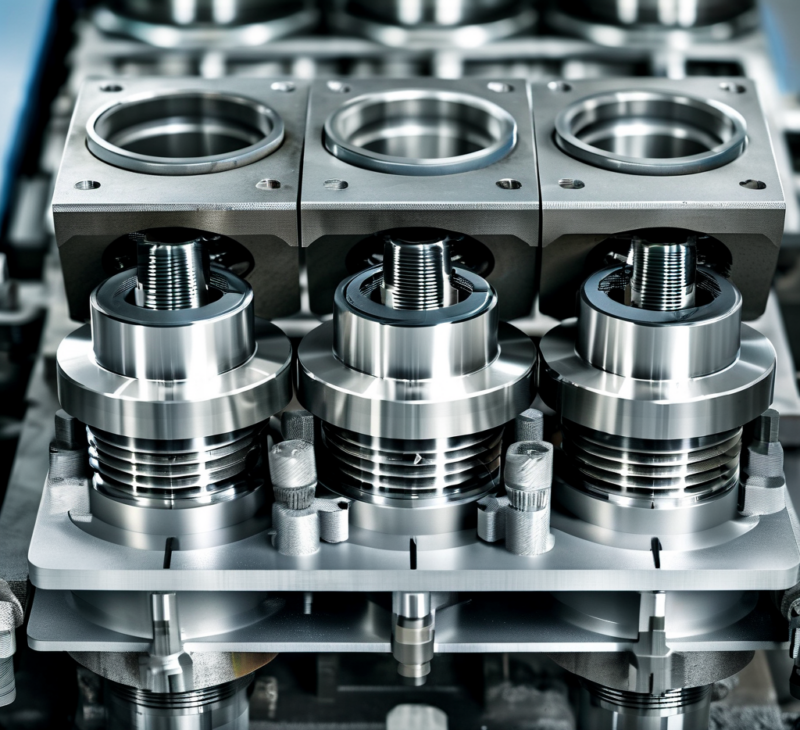
Repeat a sample under the planned recipe and compare the measurements. If different operators, fixtures or shifts will run the cell, confirm which settings are locked and which adjustments require approval. Note how the system identifies a saved recipe and how a wrong selection is prevented. A speed comparison based on one successful pass does not show whether the result will hold across a normal production week. Track exceptions such as a difficult surface, additional cleaning pass, inspection hold or unexpected setup. Those events should be classified rather than hidden in an average. The resulting data can support a realistic capacity estimate and show whether the process needs an operator instruction, a new fixture or a separate job recipe.
8. Request a trial report that can support a purchase decision
A useful report names the part family, surface condition, acceptance target, test setup, recipe, measurement method, sample count and result for every run. It separates cleaning time from handling and inspection. Include photographs and identify any condition that was excluded from the trial. Ask the supplier to state which assumptions apply to the estimate and which items remain open for a site acceptance test. Put ownership of follow-up trials, sample retention and signoff in the purchase plan. That record gives procurement a defensible basis for comparing proposals and gives production a starting point for training. It also prevents a marketing number from being mistaken for a guaranteed cycle on an untested job.
For buyers comparing available product and supplier options, see laser cleaning solutions.
Questions buyers often ask
How should a buyer compare laser cleaning speed between suppliers?
Use the same part or an equivalent sample, the same removal objective, the same inspected area and the same acceptance criteria. Compare full part time as well as active cleaning time.
Is area per minute enough to estimate production capacity?
No. It leaves out part presentation, repositioning, inspection, handling and exceptions. Ask for the underlying trial conditions and calculate capacity from the complete workflow.
Should every material use one laser cleaning recipe?
Do not assume that. Separate jobs when substrate, contamination, geometry or acceptance needs differ, and qualify the relevant part families.
What should be included in a trial report?
Include the sample condition, target result, saved process recipe, timing method, inspection evidence, sample count and open assumptions for production validation.