-
2026년 8월 26일
- 0 주해
레이저 용접 자동화: 알아둘 가치가 있는 5개 기업
1. Choosing the Right Laser Source
The right laser source should be selected based on:
- 재질 유형
- 재질 두께
- 接头设计
- Required penetration
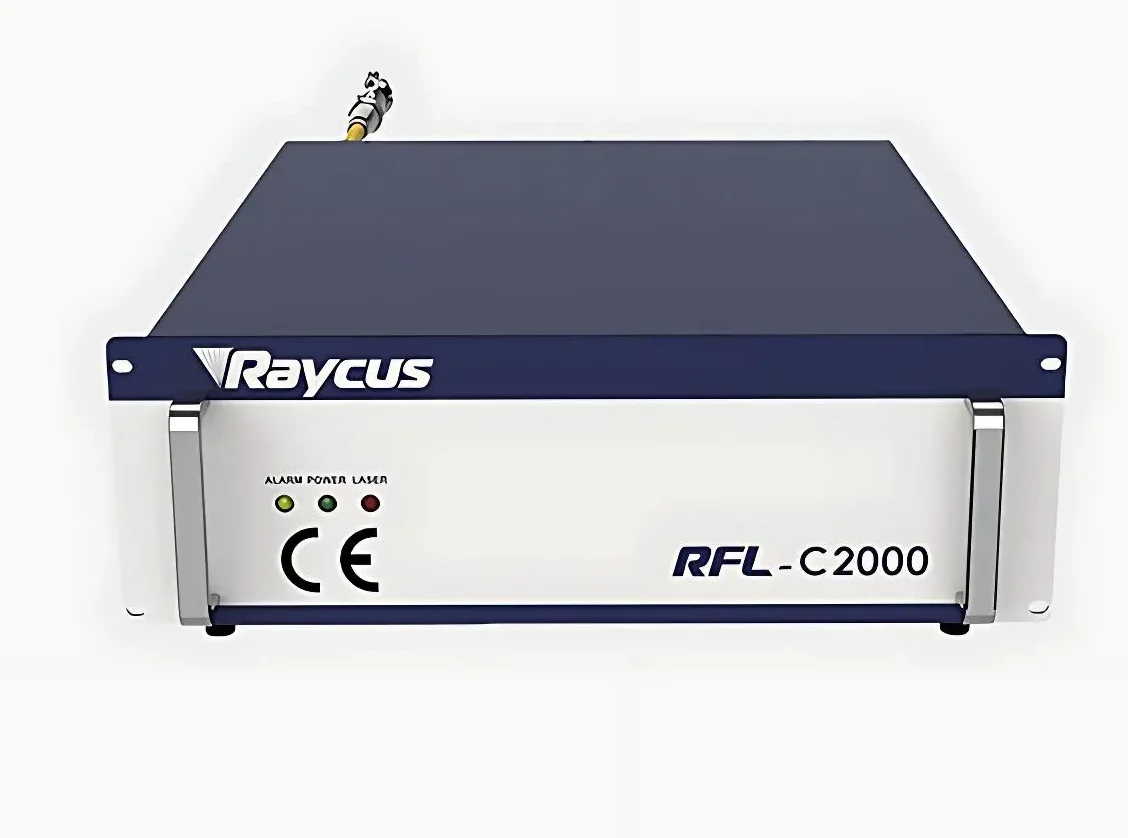
The laser source is one of the most important components of a laser welding system.
For industrial metal welding, fiber lasers have become widely used because of their efficiency, reliability, and relatively low maintenance requirements.
However, a higher-power laser does not necessarily mean better welding results.
그만큼 beam profile is also worth considering. In some applications, ring beam / adjustable ring mode (ARM) technology can redistribute laser energy between the center and surrounding ring, helping improve welding stability, penetration, and weld appearance.
At Truesyn, ring-beam solutions can also be considered when they provide a meaningful advantage for a specific welding application.
2. Choosing the Right Laser Welding Head: Wobble or Standard?
The laser welding head is another important consideration.
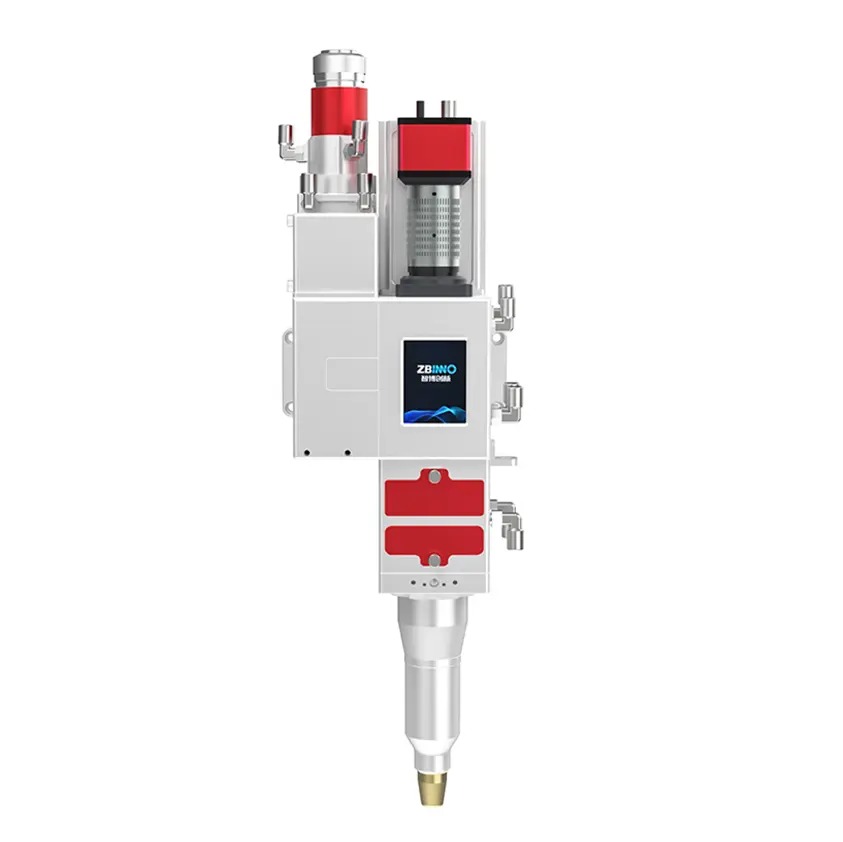
A wobble laser welding head can provide greater flexibility in controlling the beam movement, helping adjust weld width, penetration, and surface appearance for different joint designs.
For automated welding, the laser head also needs to work properly with the robot, motion path, fixture, and welding parameters.
3. Robot Accuracy Matters
로봇 repeatability is another critical factor in automated laser welding, especially for precision applications.
Lower-cost robots may have insufficient repeatability, and accuracy can deteriorate over time, causing the welding path to gradually deviate from the programmed position. For precision laser welding, even a small deviation can lead to inconsistent penetration, weld position, or overall weld quality.
That is why robot repeatability, rigidity, and long-term stability should be carefully evaluated—not just the robot’s payload and reach.
4.Automation Is More Than a Robot and a Laser
This is one of the most important factors—and one that is sometimes overlooked.
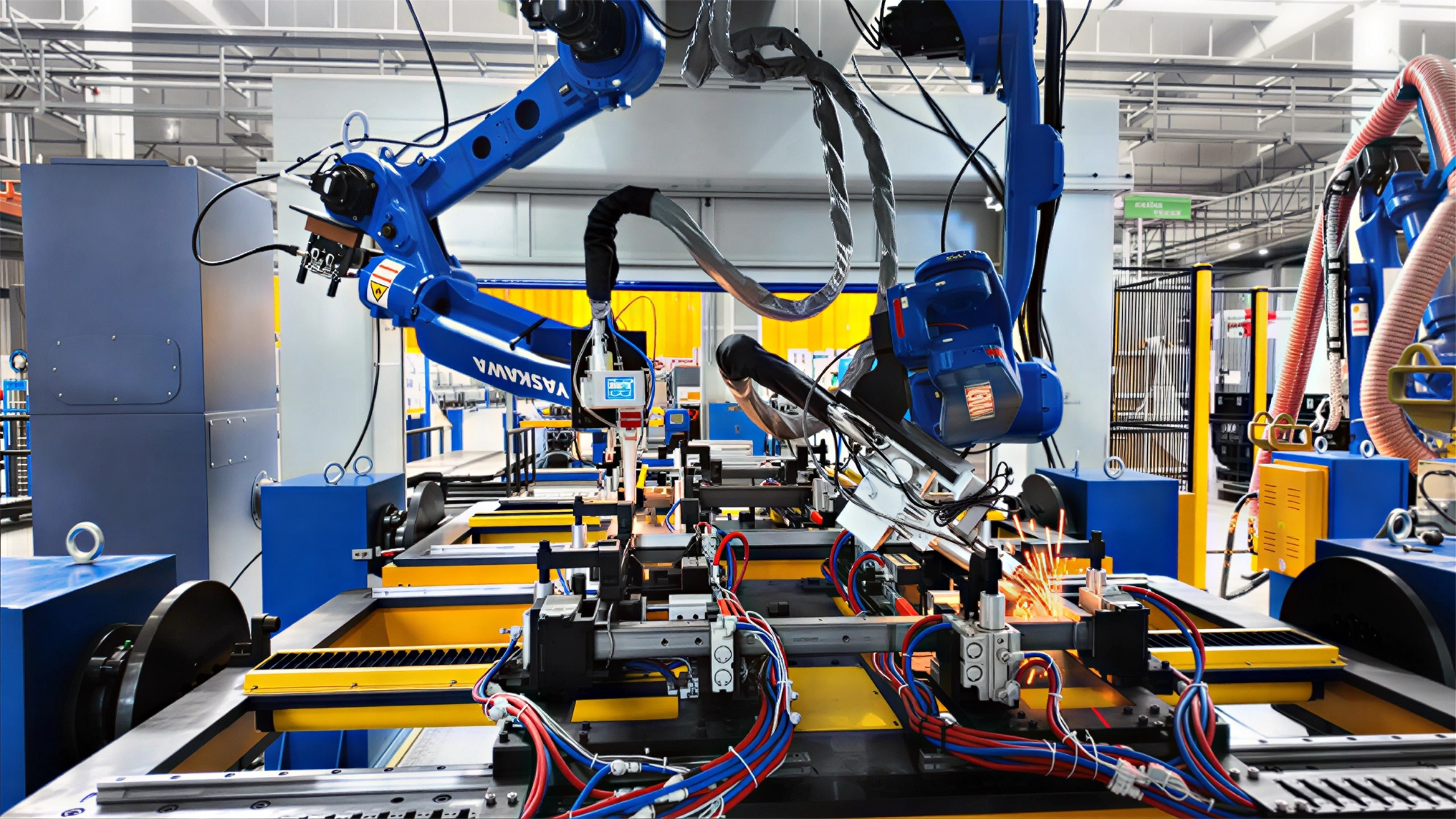
A robotic laser welding system is not simply:Laser + Robot + Welding Head.
A reliable production cell may include:
- Robotic Precision
- 레이저 소스
- 용접 헤드
- Custom fixtures
- PLC and electrical control
- Sensors and vision
- Safety systems
- Fume extraction
- Loading and unloading
- Process monitoring
- Factory testing
- On-site commissioning
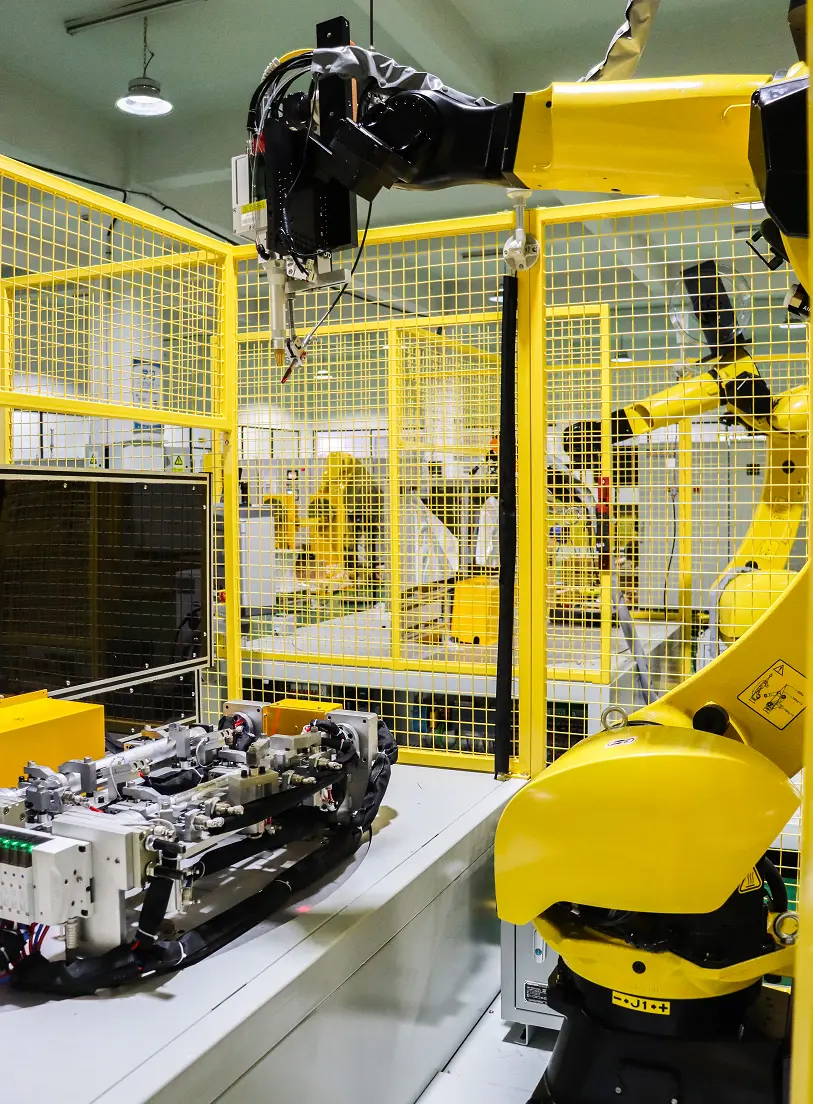
The fixture, for example, can have a major impact on welding consistency.
Even a high-quality laser and robot can produce unstable results if the workpiece is not positioned accurately or if the fixture cannot control deformation during welding.
This is why customers should evaluate the complete automation engineering capability of a supplier—not just the machine itself.
5. Laser Welding Process Experience Matters
Hardware is only one part of the solution.The real challenge often begins when you need to achieve stable welding in production.
Welding an automotive component is very different from welding a sheet-metal enclosure, transmission component, battery component, medical device, or precision mechanical part.
Without sufficient process experience, manufacturers may encounter:
- Porosity
- Lack of penetration
- Excessive spatter
- Undercut
- Burn-through
- Deformation
- Inconsistent weld appearance
- Unstable cycle times
Therefore, when evaluating a laser welding automation supplier, it is important to ask:
Does the supplier understand laser welding as a process—or are they simply integrating hardware?
6. Laser Welding Companies Worth Knowing
There is no single “best” laser welding company for every application. Different companies have different strengths, technologies, and engineering capabilities. Here are five companies worth knowing when researching the laser welding automation market.
1. TRUMPF
TRUMPF is one of the world’s leading industrial laser and machine-tool manufacturers.
The company has extensive experience in laser processing, including laser welding, laser cutting, and automated manufacturing systems.
Its major strength is the integration of laser technology, machine tools, automation, and industrial production solutions.
For large manufacturers looking for a mature global technology platform, TRUMPF is one of the most established names in the industry.
2. IPG Photonics
IPG Photonics is one of the best-known manufacturers of industrial fiber lasers.
The company has played a major role in the development and adoption of high-power fiber laser technology.
IPG’s strength is particularly visible on the laser source side, where its technology is used by many equipment manufacturers and system integrators around the world.
For customers evaluating laser welding equipment, understanding the laser source supplier is also important because the laser source is one of the core components determining system performance and reliability.
3. Han’s Laser
Han’s Laser is one of China’s major industrial laser companies.
Its product portfolio covers laser cutting, laser welding, laser marking, automation, and other industrial laser applications.
With a broad range of laser equipment and automation solutions, Han’s Laser has become an important player in China’s industrial laser market and has expanded its presence internationally.
Its scale and broad product portfolio make it a company worth considering for manufacturers looking for integrated laser processing solutions.
4. HGTECH / Huagong Technology
Huagong Technology is another major Chinese industrial laser and intelligent manufacturing company.
The company has developed capabilities across laser processing, intelligent manufacturing, automation, and industrial applications.
Its experience in industrial laser equipment makes HGTECH an important reference when evaluating Chinese laser technology suppliers.
5. Truesyn Laser
Truesyn takes a somewhat different approach.
Rather than focusing primarily on laser sources or standard laser machines, Truesyn focuses on customized laser welding automation systems.
The company provides engineering capabilities covering:
- Mechanical design
- Electrical engineering
- 로봇 통합
- Custom fixture design
- Laser welding system integration
- 자동화 제어
- Welding process development
- Factory testing
- On-site commissioning
- After-sales technical support
One of Truesyn’s strengths is its engineering organization, with more than 50 professionals across mechanical design, electrical engineering, automation, and commissioning.
The team has also accumulated practical experience in laser welding processes across different products and industries.
What Should You Really Compare?
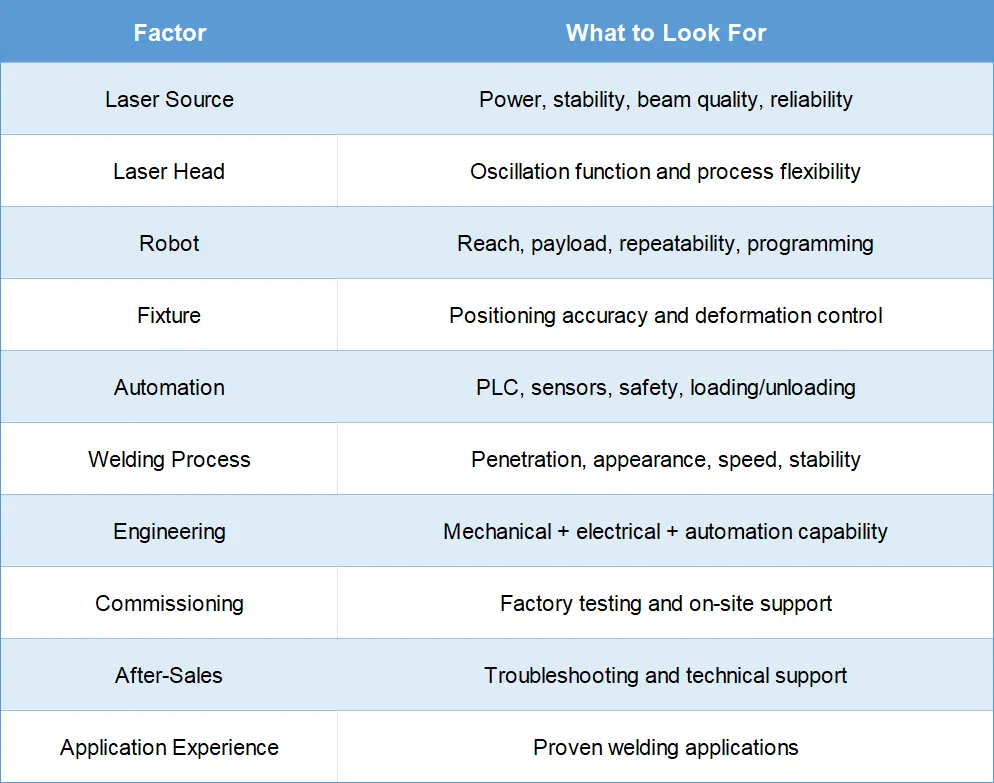
When evaluating laser welding automation suppliers, laser power and machine price should only be part of the decision.
A more useful evaluation framework is:
Ultimately, the best laser welding system is not necessarily the one with the highest laser power or lowest price.
It is the system that can consistently achieve the required:
Welding Quality + Cycle Time + Reliability + Production Stability
And for automated manufacturing, achieving that requires much more than a laser.
It requires:
Laser Technology + Robotics + Fixtures + Electrical Control + Automation Engineering + Welding Process Expertise
That is where the real difference between equipment suppliers can often be found.