
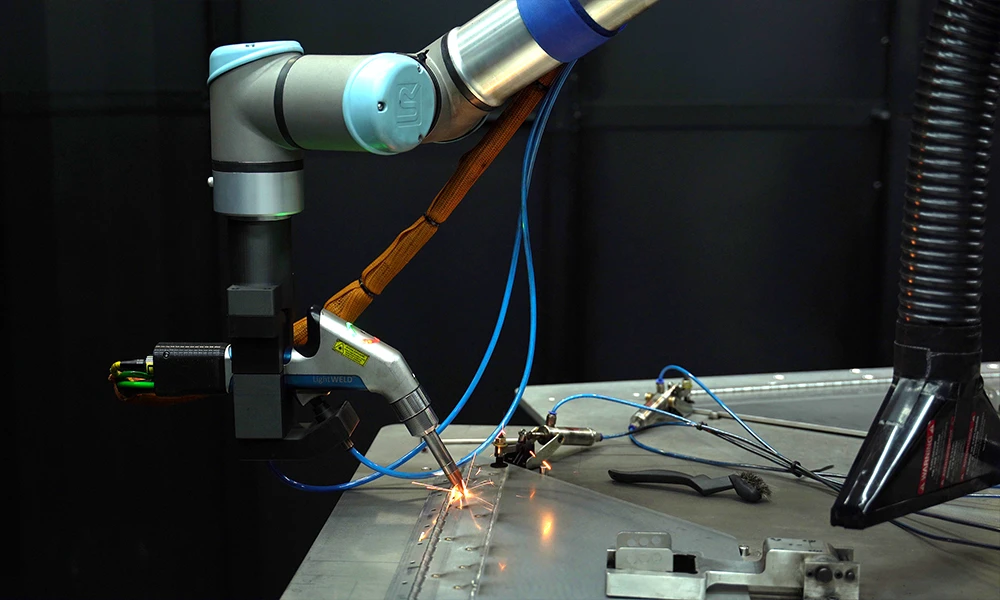
How Intelligent Laser Welding Is Transforming Manufacturing Efficiency
In recent years, intelligent laser welding has become a cornerstone of advanced manufacturing. With the integration of robotics, sensors, and AI-driven control systems, laser welding now delivers higher precision, consistency, and efficiency than ever before.
At TrueSyn, our laser welding systems are designed for diverse industries — from automotive to electronics — enabling stable, automated production lines with reduced labor costs and minimal defects. As industries shift toward smart factories, laser technology continues to redefine the future of industrial joining and assembly.
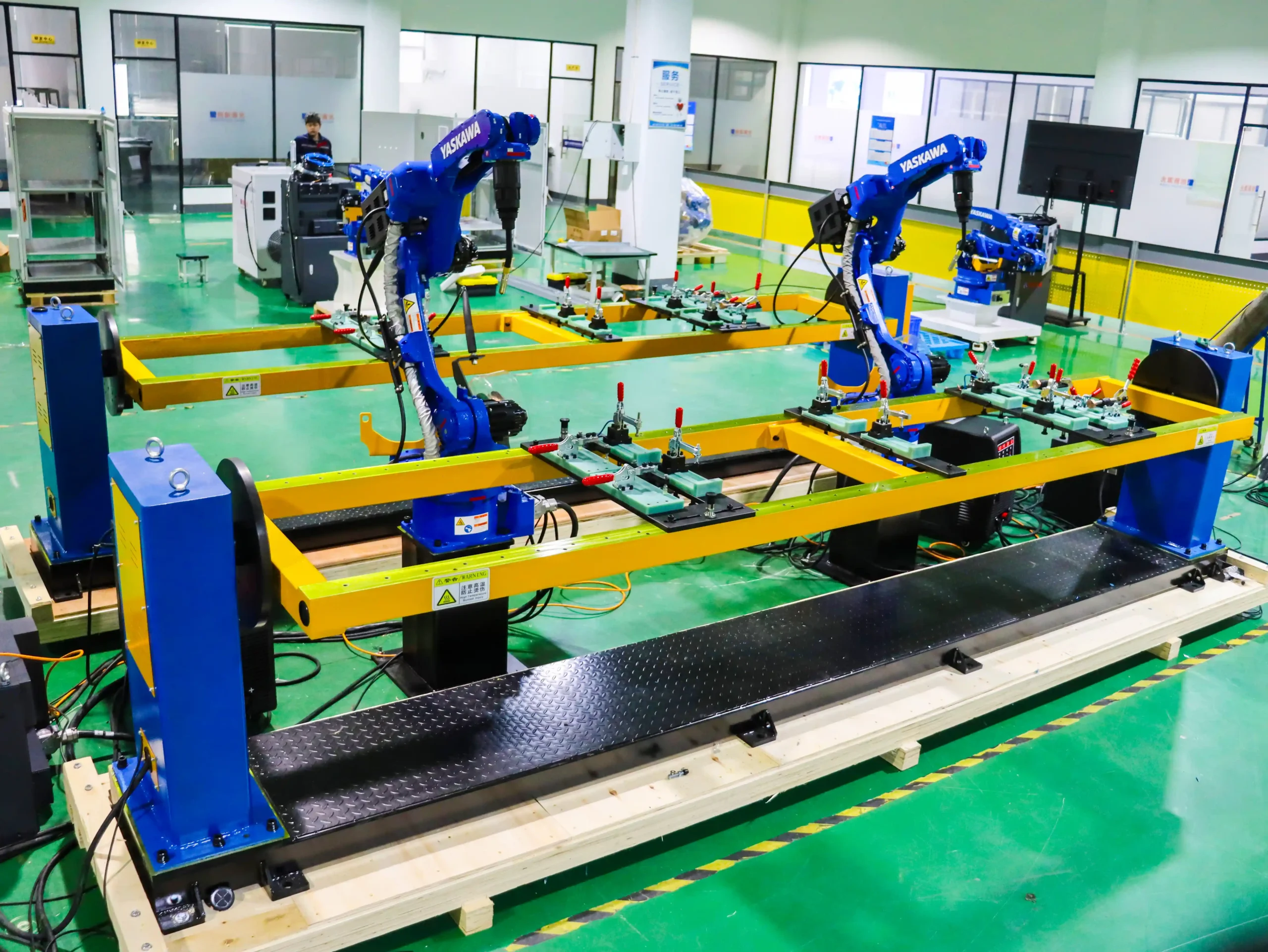
What “Intelligent” Adds to a Weld Cell
Intelligence in laser welding is not marketing — it is closed-loop control. The table separates the layers.
| Layer | Function | Benefit |
|---|---|---|
| Seam tracking | Camera corrects path live | Tolerates part variance |
| Power modulation | Adjusts energy at joints | Prevents burn-through |
| Penetration monitoring | Photodiode feedback | Catches lack-of-fusion |
| Data logging | Every weld archived | Audit traceability |
Frequently Asked Questions
Do I need all four layers?
Seam tracking plus monitoring covers most jobs. Logging matters when your customers audit weld quality.
Does intelligence replace fixturing?
No — it tolerates more variance, but good fixtures still make good welds. Both, not either.
See the laser welding robot guide and handheld vs robotic entry points. Background: laser beam welding.
Measuring Efficiency Gains on the Floor
Intelligent laser welding only proves itself in numbers a production manager already tracks. Four metrics move first after a cell goes live:
| Metric | Typical direction after automation | Why it moves |
|---|---|---|
| Changeover time | Minutes instead of shifts | Recipe-based programs replace mechanical re-fixturing |
| First-pass yield | Up, once parameters are locked | Sensor feedback corrects drift before it becomes scrap |
| Scrap and rework | Down steadily | Repeatable heat input removes the human variable |
| Energy per joint | Down 20–60% vs arc processes | Energy lands in the joint, not in the surrounding metal |
The values above are indicative; your baseline decides the size of the gain. What stays constant is the mechanism: a closed loop of weld → measure → adjust runs thousands of times per shift without fatigue. Plants that log these four numbers before and after commissioning get an honest ROI picture instead of a brochure promise — and usually find the payback story is carried by scrap reduction and changeover time, not by headline welding speed.
Where Intelligence Stops Needing You
- Seam tracking corrects part-to-part drift without re-teaching.
- Melt-pool monitoring flags porosity risk joint by joint.
- Adaptive power compensates coating and gap variation.
- Predictive optics service schedules by usage, not calendar.
The practical meaning: operator attention shifts from watching arcs to approving recipes. A cell that self-corrects small variation converts supervision hours into engineering hours — the trade most efficiency programs are actually after.
Downtime Is the Hidden Efficiency Number
Throughput comparisons usually ignore the hours a cell sits idle waiting for gas, optics cleaning or a recipe decision. Intelligent systems attack exactly this: consumable levels are monitored, optic contamination is predicted, and the most common recipes are one tap away. For many plants, cutting unplanned stops by half moves more parts per week than raising welding speed by a third — which is why utilization, not speed, belongs on the project dashboard from the first day.