
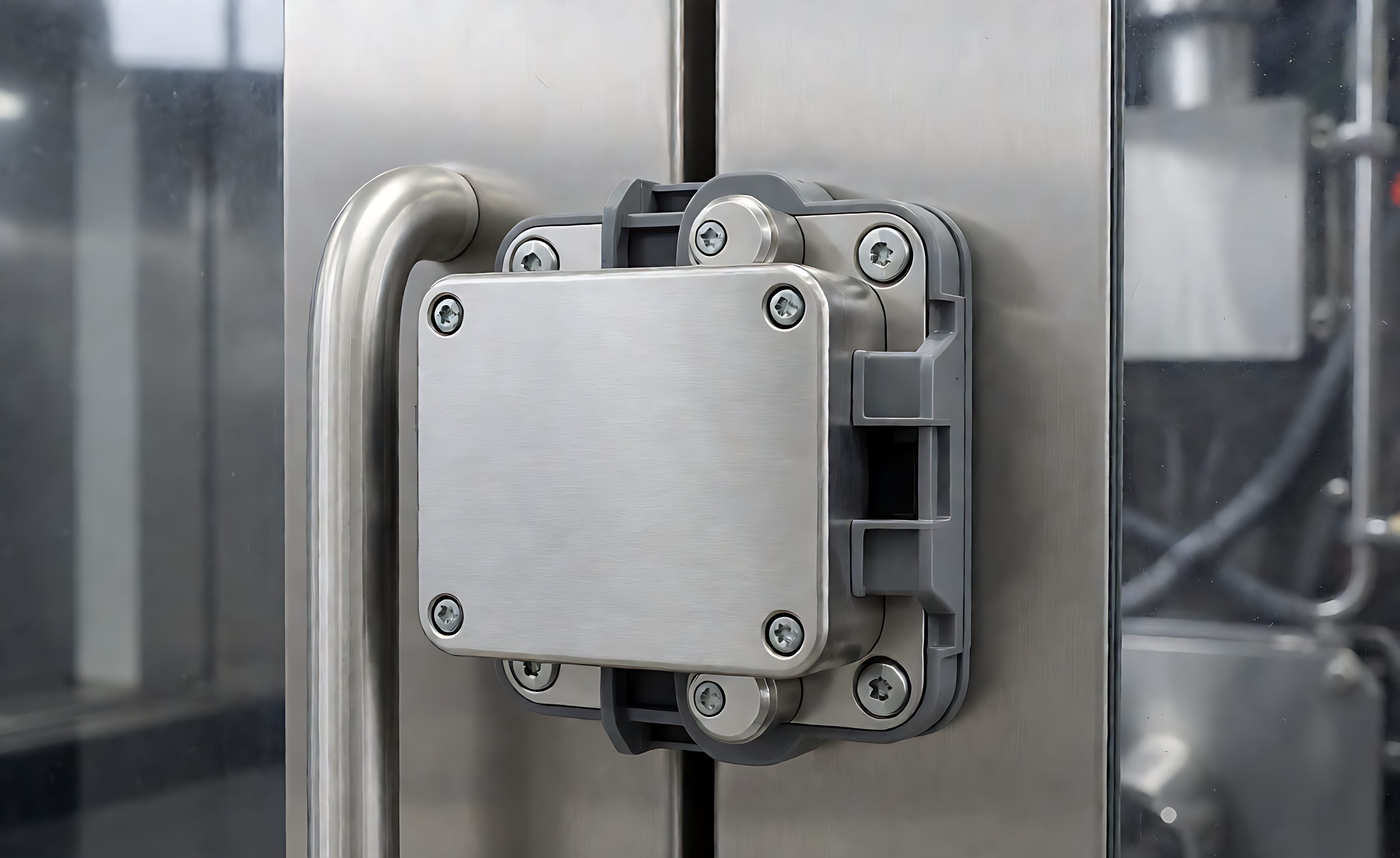
Безопасные блокировки и проектирование доступа в лазерно-сварочную ячейку
A robotic laser welding cell is guarded by design, and the guarding is the reason anyone can stand beside a Class 4 source without injury. Yet the dangerous moments rarely involve welding. They involve the maintenance entry nobody planned for, the switch held closed to recover a part quickly, and the restart performed by someone standing where they should not have been. Interlocks and access design decide whether those events are prevented or quietly enabled.
Buyers rarely specify interlocks in detail, which is strange, because this is the one subsystem where a poor design is permanent. Power can be upgraded, a positioner swapped, software changed. This article sets out what belongs in the enquiry: what must be interlocked, how doors behave, what a restart must do, and how to keep routine work from tempting anyone to defeat the system.
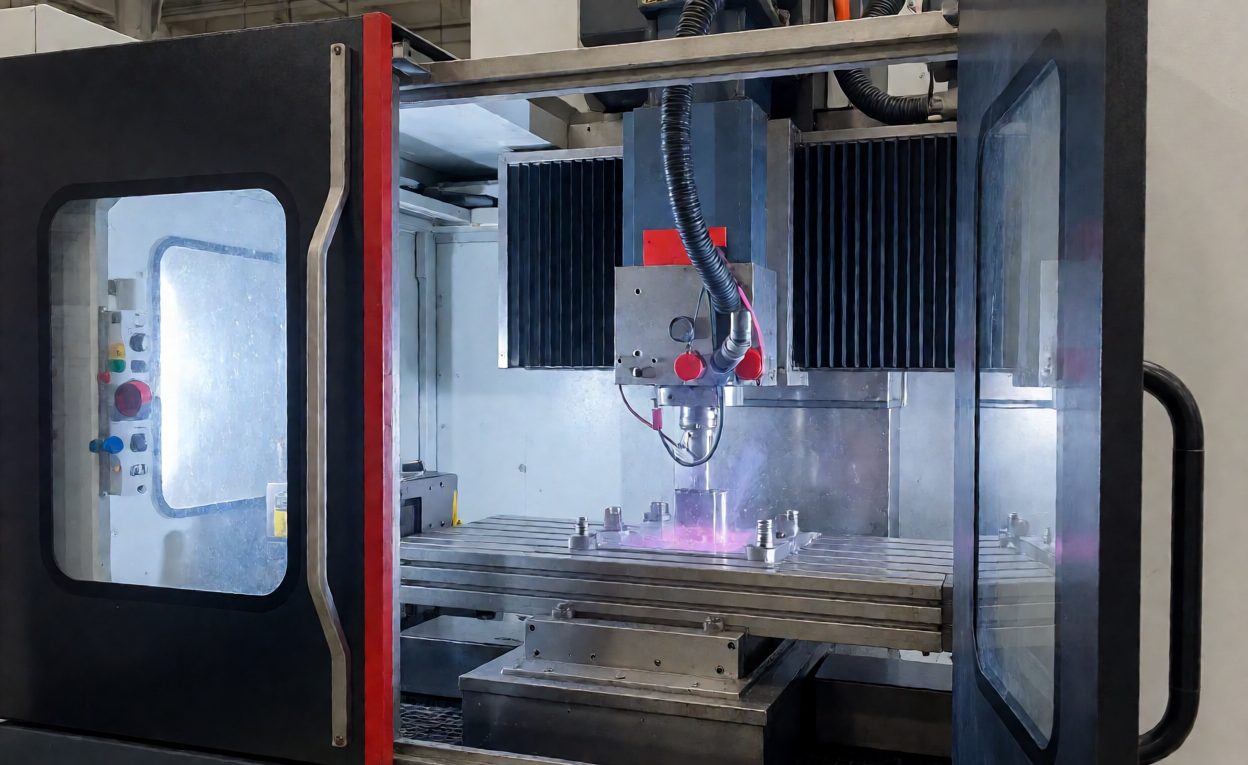
What Actually Has to Be Interlocked
An interlock removes the hazard when a guard is opened. On a laser cell the list runs longer than most purchasers expect, and every item needs its own answer rather than a general assurance:
- Doors and access panels: positively actuated, coded switches rather than simple magnetic ones, so neither a detached magnet nor a spare can fake a closed door.
- Laser emission stop: opening any door or removing any panel must terminate emission, not merely pause robot motion.
- Robot and positioner motion: a safe stop rather than a controlled stop near moving parts, with rotary positioners treated separately because their swept volumes look harmless.
- Fume extraction coordination: where the unit has an automatic filter-cleaning cycle, control logic must account for airflow interruption rather than assume continuous draft.
- Service disconnects: a lockable main disconnect plus local isolation points, so work is isolated by the person performing it.
The radiated hazard itself is set out in статье о безопасности лазеров класса 4, and enclosure options that satisfy it are costed in the compliance cost article. Interlocks are the layer that must remain true every time somebody opens something.
Guard Locking, Release Logic and Performance Levels
Some entries are safe immediately; others are not. Separating the two is the most consequential decision, because it determines whether a door may be opened on demand or released by the control system.
- Guard locking with delayed release: where a spinning positioner, a residual charge or a hot part must first reach a safe condition, the locking device holds the door closed until that condition is genuinely met, then releases.
- Two-channel monitoring: safety circuits should be dual channel and monitored, so a failed contact produces a stop instead of a latent fault.
- Trapped-key transfer: for work inside the enclosure, mechanical key systems make the safe sequence the only available sequence.
- Escape release: внутреннее релиз для любого, кто находится внутри заблокированного защитного ограждения, проверяется при вводе в эксплуатацию, а не обнаруживается во время инцидента.
- Сброс размещения: доступен только снаружи, требует целенаправленных ручных действий, а не происходит автоматически при закрытии двери.

Инженерия межкомандной блокировки является устоявшейся дисциплиной, и стандарты для машин предписывают производительность, а не просто наличие. Уровни целостности безопасности предоставляют стандартный язык для определения того, насколько надежно должна выполнять свои функции каждая функция. При сравнении предложений спросите, в какую категорию входит каждое устройство и является ли цепь контролируемой и двухканальной; разница проявляется в цене и снова после первого отказа компонента.
Проектирование доступа: превращение безопасного маршрута в удобный
Большинство обходных манипуляций с межкомандной блокировкой не являются злонамеренными. Они следуют из задачи, которую неудобно выполнять безопасным путем, и ответом является не еще один тренинг, а проектирование доступа, которое устраняет стимул:
- Достаточное количество дверей, правильно размещенных: оператор не должен обходить ячильный блок, чтобы добраться до приспособления, к которому обращается каждый цикл.
- Панели, не требующие инструмента, для рутинных работ: замена насадок и очистка окон происходят часто; если для каждой нужен ящик с инструментами, однажды панель останется открытой.
- Позиция загрузки в пределах досягаемости: это является вопросом проектирования приспособления не меньше, чем вопросом защитного ограждения.
- Запрет на наклон в сторону ячильного блока: если установка зажима требует дотянуться через край, межкомандная блокировка будет ежедневно обходится по определению.
- Видимость вместо открытия: правильно оцененные обзорные панели и фонарик-камера устраняют желание открывать дверь только для того, чтобы посмотреть.
- Выезд за пределами: одна из зон, покрытых layout planning article.

Verification, Documentation and Restart Rules
An interlock system is only as good as its last test, and new cells are tested thoroughly while mature cells are assumed. Put testing into handover:
- Functional test at commissioning: every switch tested individually and the result recorded, not only the operator door.
- Defined retest interval: set by the risk assessment, with a named owner.
- Alarm history review: controllers record safety stops; reviewing them reveals bypass patterns while they are still habits.
- Emergency stop behaviour: what each emergency stop cuts and what recovery requires, verified physically rather than read from a manual.
- Restart rules: who may reset, from where, and what must be checked before the next part runs. These belong in the operator training plan.
Isolation then becomes a procurement matter. Isolation points, stored energy and the step-by-step procedure belong in the maintenance documentation pack requested with the machine, so whoever services the cell in year five works from the assumptions it was built with.
Часто задаваемые вопросы
В чём разница между интерлоком и переключателем защитного ограждения?
A guard switch senses the door; the interlock is the complete chain from that switch through the safety circuit to the stopped hazard. Specifying only the switch leaves the rest undefined.
Можно ли использовать магнитный датчик на дверце доступа?
Simple magnetic switches are easy to defeat with a spare magnet. Positively actuated, coded switches or full guard locking are the defensible choice.
Когда действительно требуется отложенное высвобождение?
Where anything inside continues moving, cooling, discharging or settling after emission stops. A rotating positioner is the most common example.
Должны ли операторы иметь возможность открывать дверь в середине цикла?
Yes where the hazard stops first, because otherwise they will find a way to. The interlock must terminate emission and motion immediately.
Как часто должны проводиться повторные испытания блокировочных устройств?
An interval set by the risk assessment, typically annually for routine cells and more often where access is frequent. Record the results each time.
Где должен находиться элемент управления сбросом?
Outside the enclosure, out of reach of anyone inside, requiring deliberate manual action rather than automatic resumption.
Можно ли улучшить межблочное упорядочивание после установки?
Yes, at the cost of new panels, wiring, commissioning and a fresh risk assessment. Specifying them before purchase is far cheaper.