
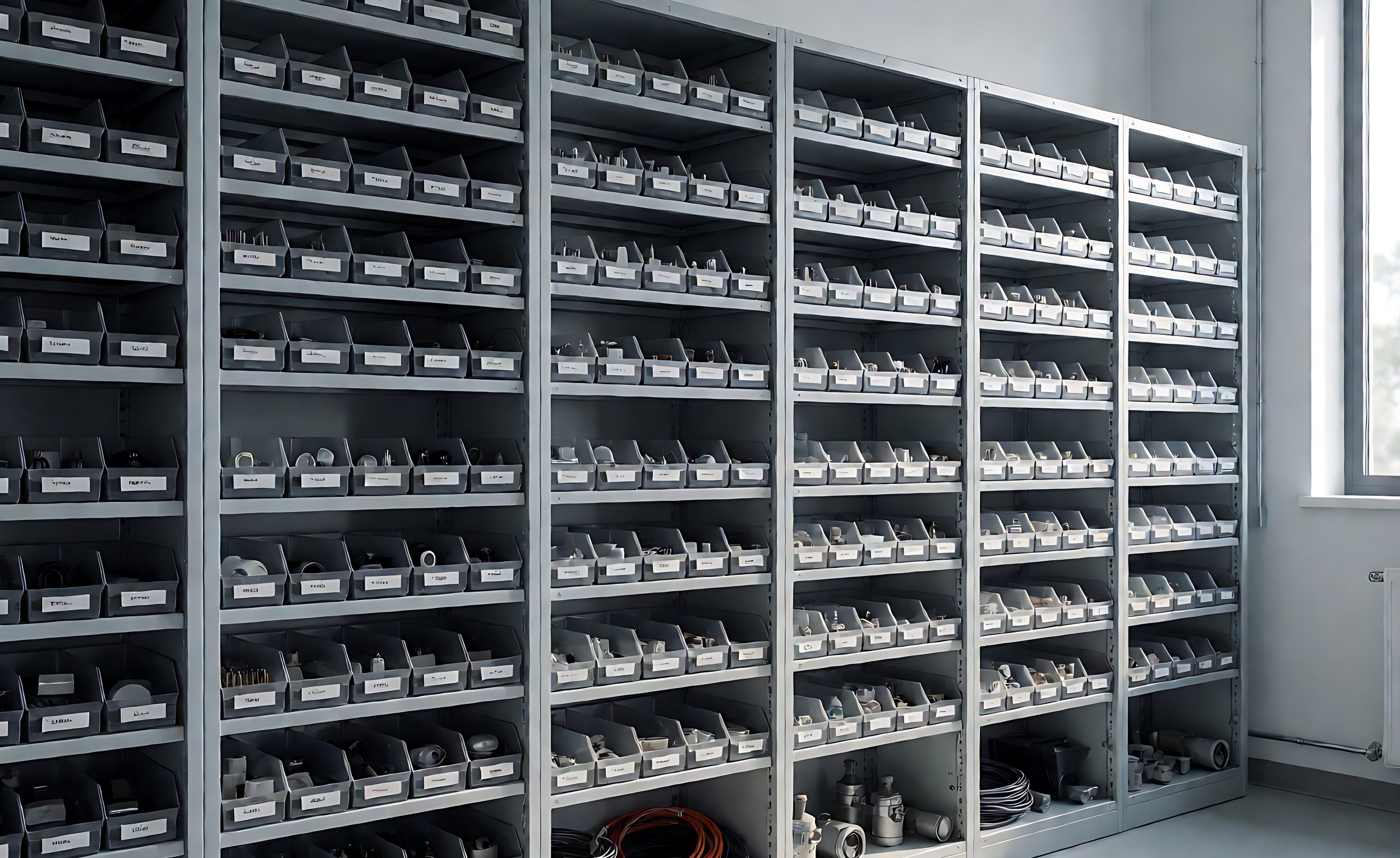
Запасные части сварочной ячейки: ранжирование критичности и уровни хранения
Spares budgets fail in a very consistent way. Plants hold generous quantities of cheap consumables and nothing whatsoever of the one module whose failure stops production for three weeks. The cause is not carelessness; it is that spares are bought bottom-up from a catalogue instead of top-down from a downtime consequence. Every part looks worth having when it costs little, and the expensive item never gets justified because nobody expects it to fail next Tuesday.
A useful spares policy starts with two questions per part: what happens when it fails, and how long the replacement takes to arrive. Those two answers determine everything else, including how much capital should sit on the shelf. This article sets out a simple criticality ranking, the stocking tiers that follow from it, and how to keep the list alive after commissioning.

Ranking Parts by Consequence Rather Than by Price
Three variables define criticality for any component on a cell:
- Downtime consequence: does failure stop the cell, degrade quality silently, or nothing observable? Silent degradation is the worst category, because it is discovered as scrap rather than as an alarm.
- Lead time: a part held locally by the distributor is a different problem from one shipped from another continent. Lead time, not unit price, drives the stocking decision.
- Failure predictability: some items wear on a schedule, some fail at random, and some fail only after a specific event such as a crash or a power surge.
Combining the three produces a short list. Items that stop the cell and arrive slowly go on the shelf regardless of cost. Items that stop the cell and arrive overnight do not. Items worn on a predictable schedule are a consumables problem rather than a stocking problem, and are costed per part in the consumables cost per part article. Random-failure items with long lead times are the genuinely difficult case, because they combine low probability with high consequence and no schedule to plan around.
Spare parts for control hardware become more awkward than the cost suggests, because many modules are configured, parameterised or keyed to the specific machine. A populated spare sitting on a shelf is worthless if it needs commissioning firmware that only arrives with an engineer. Ask the supplier explicitly which items require configuration, and put those questions into the maintenance documentation pack request rather than discovering them during a breakdown.

Three Stocking Tiers That Actually Work
Most plants end up with two tiers and regret it: everything critical on site, or nothing on site. Three tiers handle the real distribution far better:
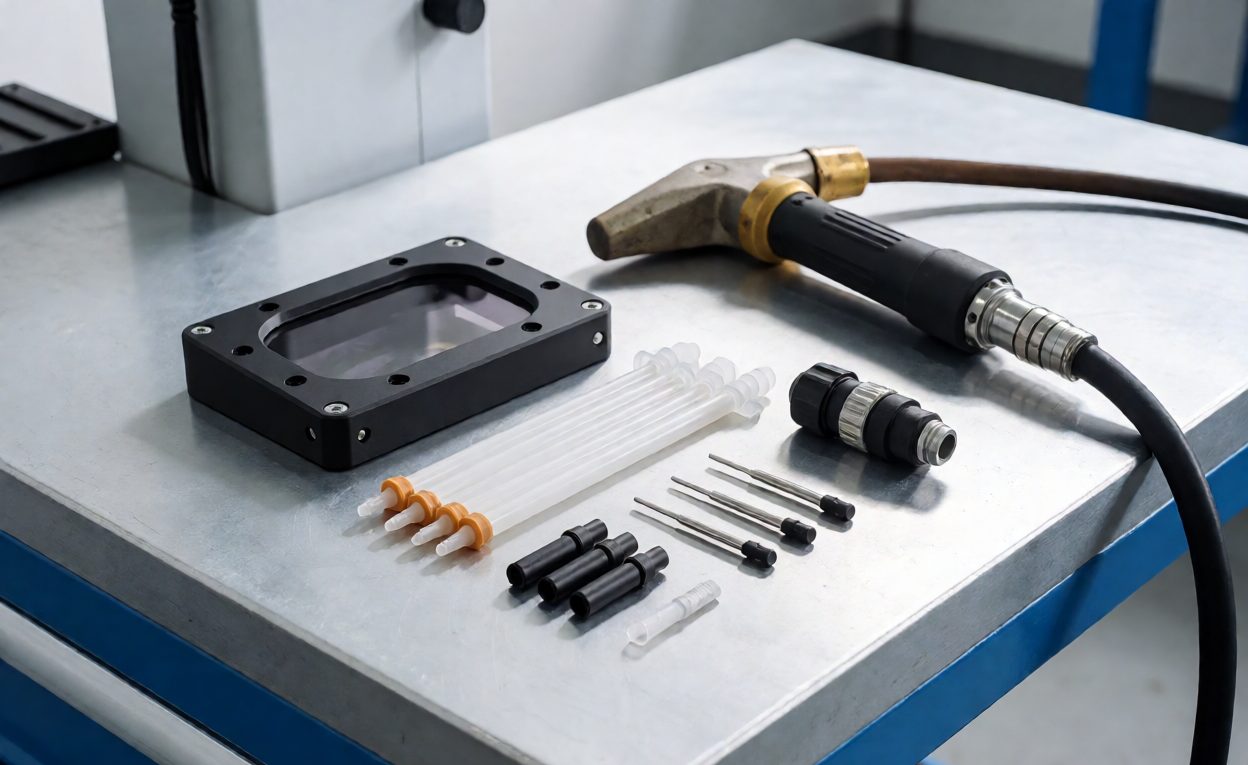
- Tier 1 – on site: optics and protective windows, nozzles, contact tips, fuses, common sensors, seals and filters. Cheap, predictable, and no discussion required. The first-year spare parts kit article covers the standard starting set.
- Tier 2 – regional or shared: modules and assemblies too costly to duplicate per cell but likely to be needed eventually, held either by the supplier’s local office or shared across several cells on site.
- Tier 3 – supplier-managed: large and expensive items with a defined delivery commitment, where the lead time is written into the contract rather than discovered after ordering.
The economics are clearer than they first appear. Tier 1 stock costs very little and prevents the majority of short stops. Tier 2 is where maintenance, repair and operations budgeting usually goes wrong, because one shared module replaces several idle copies. Where multiple cells share a floor, shared services planning makes Tier 2 cheaper still, since identical cells can share servo, power and control modules rather than duplicating them.
Duty Cycle, Environment and What Actually Fails
Two identical cells can need very different stock based on how they run. The factors that move a part up or down the list:
- Shift pattern: three-shift operation triples the wear on consumables and shortens every planned interval.
- Material and process: aluminium, galvanised and coated workpieces raise the optical and nozzle consumption dramatically compared with clean mild steel.
- Условия среды: dusty environments, high humidity and temperature swings affect filters, fans and electronics alike.
- Crash history: cells that have experienced collisions hide latent damage in torch mounts, wiring and optics.
- Cooling water quality: poor water chemistry shortens chiller component life, which is the subject of the chiller maintenance guide.
Keeping the List Alive
A spares list written at commissioning is a snapshot of assumptions that were never tested. What makes the list useful is a feedback loop with very little ceremony attached:
- Record every unplanned stop: part name, source, waiting time. Six months of this data rewrites the tiers more accurately than any supplier recommendation.
- Review annually: reorder based on what actually failed rather than on what was feared.
- Use consumption counters: modern controllers count windows, nozzles and cycles, and the monitoring article explains how these signals reach someone who orders parts.
- Re-check supplier lead times: these change silently, especially for electronics reaching end of life.
- Plan around known interventions: if a cell must stop for planned work anyway, the downtime planning article shows how planned and unplanned work can share the window.
Finally, treat the robot and laser source as separate ecosystems. Robot spares, source spares and cell furniture have different lead times and different distribution channels, which is why the робот для лазерной сварки scope line in the contract should state who carries stock and where, rather than leaving it to whoever answers the phone.
Часто задаваемые вопросы
Сколько должна стоить первая партия запасных частей?
Usually a small percentage of cell value for Tier 1, plus one or two Tier 2 modules for the items with the longest lead times.
Каждая единственная деталь чаще всего останавливает клетку?
Optics and protective windows, followed by sensors and fuses. They are cheap, predictable and therefore easy to stock adequately.
Должен ли каждый критический модуль дублироваться?
No. Duplicating one expensive module per cell is rarely economic; sharing one across identical cells usually is.
How do configured modules complicate stocking?
A populated module may need firmware or parameterisation before it works. Confirm at purchase whether the spare is plug-ready.
Can the supplier hold stock on our behalf?
Often yes, against a written delivery commitment. Put the lead time and the response window into the contract rather than relying on goodwill.
How often should the list be reviewed?
Annually, using recorded unplanned stops and actual lead times rather than supplier brochures and commissioning assumptions.
Do identical cells need identical spares?
Shared modules make sense across identical cells, but duty cycle and environment differences can justify different consumable holdings.