
Laser Welding Cell Safety Interlocks and Access Design
A robotic laser welding cell is guarded by design, and the guarding is the reason anyone can stand beside a Class 4 source without injury. Yet the dangerous moments rarely involve welding. They involve the maintenance entry nobody planned for, the switch held closed to recover a part quickly, and the restart performed by someone standing where they should not have been. Interlocks and access design decide whether those events are prevented or quietly enabled.
Buyers rarely specify interlocks in detail, which is strange, because this is the one subsystem where a poor design is permanent. Power can be upgraded, a positioner swapped, software changed. This article sets out what belongs in the enquiry: what must be interlocked, how doors behave, what a restart must do, and how to keep routine work from tempting anyone to defeat the system.
What Actually Has to Be Interlocked
An interlock removes the hazard when a guard is opened. On a laser cell the list runs longer than most purchasers expect, and every item needs its own answer rather than a general assurance:
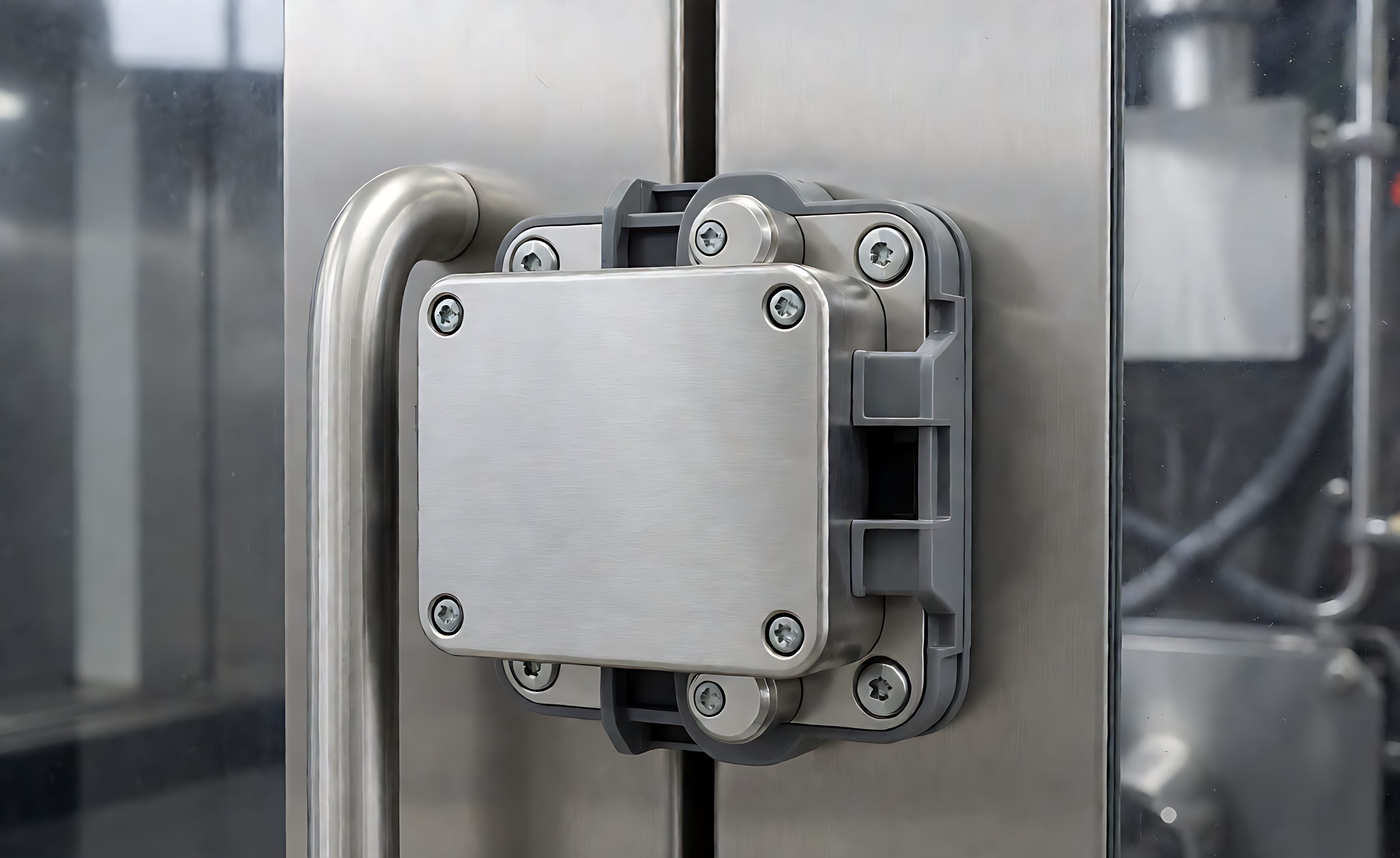
- Doors and access panels: positively actuated, coded switches rather than simple magnetic ones, so neither a detached magnet nor a spare can fake a closed door.
- Laser emission stop: opening any door or removing any panel must terminate emission, not merely pause robot motion.
- Robot and positioner motion: a safe stop rather than a controlled stop near moving parts, with rotary positioners treated separately because their swept volumes look harmless.
- Fume extraction coordination: where the unit has an automatic filter-cleaning cycle, control logic must account for airflow interruption rather than assume continuous draft.
- Service disconnects: a lockable main disconnect plus local isolation points, so work is isolated by the person performing it.
The radiated hazard itself is set out in the Class 4 laser safety article, and enclosure options that satisfy it are costed in the compliance cost article. Interlocks are the layer that must remain true every time somebody opens something.
Guard Locking, Release Logic and Performance Levels
Some entries are safe immediately; others are not. Separating the two is the most consequential decision, because it determines whether a door may be opened on demand or released by the control system.
- Guard locking with delayed release: where a spinning positioner, a residual charge or a hot part must first reach a safe condition, the locking device holds the door closed until that condition is genuinely met, then releases.
- Two-channel monitoring: safety circuits should be dual channel and monitored, so a failed contact produces a stop instead of a latent fault.
- Trapped-key transfer: for work inside the enclosure, mechanical key systems make the safe sequence the only available sequence.
- Escape release: an internal release for anyone inside a locked guard, tested at commissioning rather than discovered during an incident.
- Reset placement: reachable only from outside, requiring deliberate manual action rather than following automatically from a closing door.

Interlock engineering is a settled discipline, and machinery standards specify performance rather than mere presence. Safety integrity levels supply the usual language for how reliably each function must perform. When comparing quotations, ask which category each device falls into and whether the circuit is monitored dual channel; the difference appears in the price, and again after the first component failure.
Access Design: Making the Safe Route the Easy Route
Most interlock defeats are not malicious. They follow from a task that cannot be completed conveniently through the safe route, and the answer is not another training session but an access design that removes the incentive:
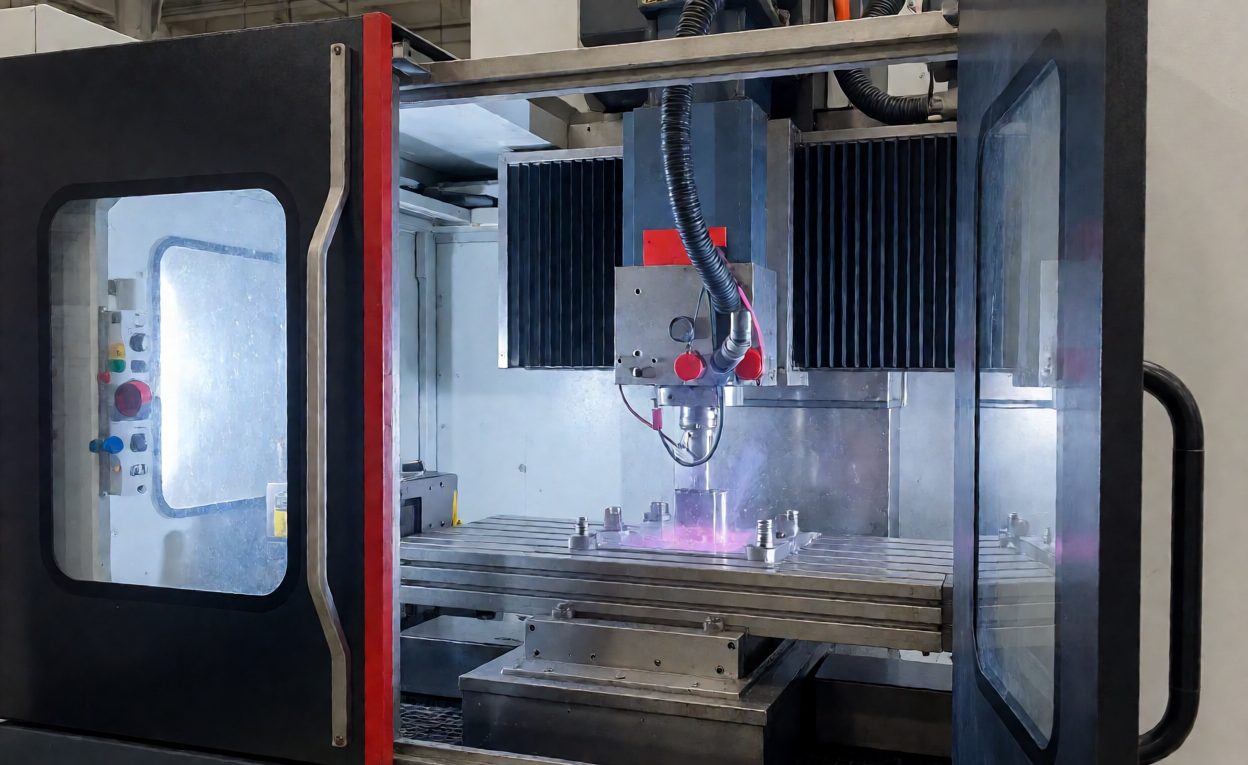
- Enough doors, positioned correctly: an operator should not walk around the cell to reach a fixture touched every cycle.
- Tool-free panels for routine work: nozzle changes and window cleaning happen frequently; if each needs a tool chest, one day the panel stays off.
- A load position within reach: this is a fixture design question as much as a guarding one.
- No leaning into the cell: if setting a clamp requires reaching over the edge, the interlock will be defeated daily by definition.
- Visibility instead of opening: correctly rated viewing panels plus a torch camera remove the temptation to open a door merely to look.
- Clearance outside: one of the zones covered by the layout planning article.

Verification, Documentation and Restart Rules
An interlock system is only as good as its last test, and new cells are tested thoroughly while mature cells are assumed. Put testing into handover:
- Functional test at commissioning: every switch tested individually and the result recorded, not only the operator door.
- Defined retest interval: set by the risk assessment, with a named owner.
- Alarm history review: controllers record safety stops; reviewing them reveals bypass patterns while they are still habits.
- Emergency stop behaviour: what each emergency stop cuts and what recovery requires, verified physically rather than read from a manual.
- Restart rules: who may reset, from where, and what must be checked before the next part runs. These belong in the operator training plan.
Isolation then becomes a procurement matter. Isolation points, stored energy and the step-by-step procedure belong in the maintenance documentation pack requested with the machine, so whoever services the cell in year five works from the assumptions it was built with.
Frequently Asked Questions
What is the difference between an interlock and a guard switch?
A guard switch senses the door; the interlock is the complete chain from that switch through the safety circuit to the stopped hazard. Specifying only the switch leaves the rest undefined.
Can a magnetic switch be used on an access door?
Simple magnetic switches are easy to defeat with a spare magnet. Positively actuated, coded switches or full guard locking are the defensible choice.
When is delayed release actually required?
Where anything inside continues moving, cooling, discharging or settling after emission stops. A rotating positioner is the most common example.
Should operators be able to open a door mid-cycle?
Yes where the hazard stops first, because otherwise they will find a way to. The interlock must terminate emission and motion immediately.
How often should interlocks be retested?
An interval set by the risk assessment, typically annually for routine cells and more often where access is frequent. Record the results each time.
Where should the reset control be located?
Outside the enclosure, out of reach of anyone inside, requiring deliberate manual action rather than automatic resumption.
Can interlocks be upgraded after installation?
Yes, at the cost of new panels, wiring, commissioning and a fresh risk assessment. Specifying them before purchase is far cheaper.