
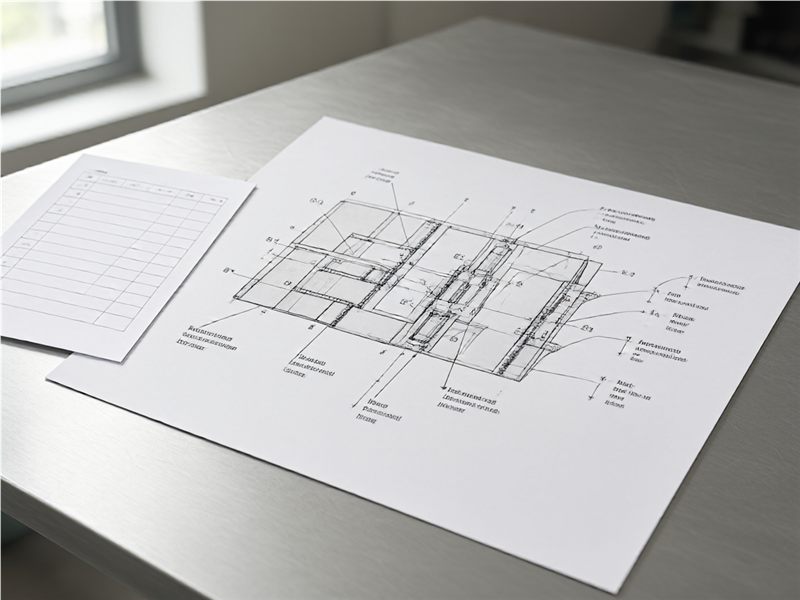
Laser Welding Thin Sheet: Control Joint Gap and Part Warpage
Quick answer: Stabilize laser welding thin sheet with a controlled joint gap, representative fixture trial and post-weld distortion checks.
Map the process from start to finish
Draw the workflow as operators experience it, from arrival or setup through normal output, handoff and recovery. Include product identity, system state and owner at each step. For a thin-sheet laser-welding process with defined material, joint, fixture and post-weld dimensional requirements, write down actual peaks and difficult cases rather than using only an average or ideal sample. A process map exposes where a missing scan, misfit or unclear instruction can stop the next operation. Write the record so a second supplier or new team member can understand the same configuration. Tie every open question to an owner and date; do not let an informal call replace the controlled drawing, service scope or product file.
Name each system and product interface
List every interface that must work: physical connection, control signal, data field, mounting point or service access. Identify the owner on each side and the revision of the drawing, program or master data. For a thin-sheet laser-welding process with defined material, joint, fixture and post-weld dimensional requirements, sheet material and thickness, joint gap samples, fixture drawing, weld trial and post-weld measurements should connect the supplier deliverable to the receiving system. For this topic, a useful comparison includes joint design, fit-up control, clamping, seam tracking, welding path, post-process and inspection and states what is standard, optional or still unverified. Similar names or photographs do not establish mechanical fit, software behavior, service coverage or compliance.

Separate normal flow from exceptions
Define the normal route and exception route separately. State what happens when an item is damaged, an order is incomplete, a sensor reads nothing or an alarm appears. Give operators a safe hold condition, reason code and escalation contact. An implicit route encourages improvisation that is hard to audit. Use sheet gauge, edge preparation, gap, fixture force, material coating or program revision as the basis for choosing a sample and deciding what to measure. If the sample leaves out a difficult condition, state the limit of the result instead of presenting it as proof for all use cases.
Choose data operators can verify
Choose a small set of data fields that can be captured accurately at the work point. Use stable identifiers for SKU, model, lot or revision and record timestamps, quantity and exception reason where they support a decision. For a thin-sheet laser-welding process with defined material, joint, fixture and post-weld dimensional requirements, agree the source of truth and who may edit each field. A common failure mode is small changes in fit-up or restraint can create burn-through, inconsistent appearance or a distorted assembly. Reduce it with a written check before release, plus a clear hold and escalation step when the check fails. The responsible owner should be able to find the evidence without relying on memory.
Include access and safety review
Review access, guarding, lifting, pinch points, maintenance clearance and emergency response with the responsible site safety professional. Keep the assessment specific to the installed arrangement. Where small changes in fit-up or restraint can create burn-through, inconsistent appearance or a distorted assembly is present, document what operators may do, what requires isolation and who authorizes a restart. A buyer can ask the supplier to return sheet material and thickness, joint gap samples, fixture drawing, weld trial and post-weld measurements with the quote or sample. That makes the response more useful than a broad capability statement and gives procurement, engineering and quality a shared starting point.
Trial representative conditions
Trial the workflow using representative volume, product variation and at least one planned exception. Record start conditions, actual steps, handoffs, recovery and unresolved issues. Do not present a short demonstration as a universal rate unless the workload and measurement window are disclosed. For a repeatable result, agree representative assemblies meet appearance and dimensional requirements across the agreed fit-up range before the trial. Identify sample identity, measurement or operating method, record format and who signs off; if one condition changes, review the effect before reusing the approval.
Prepare role-based training
Turn the approved sequence into role-based instructions. Operators need start, stop, check and escalation steps; supervisors need status visibility; maintenance staff need safe access and diagnostic context. Record training against the actual revision and notify teams when it changes. Plan part and tolerance review, fixture and gap study, controlled weld trial, distortion check and process release as connected gates. Each gate should have an input, owner and output so a sample, order or installation cannot move forward with an unresolved issue hidden in an email thread.

Define measures before launch
Select measures that match the decision: completion rate, exception count, response time, inventory variance or successful test result. Define numerator, denominator, time period and exclusions before comparison. Report the baseline and conditions under which the number was collected. Market and site differences matter: the customer’s weld acceptance criteria, site laser controls and final assembly function can change the documents, labels, installation details or customer wording that must be reviewed. Name the responsible local party and use current primary guidance.
Assign an escalation owner
Create an escalation path with severity, owner, response expectation and evidence to attach. The front line should know when to hold work and when it may resume; support teams need the relevant identifier, photo, alarm or transaction record. Before commercial release, align the product or service page with the approved scope. Explain a thin-sheet laser-welding process with defined material, joint, fixture and post-weld dimensional requirements in buyer language, but avoid performance or certification claims that the supporting file does not establish.
Make the handover usable
At handover, transfer the current layout, interface list, revision, spare-parts list, training record, approved limits and unresolved items. Confirm access to the record system and test retrieval of an older case. The receiving team should be able to find evidence without the original project team. At handoff, make approved joint and fixture drawings, validated process window and inspection checks to production available to the next team with a model ID, revision, training or status record and named contact. A transfer is complete only when the receiving owner can act on an exception.
Plan maintenance and change control
Schedule maintenance and change review around actual failure modes and supplier instructions. Record inspection triggers, required parts or tools, qualified owner and return-to-service check. Do not invent a universal interval where product documentation gives none. Ask for a change notice when sheet gauge, edge preparation, gap, fixture force, material coating or program revision or a controlled component changes. Review compatibility, tests, packaging, labels, training and customer communication before accepting the revised configuration.
Review actual results against baseline
After the first operating period, compare results with the baseline and record what changed. Separate process improvements from product mix, staffing, site layout or measurement changes. Re-review local access, training, data and safety when the method moves to another location. A clear decision explains which configuration fits, which evidence supports it, and what is still open
See the related TrueSyn robotic metalworking solutions for product and supplier details.
Primary references for market review
These primary references help frame the review. Confirm current local rules, product classification and contractual requirements for the actual application.
Questions buyers often ask
What should buyers verify when sourcing a thin-sheet laser-welding process with defined material, joint, fixture and post-weld dimensional requirements?
Start with sheet material and thickness, joint gap samples, fixture drawing, weld trial and post-weld measurements. Match the record to the model or service revision, destination and intended use, then ask the responsible owner to approve any open requirement.
How should a buyer compare laser welding thin sheet options?
Compare joint design, fit-up control, clamping, seam tracking, welding path, post-process and inspection on the same scope. Label included, optional and unverified items, then evaluate fit, evidence, service and total cost against the stated use case.
What evidence supports release?
Use a representative sample or workflow, the agreed acceptance method, traceable results and a named approval owner. Do not treat an unscoped demonstration as universal proof.
Do requirements vary by market or site?
Yes. the customer’s weld acceptance criteria, site laser controls and final assembly function may change applicable rules, documentation, installation or customer claims. Confirm the current requirement with the importer, project owner or qualified local professional.