
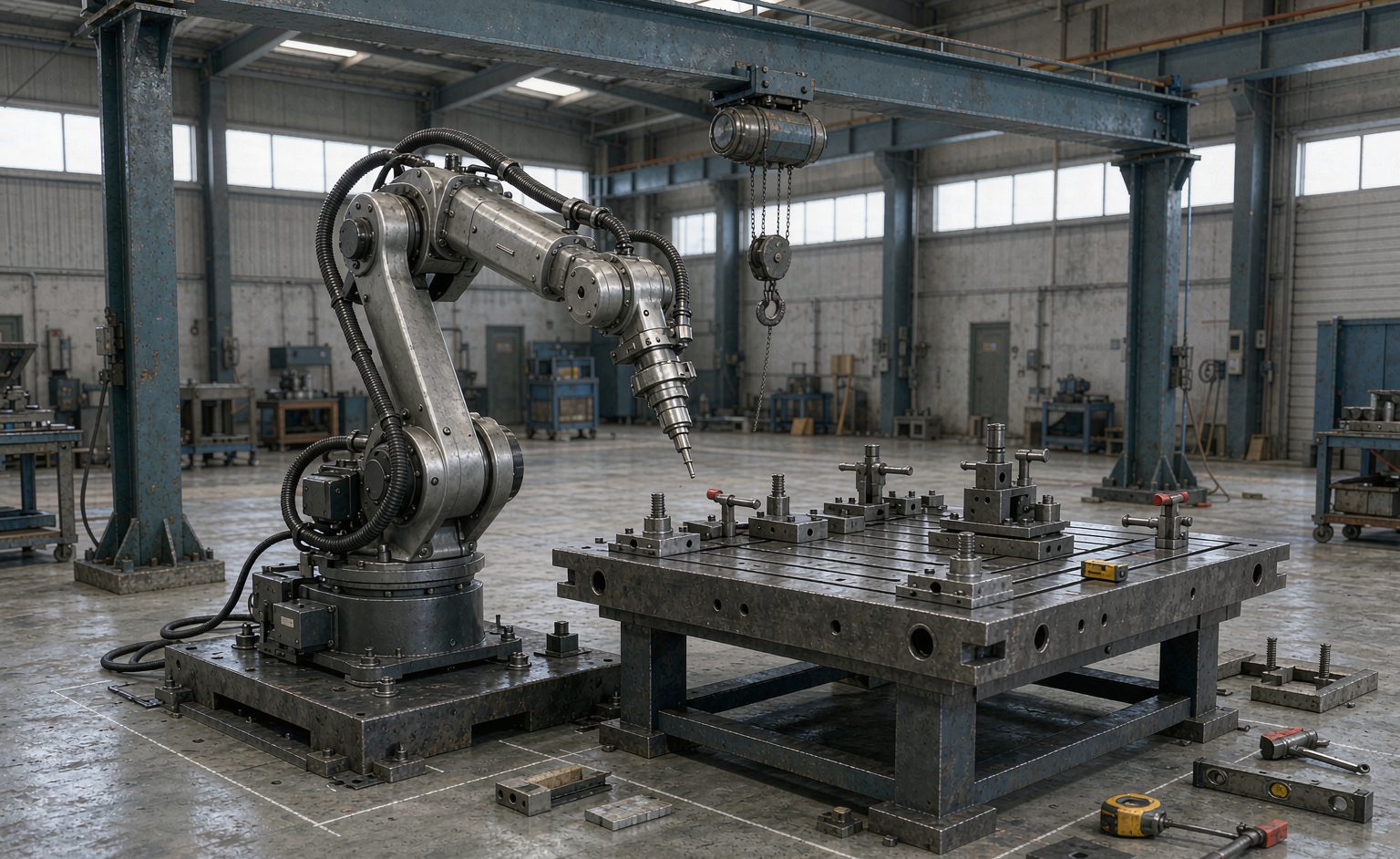
Laser Welding Robot Installation Requirements: Floor, Power, Fume and Enclosure
A laser welding robot is sold as a cell, but it is installed as a system that touches the building. Floor that can hold the robot and fixture, three-phase power with headroom, a chiller for the source, fume extraction for the plume, and an enclosure rated for a Class 4 laser. Teams that spec the robot and forget the envelope end up with a capable machine they cannot legally or practically switch on. The requirements are not optional, and most are cheaper to provide before the cell arrives than after.
Key Takeaways
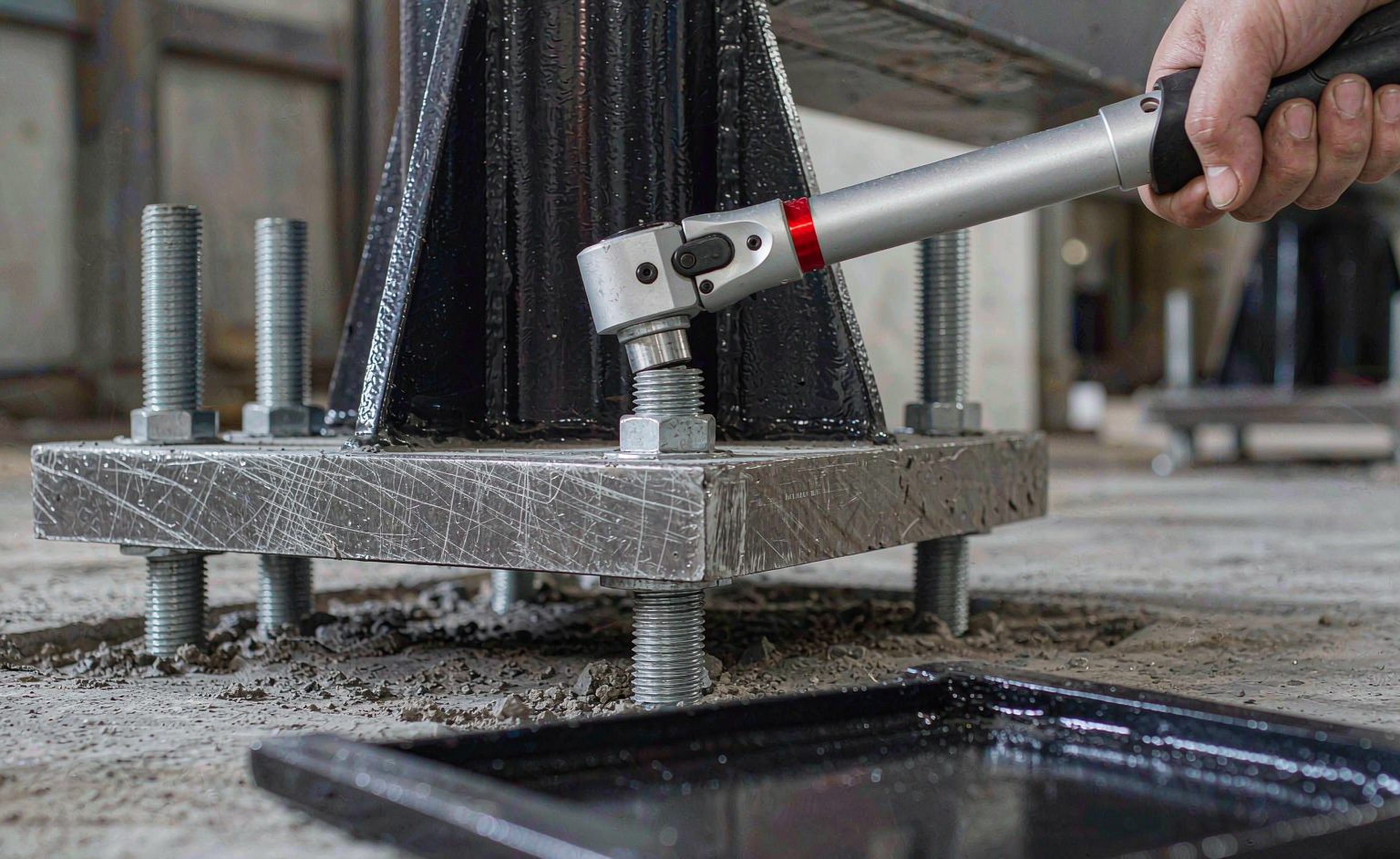
- Floor loading and flatness decide whether the robot can be anchored and repeat.
- Three-phase power needs headroom above the source and chiller draw.
- A chiller and fume extraction are part of the cell, not add-ons.
- The enclosure must be a certified Class 4 laser safety enclosure with interlocks.
- Provide utilities before delivery; retrofitting them stalls commissioning.
Floor, Power and Cooling
Three physical services gate installation before any welding happens.
| Requirement | Why it matters | Common shortfall |
|---|---|---|
| Floor loading | Robot + fixture + part mass | Unchecked slab rating |
| Three-phase power | Source, chiller, robot | No headroom above draw |
| Chilled water | Cools the laser source | Treated as optional |
The chiller is not a comfort item; without it the source overheats and derates within minutes. Sizing power for the source and chiller running together, not separately, is the mistake that trips breakers at first start. The safety envelope that the power feeds is covered in our Class 4 laser safety guide.
Fume Extraction and the Plume
Laser welding produces a fine fume and plume that must be captured at the source, not at the room.
| Approach | Effect | Note |
|---|---|---|
| Local extraction at torch | Captures fume at origin | Preferred |
| Enclosure filtration | Secondary capture | Supports compliance |
| Room ventilation only | Inadequate | Fails most standards |
Local extraction at the torch is the standard because the plume is fine and rises fast. Room ventilation alone does not meet occupational exposure limits for the metals commonly welded. For plants building lines at volume, the extraction design is part of the wider plan in our turnkey line guide.
Enclosure and Interlocks
A laser welding cell is a Class 4 laser system and must sit inside an interlocked enclosure.
| Element | Function | Failure mode |
|---|---|---|
| Enclosure walls | Contain beam and plume | Improvised shielding |
| Door interlocks | Cut power on open | Bypassed interlocks |
| Emergency stop | Cease emission | Not at each access |
Interlocks must cut laser emission the instant an access panel opens; bypassing them to save a second is how incidents happen and how audits fail. The enclosure is the difference between a compliant cell and a prohibited one, and it is a prerequisite whether the cell ships to India or elsewhere, as covered in our India market guide.
Frequently Asked Questions
What site services does a laser welding robot need?
A rated floor, three-phase power with headroom, a chiller for the source, local fume extraction, and a certified Class 4 laser enclosure with interlocks. These are prerequisites, not extras.
Why is a chiller required?
The laser source generates heat that must be removed continuously. Without chilled water it overheats and derates within minutes, so the chiller is part of the cell, not an accessory.
Can room ventilation handle the fume?
No. Laser welding plume is fine and rises fast; room ventilation alone fails occupational exposure limits. Local extraction at the torch, with enclosure filtration as backup, is the standard.
Why must the enclosure be interlocked?
A laser welding cell is a Class 4 system. Interlocks cut emission the moment an access panel opens; bypassing them causes incidents and fails safety audits.
How should power be sized?
For the source and chiller running together, with headroom. Sizing them separately is the common error that trips breakers at first start.
Does floor flatness matter?
Yes. The robot must be anchored to a slab that holds its mass and the fixture load, or repeatability suffers. Unchecked slab rating is a frequent shortfall.
When should utilities be provided?
Before the cell is delivered. Retrofitting floor, power and extraction after arrival stalls commissioning and costs more than doing it first.
Technical background: laser safety, industrial robot and fume extraction explain the safety and equipment concepts referenced above.