
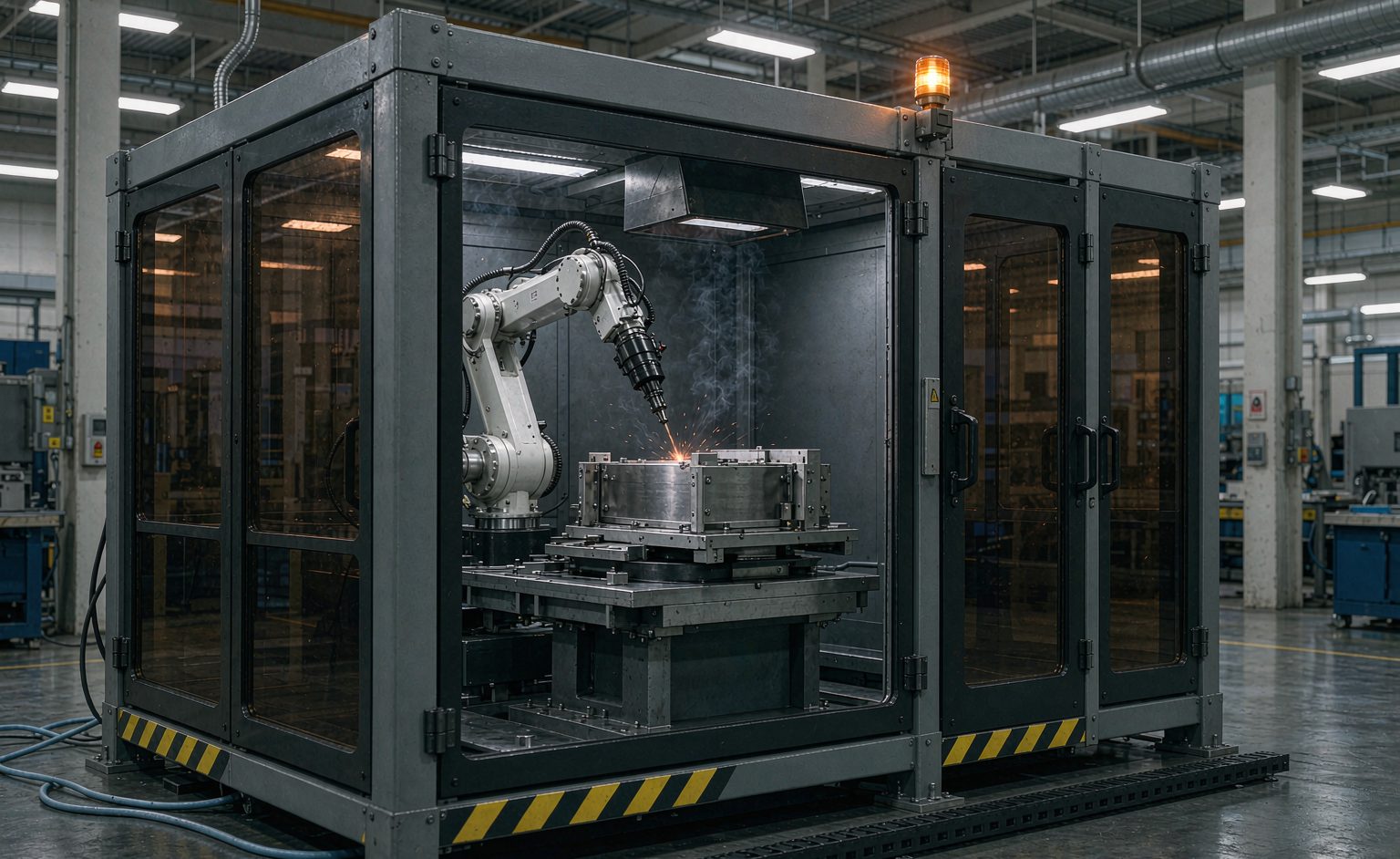
Class 4 Laser Safety for Robotic Cells: Enclosures, Interlocks and PPE
A welding laser is a Class 4 laser: direct or specular reflection can cause skin burns and permanent eye injury, and the beam can ignite materials. In a robotic cell the hazard is concentrated and often hidden behind enclosures, which makes complacency the biggest risk. Safe operation is built from three layers — enclosure, interlocks and PPE — plus the validation that proves they work together. None of the three is sufficient alone.
Key Takeaways
- Class 4 means the beam is hazardous on contact and by reflection; never rely on one safeguard.
- The enclosure contains the beam and plume; it is the primary barrier.
- Interlocks must cut emission on access, with no bypass permitted.
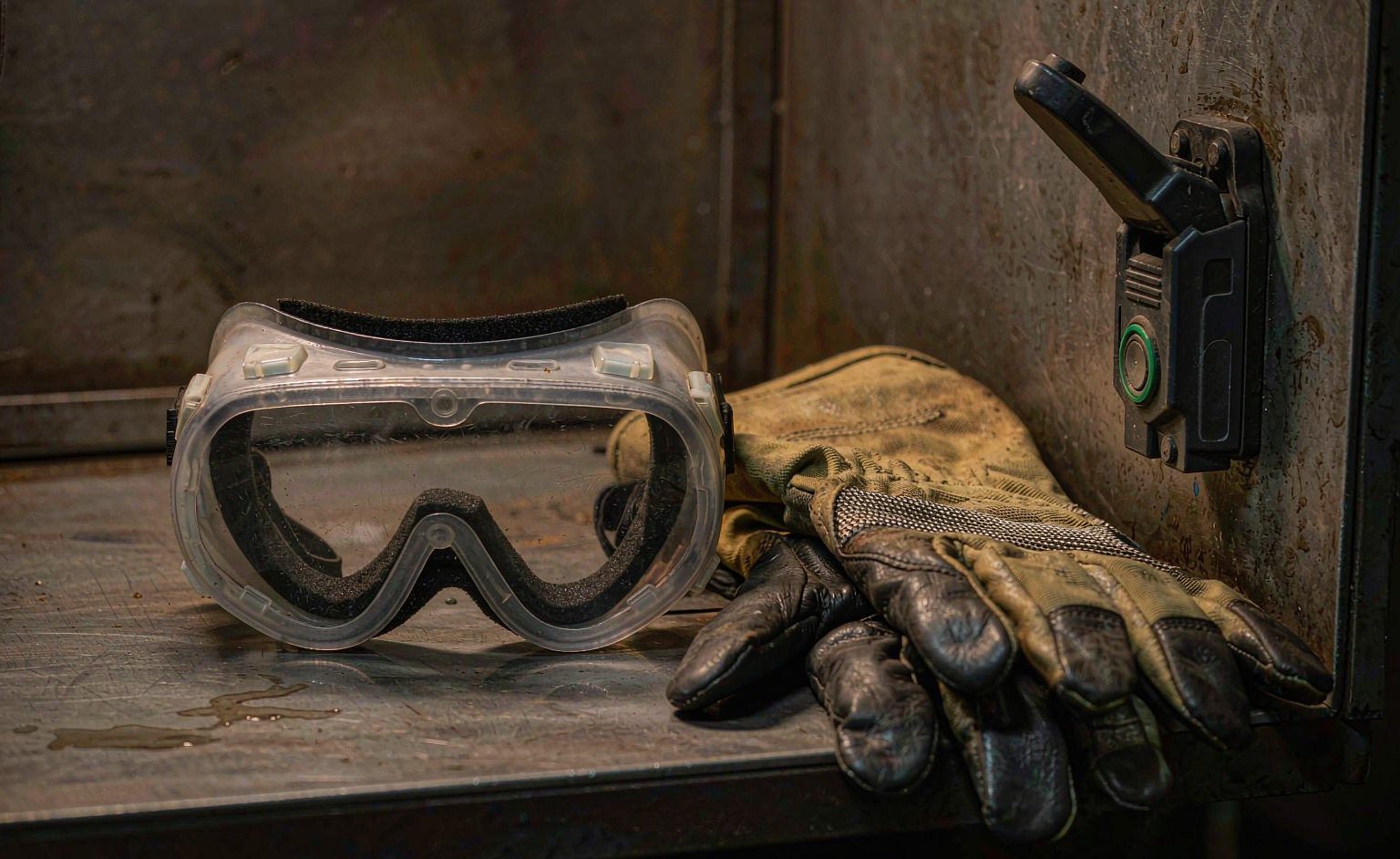
- PPE (filters, curtains) is the last line for anyone outside the enclosure.
- Validation and labelling are what make a cell auditable and legal to run.
The Enclosure as Primary Barrier
The enclosure keeps the beam and plume inside the cell during normal operation.
| Enclosure feature | Purpose | Failure mode |
|---|---|---|
| Opaque or rated walls | Block direct and scattered beam | Improvised panels |
| Viewing window | Inspect without exposure | Wrong filter rating |
| Sealed seams | Contain plume | Gaps leak fume |
The viewing window must carry the correct optical density for the wavelength; a window that looks right but is under-rated still transmits hazardous radiation. The enclosure is installed as part of the physical preparation covered in our installation requirements guide.
Interlocks and Access Control
Interlocks are the dynamic safeguard: they stop emission the instant someone can reach the beam.
| Interlock point | Action | Prohibition |
|---|---|---|
| Doors and panels | Cut laser on open | No bypass or jumper |
| Service access | Requires deliberate enable | No permanent disable |
| E-stop | Cease all emission | Must be reachable |
Bypassing an interlock to save cycle time is the single most common root cause of laser incidents, and it also fails the safety audit that a turnkey line must pass, as covered in our turnkey line guide.
PPE and Validation
PPE protects anyone who must be near the cell, and validation proves the system is safe on paper and in practice.
| Layer | Covers | Note |
|---|---|---|
| Enclosure | Everyone outside | Primary |
| Interlocks | Access moments | Dynamic |
| PPE | Service, setup, bystanders | Last line |
Validation includes beam containment checks, interlock function tests and warning signage, and it is required whether the cell ships to a domestic plant or to a market like Southeast Asia, as covered in our Southeast Asia market guide.
Frequently Asked Questions
What makes a laser Class 4?
A Class 4 laser is hazardous on direct exposure and by reflection: it can burn skin and damage eyes, and can ignite materials. Welding lasers fall in this class, so multiple safeguards are mandatory.
Why are three safety layers needed?
Because no single safeguard is reliable enough alone. The enclosure contains the beam, interlocks stop emission on access, and PPE protects anyone outside. Each covers a failure mode the others do not.
Can an interlock be bypassed for speed?
No. Bypassing an interlock is the leading root cause of laser incidents and fails safety audits. Access must always cut emission.
Why does the viewing window rating matter?
The window must have the correct optical density for the laser wavelength. An under-rated window looks safe but still transmits hazardous radiation.
What does laser safety validation include?
Beam containment checks, interlock function tests, warning signage and documented PPE requirements. It makes the cell auditable and legal to operate.
Is PPE the main protection?
No, it is the last line. The enclosure and interlocks protect everyone outside the cell; PPE covers service, setup and bystanders who may be near it.
Do safety rules differ by market?
The hazard and the three-layer approach are the same everywhere; local standards differ in documentation and audit detail. Validation is required regardless of destination.
Technical background: laser safety, personal protective equipment and occupational safety explain the safety framework referenced above.