

Laser Safety Officer Role and Training Requirements: A Buyer’s Overview
Safety documentation is where cell projects stall, and the cause is rarely the hardware. It is the absence of a named person who owns laser safety, with time allocated for the role and training evidence behind it. A Class 4 installation without an appointed officer is defensible on paper for exactly as long as nothing goes wrong – and most plants appoint one during commissioning week, under schedule pressure, when every other choice has already been made.
The role appears in every laser regulation worth complying with, but buyers routinely misunderstand its scope. It is not a certificate hung on a wall. It is an accountable function held by someone who can classify the hazard, specify the controls, verify them afterwards, and say no when conditions are not met.
What the Role Actually Covers
- Hazard classification and risk assessment: establishing the nominal hazard zone and diffuse reflection risk for every operating mode, including the service modes in which the enclosure is open and engineered protection is defeated.
- Control specification: enclosure interlocks, key control, beam stops, warning signs and labelling, plus the administrative controls of written procedure and training.
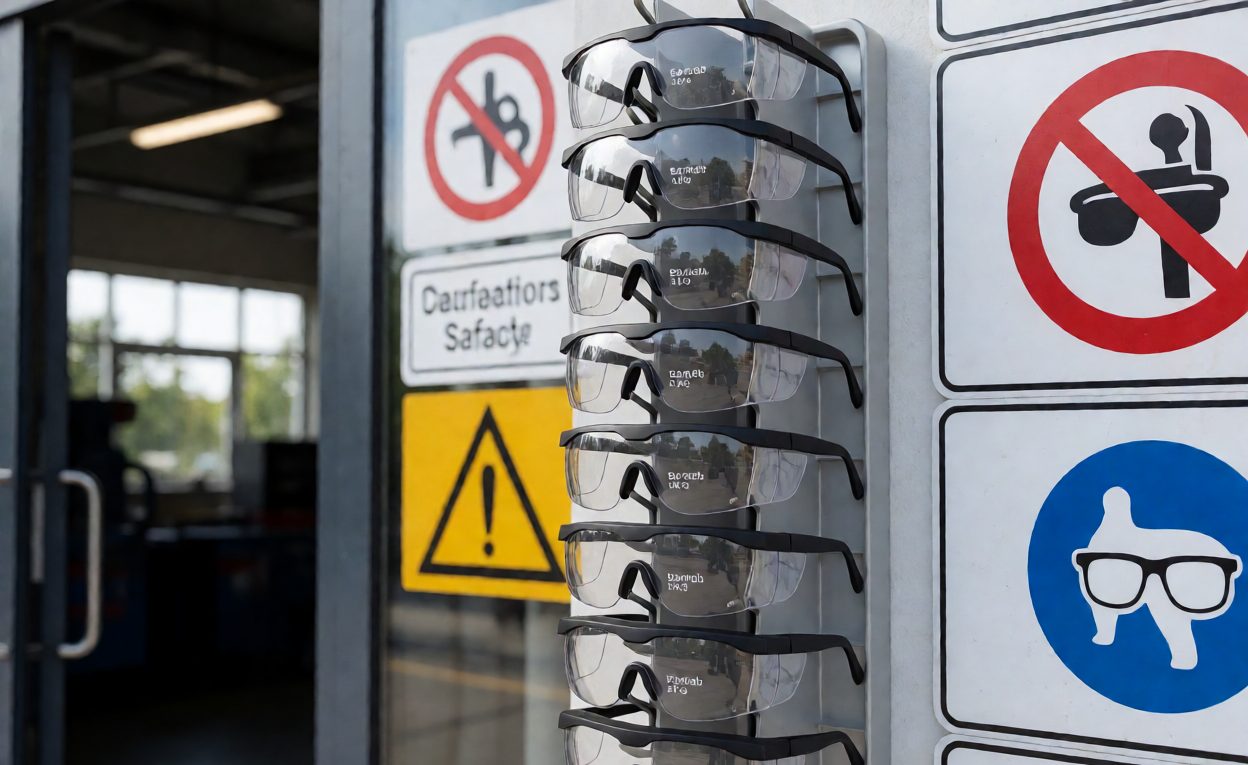
- Protective equipment: selecting laser eyewear at the correct optical density for the specific wavelength, and insisting it is worn. Personal protective equipment is the last defence, applied after engineered controls and never instead of them.
- Procedure authorisation: written procedures for alignment, maintenance and every task that bypasses an interlock, because incidents cluster during servicing rather than production.
- Incident investigation and records: the part regulators ask to see first.
None of this requires a full-time appointment at most plants. One experienced engineer can hold the role across several cells, provided it is written into their duties with real time allocated – which is what “appointed” means in practice. The technical requirements themselves are set out in the Class 4 laser safety article; the officer’s job is to make sure they are implemented, verified and maintained rather than merely specified.
Training: What It Must Contain
Training needs differ by role, and one all-staff course satisfies nobody. The sensible split:
- Maintenance engineers: the deepest content – beam hazards, service-mode controls, safe working practice during alignment, and PPE selection.
- Operators: practical and specific – what must never be defeated, what to do when an interlock trips, and the boundary of their permitted actions.
- Supervisors: enough to recognise when to stop work and who to call.
- The officer: all of the above plus audit competence and enough authority to halt the line.
Two principles make training useful rather than decorative. First, occupational safety and health practice treats training as a control that decays, so refresher intervals matter more than attendance certificates. Second, train before the cell arrives: every hour of laser-specific training scheduled during installation week competes with commissioning, commissioning wins, and the plant is left with staff trained on paper and unpractised at the machine.

Evidence, Records and the Regulator Visit
An inspector will not ask whether training happened. They will ask to see it, in this shape:
- Appointment letter naming the officer, dated and signed by someone with authority.
- Competence record for the officer: course content, provider, duration, date and evidence of assessment.
- Task-specific procedures for every activity in which interlocks are bypassed, each version-controlled.
- Training matrix by person and role, with refresher dates visible.
- Inspection records: interlock functional checks, enclosure integrity, signage condition and eyewear condition.
- Incident log including near misses, with actions demonstrably closed out.
The wiring between these matters more than any single item. Findings from inspection should feed back into training content, and near misses should feed into procedures. Plants that treat the records as a filing exercise tend to repeat the same near miss roughly every eighteen months.
Cost, Timing and the Usual Mistakes
The costs are modest and mostly predictable: the officer’s course, task-specific training for engineers and operators, eyewear across the relevant wavelengths, and a periodic third-party verification. Compared with enclosure compliance cost, these are small numbers – the enclosure is where most of the capital goes, and the wider laser safety guide lists the physical requirements training has to line up with.

Timing is where projects lose weeks. Appoint the officer at enquiry stage, before suppliers quote, so safety requirements enter the specification rather than being retrofitted afterwards. Schedule training against the delivery date, so operators are competent on day one while the supplier’s commissioning engineers are still on site to answer questions. Where the syllabus is unfamiliar, measure it against the operator training and certification plan, which sets out what good looks like for each function, or compare approaches in full system supply proposals that bundle training with the cell.
Finally, hand over the file when the role changes hands: the risk assessment, the procedures, the training matrix and the facility arrangement that the whole laser safety case rests on. Plants that do this survive staff turnover intact. Plants that do not quietly revert to relying on the enclosure alone.
Frequently Asked Questions
Does every plant need a laser safety officer?
Yes for any installation with accessible laser radiation, including Class 4 cells. One person may cover several cells if the appointment is documented.
Can the officer be an existing engineer?
Yes, provided they hold the required competence, have authority to stop work, and have allocated time recorded in their duties.
How often should refresher training happen?
Typically every two to three years, and sooner after any incident, procedure change or change to laser equipment.
Who selects laser safety eyewear?
The officer, matched to the specific wavelength and OD required, with operators trained to inspect eyewear before each use.
What records will an inspector ask for?
The appointment letter, competence records, procedures, training matrix, inspection records and the incident log.
When should the officer be appointed?
At enquiry stage, so safety requirements enter the specification rather than arriving late as retrofit costs.
Can this wait until after commissioning?
It can physically, but it usually delays sign-off and leaves the plant exposed through the highest-risk period of the project.