
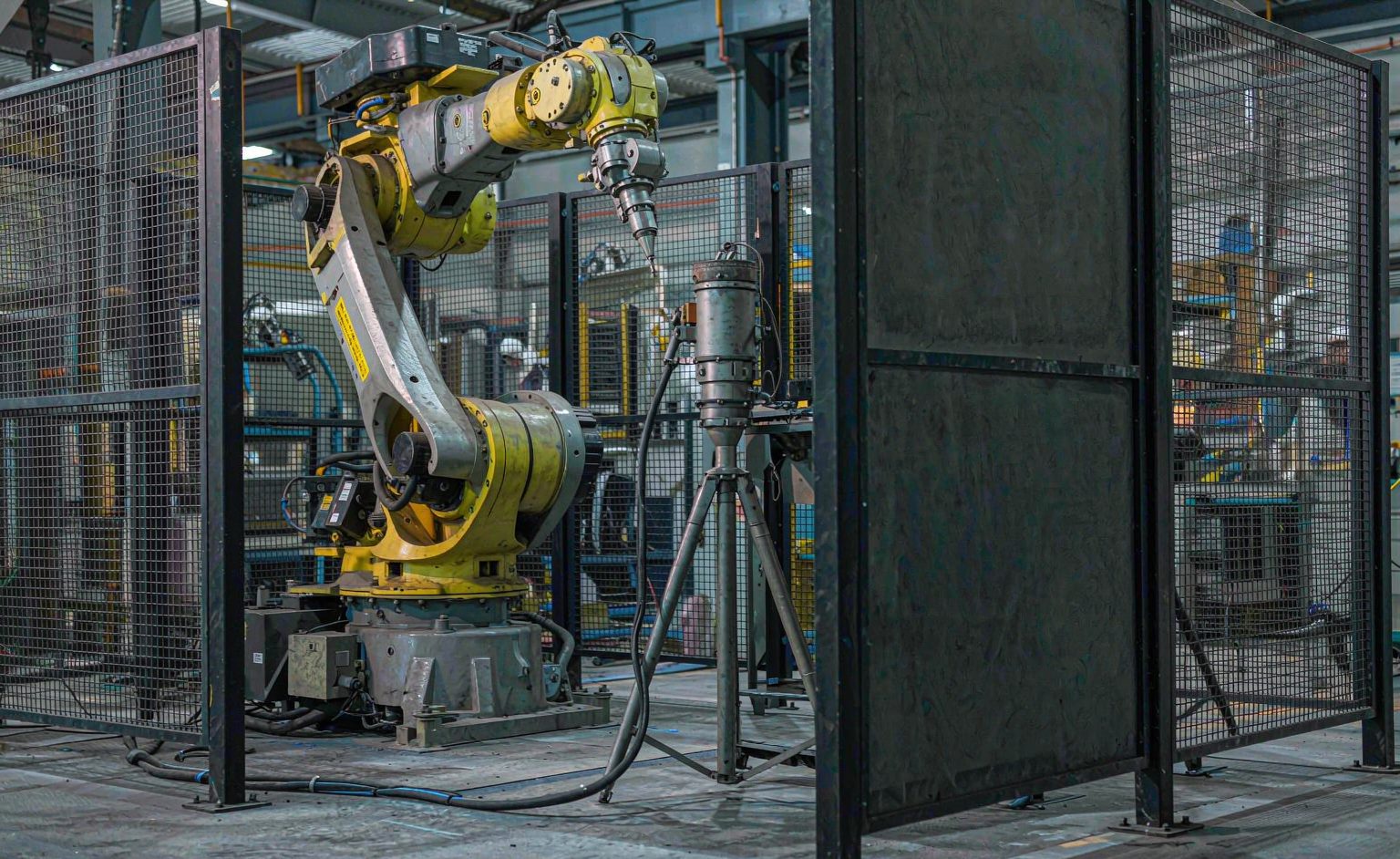
야스카와 용접 로봇 vs FANUC: 레이저 용접 셀 통합 노트
Yaskawa and Fanuc are the two names every welding-robot buyer shortlists, and the choice is rarely made on a single spec sheet. Both ship reliable six-axis arms, both integrate with every major welding power source, and both have global service networks. The real differences live in controller philosophy, programming model, ecosystem openness and the total cost of ownership over a decade — not in payload ratings that overlap almost completely. This comparison is written for integrators and plant engineers choosing a platform, not for a brochure shootout.
Key Takeaways
- Payload ranges overlap heavily (3–50+ kg); pick by reach and process, not by brand ceiling.
- Yaskawa’s strength is motion smoothness and a programmer-friendly controller; Fanuc’s is ecosystem breadth and pervasive service presence.
- Both integrate MIG/TIG/laser power sources; the differentiator is the weld-process add-on and fieldbus support.
- Total cost of ownership is driven by spare-part pricing, training and downtime — model a 10-year view.
- Cobot options from both vendors suit low-volume, collaborative cells rather than high-rate lines.
Payload and Reach: The Overlap Is the Point
Both vendors cover roughly 3 kg to 50+ kg payload with reaches from 500 mm to over 2 m. For welding, the common band is 6–20 kg with 1.4–2.0 m reach — enough for torch or laser head plus cable dress. Because the overlap is near-total, the decision should start from the specific part envelope and process, not from “which goes higher”. A torch-heavy laser head needs stiffness at full reach; a small MIG cell does not. Matching reach and stiffness to the joint geometry eliminates most of the apparent choice. The specifics of Fanuc laser-welding integration show how reach and dress-pack routing drive the real layout.
| 치수 | Yaskawa (typical) | Fanuc (typical) |
|---|---|---|
| Payload range | 3–50+ kg | 3–50+ kg |
| 도달하다 | 0.5–2.0+ m | 0.5–2.0+ m |
| Controller | YRC / MLX, motion-focused | R-30iB, ecosystem-focused |
| Fieldbus | EtherCAT, PROFINET, CC-Link | PROFINET, EtherNet/IP, DeviceNet |
| Ecosystem | Strong in motion, growing IoT | Very broad, pervasive service |
Controller Philosophy and Programming
Yaskawa’s controllers are widely regarded as motion-smooth and approachable for programmers who live in the pendant; path blending and tuning feel refined out of the box. Fanuc’s R-30iB leans into a vast, consistent ecosystem — the same control model appears across welding, handling and painting, which pays off for plants standardising on one platform. Neither is “better” universally; the question is which programming model your integrators already know, because training and support velocity beat a marginal spec edge over a ten-year life.
Welding-Process Integration
Both integrate MIG, TIG, laser and hybrid sources through standard interfaces and weld-process add-ons (touch sensing, seam tracking, weave). The practical differentiator is how cleanly the power source talks to the controller over the chosen fieldbus and how good the seam-tracking package is. For laser specifically, the integration story is in laser versus traditional welding and the controller’s ability to coordinate beam and motion at high path speed. A laser head is stiffer and lighter than a MIG torch, but it demands tighter path accuracy — which both platforms meet in the mid-band.
Ecosystem, Service and TCO
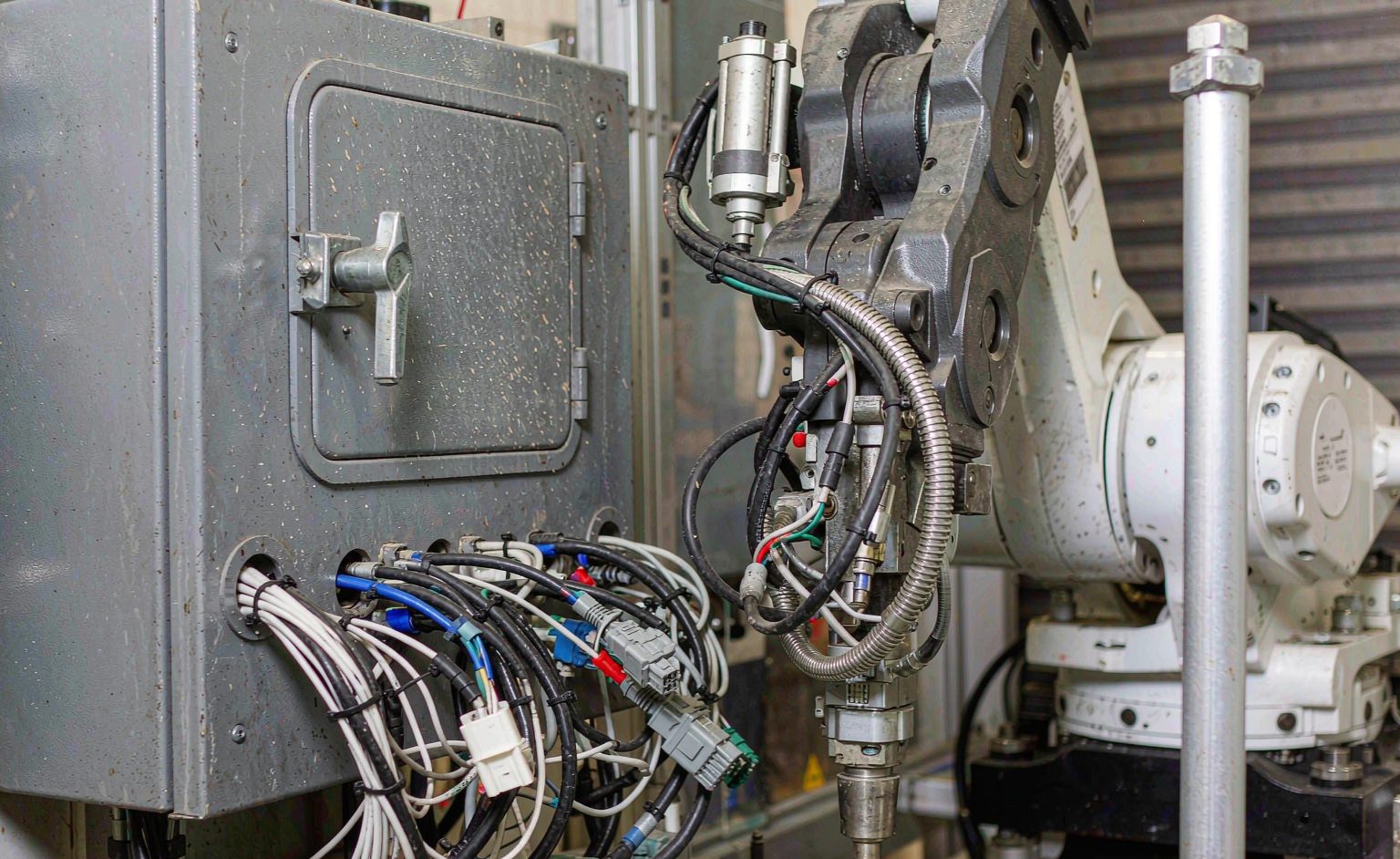
Fanuc’s service footprint is exceptionally broad, an advantage for single-site buyers far from a metro hub. Yaskawa’s strength is motion quality and a loyal programmer base. Total cost of ownership over a decade is dominated by spare-part pricing, dress-pack and cable wear, training, and downtime — not the initial arm price. Integrators should model a 10-year view: a slightly cheaper arm with expensive proprietary cables and scarce local support will out-cost a pricier, well-supported one. For low-volume collaborative work, both vendors offer cobot-class options discussed in our cobot vs industrial robot comparison.
자주 묻는 질문
Which brand is more reliable?
Both are industrial-grade and field-proven. Reliability differences are smaller than the differences in how well the cell is integrated and maintained.
Does laser welding change the brand choice?
Not fundamentally — both integrate laser heads. The deciding factors stay reach, stiffness and fieldbus fit with your power source.
Which is easier to program?
Yaskawa is often praised for motion programming; Fanuc wins on ecosystem consistency across many robot types. It depends on your team’s existing skills.
How should I model total cost of ownership?
Over 10 years, weight spare-part pricing, dress-pack/cable wear, training and downtime far more than the initial arm price.
Are cobot versions from both viable for welding?
Yes for low-volume, collaborative cells; they are not a substitute for high-rate industrial lines.
Which has better local service?
Fanuc’s network is exceptionally broad; Yaskawa’s is strong in industrial hubs. Check the specific region before deciding.
Technical background: industrial robot architecture, welding processes 과 PLC and controller concepts cover the relevant engineering.