
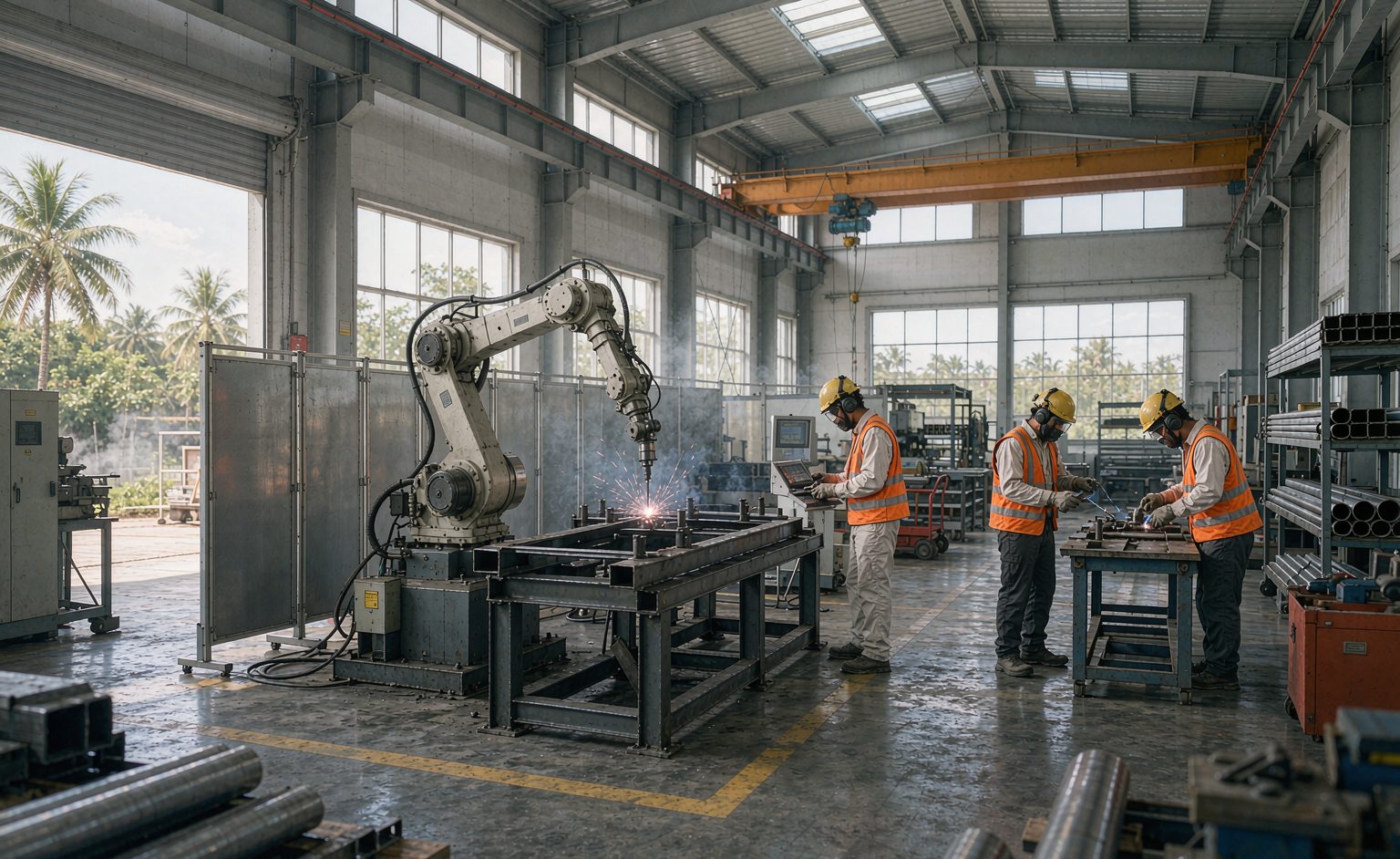
동남아시아를 위한 레이저 용접 로봇: 기후, 물류 및 현지 조립
Southeast Asia’s electronics, automotive and appliance supply chains are adopting laser welding as they move up the value chain. The technology transfers well, but the operating environment does not: tropical heat and humidity stress cooling and optics, and logistics are fragmented across many smaller markets. A cell that is robust in a temperate factory can struggle in a humid one unless climate and support are designed in from the start.
Key Takeaways
- Tropical heat and humidity stress the chiller, optics and electronics — cooling headroom is not optional.
- Fragmented logistics mean spares must be regionally positioned, not shipped from a distant hub.
- Local assembly and training shorten lead times and build competence on the ground.
- Safety compliance still applies; the Class 4 enclosure and interlocks are non-negotiable.
- A regional support model, not a single-country plan, fits the market structure.
Climate and Cooling
High ambient temperature and humidity change the design assumptions a cell is built on.
| 요인 | 효과 | Mitigation |
|---|---|---|
| Ambient heat | Chiller works harder | Extra cooling headroom |
| Humidity | Optics fog, corrosion | Climate control, sealed optics |
| Dust | Contaminated lenses | Filtration, maintenance plan |
The chiller sized for a European factory may run continuously near its limit in tropical heat, so cooling headroom is designed in, not added later. The enclosure that protects the optics and contains the beam is the same Class 4 design covered in our laser safety guide.
Logistics, Spares and Local Assembly
The region is many markets with different ports, customs and lead times.
| 과제 | Impact | Response |
|---|---|---|
| Fragmented logistics | Long spares lead times | Regional spares hub |
| Customs variance | Unpredictable delivery | Local assembly where feasible |
| Skill gaps | Slow adoption | Training on the ground |
Local assembly shortens lead times and builds regional competence, and it pairs with the India experience in our India market guide. The same support logic underpins a turnkey line offered across the region.
Regional Support Model
A single-country plan fits a single market; Southeast Asia needs a regional one.
| Element | Why regional | 이점 |
|---|---|---|
| Spares hub | Serves many small markets | Days not weeks |
| Mobile technicians | Cross-border coverage | Flexible response |
| Training centres | Builds local skill | Sustainable adoption |
The regional model lowers TCO the same way it does in India, but the logistics fragmentation makes positioning spares centrally even more important. Without it, a minor fault in a small market becomes a long idle.
자주 묻는 질문
How does tropical climate affect laser cells?
Heat makes the chiller work harder and humidity fogs optics and encourages corrosion. Cooling headroom, climate control and sealed optics must be designed in from the start.
Why position spares regionally?
Logistics are fragmented across many small markets with varying customs. A regional spares hub turns weeks of waiting into days, which protects uptime and TCO.
Does local assembly help?
Yes. It shortens lead times, smooths customs variance and builds competence on the ground, which supports faster, more sustainable adoption.
Is laser safety still required?
Absolutely. The Class 4 enclosure and interlocks are non-negotiable regardless of climate; tropical conditions affect cooling, not the beam hazard.
How is the support model different from India?
The principles match the India approach, but the regional, multi-market structure makes a central spares hub and mobile technicians more important than in a single large market.
What is the biggest adoption barrier?
Skill gaps and slow spares. Both are addressed by training centres and regional spares, without which cells underperform after the warranty ends.
Should I plan per country or regionally?
Regionally. A single-country plan cannot absorb the logistics fragmentation; a regional hub-and-technician model fits the market structure and lowers TCO.
Technical background: Southeast Asia, tropical climate 과 supply chain explain the regional context referenced above.