

조립 완료 후 용접 셀 사이클 타임 최적화
Every welding cell has two cycle times: the one quoted, and the one that shows up in production. The gap between them is rarely a single fault. It is the sum of small, individually defensible losses – a cautious approach move added at commissioning, a longer dwell while the fixture clamps, an operator who cannot quite get the part in before the robot returns. Closing the gap is a measurement exercise before it is a tuning exercise, and it starts by splitting the cycle into stages and timing each one honestly.
The framework for this is standard: cycle time analysis and overall equipment effectiveness exist precisely to turn a vague feeling of slowness into named losses. What follows is how those ideas apply specifically to a robotic laser welding cell that has already been commissioned and is running.
Split the Cycle Before Touching Anything
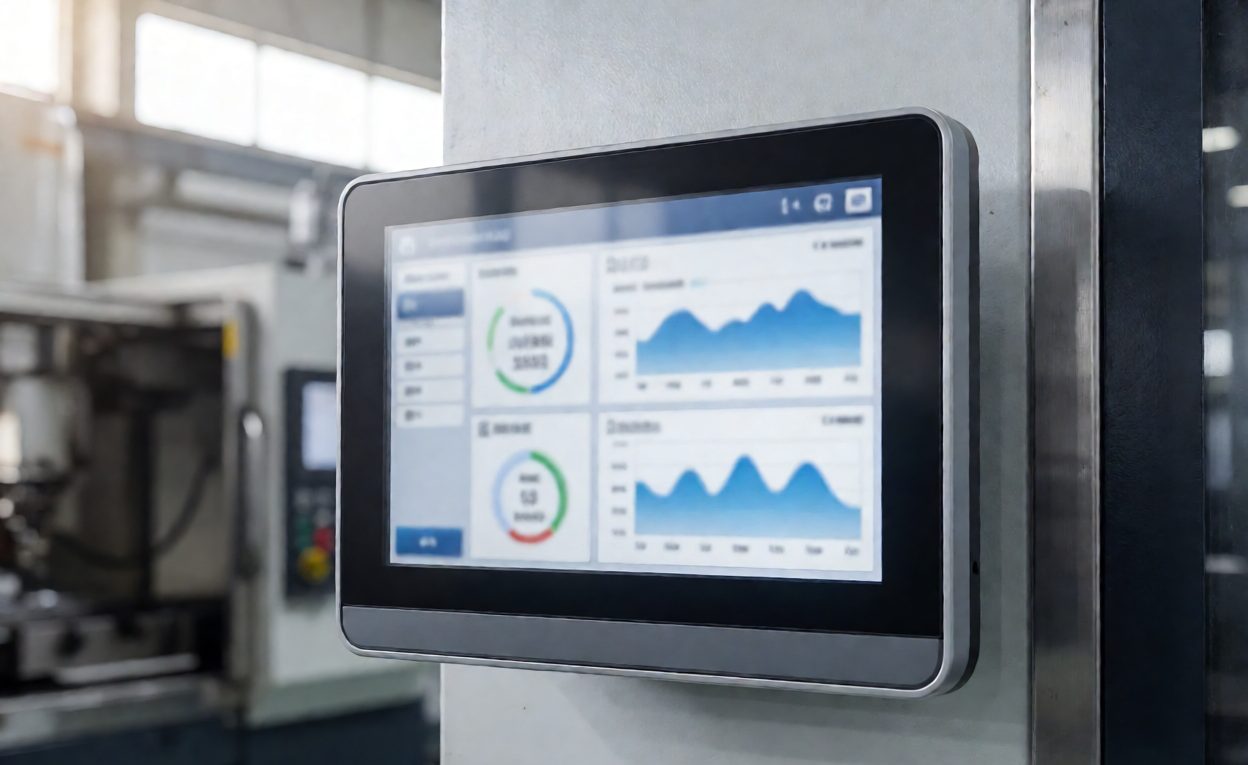
Most controllers will produce a per-instruction or per-block time report, and that report is the whole starting point. Convert it into a stage table and the losses usually separate into five bins:
- Weld time: the actual arc-on or beam-on time. This is fixed by the weld schedule and rarely the problem, despite being the stage everyone blames first.
- Approach and retract motion: often the largest non-weld component, and the one most inflated by conservative commissioning settings.
- Clamp, index and dwell: fixture actions inserted between welds, each a second or two, totalling far more than anyone expects.
- Tracking and correction moves: necessary when they correct real variation, wasteful when they compensate for avoidable fit-up error.
- Waiting: robot waiting for the operator, operator waiting for the robot, or both waiting for an upstream process.
Time five consecutive parts against this table before changing anything. The temptation to skip this step is strong and the cost of skipping it is real: without stage times, optimization becomes a series of guesses, and guesses that touch the weld schedule can degrade quality in exchange for seconds that motion changes would have provided for free.
Attack Motion First
Motion between weld positions is usually recoverable without any process risk. The programming and teaching cost-per-part article covers how programme quality affects economics; the practical levers here are specific:
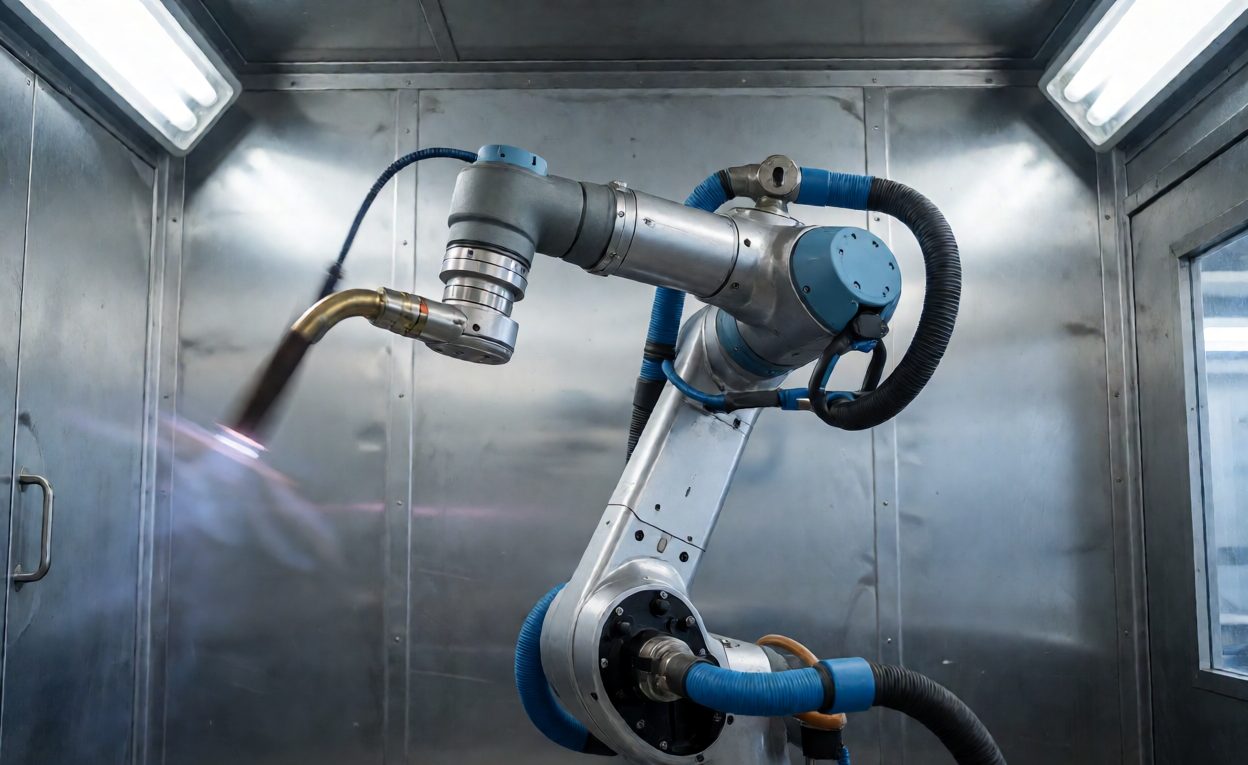
- Speed settings inherited from commissioning: programs commissioned slowly for safety verification are often never fully sped up. Raise joint and linear speeds segment by segment with the safety system verified, not wholesale.
- Blending and corner smoothing: a robot that decelerates to a full stop between every weld loses seconds that blending recovers without changing weld positions.
- Path geometry: approach points taught one at a time accumulate detours. Re-teaching the sequence as a coherent path often removes more time than any speed change.
- Simultaneous tracking limit: where the seam tracking system runs, confirm its correction rate matches actual variation rather than a worst-case setting.
The joint design matters here more than buyers expect. The joint design and fit-up guide quantifies how a loose tolerance forces slower travel, more tracking and more rework – which is why the cheapest cycle time project is sometimes a fixture improvement rather than any change to the robot.
Overlap the Human and the Robot
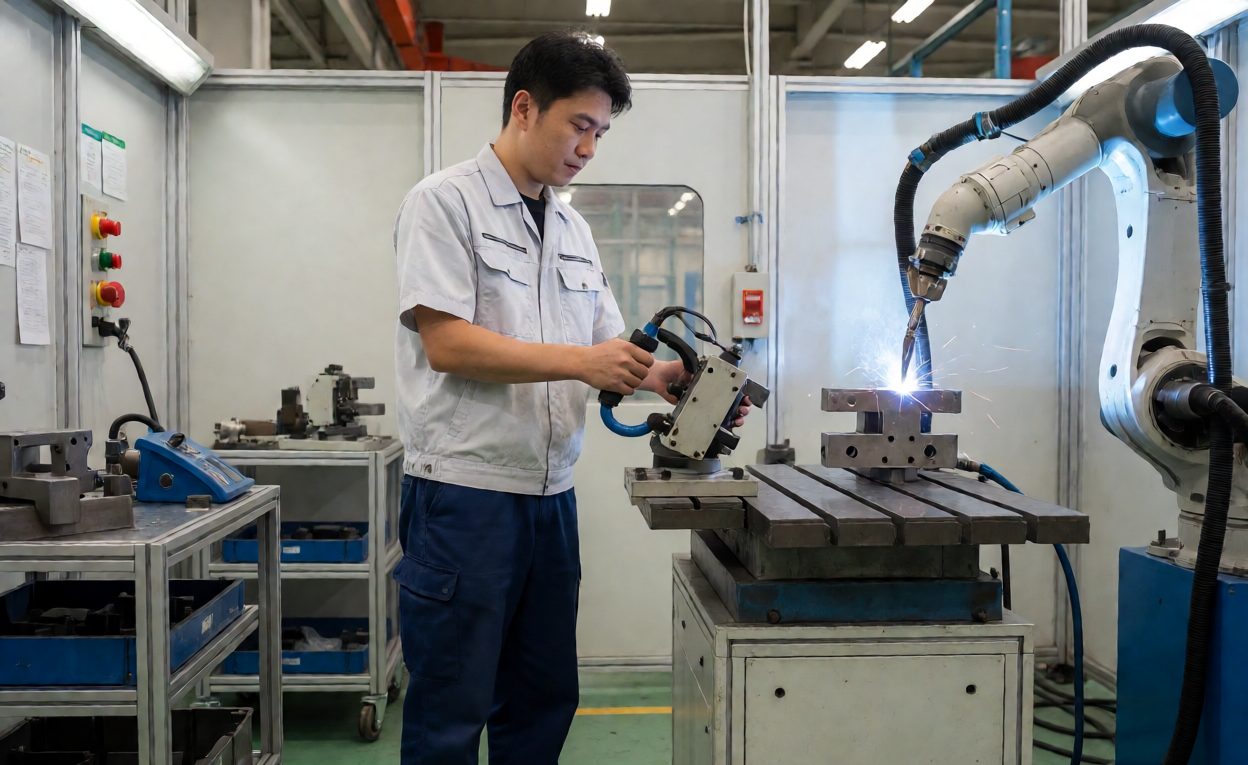
If the robot waits for the operator to load, the highest-value change is structural rather than a programming edit. A second fixture position, a turntable positioner, or a simple swap table lets the operator load at one station while the robot welds at the other. The integrated loading and positioning article describes the full hardware version; even a manual dual-station arrangement routinely removes the single largest waiting block from the cycle.
Where the cell already overlaps, the remaining waits move upstream. Material presentation, part availability and the schedule of what runs when now dominate, and those belong to production planning rather than to the cell. This is where the analysis naturally becomes a throughput question for the line rather than a cell question, and it is important to recognize the boundary: further gains inside the cell will be absorbed by upstream variation unless the upstream is stabilized first.
Guardrails So Optimization Does Not Cost Quality
Every cycle time project should run against three constraints, written down before the first change:
- Weld schedule untouched: power, speed and focus changes are a separate process exercise with its own verification, not a motion optimization side effect.
- Quality verification after each change batch: re-check coupons after each group of changes, not once at the end, so a regression can be attributed.
- Safety settings untouched: speed limits tied to safety validation stay where they are until a documented re-validation says otherwise.
Managed this way, a commissioned cell typically gives back ten to twenty percent of cycle time without touching a single weld parameter, and the recovered capacity is free in a way that a second cell never is. The discipline that keeps it recovered is measurement: keep the stage table current, re-time after any programme or fixture change, and treat a drifting cycle time as an early warning of fixture wear, tracking drift or an operator struggling with a part. The cycle time table is not a one-off project artifact; it is the cell’s ongoing health record, and teams that maintain it find problems in weeks instead of at the next audit.
자주 묻는 질문
Where does lost cycle time usually hide?
In approach and retract motion, clamp and index dwells, and robot-operator waiting – not in weld time, which is where most people look first.
What is the first step after commissioning?
Pull the controller’s per-block time report, build a stage table, and time five consecutive parts before changing anything.
Can motion be sped up safely?
Yes, segment by segment, with safety-validated speed limits left untouched and each change batch verified before the next.
How is operator waiting removed?
By overlapping loading and welding with a second fixture position, a turntable or a swap table, so neither waits for the other.
Does seam tracking affect cycle time?
Yes. Correction moves take time, so the tracking rate should match actual variation rather than a worst-case commissioning setting.
Why not just raise weld speed?
Because weld parameters belong to a separate process exercise with its own quality verification, and motion changes usually deliver the seconds first.
How much cycle time is typically recoverable?
Commonly ten to twenty percent on a recently commissioned cell, from motion, dwell and overlap changes alone.