
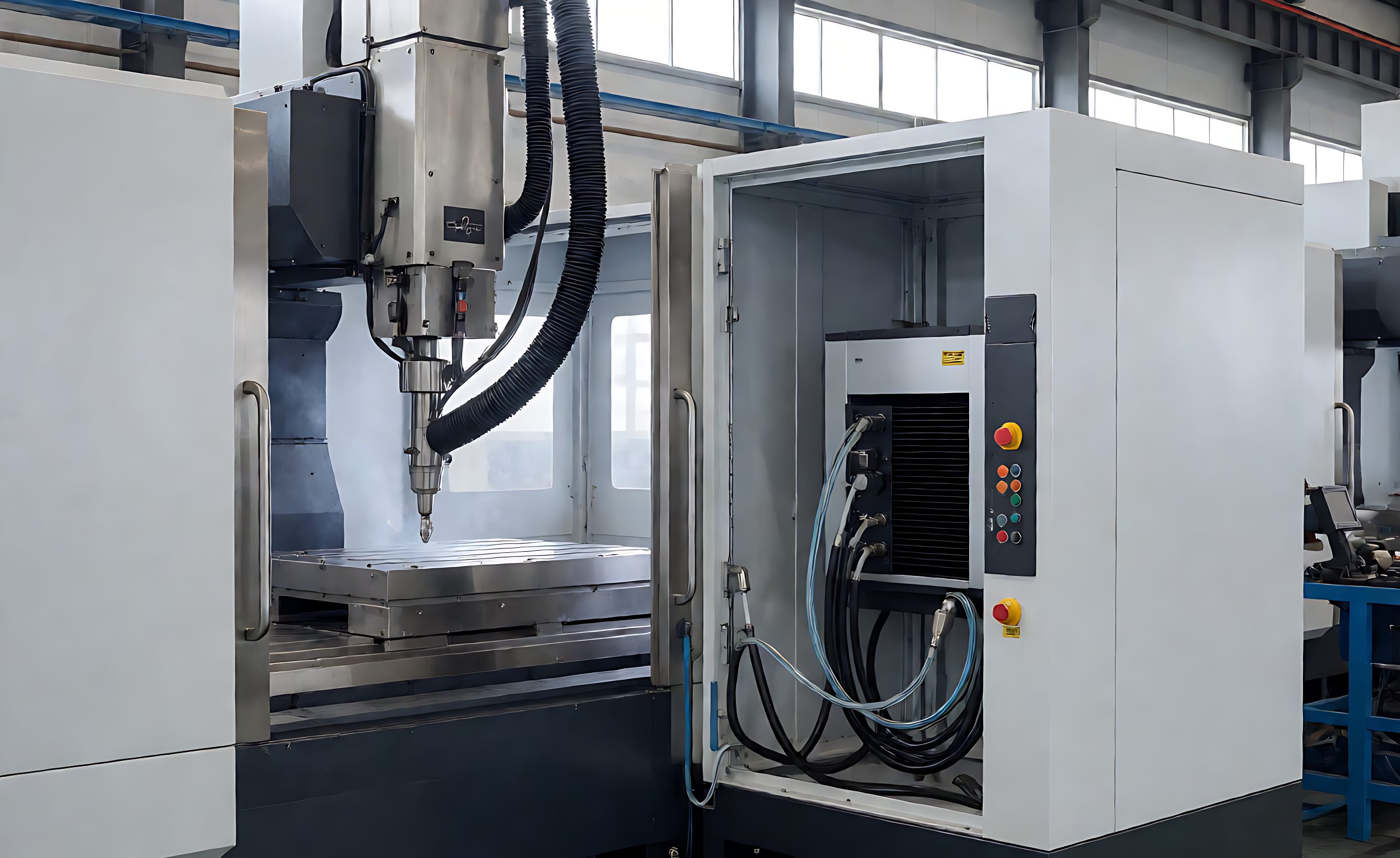
特定の肉厚範囲におけるレーザー光源パワーの選定
Every buyer eventually asks the same question: what power do I need for the thickest part? It is wrong in two ways. It sizes the cell against an outlier that may run once a year, and it ignores everything else that decides whether that plate welds well – joint type, material, travel speed, fit-up and whether filler wire is involved. Cells bought this way are oversized, expensive, and often slower than a smaller machine correctly applied.
The better question is asked as a range: which wall thicknesses actually appear week to week, on which materials, with which joints, at what acceptable cycle time. The answer sets the source rating, and it also determines whether a higher power would help at all. This article walks through the relationship between power and penetration, where it stops being linear, and how to size honestly.
Power, Penetration and Where It Stops Being Linear
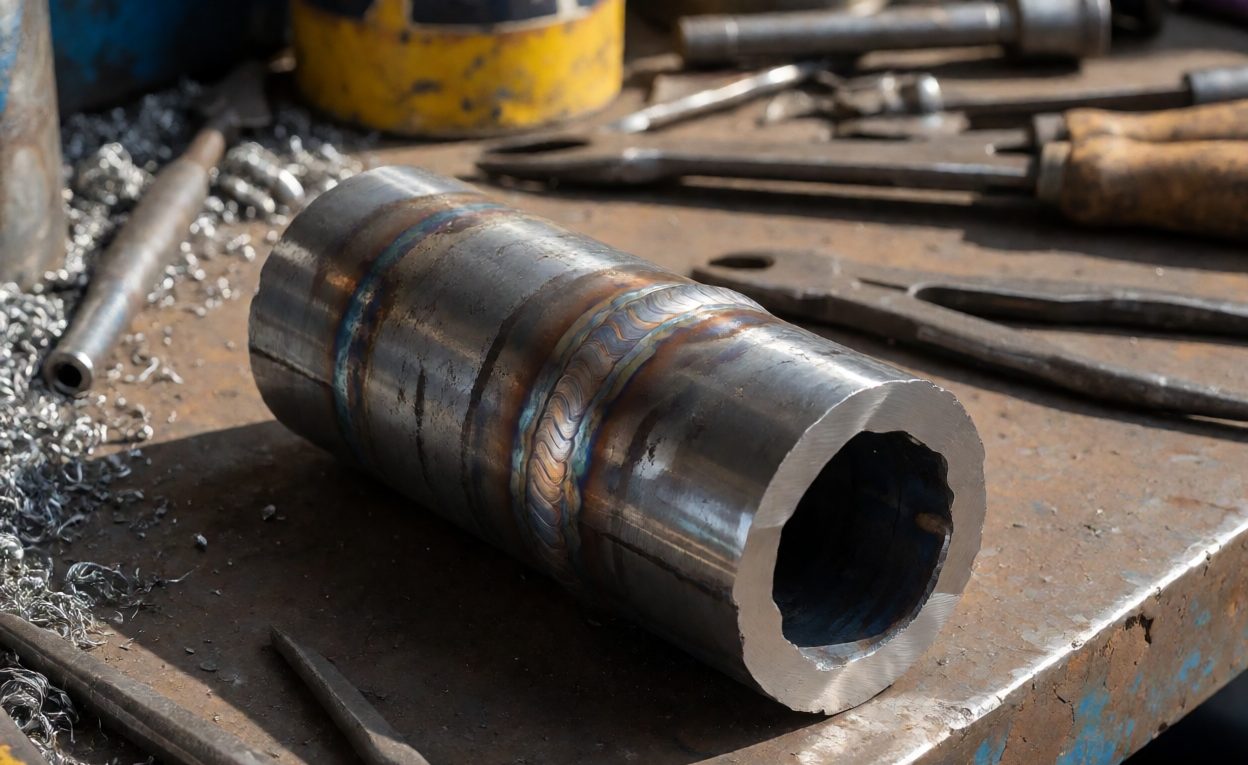
レーザービーム溶接 driven to depth forms a keyhole, and penetration follows power density at the workpiece rather than raw watts. That distinction explains much of the confusion in supplier catalogues:
- Spot size and optical configuration: the same source delivers very different penetration through different optics. A smaller spot concentrates density, improving penetration at the cost of fit-up tolerance.
- Diminishing returns: doubling power does not double depth. Practical gains flatten as weld pool dynamics, plume behaviour and heat conduction take over.
- Travel speed trade-off: extra power buys speed at the same depth as readily as it buys depth at the same speed. Deciding which you want changes the answer.
- Material differences: aluminium, copper alloys and stainless steel each move the relationship, usually downward in usable penetration for the same nominal power.
- The heat affected zone: higher power changes the heat affected zone and distortion behaviour, which can matter more than depth on thin gauge assemblies.
This is also why thin sections are not simply easy. Below roughly a millimetre, the challenge becomes controlling heat input rather than generating it, and a large source run at low duty can be less stable than a smaller one working nearer its design point. The controllable penetration discussion covers how modern sources behave away from full power.
Starting From the Range You Actually Run
The practical way to specify power is to tabulate production before reading any catalogue:
- Thickness distribution: every thickness run more than occasionally, with estimated annual volume. Most plants find that three thicknesses account for the overwhelming majority of work.
- Material list: mild steel, stainless, aluminium and coated grades belong in separate rows, because each shifts the power requirement.
- Joint types: butt, lap, fillet and T-joints need different penetration targets. Lap joints often need control rather than depth, as set out in the 継ぎ目デザインガイド.
- Target cycle time: whether the cell must keep pace with a line or simply finish within a shift changes meaningful constraints entirely.
- フィラー戦略: adding wire relaxes fit-up tolerance and changes the process economics, explained in the filler strategy comparison.
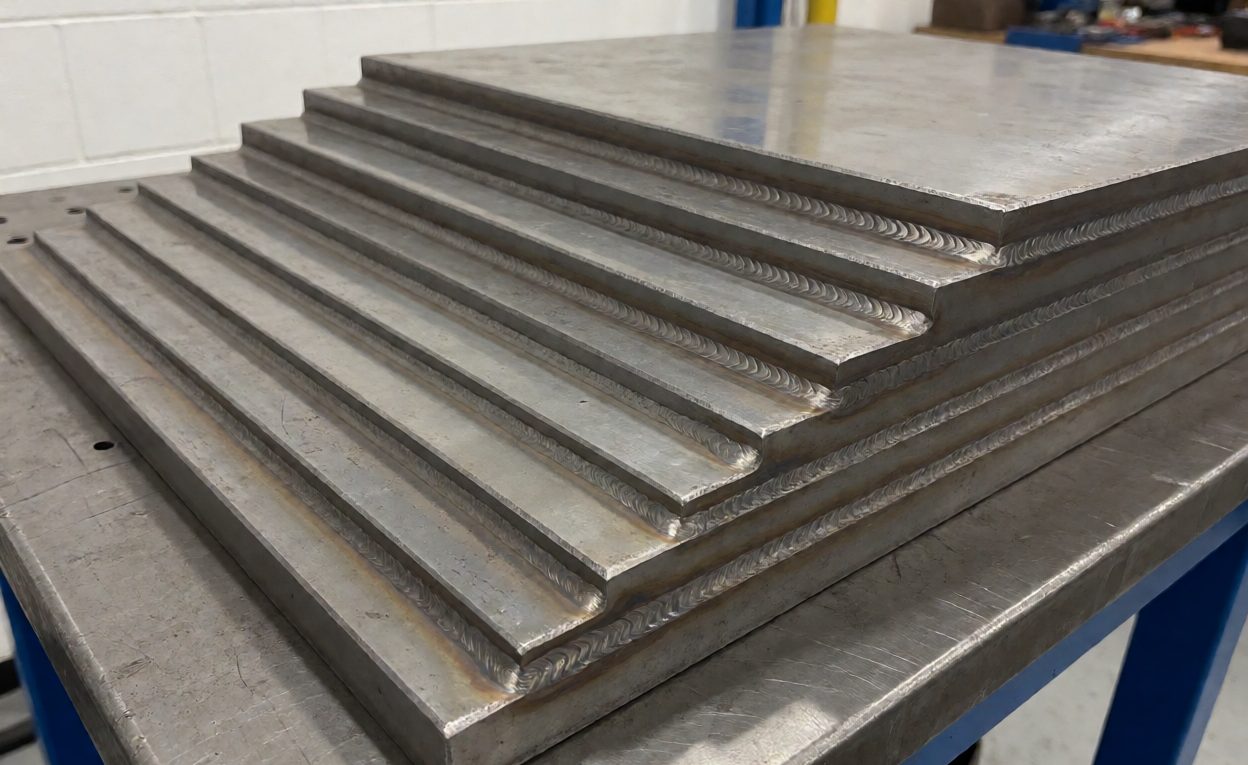
Once stabilised, the specified thickness may need resizing. Where genuinely heavy sections are routine rather than hypothetical, the heavy-duty 3000 W approach sets out what higher power buys in practice. Where the top of the range is intermittent, ハイブリッドレーザーMIG溶接 often reaches thicker material more economically than a larger source, at the cost of a second process to qualify and maintain.
What Extra Watts Cost Beyond the Purchase Price
A larger source is not merely a more expensive line item; it changes several things downstream, and these belong in the comparison rather than in the small print:
- Cooling capacity: more dissipated heat means a larger chiller, more pipework and greater electrical load, which flows directly into the power and chiller sizing.
- 光学部品: higher average power shortens protective window life and raises consumable cost per part.
- Safety classification: enclosure rating and procedural requirements rise with source power, feeding back into the interlock and access design.
- 足跡: bigger source cabinets and chillers consume floor plan that could have gone to staging.
- Low-duty instability: a source run far below rating may not hold the stability of one sized closer to its working range.
Brand and architecture matter too. Beam quality, modulation response and reliability differ across suppliers, and the fiber laser source comparison outlines how ファイバーレーザー designs vary in practice rather than in specification sheets.
Proving It Before Acceptance
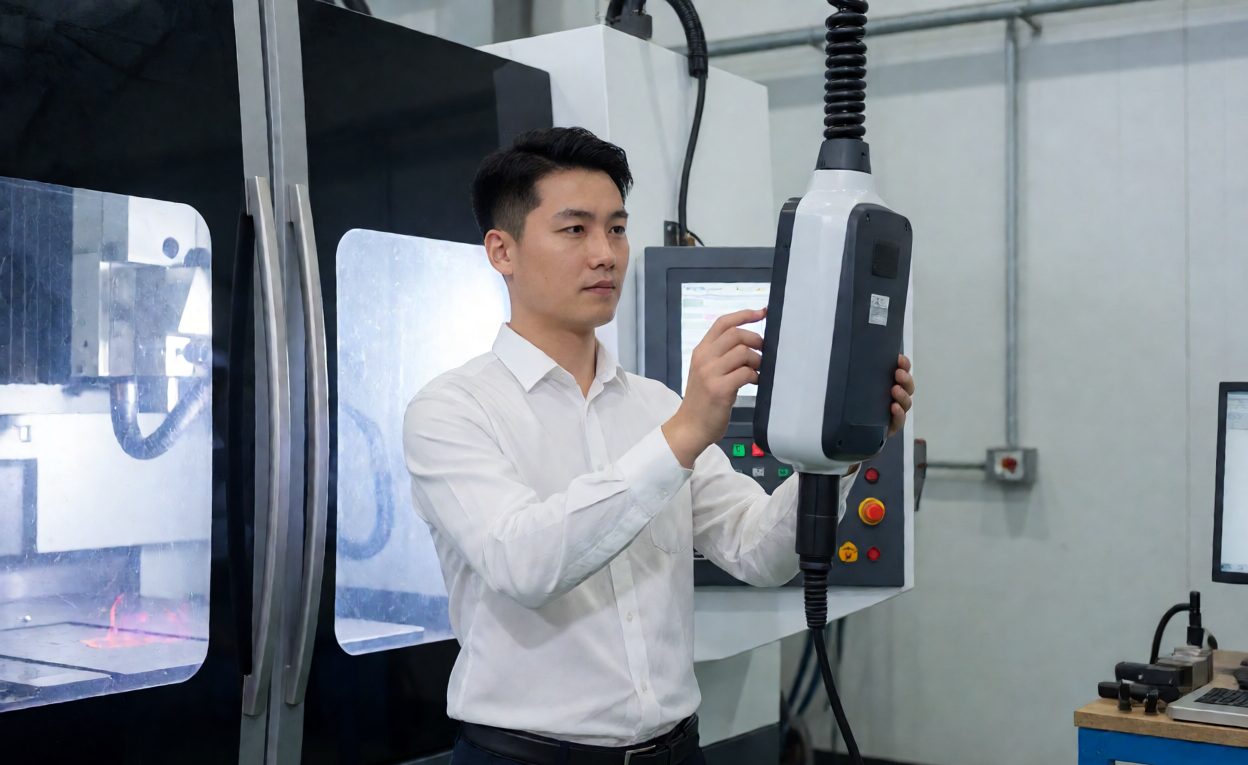
Nothing in this decision should rest on a catalogue figure. The specification should include a witnessed weld trial on the buyer’s own material:
- Sample set across the range: thinnest, most common and thickest production parts, welded with production fixturing.
- Acceptance evidence: sectioning, dimensional checks and any required testing, using the criteria from the acceptance criteria article.
- Parameter sheets retained: the settings that produced acceptable welds, filed with the machine rather than kept in someone’s memory.
- Cycle time measured: proof that throughput targets are met, not merely that the weld looks correct.
- Station configuration checked: some cells need the station geometry reviewed against the reach and optical requirements, described in the multi-axis workstation guide.
Material-specific limits deserve the same treatment. Where aluminium sits in the product mix, the aluminium parameter window is usually narrower than buyers expect, and discovering that during a witnessed trial costs a day rather than a quarter.
よくある質問
How much laser power is needed per millimetre of steel?
There is no single ratio. Penetration depends on power density, optics, material and travel speed, so a witnessed trial settles it better than a rule of thumb.
Is buying more power ever wasted?
Yes, when it is bought for a part that rarely runs. The extra chiller, optics cost and floor space are paid for every day regardless.
Can higher power weld thinner material?
It can, but thin gauge work is a heat input control problem. A source working near its design point often gives better results.
Does adding filler wire reduce the power needed?
It relaxes fit-up tolerance and can bridge gaps, changing what is achievable, but it does not replace correct power sizing.
Should heavy sections use a hybrid process instead?
Often yes for medium-thick plate and intermittent heavy work, since hybrid reaches further per installed watt than a larger pure laser source.
How much does material choice change the answer?
Substantially. Aluminium and copper alloys are far less forgiving than mild steel at identical nominal power.
What should be in the acceptance trial?
The thinnest, most common and thickest production parts, welded with production tooling and verified against written acceptance criteria.