
Extracción de humo de soldadura láser y requisitos de calidad del aire
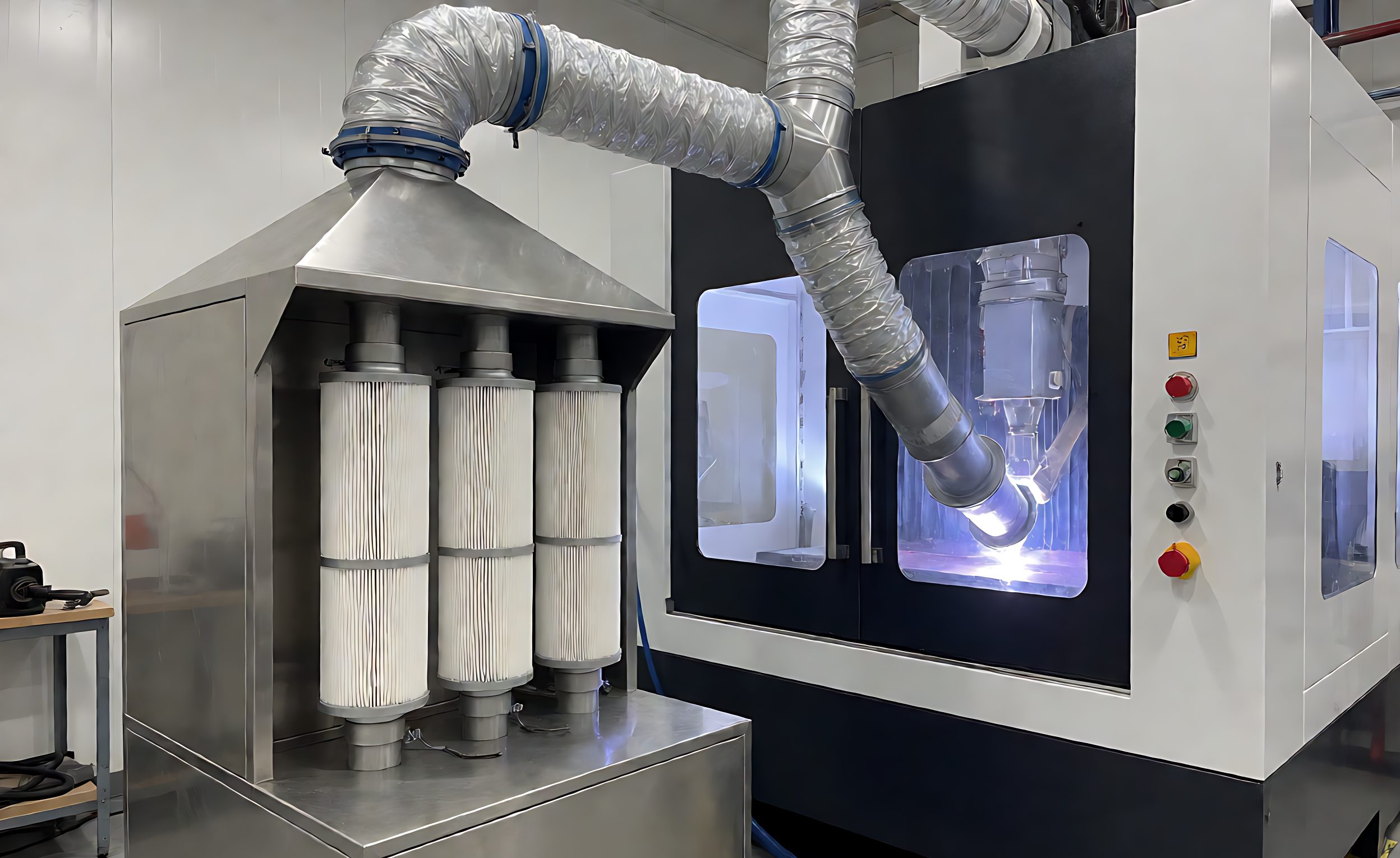
Fume is the least glamorous part of a laser welding cell and one of the few with consequences in three directions at once: operator health, process stability and neighbours’ tolerance of the plant. Extraction is usually purchased as an accessory at the end of a quotation, specified by catalogue number rather than by airflow, and that is how cells end up with beautifully designed enclosures that slowly fill their optics with condensate.
The reason is straightforward. Capture is not a cleanup problem; it is a process parameter. Remove the plume badly and you introduce turbulence in the shielding gas envelope, which shows up as porosity rather than as visible smoke. This article covers what to specify: how much airflow, where it is captured, what the filter does with it, and how the cell proves its air quality is still what it was on commissioning day.
Capture First, Filtration Second
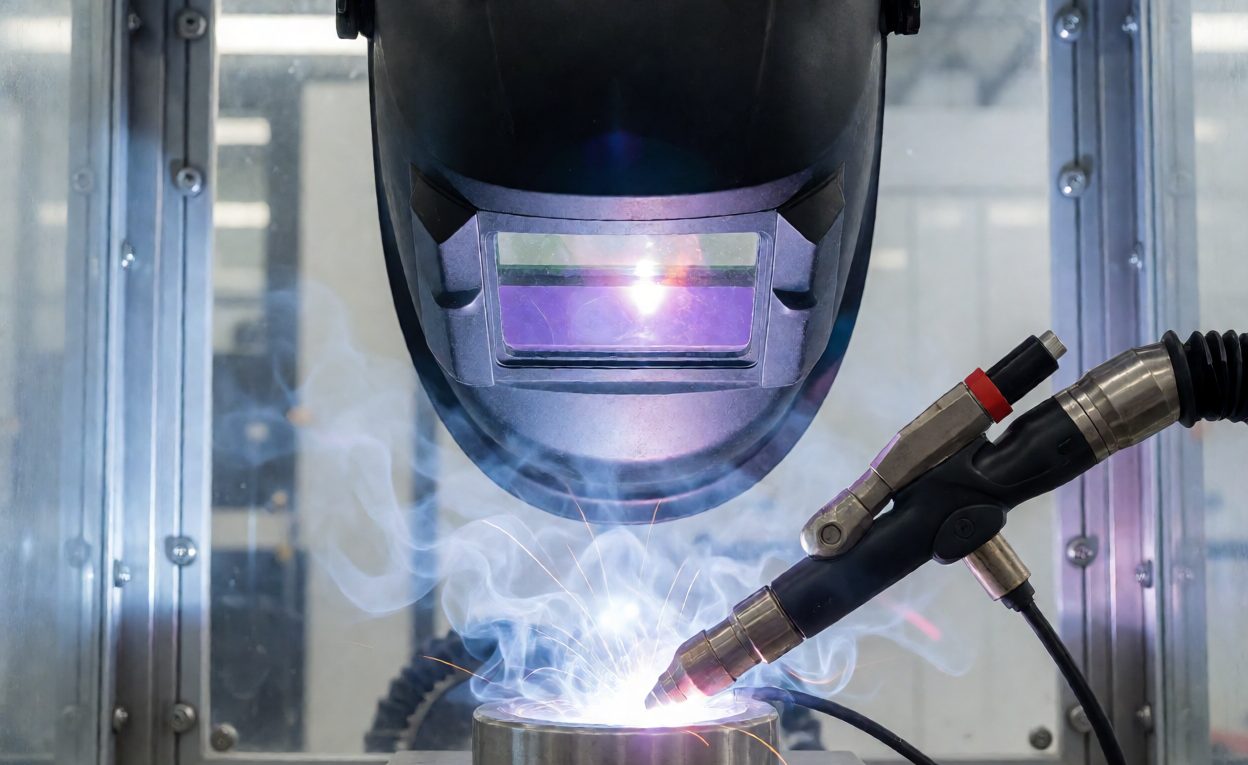
Every extraction quote should begin with a capture question, not a filter question. Once fumes have escaped into the room, no amount of downstream filtration helps the operator standing there.
- Capture point proximity: the hood should sit close to the weld, above and slightly downstream, catching the plume as it rises rather than after it spreads.
- Capture velocity: enough air movement at the plume to overcome draughts from doors, fans and passing vehicles. The measured figure and assumed distance belong in the specification.
- Enclosure containment as the primary barrier: the enclosure contains the hazard while filtration cleans extracted air; the two work together only while the enclosure stays closed.
- Duct runs and pressure loss: long ducting, elbows and flex hose consume static pressure, so a unit sized by free-air rating underperforms in a predictable direction.
- Induced draughts: an opening access door or a nearby compressed air nozzle can defeat a nominally correct capture velocity.
Shielding gas interacts with all of this, which is why the fume extraction and spatter control discussion belongs next to the parameter window rather than next to the electrical cabinet. Cells that fight porosity for months often trace it back to extraction velocities, and the resulting variation is documented in the weld verification article as porosity and lack of fusion.
Sizing Airflow and Choosing Filter Stages
Airflow follows the enclosure volume and the number of changes per hour appropriate to the duty cycle, then gets corrected for installed pressure loss. Air filter technology then determines what happens to what has been captured:
- Pre-separation: spark arrestors or mechanical separators ahead of fine filters protect the expensive media from hot particles.
- Main filtration: pleated cartridges sized for the expected particle load, with the loading assumption stated, because undersized media saturates quietly and loses airflow.
- Fine filtration: HEPA filtration where fine respirable material or regulatory requirements justify it, noting that it adds pressure drop and therefore energy cost.
- Gas-phase treatment: some coated and alloyed materials generate compounds that particle filters cannot address, and the specification should say so explicitly.
- Discharge: recirculation into the factory or ducting outside. Recirculation saves heating energy and requires the discharge quality to be defensible.
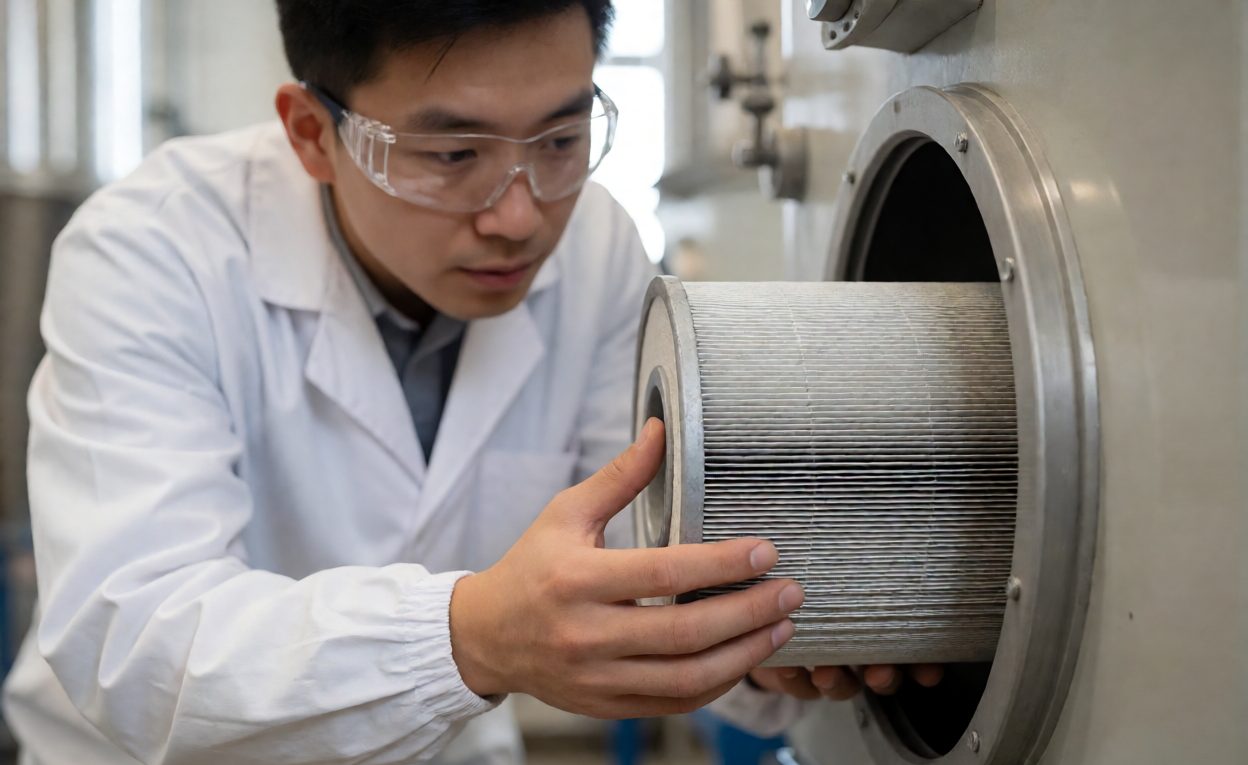
Two cost items follow from sizing and are worth asking about at quotation stage. Filter replacement intervals drive operating cost per part, set out in the artículo sobre costo de consumibles por pieza, and should be expressed as hours rather than as optimistic assumptions. Electrical load is second: fans and any filter-cleaning compressor belong in the power and chiller sizing calculation, and filter stock belongs in the first-year spares kit.
Air Quality Limits Worth Writing Down
A buyer does not need to become an industrial hygienist, but three things need to be explicit before contract rather than discovered afterwards:
- Measurable limits: stated exposure or concentration figures with the standard referenced, so that compliance is a measurement rather than an opinion.
- Where the measurement happens: at the operator position during normal loading, not at the duct outlet on a quiet morning. Indoor air quality depends heavily on where and when it is sampled.
- Acceptance test method: who measures, with what instrument, on what day, and against which limit – written into the acceptance criteria alongside weld quality.
- Baseline and periodic monitoring: one result at commissioning plus a recurring schedule, because filter performance drifts and duty cycles change.
Living with the System
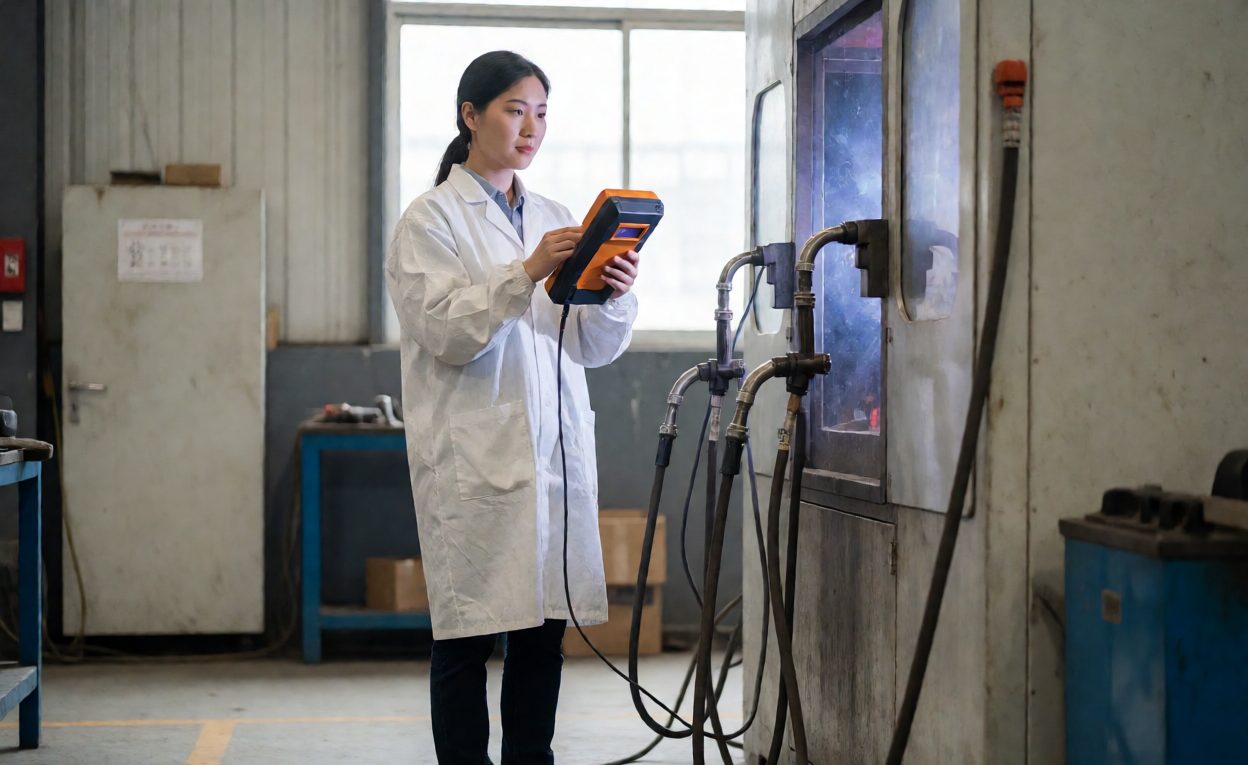
Extraction degrades gracefully, which is why it gets neglected. Airflow falls slowly, nobody notices, and the change is blamed on optics or wire quality rather than on a filter that saturated two months ago. Three habits prevent this:
- Differential pressure monitoring: a pressure gauge or sensor across the filter gives an objective replacement trigger instead of a calendar guess.
- Counters into the cell controller: filter hours, cleaning cycles and alarm states are available as signals, and the remote monitoring article shows how cheaply they join the tag list.
- Documented airflow check: a periodic measurement at the capture point, recorded, so degradation shows as a trend rather than as a surprise.
- Safety interlock coordination: where an automatic cleaning cycle interrupts airflow, the interlock design must know about it rather than assume continuous extraction.
Maintenance questions answer themselves when airflow is monitored: filters that reach their differential pressure early indicate a capture problem upstream, while filters that last suspiciously long often indicate air is taking a shorter route into the room. Either way the cost of finding out early is a filter and an afternoon, and the cost of finding out late is usually expressed as scrap.
Preguntas frecuentes
¿Cuánto flujo de aire necesita una celda de soldadura láser?
Sized from enclosure volume, target air changes per hour and installed duct pressure loss. Ask for the calculation, not just a unit catalogue number.
¿Se puede recircular el aire extraído hacia la fábrica?
Yes where discharge quality is demonstrably within the stated limits. Recirculation saves heating and cooling energy, so it is often the default.
¿Es siempre necesaria la filtración HEPA?
Not always. It depends on the materials welded and the applicable limits; HEPA adds pressure drop and energy cost, so it must be justified.
Why does porosity sometimes follow an extraction change?
Excess capture velocity disturbs the shielding gas envelope. Correcting a smoky cell by increasing airflow can introduce weld defects.
¿Cada cuánto tiempo se deben cambiar los filtros?
On differential pressure rather than on a calendar. Operating hours then become an estimate used for stocking rather than a trigger.
Should air quality be part of cell acceptance?
Yes. State the limits, the measurement positions and the method in acceptance criteria so compliance becomes a measurement rather than an argument.
What happens if the extraction unit fails?
The interlock should stop emission rather than allow welding to continue. Silent failure is the failure mode that matters most.