

Metal Cutting Laser Machine Trial: Define Parts, Quality Checks and Site Inputs
Quick answer: A metal cutting laser machine trial should use representative parts and a written cut-quality plan tied to the material, drawing revision, fixture and downstream requirement. Buyers should define the measurement method, record process assumptions and assess site interfaces with qualified engineers. A sample cut does not establish suitability for other materials, thicknesses or production conditions unless those are included in the agreed trial.
1. Select parts that represent the production family
Provide the current drawing, material specification, thickness range, part revision and sample pieces for the proposed trial. Identify which cut features, edges or access points matter to the buyer. If parts have different orientations or surface conditions, include them or state that they are outside the test. Mark the drawing revision on the sample record. A representative part set helps the supplier evaluate the requested work instead of demonstrating a convenient geometry that does not reflect the intended production.
2. Define cut quality in observable terms
State what the buyer will inspect, such as dimensional features, edge appearance, burr condition or another requirement from the product specification. Identify the measurement method and who interprets the result. Avoid vague terms such as “clean cut” without a reference or acceptance limit. If a downstream joining or finishing step depends on the cut, include that interface in the review. Keep any measurement result linked to the part and process revision so the team can distinguish a specific trial from a broad performance promise.

3. Review nesting, fixture and access
Show how each part is located, supported and oriented during processing. Identify features that restrict tool access, part movement or removal. If the supplier proposes a fixture, review the datum plan and how it holds the part without obscuring the cut path. Note loading method and how finished parts are separated or identified. A sample run that ignores fixture and handling can understate the effort required to reproduce the cut in the intended workcell. Record which equipment and fixture configuration were used for the trial.
4. Agree on cycle-time boundaries
Define when timing begins and ends, including whether loading, unloading, inspection, changeover or part identification is included. Use the same boundaries for every quotation comparison. Record the quantity, program revision and conditions used. If the supplier reports a rate, ask which assumptions support it and whether it reflects one part or a production sequence. Do not treat a short demonstration as a guaranteed line rate unless the contract and acceptance plan say so. A clear time measure helps the buyer compare options without changing the denominator between trials.
5. Confirm material and process assumptions
Ask the supplier to list the material grade, surface condition, thickness, consumables and process setup used. Compare those inputs with the buyer’s released part specification. If a proposed substitute or alternate condition is tested, label it separately. Keep the process owner responsible for deciding whether the trial conditions represent production. This record is particularly useful when the same part family has several materials or revisions. It prevents a result from one sample from being repeated as evidence for a different material condition.
6. Map utilities, extraction and cell integration
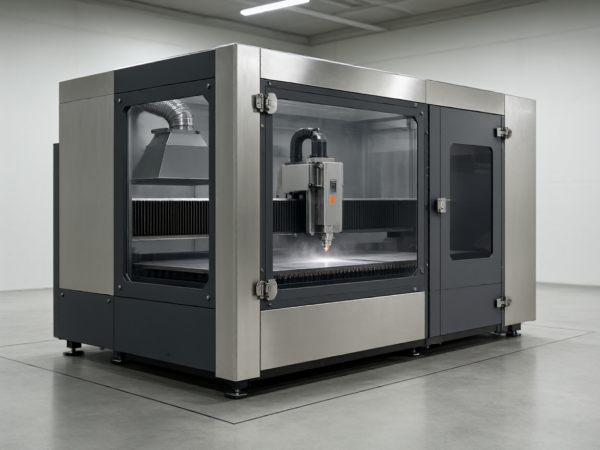
List the site information needed for installation, such as footprint, floor conditions, utilities, material flow, extraction requirements and controls connections. Assign a qualified owner to verify each interface at the facility. Confirm where the operator stands, how parts are moved and what guarding or access review is needed. Do not rely on a generic layout image to close site-specific issues. A complete integration list helps the project team identify constraints before delivery and supports a realistic commissioning plan.
7. Keep test records tied to the machine setup
Capture the machine configuration, program, fixture, sample identifiers, measurement approach, results and open issues. Identify who prepared and who reviewed the record. If different process versions are trialed, do not combine their observations into one result. Keep photos and measurement sheets with the relevant part revision. A concise report makes the sample reproducible and helps the buyer discuss deviations without relying on memory or a summary slide.
8. Decide what must happen before order release
Agree whether a revised sample, site review, safety assessment, technical clarification or contract acceptance test remains open. Name an owner and due date for each item. Tie the final purchase order to the approved part family, machine configuration and evidence expected at installation. Reopen the review when material, drawing, fixture or site assumptions change. This gives the buyer a clear decision record and prevents an unresolved trial assumption from becoming an undocumented production requirement.
For buyers comparing available product and supplier options, see TrueSyn laser cutting systems.
Questions buyers often ask
What should a metal cutting laser machine trial include?
Use representative material and parts, a defined fixture, an agreed quality method, timing boundaries and recorded machine assumptions.
Can a sample cut guarantee every part in the family?
Only if the trial includes the relevant geometry, material and operating range; otherwise document the limits of the result.
Who sets the cut-quality criteria?
The buyer’s product or process owner should define the requirement and measurement method for the application.
What site inputs should be checked before order release?
Confirm footprint, utilities, extraction, material flow, controls interfaces and site-specific safety review ownership.