

Laser Welding Cell Acceptance Trials and Signoff Criteria
Acceptance trials are the last point at which a buyer has leverage over a welding cell. After signoff, corrections are requests rather than obligations. The trials therefore need to prove what the specification claims, in the buyer’s actual conditions, against criteria both parties agreed before the trial started.
The trials are also where a supplier demonstrates the cell honestly. A supplier confident in the build welcomes defined criteria; one who prefers an open demonstration is usually avoiding them.
What the Trials Must Prove
The trial set maps directly to the specification claims. Weld quality, cycle capability, reliability over a defined window, and the integration and safety functions all need evidence rather than demonstration.
- Weld quality – penetration, profile and defect status on samples from the trial run.
- Cycle capability – the specified cycle time sustained, not achieved once.
- Reliability – operation over a defined window without unresolved faults.
- Safety and integration – interlocks, e-stops and the plant interface functioning as designed.
The Criteria
Criteria should be numeric and stated in advance. A penetration depth with a tolerance, a defect classification with an acceptance level, a cycle time with a stated measurement method, and a reliability window with a defined fault threshold. Vague criteria produce a signature that cannot be defended later, because nobody can say what was accepted.
The acceptance testing discipline that works is a criteria sheet agreed before the trial, with each criterion mapped to a test method and a result field. The sheet becomes the signoff record, which is what both parties keep.
Sample Selection and Retention
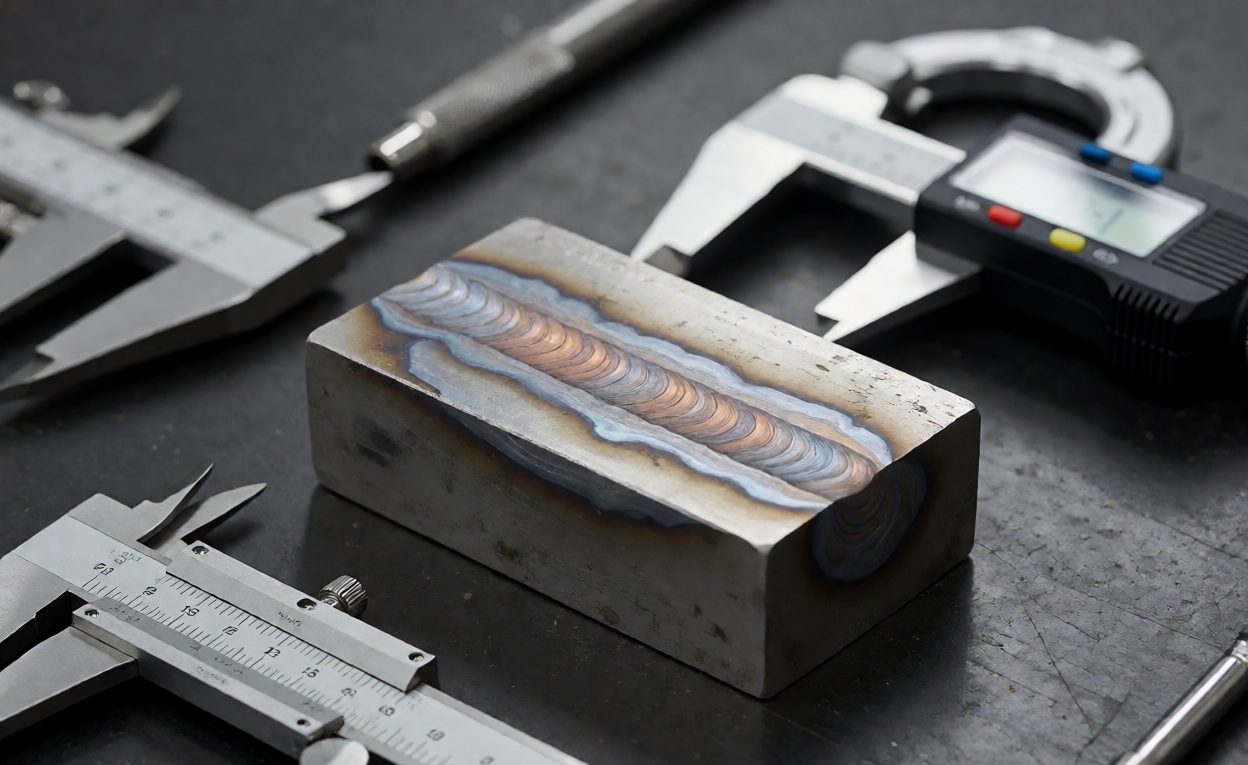
Trial samples must come from the trial run, not from a special preparation. Samples produced under conditions that will not recur prove nothing about production. Retain the samples with their records, because they are the reference against which later production parts are compared.
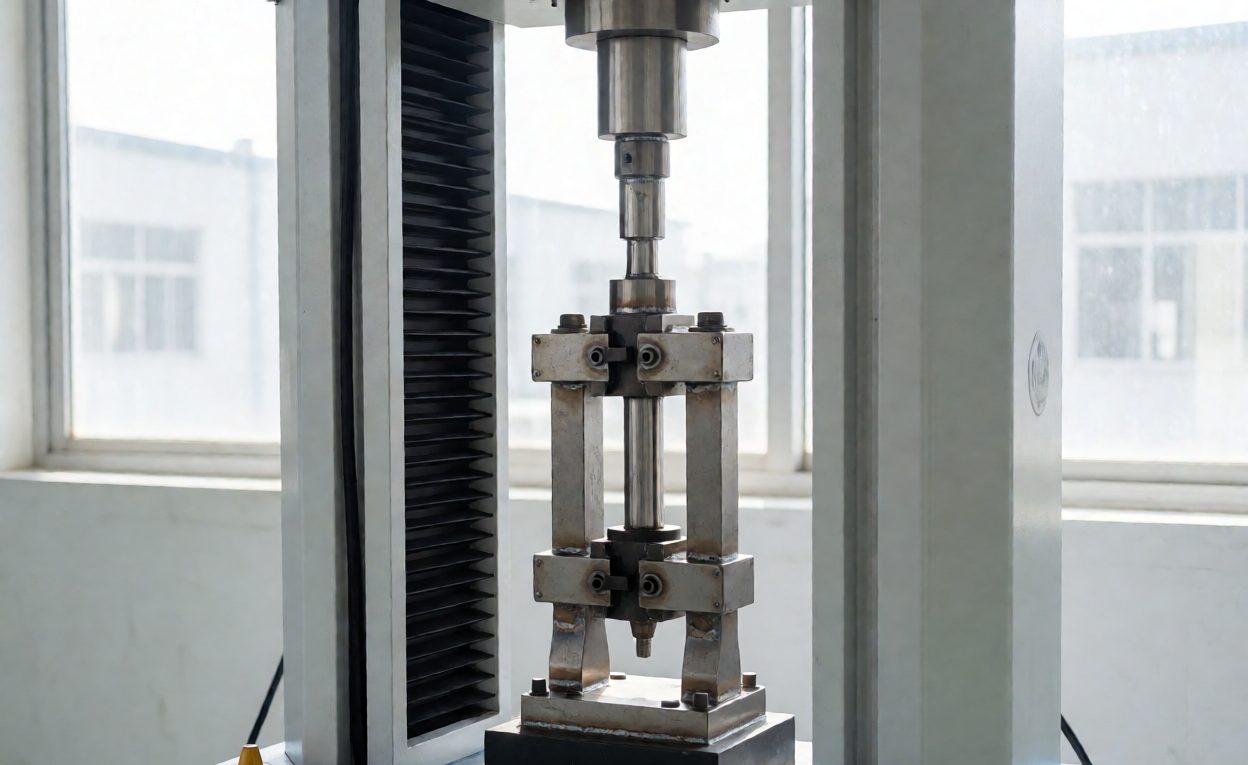
The destructive testing portion of the trial is where the metallurgy is proven, and it is the portion most often skipped for schedule reasons. A cross-section and a mechanical test on trial samples take hours and answer the questions that visual inspection cannot.
Structuring the Signoff
Signoff should be against the criteria sheet, with both parties signing the same record. Where a criterion is not met, the record should state the disposition – corrected and retested, accepted with a concession, or deferred with a date – rather than being left blank.
A trial that ends with a blank field is a trial that will be revisited. The concession route exists precisely for criteria that are not met but are acceptable, and using it explicitly is far better than an unsigned row.
One further discipline: keep the criteria sheet with the contract file rather than the project file. The sheet is what a warranty claim or a future dispute is measured against, and it is far cheaper to keep than to reconstruct from memory.
It is also worth agreeing the retest procedure in advance. Where a criterion is corrected after the trial, the retest should follow the same method as the original, and the method recorded on the criteria sheet is what makes the retest comparable rather than a fresh argument.
One more practical step: run at least one trial criterion under adverse conditions deliberately. A cell that only performs under favourable conditions has not been tested, and the adverse run is what reveals the margin.
One more discipline: agree the witness list before the trial date. A trial where the witnesses are decided on the day is a trial whose findings depend on who happened to be available.
One last item: photograph or record the trial setup as run. A trial reconstructed from memory months later is a trial that cannot be repeated, and the setup record is what makes a retest comparable.
One more habit worth building: archive the criteria sheet, the results and the retained samples together. The three together are what a warranty discussion or a future qualification needs, and they are far cheaper kept than reconstructed.
One further discipline: state the measurement method for each criterion, not only the value. A cycle time measured over ten parts and one measured over a hundred are different claims, and the method is what makes them comparable.
One final note: keep the signoff record and the criteria sheet as one document set. Separated, they drift; together, they are the complete answer to what was accepted and against what.
Related reading for buyers working through the same question: 3000w fiber laser welding machine maximizing penetration and minimizing thermal distortion in heavy duty manufacturing, advanced techniques in robotic laser seam tracking for precision welding and autogenous vs wire fed vs hybrid choosing a filler strategy for laser welding cover the surrounding decisions this specification depends on.
Frequently Asked Questions
How long should the reliability window be?
Long enough to cover a representative production cycle, including the changeovers and material handling that a short demonstration omits.
Should trial samples be retained?
Yes, with their records. They are the reference against which later production parts are compared, and they cannot be reproduced later.
Can a criterion be accepted as a concession?
Yes, explicitly, with the reason and any conditions recorded. An unsigned blank row is what causes the argument later.
Who should witness the trial?
Production, quality and the commercial owner. Each sees a different failure mode, and a trial witnessed only by the project team misses what the operators would notice.
What if a criterion fails?
The record states the disposition: corrected and retested, accepted with a concession, or deferred with a date. Silence is the only unacceptable outcome.
Is destructive testing always required?
For new processes and materials, yes. It is the only evidence that proves the metallurgy rather than the appearance.
Should criteria be agreed before the trial?
Always. Criteria agreed after the results are seen are not criteria; they are a negotiation, and the trial has already been spent.