
ターンキーロボティック溶接ライン:対象範囲、統合、そして「ターンキー」の真の意義
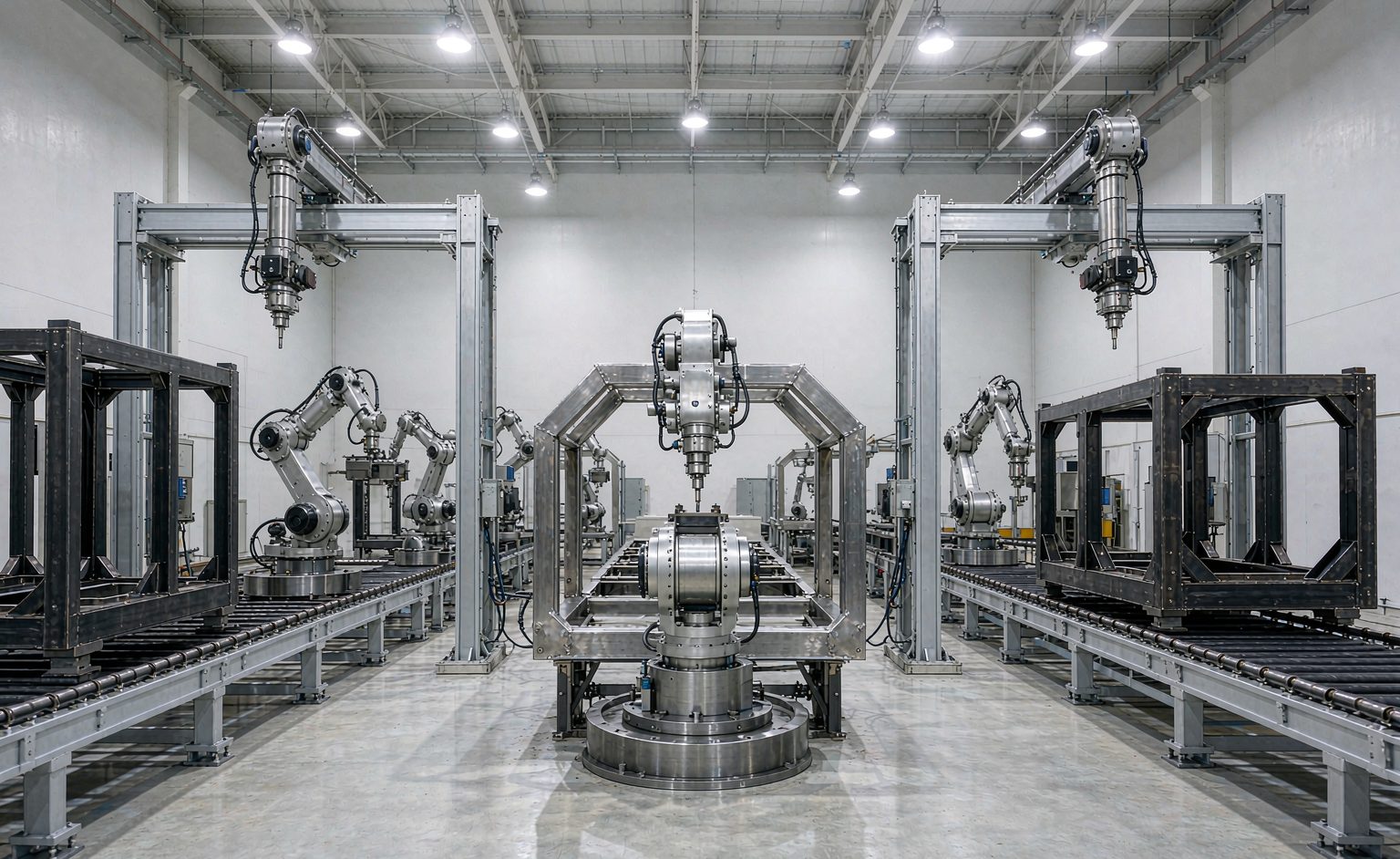
“Turnkey” is the most abused word in automation. To a buyer it means a line that runs on day one; to some suppliers it means a robot on a pallet. The gap between those two definitions is where welding line projects go over budget and late. A real turnkey line spans fixtures, robotics, the laser source, controls, safety and commissioning — and the integration across those is the product, not the components.
要点
- Turnkey means fixtures, robot, source, controls, safety and commissioning as one scope.
- The integration across those elements is the actual deliverable, not the parts.
- Scope creep hides in fixturing, part variation and downstream handling.
- Utility preparation is the buyer’s job and gates go-live.
- Acceptance is at rate on your parts, not a demo on the supplier’s bench.
What a Real Turnkey Scope Includes
The line is a system; the bill of materials is only part of it.
| Scope element | Included? | 備考 |
|---|---|---|
| Fixtures and tooling | Yes | Often underestimated |
| Robot and positioner | Yes | Core |
| Laser source and chiller | Yes | Cooling is in scope |
| Controls and safety | Yes | Enclosure, interlocks |
| Commissioning | Yes | To verified rate |
Fixturing is where scope is most often cut or under-specified, and it is what determines whether your actual part welds well. The safety enclosure that must be in scope is the Class 4 design covered in our laser safety guide.
Where Scope Creep Hides
The line works on the sample part; the production parts vary, and that variation is unbudgeted.
| Hidden scope | 効果 | How to catch it |
|---|---|---|
| Part variation | Fixtures do not fit all | Provide full part range |
| Downstream handling | Line starves or backs up | Specify in and out |
| Utilities | Buyer assumption | Pin owner in contract |
The utility preparation — floor, power, cooling — is the buyer’s responsibility and is detailed in our installation guide. Clarity on who owns it prevents the classic “the line is ready but the building is not” standoff.
Acceptance at Rate on Your Parts
Acceptance should be defined as sustained rate on your real parts, not a demo on the supplier’s bench.
| Criterion | Weak definition | Strong definition |
|---|---|---|
| Parts | Sample part | Full production range |
| Rate | Nameplate | Verified on your mix |
| 質 | Visual pass | Defined weld criteria |
Markets such as India, covered in our India market guide, especially reward suppliers who accept on rate and support locally rather than demo-and-depart. A turnkey line that passes acceptance on your parts is the line you actually bought.
よくある質問
ターンキーの「本当に含まれるもの」
治工具、ロボットとポジショナー、レーザー光源と冷却機、制御と安全囲い込み、および検証済みレートでの検証。これら間の統合が成果物となる。.
Where does scope creep hide?
In fixturing for part variation, downstream handling, and utilities. Sample parts weld fine; production variation and unclear utility ownership are what blow budgets.
Who owns utility preparation?
The buyer. Floor, power and cooling are owner responsibilities that gate go-live; the contract should state this explicitly to avoid a ready-line-not-ready-building standoff.
How should acceptance be defined?
As sustained rate on your full production part range with defined weld quality, not a demo on the supplier’s bench on a sample part.
Why is fixturing underestimated?
Because it is the element that decides whether your actual part welds well, yet it is easy to treat as a minor add-on. Under-specified fixturing is a leading cause of late lines.
Is safety part of turnkey?
Yes. The Class 4 enclosure, interlocks and validation are in scope; a line without them is not turnkey, it is non-compliant.
What makes a turnkey supplier trustworthy?
Clear scope, acceptance on your parts at rate, and local support after handover. Demo-and-depart suppliers leave the risk with the buyer.
技術的背景: production line, 産業用ロボット あんど systems integration explain the production and integration concepts referenced above.