
ロボット溶接セルの消耗品:1部品あたりのコスト推定
Consumables are the part of a robotic welding cell’s operating cost that nobody quotes precisely and everybody pays. They do not appear in the capital figure, they are too small to trigger a purchase review individually, and they accumulate quietly into a number that surprises the first person who adds them up.
That number matters because it is the difference between a cell that looks profitable per part and one that is marginal. Getting it right does not require sophistication – four items account for most of the spend, and all four can be measured in a week.

The Four Items That Dominate
Every laser welding cell is different, but the same categories appear in nearly every consumables budget.
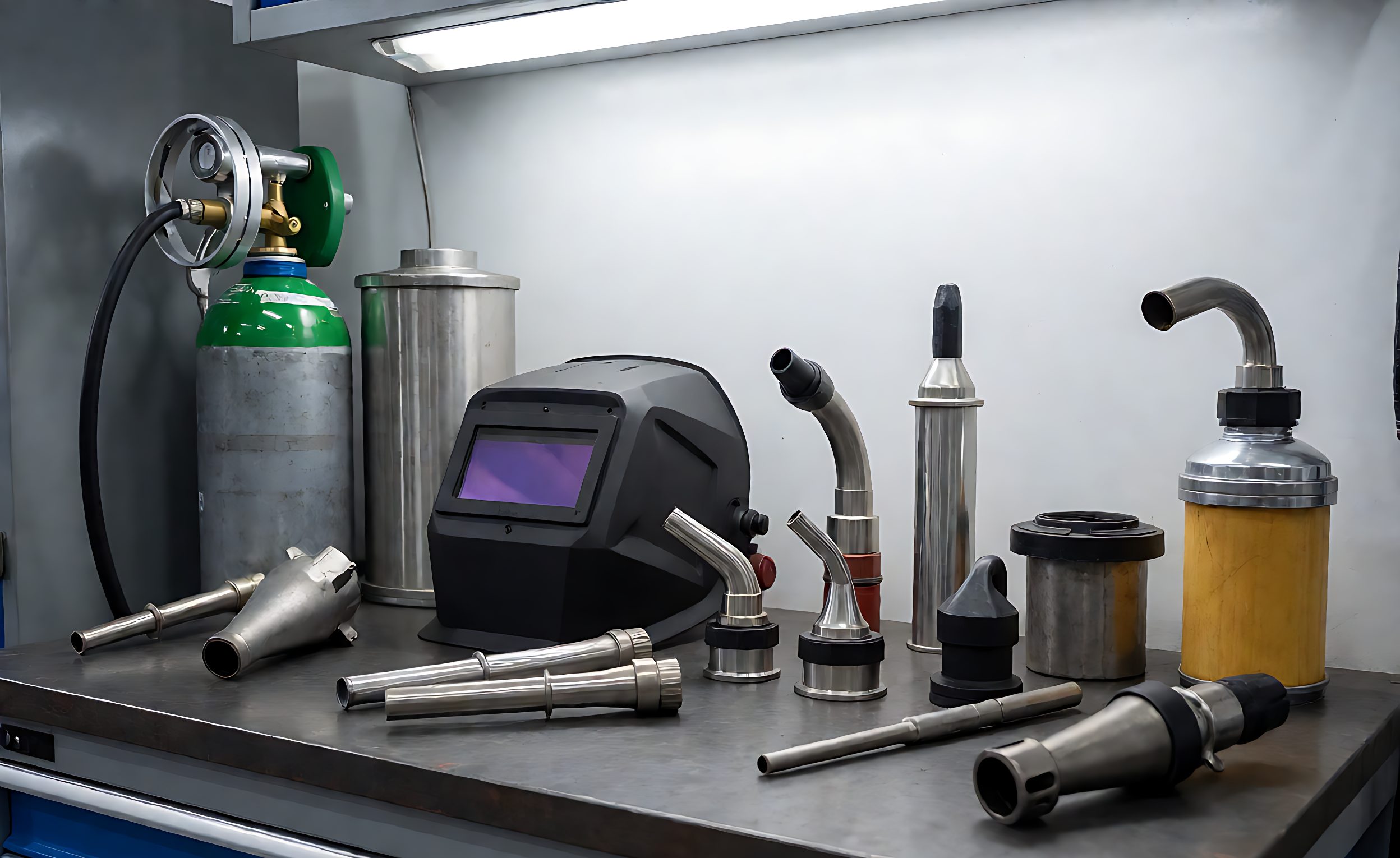
- Shielding gas: usually the largest single line. Consumption depends on flow rate, weld duration and the number of purge cycles, not on the number of parts alone.
- Protective windows and cover slides: the sacrificial optics between the weld and the focusing lens. Consumption rate is driven by spatter, fume extraction quality and how often the window is inspected rather than replaced.
- Nozzles and contact tips: wear items on the welding head. Life depends heavily on how often the tip is cleaned and whether crash protection is set correctly.
- Filters and extraction consumables: fume filter cartridges and pre-filters. Often forgotten because they are serviced on a schedule rather than consumed visibly.
Two further items belong in the estimate when they apply: filler wire in wire-fed processes – the choice described in the filler strategy discussion directly changes this line – and cleaning consumables such as wipes, solvents and anti-spatter spray.
Measuring Rather Than Estimating
Supplier estimates are useful for budgeting but should be replaced with measurements as soon as the cell runs. The measurement is simple: record consumption over a defined production quantity and divide.
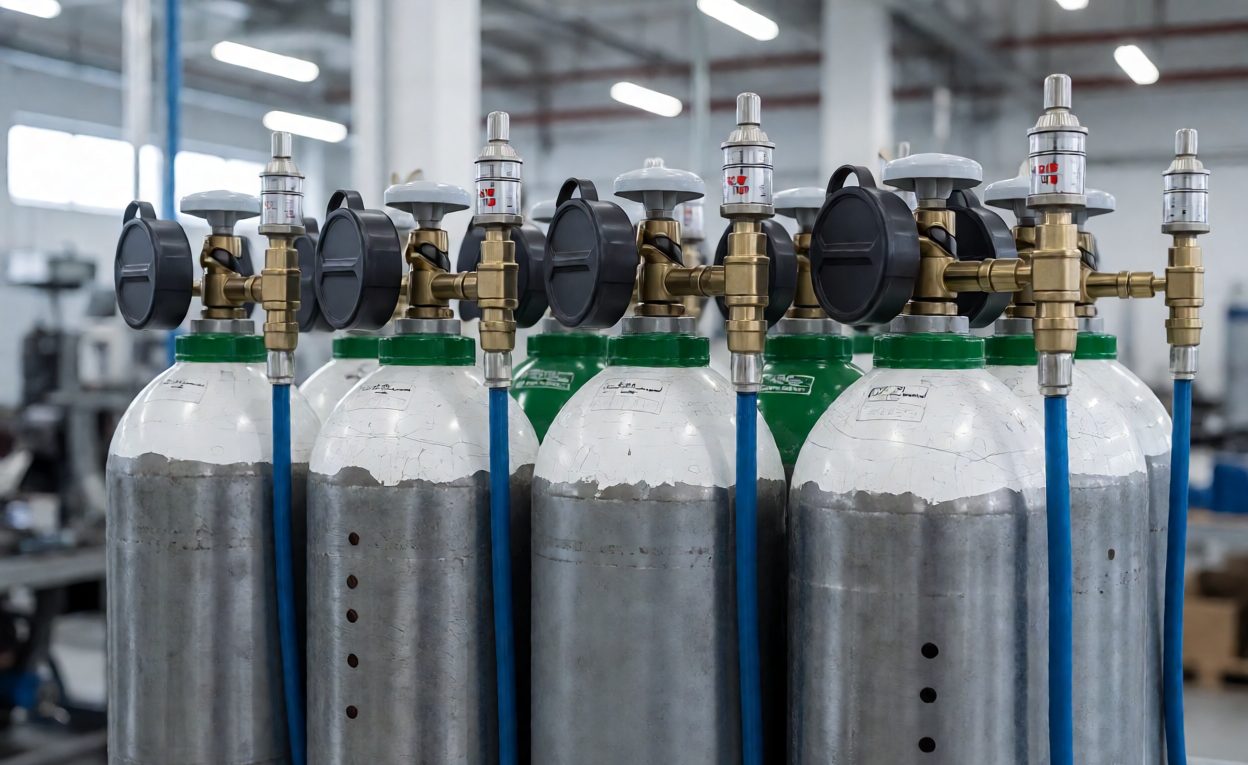
- Gas: fit a flow totaliser, or weigh cylinders at the start and end of a known production run. Weighing is more accurate than reading a regulator gauge.
- Windows and nozzles: log every replacement with a date and a part counter reading. After a month, replacements per thousand parts is reliable enough to budget from.
- Filters: record change dates and the counter reading; filter life is usually driven by duty cycle rather than part count.
- Attribution: allocate by part type where the cell runs mixed work, because a heavy-penetration part consumes far more gas per unit than a light tack weld.
Turning Usage Into a Defensible Cost Per Part
Once usage is known, the cost calculation needs two decisions made explicitly, because they change the answer.

First, which overhead basis to use. Consumables cost per part is unambiguous; the question is whether to add the labour for replacement and the downtime it causes. Both are real. A window change takes minutes, and if it happens twice a shift, that is shift time lost to production. Deciding in advance whether the estimate includes those minutes keeps it comparable between cells.
Second, whether to include the cost of quality failures attributable to consumable condition. A worn nozzle or a contaminated window produces porosity and inconsistency, and the rework cost dwarfs the consumable cost. Including it requires a rework rate, which most operations can produce from existing records.
The cooling loop deserves a separate line rather than being treated as a consumable: water treatment, coolant top-up and filter changes belong to chiller upkeep. The maintenance tasks and intervals in the chiller maintenance guide define that schedule, and neglecting it is a common cause of unplanned downtime that never appears in a consumables budget at all.
What to Do With the Number
A cost-per-part consumables figure is useful in three places. It validates or corrects the supplier’s estimate before the next cell is specified. It provides a baseline for detecting drift – if consumption per part rises, something in the process has changed, and it is usually worth finding out what. And it feeds the business case, where the difference between two cell designs can be a consumables line rather than a capital line.
Unit cost accounting for manufacturing is standard practice; the point here is that consumables are a genuine unit cost, not an overhead to be spread. Where the cell is being compared against an existing manual or MIG process, the comparison with conventional processes should be run on the same basis so that gas, wire and rework are counted on both sides. And because usage is driven by duty cycle, the estimate should be rechecked after any significant change to shift pattern or part mix – activity-based costing is the appropriate frame when a single cell runs very different work.
A related question is who buys consumables: central procurement or the cell team. Central buying usually achieves a better unit price; cell-level buying responds faster. Either works, provided the usage data is recorded in one place, because the value of the estimate depends entirely on being able to repeat it. Variable costs of this kind are small per unit and large in aggregate, which is exactly why they drift out of view unless someone owns the number.
よくある質問
消費品のうち最もコストがかかるものはどれですか?
Usually shielding gas, driven by flow rate, weld duration and purge cycles rather than part count alone.
サプライヤーの見積もりはどの程度正確ですか?
Useful for budgeting, but replace them with a measured run once the cell is producing.
シールドガスはどう測定すべきですか?
Weigh cylinders at the start and end of a known production run; this is more accurate than reading a gauge.
交換による停止時間は含まれるべきですか?
Yes if comparability matters. Decide in advance and apply the same rule to every cell.
なぜフィルムの耐久性がこれほど異なるのですか?
Spatter, fume extraction quality and inspection discipline. Inspecting before failure extends life considerably.
クーラーの維持費は消耗品にカウントされますか?
Separately. Coolant, treatment and filter changes belong to a maintenance schedule rather than a consumables line.
見積もりはいつ再確認すべきですか?
After any significant change to shift pattern, part mix or process parameters.