
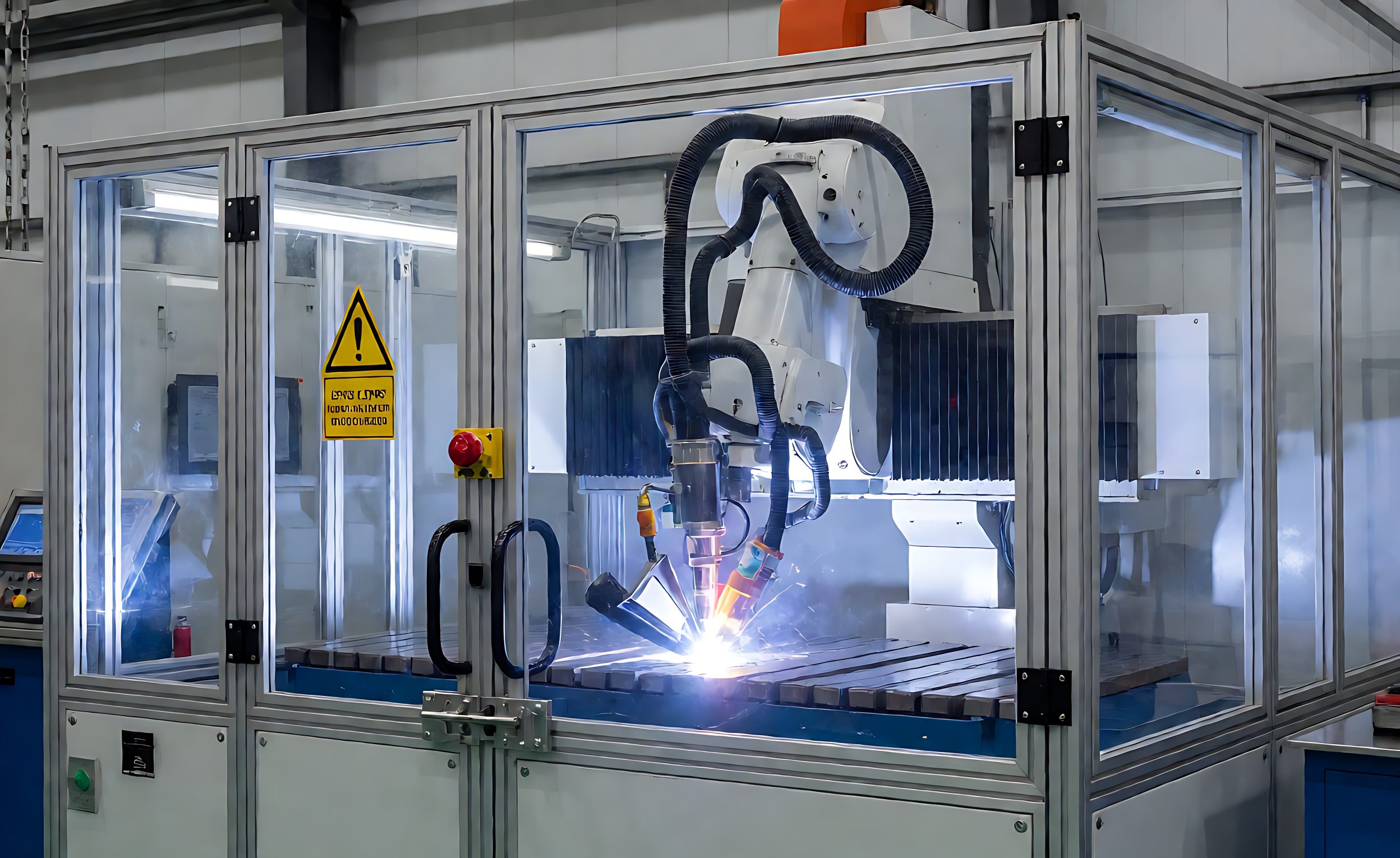
レーザー安全エンクロージャとコンプライアンス:コンプライアント溶接セルの費用はいくらか
Compliance on a laser welding cell is not a certificate bought at the end of a project. It is an enclosure, an interlock system, documented procedures, trained people and records – and almost all of it has to be designed in rather than added afterwards. Buyers who treat it as a formality discover the cost late, usually when the cell is otherwise ready to run.
The practical question is not whether the cell can be made compliant; it is which items the supplier provides, which the buyer provides, and which fall between the two because nobody wrote them down.
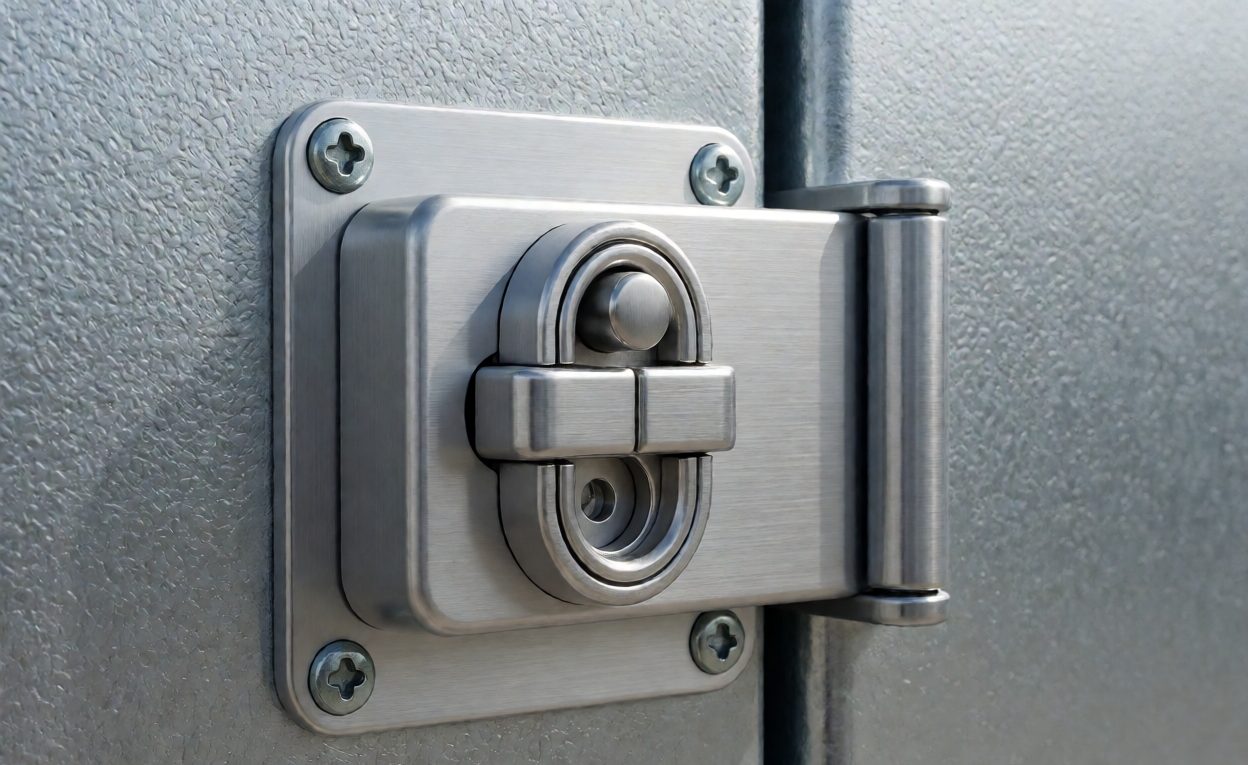
The Elements of a Compliant Cell
A Class 4 laser cell has four layers of protection, and each has its own cost line.
- Enclosure: material and construction rated for the wavelength and power, with no unintended apertures. Viewing windows must be rated, not merely tinted.
- Interlocks: door and access interlocks that remove laser emission before access is possible, with the safety category appropriate to the risk.
- Administrative controls: procedures, signage, restricted access, key control and a documented risk assessment.
- Personal protective equipment: wavelength-appropriate eyewear for maintenance and any open-process work, plus training records.
The requirements are set out in more detail in Class 4レーザー安全記事に; the point here is commercial. Each layer has a cost, and the enclosure and interlock layers are far cheaper when designed with the cell than when retrofitted to it.
Where Compliance Cost Gets Underestimated
Four items account for most of the overruns.

- Integration with the robot safety system: the laser interlock chain and the robot’s safety circuit must work together. Mating two independently designed safety systems is an engineering task, not a wiring task.
- Maintenance access: enclosures that make routine tasks difficult get bypassed. If changing a protective window requires defeating an interlock, the interlock will eventually be defeated. Design for the maintenance that will actually happen.
- Extraction and fume routing: duct penetrations are apertures. They need to be designed so that they do not compromise the enclosure rating.
- Documentation and training: risk assessment, procedures, signage and training records. Small in money, large in delay when left to the end.
Allocating Responsibility
The boundary between supplier and buyer responsibility should be written into the contract per item. A workable allocation usually looks like this:
- Supplier: enclosure design and construction, interlock chain, integration with robot safety, emission indicators, and the technical file for the machine.
- Buyer: site risk assessment, procedures, signage and access control, appointment and training of responsible personnel, and any local registration or notification.
- Shared: validation testing after installation, and the documented handover that demonstrates the interlock chain works.

The shared items are the ones that cause arguments, because each party assumes the other has done them. Name them, and attach them to a payment milestone so they are completed rather than discussed.
Compliance in the Business Case
Compliance cost is a genuine project cost and belongs in the capital case, not in overhead. It typically includes the enclosure, the safety integration engineering, documentation and training time, and any third-party review. For buyers assembling a budget, the cell cost breakdown shows where these items sit relative to the rest of the project – usually a modest but not negligible share.
Regional requirements differ, and a cell built for one market may need changes for another. Buyers importing equipment should confirm that the enclosure, interlocks and documentation meet the destination market’s requirements before shipment, because modifying an enclosure on site is slow and expensive. Where the equipment is sourced from a Chinese manufacturer, the manufacturer selection guide covers the documentation questions worth asking before order.
Laser safety standards are well established internationally, and the classification system described in laser safety classes determines what a particular cell requires. The commercial implication is straightforward: specify the enclosure and interlock requirements in the enquiry, and the cost appears in the quote instead of in a variation order. That same discipline – define the requirement early – is what makes the quotation comparison meaningful across suppliers.
Two practical points complete the picture. Compliance documentation should be handed over with the machine rather than assembled later, and it should include the technical file, the risk assessment inputs the supplier holds, and the interlock validation record. Without those, a buyer starting from nothing will spend weeks reconstructing information the supplier already had. Conformity marking requirements differ by market, and a cell built for one region may need documented changes for another – a question worth asking at enquiry rather than at import. Finally, budget for re-validation. Any modification to the cell – a new head, a changed enclosure aperture, an additional axis – potentially changes the safety assessment. Treating re-validation as a routine cost of modification keeps the cell compliant through its life rather than compliant on the day it was delivered.
よくある質問
セルが構築された後に、コンプライアンスを追加することは可能ですか?
Technically yes, but an enclosure and interlock system designed in is cheaper and better than one retrofitted.
Who is responsible for the risk assessment?
Usually the buyer as the site operator, though suppliers often provide supporting documentation.
Do viewing windows need to be rated?
Yes. They must be rated for the specific wavelength and power, not merely tinted.
Why do interlocks get bypassed?
Because maintenance access was not designed for. Design enclosures around the tasks that will actually happen.
Does extraction compromise the enclosure?
It can. Duct penetrations are apertures and must be designed not to compromise the rating.
Does a cell built for one market comply elsewhere?
Not automatically. Confirm destination requirements before shipment; site modification is slow and costly.
Should compliance appear in the capital case?
Yes. It is a project cost and should be in the budget rather than absorbed into overhead.