
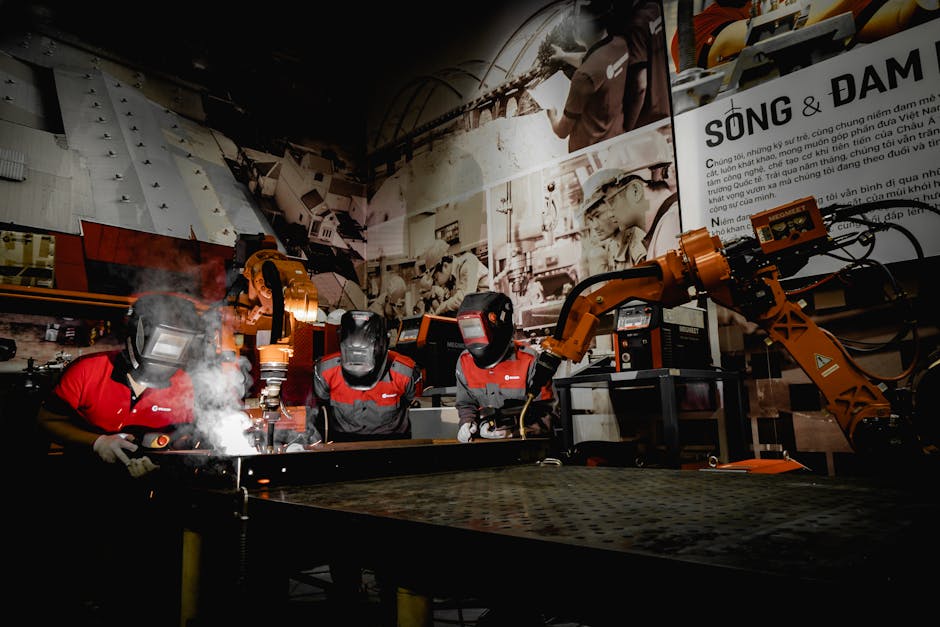
自動アーク溶接:精密金属加工のための戦略的導入
Automated Arc Welding: Strategic Implementation for Precision Metal Fabrication – In-Depth Guide & Use Cases
産業用ロボティクスは金属加工プロセスを変革し、自動化されたアーク溶接は、一貫した品質と生産性を実現したいメーカーにとって重要なソリューションとして台頭しています。従来の手動溶接とは異なり、この技術はロボットの精密さと高度なアーク制御アルゴリズムを組み合わせ、多様な素材や継手部品構成において繰り返し可能で高信頼性の溶接を達成します。TrueSyn Roboticの統合における専門知識 TrueSyn アーク溶接 生産ワークフローへの組み込みは、労働力不足、工程の変動、運用の拡張性といった主要な課題に対応します。精密加工への世界的な需要が高まる中、メーカーは生産性と柔軟性を両立するシステムの導入 increasingly 迫られています。. 自動化アーク溶接 は熟練労働者への依存を軽減するだけでなく、リアルタイムデータ取得と工程トレーサビリティを通じてスマートファクトリ統合の基盤を確立します。.
自動化アーク溶接の技術的基盤
自動化アーク溶接 システムは、ガス金属アーク溶接(GMAW)、ガスタングステンアーク溶接(GTAW)、またはフラックスコアードアーク溶接(FCAW)プロセスを利用し、ロボット実行用に調整されています。主要な技術パラメータは以下の通りです。
- 糸送り速度(WFS): 堆積率とビード形状に直接影響します。例えば、GMAWにおける0.8mmソリッドワイヤは通常3-12 m/minで動作し、速度が上がると浸入は深まりますが、薄い素材では焼抜けのリスクがあります。.
- 移動速度: 溶接浸入と熱入力来决定します。3mm軟鋼の最適な移動速度は25-40 cm/min程度となり、融着品質と生産性のバランスを取ります。.
- 遮蔽ガス組成: アルゴン-CO₂混合ガスは異なる素材タイプに適しています。鋼材には75% Ar/25% CO₂ブレンドが標準的で、アルミニウムには熱伝導率を向上させるためのヘリウム添加純アルゴンがよく使用されます。.
- 継目Fit-Up許容誤差: ロボットシステムは±0.5mmの精度で一貫した融着を維持しますが、特別なセンサーは適応的溶接プロファイルを通じて最大±1.0mmのギャップに対応できます。.
| パラメータ | 一般的範囲 | 素材への影響 |
|---|---|---|
| 糸送り速度 | 3-12 m/min(0.8mmワイヤ) | 浸入深さ vs 焼抜けリスク |
| 移動速度 | 25-40 cm/min(3mm鋼板) | 熱入力制御 |
| ガス混合 | 75% アルゴン/25% CO₂ | 鋼 vs アルミニウム適合性 |
手動作業と比較して、自動化システムは人間ミス70-90%を削減し、溶接品質のばらつきを改善します。センサーやビジョンシステムによるリアルタイム監視によりパラメータの動的調整が可能で、素材変化や環境要因を補償します。例えば、レーザプロファイルスキャナは溶接開始前に継目ギャップを検出し、糸送り速度や振動パターンの変更をトリガーします。波形制御を備えた高度な電源は安定性をさらに高め、薄板用ショートサーキットから厚肉部用パルススプレーまで、液滴移動モードの精密な管理を可能にします。.
業界用途と工程最適化
TrueSyn Roboticのアーク溶接ソリューションは、各セクターの特定の要件に対応します。
- 自動車製造: シャーシ部品の高速溶接。位置精度0.1mm。例えば、ロボットアームはデュアルフェーズステンレス鋼耗材を使用してユニボディフレームの複数ゾーンで同時溶接を実行する。.
- 建設機械: パルスGMAWによるショベルブームの厚板溶接。12mm構造鋼接合部では、熱影響域を最小限に抑えながら側壁融合を確保するために300Aを超えるピーク電流のウィービングパターンを使用する場合がある。.
- 電気エンクロージャー: ほぼ歪みなしの1.5〜3mmSheet金属への精密溶接。1.0mmフラックス入りワイヤーによるショートサーキット転移モードはスパッタを低減し、適用の90%で溶接後の研磨を不要にする。.
- 重機械: プリヒート温度制御付き鋳鉄部品の多パス溶接。誘導加熱システムは300°Cの母材温度を維持してひび割れを防止し、延性のある溶接金属のためにニッケル合金電極と組み合わせる。.
プロセスエンジニアは各アプリケーションのためにパラメータを最適化する。例えば、自動車フレーム溶接では浸透とスパッタ低減のバランスを取るために220〜280Aの電流と25〜30Vの電圧が必要である。一方、薄板アプリケーションでは低い熱入力(140〜180A)と特殊なショートサーキット転移モードを使用する。TrueSynの独自ソフトウェアは熱分布パターンをシミュレートし、大型アセンブリの寸法安定性を保つためにパス間冷却間隔の予防的調整を可能にする。.
統合課題と解決策
成功した実装には3つの重要な領域に対応することが必要である:
- フィクスチャ設計: ±0.1mmの部品アライメントを保証するカスタムジグ。例えば、空気圧クランプ付きモジュラーフィクスチャはトラックフレームレールの12バリエーションに対応し、セットアップ時間を15分まで短縮する。.
- パスプログラミング: オフラインプログラミングはロボットのティーチ時間を40%削減する。TrueSynのエンジニアはCAD/CAM統合を使用して溶接パスをシミュレートし、実稼働前に干渉を特定しトーチ角を最適化する。.
- 切替効率: クイックリリースツールは50以上の部品バリエーションのバッチ生産をサポートする。食品加工設備メーカーは標準化されたエンドエフェクタを使用して工具交換時間を4時間から22分に短縮した。.
熱歪み管理は持続的な課題である。TrueSynのエンジニアは段違い溶接シーケンスとパス間冷却プロトコルを採用し、大型アセンブリの寸法安定性を保つ。複雑な3D形状に対して、ロボットセルは6軸運動制御を可能にする外部軸システムを統合する。recent project involving pressure vessel fabrication utilized a 7th-axis linear track to maintain consistent torch-to-work angles across 3m-long seams, achieving 0.3mm straightness tolerance.
ケーススタディ:実世界の実装成功
最近の2つの展開が技術の影響を実証している:
ライトポール生産ライン: 製造業者は、自動パイプ回転機能を備えたデュアルロボットセルを導入することで、1日あたりの生産量を35本から80本に増加させました。このシステムは、リアルタイムの溶接浸透モニタリングにより、手直しを65%削減しました。各ポールには12本の溶接継手が必要で、サイクルタイムを最小限に抑えるため、ロボットは内部パスと外部パスを交互に行います。.
電気キャビネットの製造: ハイブリッドアーク・レーザーシステムは、2mm厚のステンレス鋼パネル上で0.05mmの溶接継手の直線性を達成しました。これにより、溶接後の研磨が不要になり、材料廃棄を22%削減しました。このシステムは、レーザ誘導のシーム追跡とパルスGMAWを組み合わせ、ギャップ幅の測定に基づいてワイヤ供給速度を動的に調整します。. 電気制御キャビネット用レーザー溶接ソリューション.
洋上風力発電塔セクション: 製造業者は、40mmの壁厚を持つセクションに対してタンデムGMAWを採用し、単一ワイヤシステムと比較して60%高い堆積率を達成しました。同期パルスモードで動作するデュアルトーチにより、シャルピー衝撃値を-40°Cで60J以上維持しながら、パス数を18から12に削減しました。.
ハイブリッド技術による将来への備え
アーク溶接と補完的技術の統合により、新たな可能性が生まれます:
- レーザー・アークハイブリッド: レーザーの深い浸透能力とアーク溶接のギャップ橋渡し能力を組み合わせます。最近の航空宇宙分野での応用では、チタン合金に対して単一パスで15mmの浸透を達成し、従来の方法と比較して熱入力を40%削減しました。. ハイブリッド レーザー ミグ溶接: 中厚のプレートを溶接するための効率的なプロセス オプション。..
- AI搭載検査: 機械学習モデルは、溶接中に99.2%の精度で欠陥を検出します。50,000枚の溶接画像で訓練されたニューラルネットワークは、気孔やアンダーカットをリアルタイムで識別し、自動パラメータ調整をトリガーします。.
- IoT接続性: 予知保全は、振動および熱分析を通じてダウンタイムを30%削減します。ロボットの関節に埋め込まれたセンサーは、ベアリング摩耗の早期警告を提供し、潜在的な故障の72時間前にアラートを発行します。.
TrueSynのロードマップには、リアルタイムの冶金フィードバックに基づいてパラメータを自動的に調整する適応システムの開発が含まれています。これは、自己最適化される生産ラインというIndustry 4.0の目標と一致しています。例えば、分光分析センサーとのベータ試験により、溶け込み部の化学組成をその場でモニタリングでき、材料汚染を補償するためにシールドガス組成を動的に変更することが可能になります。.
実装ロードマップとリスク軽減
自動化されたアーク溶接システムの導入には、5つの段階にわたる戦略的計画が必要です:
- プロセス監査: TrueSynのエンジニアは、タイム・モーション研究を実施してボトルネックを特定します。最近のトラックトレーラー工場での監査では、手直しに費やされた手動溶接時間の38%が明らかになり、自動化の優先順位付けに役立ちました。.
- 実現可能性テスト: プロトタイプセルは、実際の部品に対する溶接品質を検証します。0.8mmのアルミニウム熱交換器プロジェクトでは、ホットクラックの発生しやすさを最小限に抑えるために、12種類のパラメータ組み合わせがテストされました。.
- システム設計: ロボットワークセルには、安全フェンス、排煙装置、部品搬送の自動化が含まれる。キッチン家電メーカー向けのモジュール式設計により、生産停止なしでロボットを2台から4台へ拡張可能である。.
- 試運転: 現場でのキャリブレーションにより、経路精度は±0.05mmが確保される。レーザー干渉計を用いて、生産開始前にロボットの位置決め性能を検証する。.
- 継続的最適化: クラウド接続システムは使用状況の分析を提供する。ある顧客は、アイドル時の速度や軸同期のアルゴリズム最適化を通じて、エネルギー消費量を18%削減した。.
リスク低減戦略は、一般的な導入障壁に対処する:
- 金属のばらつき: アダプティブシステムは、リアルタイムのWFS調整を通じて、入荷ブランクの±15%の厚み偏差を補償する。.
- ダウンタイムへの懸念: 冗長な電源とツールチェンジャーにより、メンテナンス中でも中断のない操業が可能である。.
- 労働力の移行: TrueSynの認証プログラムは、オペレーターにロボットのプログラミングと品質管理を訓練し、アップグレードされた役割における離職溶接士の90%の維持を実現している。.
結論:戦略的な自動化投資
自動アーク溶接システムは、人件費の削減(30-50%の節約)、歩留まりの向上(15-25%の改善)、および生産サイクルの短縮を通じて、測定可能なROIをもたらす。この技術を導入した企業は、品質の一貫性とスケーラビリティにおいて競争優位性を獲得する。TrueSyn Roboticのターンキーソリューションは、既存のワークフローとのシームレスな統合を保証し、プロセス検証からオペレーター訓練まで包括的なサポートを提供する。業界が自律型製造へと進化していくにつれ、これらのシステムはデータ駆動型の生産最適化のための基盤要素として機能し、原材料から完成溶接部までのリアルタイムトレーサビリティを可能にする。.