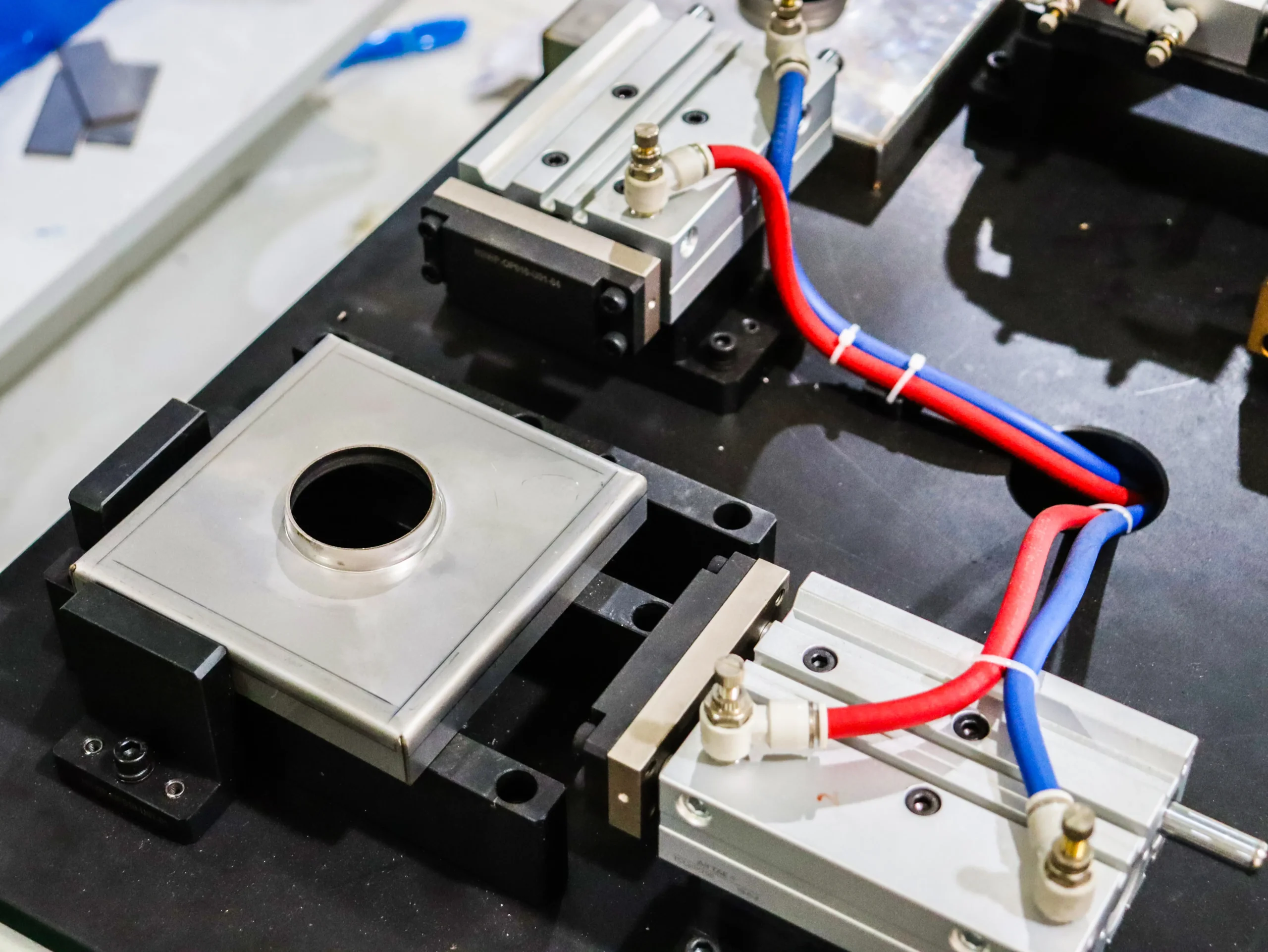
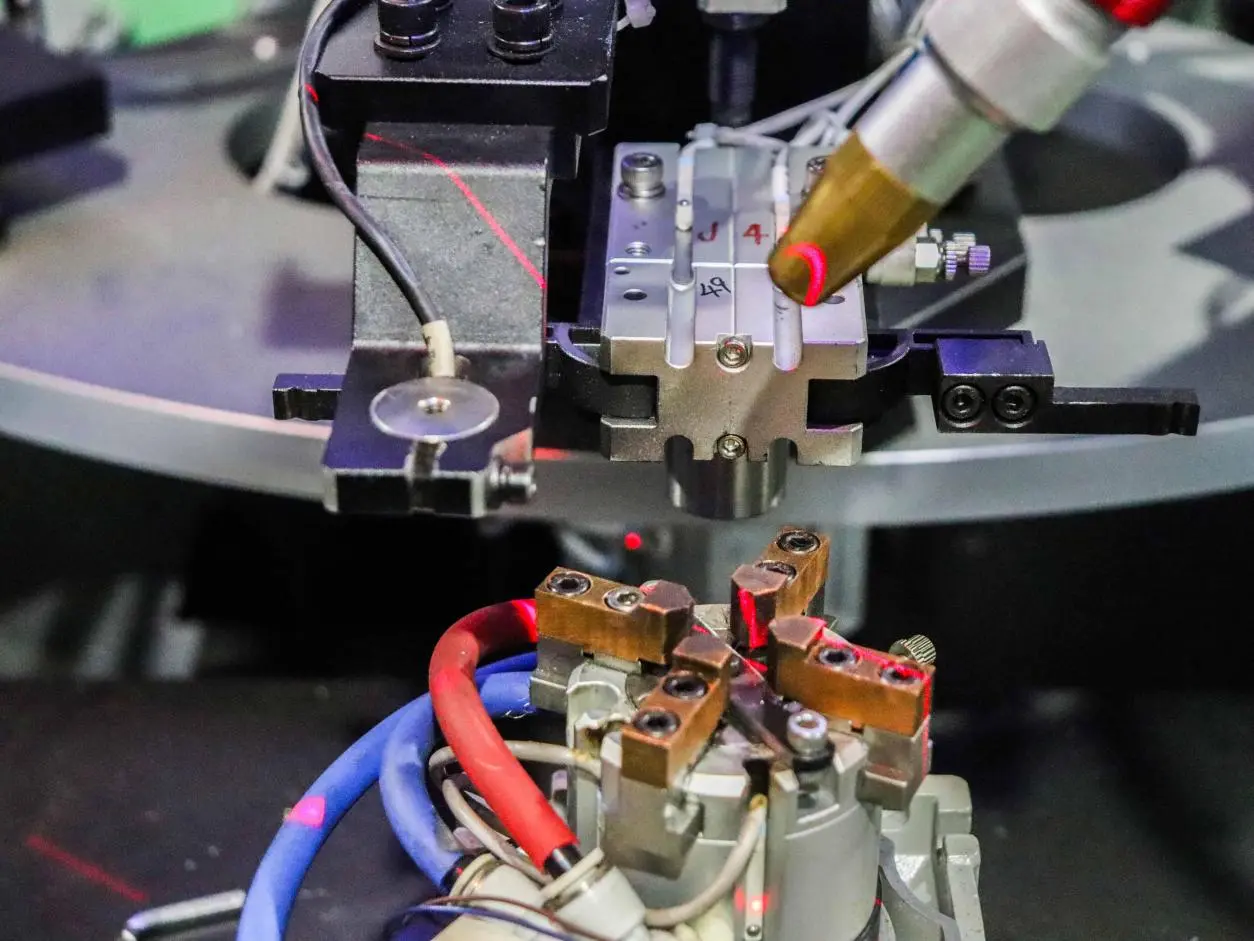
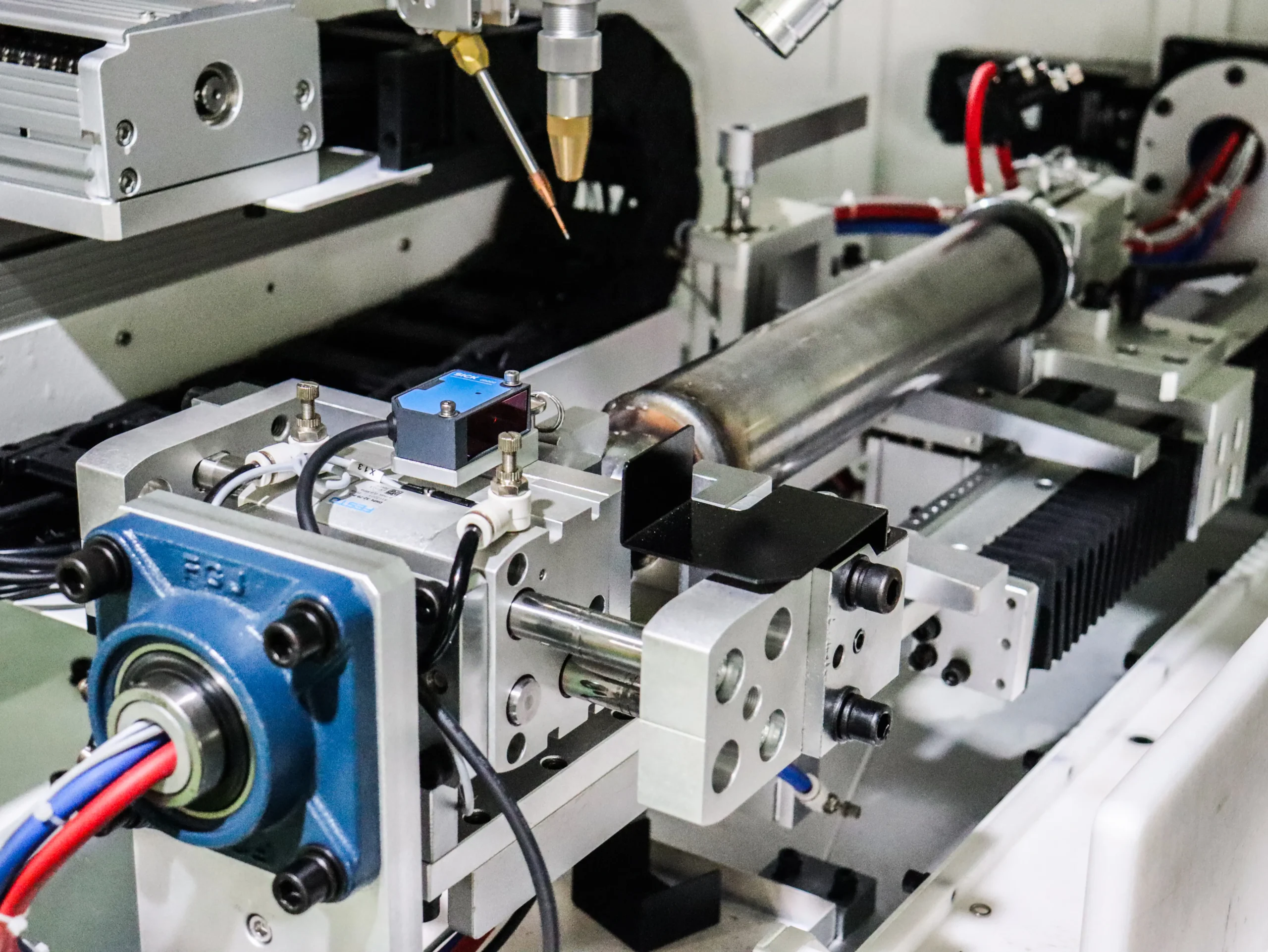
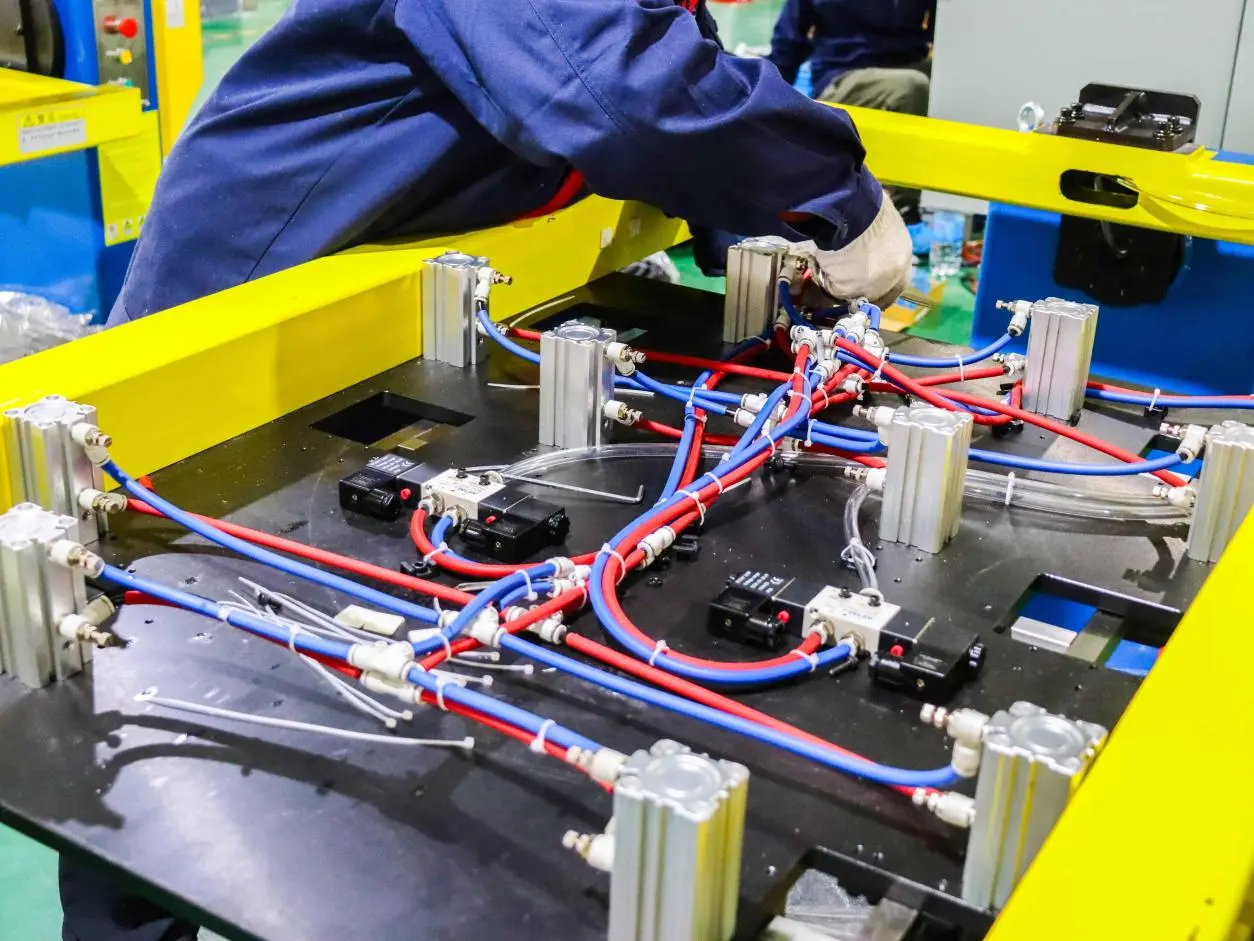
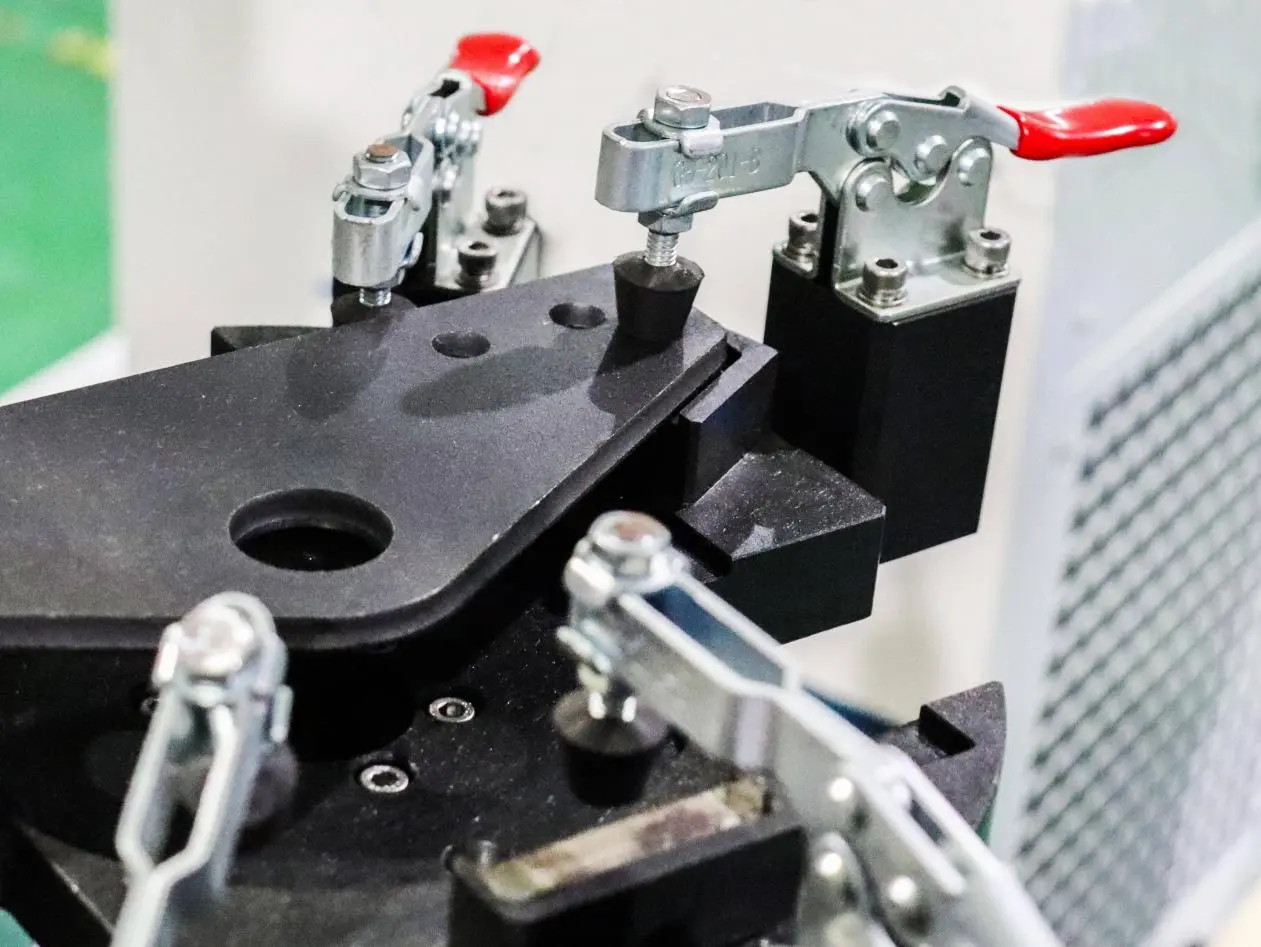
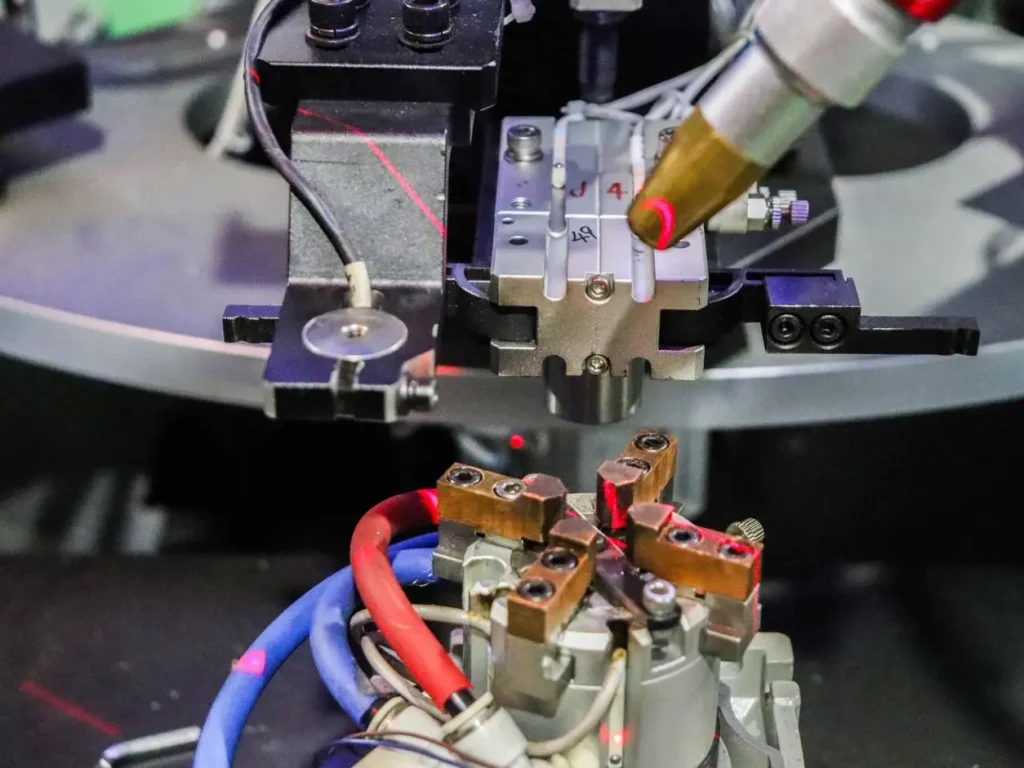
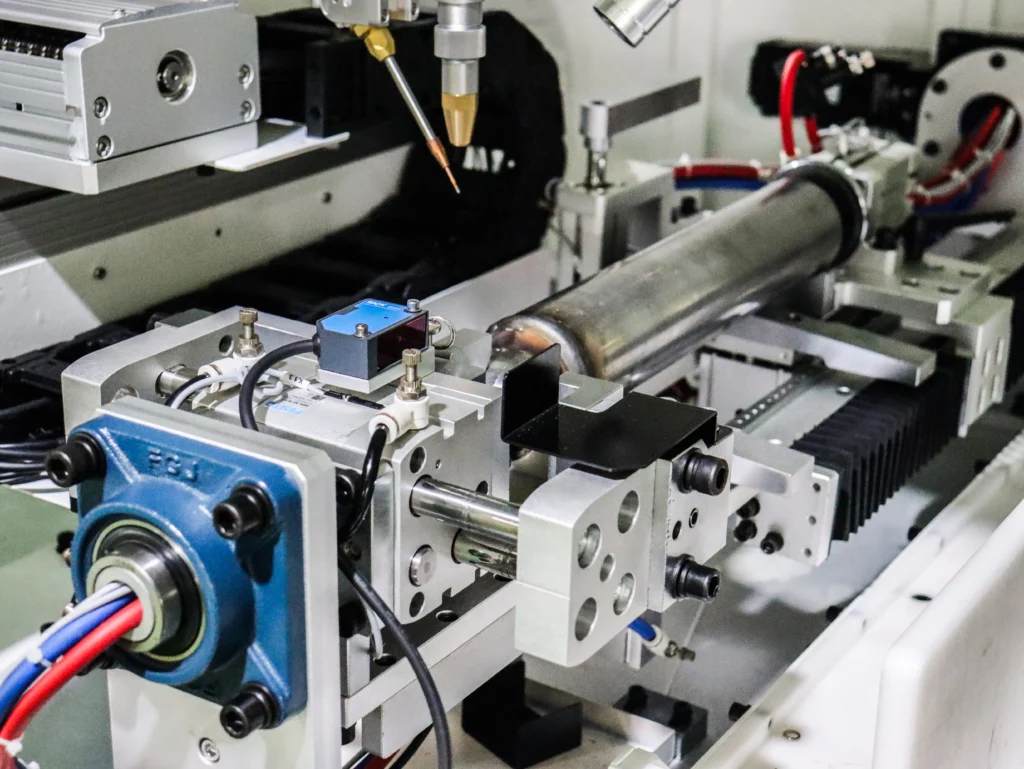
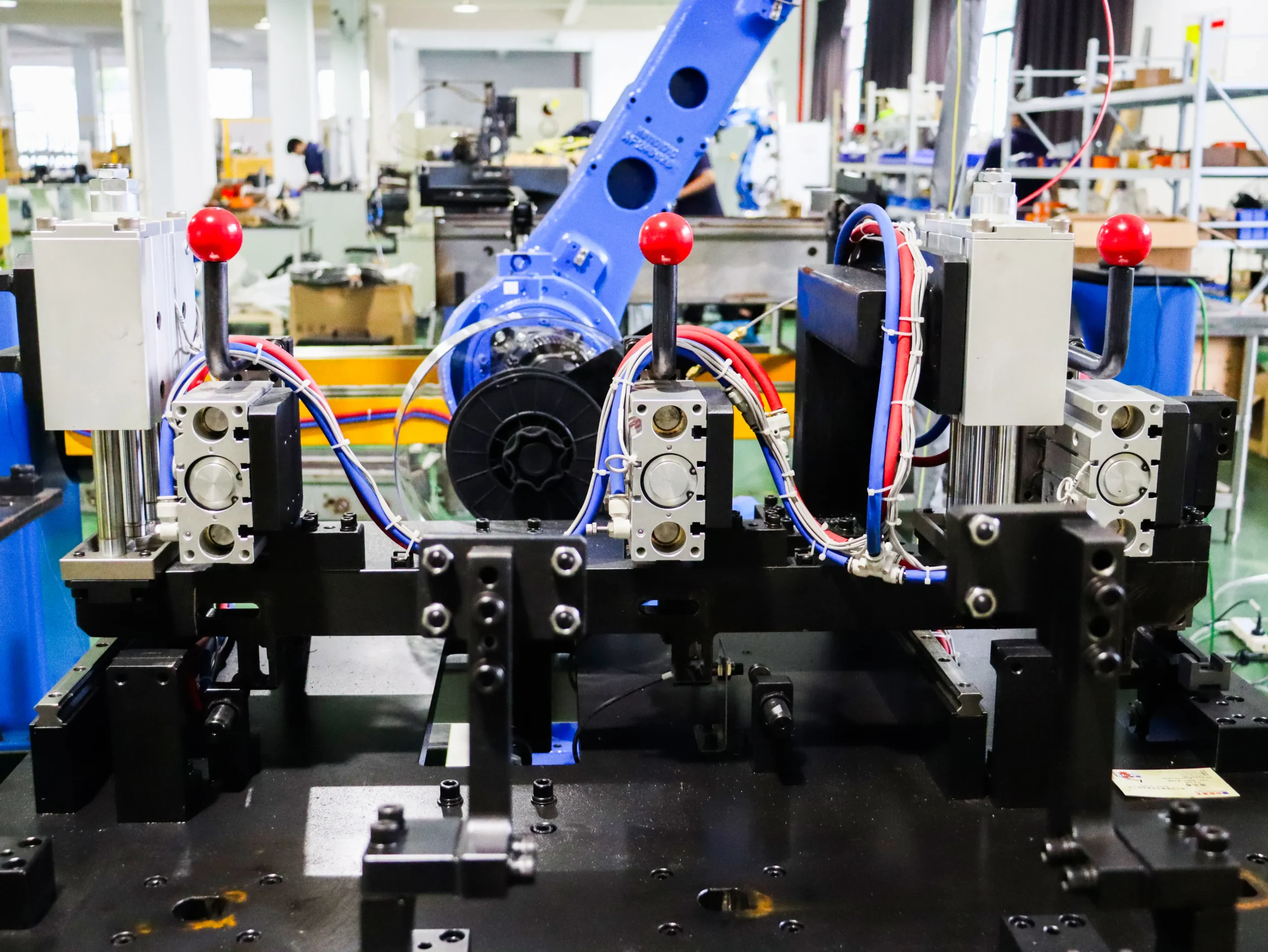
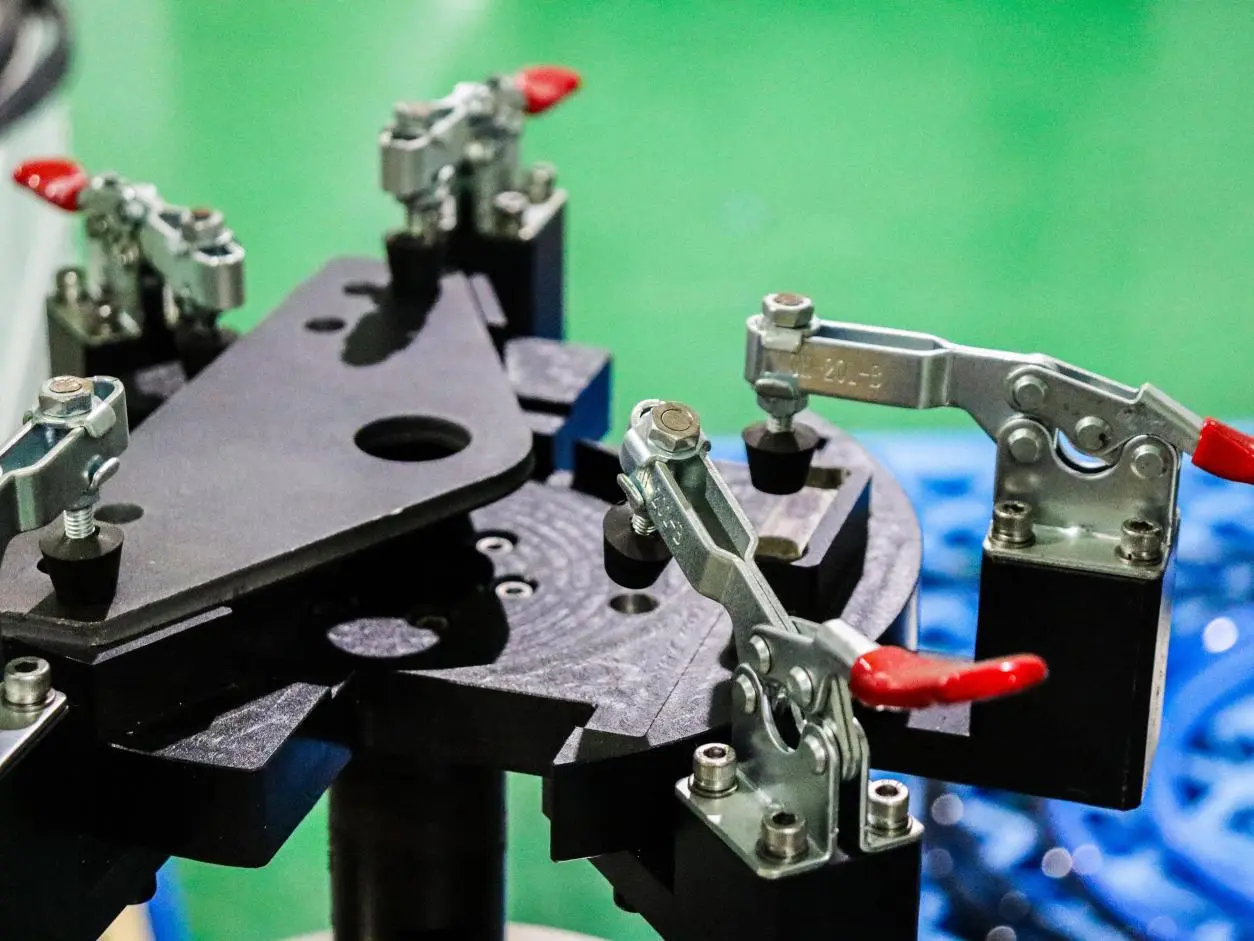
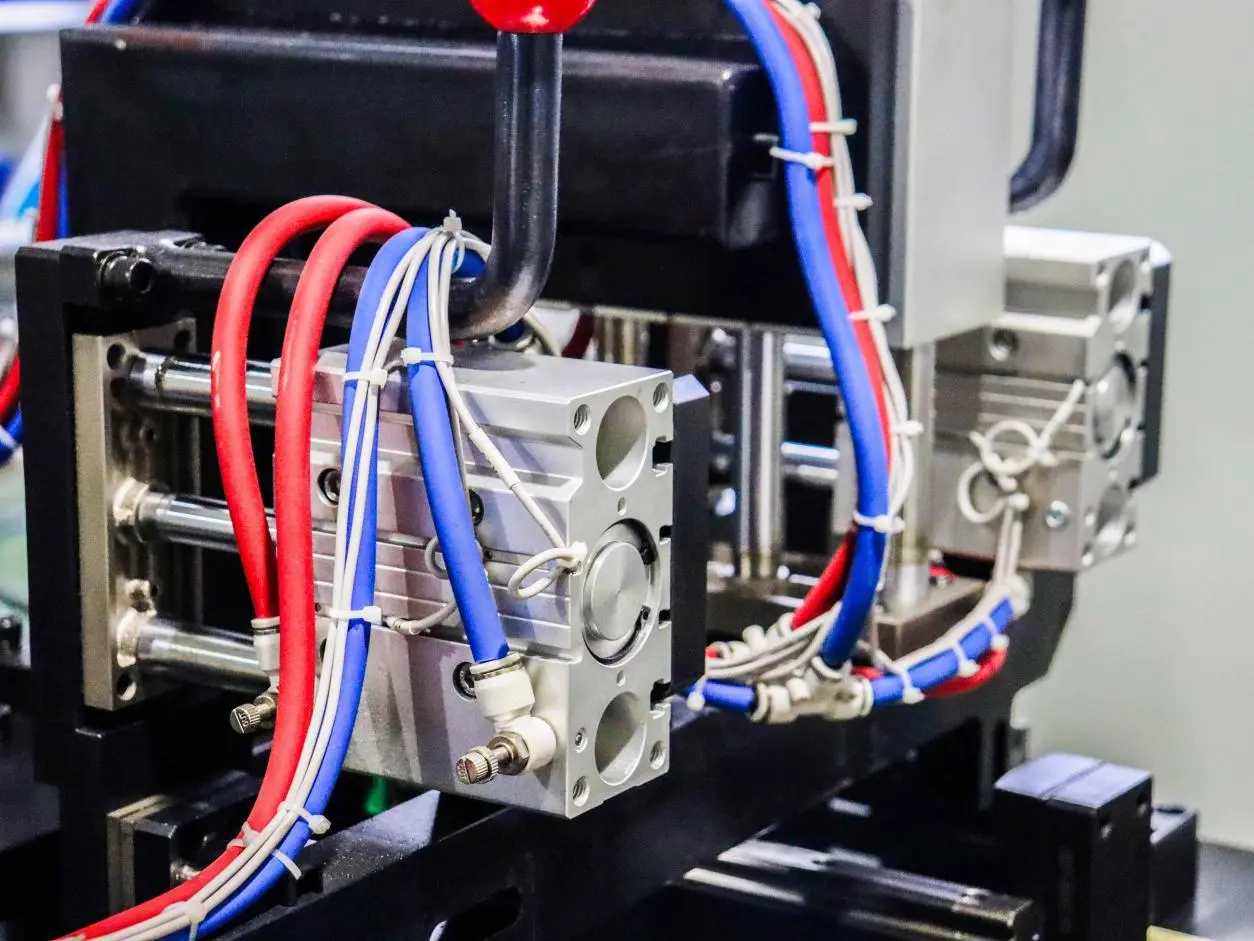
In a robotic welding cell, fixtures are specialized devices designed to securely hold and position one or more workpieces for the welding process. Their primary roles are precision, safety, and efficiency.
Types: Swing clamps, push clamps, toe clamps, and quick-release levers.
Functions: To securely hold the workpiece against locators with human-operated force. They are simple, reliable, and cost-effective for low to medium-volume production.
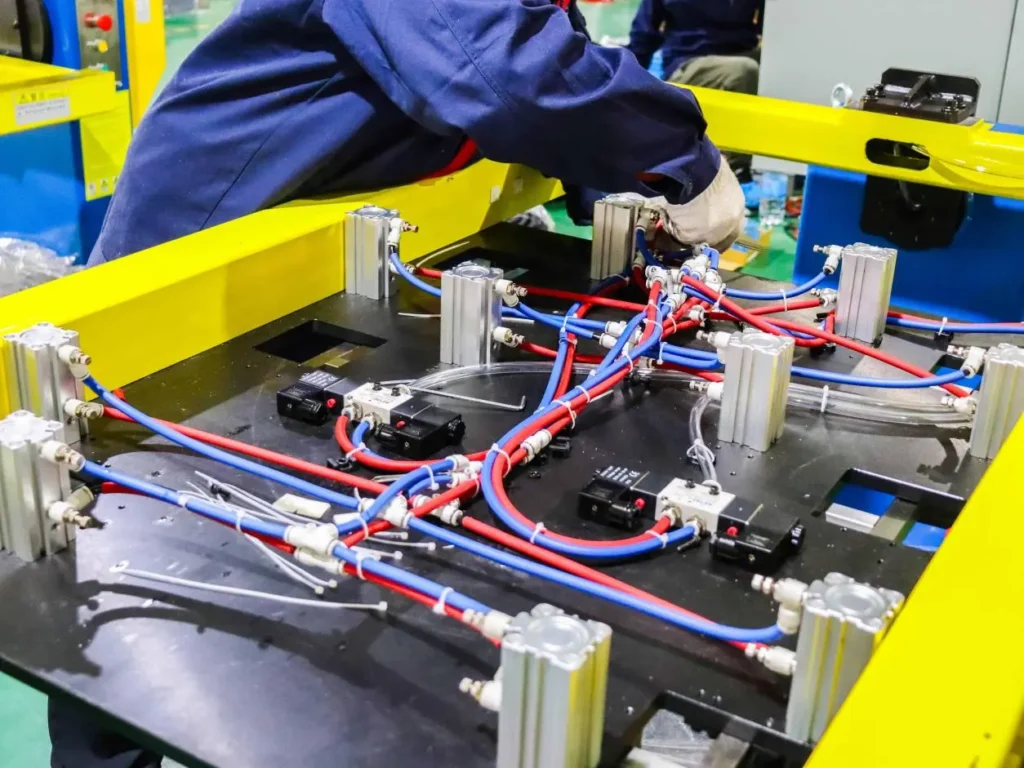
Type 2:Pneumatic/Hydraulic Actuated Fixtures
Types: Pneumatic cylinders and clamps, often controlled by the robot's PLC.
Functions: To provide automated, rapid, and consistent clamping force. This is essential for high-volume production, reducing cycle time, and enabling "Lights-Out" manufacturing. Safety interlocks ensure the robot only welds when the part is fully clamped.
Type 3:Dedicated Fixtures
Types: Custom-built, often solid steel fixtures designed for a single, high-volume part.
Functions: To achieve maximum speed, rigidity, and precision for a specific component. They often combine multiple clamps and locators for complex assemblies.
CORE FUNCTIONS SUMMARY
Location: Precisely position the workpiece in 3D space using pins, stops, and surfaces.
Clamping: Apply force to hold the part firmly against the locators, preventing movement from thermal expansion or welding forces.
Access & Reachability: Designed to allow the robot torch access to all weld joints without collisions.
Repeatability: Ensure every part loaded into the fixture is in the exact same position, which is fundamental for robotic precision.
Safety: Integrated with the cell's safety system to prevent operation if a part is not correctly clamped.
TrueSyn Expertise:
We have the in-house expertise to handle your entire welding automation project. Our team of mechanical, electrical, and welding process engineers works in unison to deliver turnkey solutions. From design and integration to installation and support, we provide a single source for all your automation needs.
01
Step
Submit Requirements
Provide drawings, photos, videos, and basic project details to help us quickly understand your needs.
02
Step
Technical Evaluation
Our team analyzes your materials and proposes the most suitable laser or automation solution.
03
Step
Design & Production
We finalize the solution, start detailed design, and manufacture the required equipment.
04
Step
Delivery & Support
We install the system, train your team, and provide ongoing technical service.
Contact
Reliable After-Sales Service You Can Trust.
Our service team offers quick troubleshooting, remote assistance, on-site support, and lifetime technical guidance to keep your production stable and efficient.