
Optimizing Metal Forming with Robotic Bending Cells: A Strategic Guide for Modern Manufacturers
Advanced Robotic Bending Cells: Precision Engineering for Industrial Metal Forming
In today’s competitive manufacturing landscape, robotic bending cells have emerged as critical solutions for achieving repeatable precision in metal forming operations. Unlike conventional press brakes, these automated systems combine multi-axis robotics with advanced tooling to deliver consistent bend angles, radii, and dimensional accuracy across complex part geometries. For manufacturers in industries ranging from automotive to consumer electronics, the transition from manual bending processes to robotic cells represents a strategic shift toward higher throughput, reduced waste, and improved product quality.
Core Components of a Robotic Bending Cell
TrueSyn Robotic’s bending automation solutions integrate three fundamental elements that work synergistically:
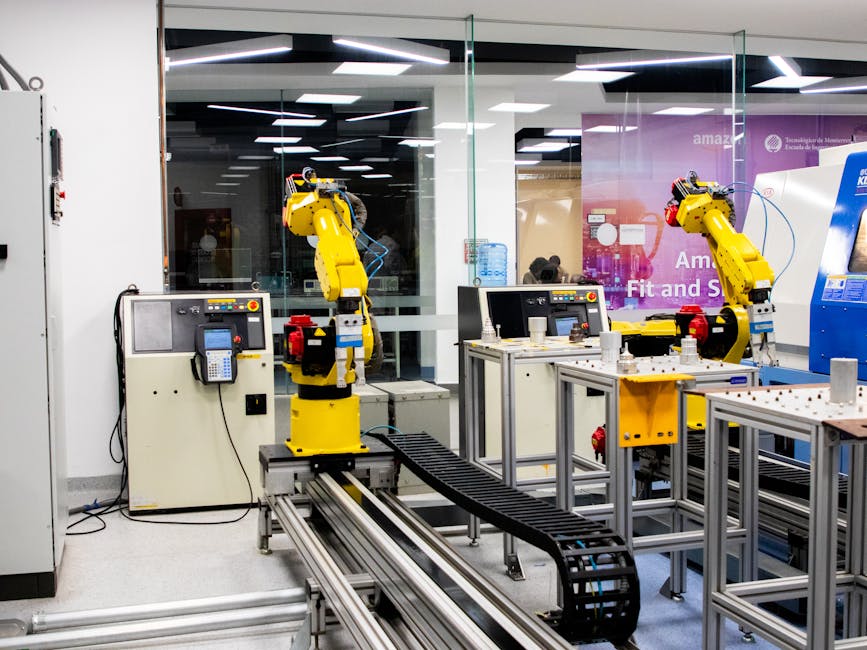
- Multi-Axis 曲げロボットs: Six-axis articulated arms with torque-controlled servos enable precise positioning of workpieces at optimal angles for bending operations. These systems maintain ±0.1° angular accuracy across 1,500-3,000mm reach ranges. In automotive applications, this reach allows simultaneous processing of large structural components like door frames, while compact configurations suit small-batch production of medical device housings. The integration of force control algorithms ensures adaptive pressure application, preventing micro-cracks in brittle alloys such as 6061-T6 aluminum.
- Adaptive Tooling Systems: Quick-change tooling setups accommodate various material thicknesses (0.5-6mm) and bend radii through modular punch/die configurations. Integrated force sensors prevent overloading during high-tolerance operations. For example, in aerospace component manufacturing, tooling automatically adjusts to compensate for titanium’s high springback characteristics. Advanced systems feature RFID-tagged tooling modules that communicate calibration data directly to the control system, eliminating manual setup errors.
- Intelligent Control Platforms: Real-time feedback loops adjust bending parameters using laser distance sensors and torque monitoring. This compensates for material springback, ensuring dimensional consistency within ±0.05mm tolerances. Machine learning algorithms analyze historical data to predict optimal bend angles for new material batches, reducing trial-and-error iterations. In high-volume production environments, closed-loop systems dynamically adjust for tool wear, maintaining quality across 10,000+ part runs without manual intervention.
For specialized applications, these cells can be integrated with collaborative robots for human-machine interaction in hybrid production lines. In electronics manufacturing, cobots assist with loading delicate sheet metal components while the main robotic cell handles high-force bending operations, combining precision with operator flexibility.
Key Advantages Over Traditional Bending Methods
Manufacturers adopting robotic bending cells experience transformative improvements in three critical areas:
- Productivity Gains: Cycle times reduced by 40-60% through simultaneous loading/unloading and bending operations. Automated tool changes eliminate manual setup delays between production batches. A case study from a German automotive parts supplier showed a transition from 8-minute cycle times on manual press brakes to 3.5 minutes per part using a robotic cell, enabling 24/7 production with minimal operator oversight.
- Quality Consistency: Elimination of human error through closed-loop control systems ensures ±0.02mm flatness across 500+ consecutive parts in automotive frame production. In medical device manufacturing, this precision is critical for components requiring biocompatibility certifications, where dimensional deviations could compromise patient safety. Statistical process control (SPC) systems automatically generate quality reports, facilitating ISO 9001 compliance audits.
- Material Utilization: Advanced nesting algorithms reduce scrap rates by 25% in stainless steel fabrication for kitchen appliance manufacturing. For complex parts like HVAC duct components, 3D simulation software optimizes bend sequences to minimize material handling. A North American appliance manufacturer reported $120,000 annual savings in material costs after implementing robotic bending cells with integrated vision systems that detect surface defects before processing.
These benefits directly address the throughput limitations found in conventional metalworking systems, creating production synergies when integrated with complementary automation solutions. When combined with robotic welding cells, manufacturers achieve end-to-end automation that reduces total production time by 30-40% compared to mixed manual-automated workflows.
Integration with Production Ecosystems
TrueSyn’s bending automation systems achieve maximum ROI when integrated with broader manufacturing workflows:
- Pre-Bending Preparation: Automated laser cutting cells prepare blanks with ±0.03mm edge quality, ensuring optimal material positioning for subsequent bending operations. In aerospace manufacturing, this integration reduces burr formation on aluminum skins, eliminating secondary deburring processes. Conveyor systems synchronize with bending cell schedules to maintain continuous material flow, minimizing idle time.
- Post-Bending Validation: Inline 3D scanning systems verify dimensional accuracy before parts proceed to robotic welding stations. For safety-critical components like truck suspension parts, these systems trigger automatic rejection of out-of-tolerance pieces, preventing costly rework. Integration with MES platforms enables real-time quality tracking across production lines.
- Material Handling: Autonomous guided vehicles (AGVs) transport formed components to assembly lines, maintaining production continuity. In smart factories, AGVs communicate with bending cells via 5G networks to dynamically adjust routes based on real-time production demands. A Japanese electronics manufacturer implemented AGVs that reduce material handling time by 70% in their sheet metal fabrication cell.
This integrated approach mirrors the efficiency gains demonstrated in automotive component manufacturing, where combined automation systems reduced total production time by 35%. For instance, a Tier 1 supplier implemented a synchronized system where laser-cut parts automatically enter the bending cell, followed by robotic welding and final inspection—all within a 12-meter production footprint.
Industry-Specific Implementation Considerations
Successful deployment requires tailoring robotic bending solutions to specific manufacturing requirements:
- Automotive Sector: Specialized cells handle high-strength steel (HSS) and aluminum alloys with adaptive clamping systems that prevent surface marring on visible components. In electric vehicle battery housing production, robotic cells maintain ±0.05mm flatness tolerances across 2m-long aluminum extrusions. Thermal compensation algorithms account for material expansion during high-volume production runs.
- Construction Equipment: Heavy-duty cells accommodate 10-15mm thick structural steel with reinforced tooling capable of 200-ton bending forces. For excavator arm fabrication, integrated hydraulic systems provide the necessary pressure while vibration-dampening mounts protect precision components. Safety interlocks prevent operation when tooling wear exceeds 5% of original dimensions.
- Consumer Appliances: Compact cells with integrated deburring systems produce aesthetic bends in stainless steel panels without secondary finishing operations. In refrigerator door manufacturing, robotic cells apply micro-textured finishes during bending to mask fingerprints. Energy-efficient designs reduce power consumption by 30% compared to traditional hydraulic press brakes.
These specialized configurations demonstrate the flexibility that makes robotic bending cells superior to traditional manual bending operations in high-mix production environments. A European kitchen equipment manufacturer reported a 500% increase in product variety capacity after implementing modular robotic cells that can switch between 0.8mm stainless steel and 2.5mm galvanized steel within 15 minutes.
Risk Mitigation and Implementation Challenges
While robotic bending cells offer substantial benefits, manufacturers must address several technical and operational challenges:
- Material Compatibility: Certain exotic alloys like Inconel 718 require specialized tooling coatings to prevent galling during bending. Thermal management systems may be necessary for continuous processing of high-temperature materials.
- Programming Complexity: Optimizing bending sequences for complex parts demands advanced simulation software. A case study revealed that 3D path planning reduced programming time from 40 hours to 6 hours for a 12-bend component.
- Operator Training: Technicians require specialized training in robotic programming (e.g., TrueSyn’s proprietary TS-Bend software) and predictive maintenance techniques. Certified training programs reduce downtime during initial implementation phases by 40%.
Failure to address these factors can lead to suboptimal performance. For example, a misconfigured springback compensation algorithm in an aerospace component caused a 15% rejection rate until material-specific parameters were properly calibrated. Comprehensive pilot testing with multiple material batches is recommended before full-scale deployment.
Future-Proofing with Smart Manufacturing Capabilities
Next-generation bending cells incorporate Industry 4.0 technologies for predictive maintenance and process optimization:
- Vibration Analysis: Accelerometers detect tool wear patterns, scheduling maintenance before quality deviations occur. In a 12-month study, this technology reduced unplanned downtime by 65% in a 24/7 automotive parts facility.
- Energy Monitoring: Real-time power consumption tracking identifies efficiency opportunities in hydraulic systems. Retrofitting older cells with energy recovery systems can reduce electricity usage by 25% in high-duty cycles.
- Cloud Integration: Remote diagnostics enable engineers to optimize bending parameters from any global location. During the 2023 supply chain disruptions, manufacturers used cloud-based simulation tools to test alternative materials without physical prototyping.
Emerging technologies like digital twins further enhance capabilities. A German machinery manufacturer created a virtual replica of their bending cell, enabling real-time process adjustments that improved first-pass yield from 88% to 97% for complex parts. Predictive analytics now forecast tool replacement needs up to 14 days in advance, minimizing production interruptions.
Strategic Implementation Roadmap
Manufacturers should follow a structured approach when adopting robotic bending cells:
- Current Process Audit: Analyze existing bending operations to identify bottlenecks and quality issues. A value stream map revealed that 40% of a metal furniture manufacturer’s rework stemmed from inconsistent bend angles on manual press brakes.
- Technology Selection: Choose cell configurations based on material types, part complexity, and production volume. For low-volume/high-mix environments, prioritize quick-change tooling and modular designs.
- Pilot Implementation: Deploy a single cell for a 3-month trial, focusing on a representative product family. A Canadian electronics firm used this approach to validate a robotic cell’s capability to handle 0.5mm copper alloys before full deployment.
- Workforce Training: Implement a tiered training program covering operation, programming, and maintenance. Certified operators reduced programming errors by 75% in a medical device manufacturing facility.
- Continuous Optimization: Utilize data analytics to refine bending parameters and maintenance schedules. One manufacturer achieved a 20% increase in cell utilization by analyzing torque data to optimize press brake force application.
This phased approach minimizes financial risk while ensuring smooth operational transition. Companies that skip pilot testing face 3x higher implementation costs due to unforeseen integration challenges.
Economic Impact and ROI Analysis
While initial investment in robotic bending cells requires capital outlay, the long-term financial benefits justify adoption:
- Cost Savings: A mid-sized manufacturer with 50 employees reported $380,000 annual savings after replacing three manual press brakes with two robotic cells, primarily through reduced labor costs and scrap reduction.
- ROI Timeline: Typical payback periods range from 18-24 months in high-volume applications. For custom job shops with frequent changeovers, ROI extends to 30-36 months but is offset by increased capacity for complex work.
- Scalability: Modular designs allow incremental expansion. A furniture manufacturer started with a single robotic cell and expanded to four interconnected cells over three years as demand grew.
Government incentives for automation adoption further improve economics. In the EU’s 2024 manufacturing modernization program, companies received 20% grants for implementing Industry 4.0 compliant bending cells, accelerating adoption timelines.
結論
Robotic bending cells represent a paradigm shift in metal forming technology, offering manufacturers unprecedented precision, flexibility, and productivity. By understanding the technical intricacies of system components, addressing implementation challenges, and leveraging smart manufacturing capabilities, companies can achieve significant competitive advantages. As material science and AI-driven optimization continue to evolve, these systems will play an increasingly vital role in next-generation manufacturing ecosystems. The strategic adoption of robotic bending technology is no longer a luxury but a necessity for manufacturers seeking to thrive in the Industry 4.0 era.