
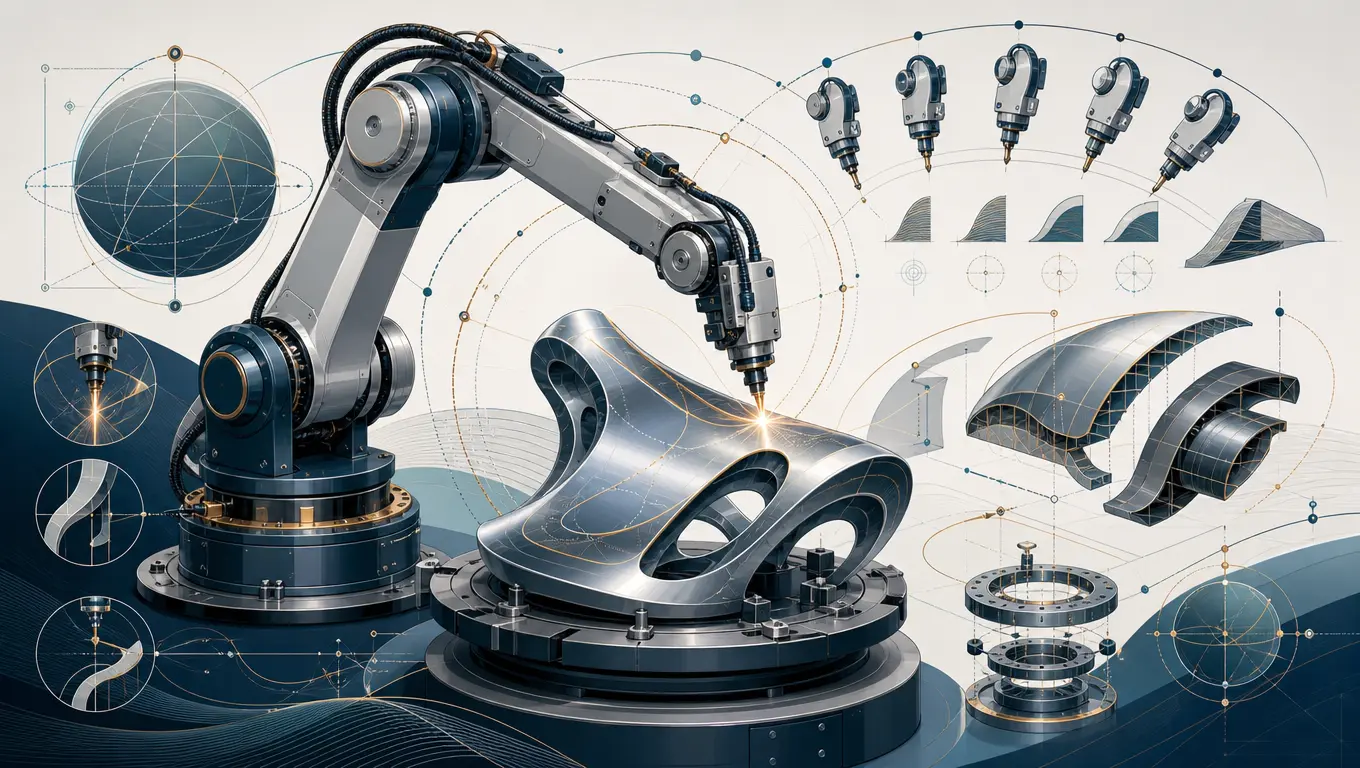
Кинематическая интеграция и конфигурация системы роботизированной 3D 5-осевой волоконной лазерной резки
Современное термо-механическое производство требует точной геометрической гибкости для сложных профилей, особенно в гидромеханических автомобильных конструкциях, изогнутых аэрокосмических воздуховодах и индивидуальных высоконапорных сосудах. Традиционные многоосевые порталы обеспечивают высокую жесткость, но ограничены высокими капитальными затратами и ограниченным объемом рабочего пространства.
По состоянию на 2026 год промышленная интеграция высокоточных волоконных лазеров со сочлененными манипуляторами достигла зрелости, предлагая гибкую и экономически эффективную альтернативу. Данный технический анализ исследует кинематическую интеграцию, алгоритмы преобразования координат и структурные конфигурации, которые делают высокопроизводительную роботизированную систему лазерной резки возможной на современном производственном полу.
Кинематическое моделирование и преобразование координат
Для выполнения точных процессов 3D лазерной резки, контроллер должен рассчитывать положение и ориентацию фокальной точки лазера в реальном времени. Сочлененный роботизированный манипулятор обычно работает с 6 степенями свободы (DoF), но при использовании активной оптической режущей головки система функционирует как избыточно связанный кинематический механизм.
Параметрический подход Денавита-Хартенберга (D-H)
Кинематическое моделирование использует классическую параметризацию Денавита-Хартенберга для установления локальных систем координат для каждого сустава (от сустава $\theta_1$ до $\theta_6$). Матрица трансформации от основания робота до лицевой стороны фланца выражается как:
При интеграции 3D режущей головки мы вводим дополнительное смещение координат для определения точки центра инструмента (TCP). TCP представляет собой физическую фокальную точку лазера, которая должна точно поддерживаться на заранее определенном расстоянии стояния (обычно от 0,5 мм до 1,5 мм) от поверхности заготовки.
Решение проблемы сингулярностей при 5-осевой лазерной резке
Основной проблемой серийной кинематики является избегание кинематических сингулярностей, особенно выравнивания сингулярностей осей запястья (Сустав 4 и Сустав 6). Во время высокоскоростной непрерывной резки по пути прохождение рядом с сингулярной точкой приводит к тому, что расчеты скорости суставов ($J^{-1}\dot{x}$) стремятся к бесконечности, что вызывает отклонение пути и механические вибрации.
Чтобы предотвратить это, современное программное обеспечение для планирования путей использует алгоритмы избегания сингулярных точек, которые вводят небольшой контролируемый наклон оптической оси (часто между 1° и 3°) без ущерба для критериев вертикальности лазерного струйного потока относительно металлической поверхности.
Компоненты конфигурации системы
Достижение структурной точности при 3D-резке волоконным лазером требует выбора компонентов, минимизирующих тепловое расширение и люфт. Ниже приведена стандартная физическая конфигурация промышленной ячейки 3D-роботизированной лазерной резки:
Роботизированный манипулятор
Необходимы высокоточные и высокоскоростные манипуляторы. Такие системы, как робот для лазерной резки серии FANUC или робот для лазерной резки серии Yaskawa обеспечивают необходимую точность траектории для лазерной обработки благодаря продвинутой настройке сервоприводов и жестким литым звеньям.
Источник волоконного лазера и передача луча
Стандартными являются высокомощные волоконные лазеры непрерывного действия (CW) мощностью от 1 кВт до 3 кВт, работающие на длине волны 1070 нм. Лазерный луч направляется через гибкий оптоволоконный кабель процесса, проложенный вдоль руки робота. Чтобы предотвратить крутильные напряжения в волокне, вдоль верхней части руки (оси 4, 5 и 6) монтируются специализированные динамические маршрутизируемые пучки с встроенными ограничителями радиуса изгиба.
Специализированная головка для 3D-лазерной резки
В отличие от стандартных головок для плоской резки, головки для 3D-лазера компактны и имеют легкую механику. Они интегрируют высокочастотный емкостный датчик высоты и могут включать встроенные оси бесконечного вращения (наклонные оси A и B), образуя истинный механический 5-осевой лазерной резки модуль. Такая конструкция снижает физическое движение, требуемое от запястья робота, минимизируя инерцию при высокочастотных изменениях направления.
Данные о динамической точности траектории и кинематических характеристиках
Чтобы количественно оценить разницу между конфигурациями систем, инженерная команда TrueSyn собрала данные динамического позиционирования, сравнивая стандартного 6-осевого робота отдельно с системой, интегрированной с отслеживанием лазерного шва в реальном времени и офлайн-калиброванной кинематической моделью.
| Кинематическая установка / Уровень калибровки | Статическая повторяемость (мм) | Динамическое отклонение траектории при 50 мм/с (мм) | Динамическое отклонение траектории при 150 мм/с (мм) | Максимальная допустимая толщина (мягкая сталь) |
|---|---|---|---|---|
| Стандартный 6-осевой робот (калибровка по умолчанию с завода) | ±0,05 | ±0,35 | ±0,62 | До 4,0 мм |
| Робот + калибровка лазерным трекером (офлайн-компенсация) | ±0,03 | ±0,12 | ±0,28 | До 6.0 мм |
| Роботизированная ячейка + датчик высоты + синхронизация реального времени | ±0,02 | ±0,06 | ±0,09 | До 8.0 мм (высокое качество кромки) |
Данные показывают, что активная интеграция датчиков и точные алгоритмы преобразования координат имеют решающее значение. По мере увеличения скорости подачи более чем до 100 мм/с механическая инерция и упругость суставов вносят ошибки отслеживания. Для компенсации этого требуется высокопроизводительное роботизированную систему лазерной резки использование前瞻ного управления ускорением пути для замедления системы перед острыми поворотами и сложными геометриями.
Расширение рабочей зоны: интеграция внешних осей
Для крупных структурных деталей, таких как рамы автомобильных шасси или длинные структурные трубы, рабочая зона стандартного 6-осевого роботизированного манипулятора может быть недостаточной. Интеграция синхронизированных вспомогательных внешних осей и вращательных позиционеров расширяет рабочую зону и позволяет выполнять непрерывные режущие траектории.
Такая конфигурация рассматривает внешний вращательный или линейный слайз как полностью интегрированный сустав (Сустав 7 и Сустав 8) в кинематической цепи. Вместо остановки процесса резации для повторной индексации детали робот и позиционер движутся синхронно, сохраняя перпендикулярный угол режущей головки относительно профиля детали. Такая динамическая синхронизация обеспечивает постоянное качество кромки без окалины и равномерное распределение тепла.
Часто задаваемые вопросы
Каков средний предел структурной точности для 3D роботизированной лазерной режущей машины?
Ответ: С помощью продвинутой офлайн-калибровки, температурной компенсации и активной емкостной высотыensing, роботизированная 3D волоконная лазерная система может достичь точности пути ±0.08mm до ±0.15mm. Хотя она немного менее жесткая, чем специализированная 5-осная CNC gantry, она предлагает более широкую рабочую зону и значительно более низкие капитальные затраты.
Почему азот предпочтительнее кислорода для высокоскоростной 5-осной лазерной резки нержавеющей стали?
Ответ: Азот действует как инертный защитный газ, выталкивая расплавленный металл из реза без инициирования экзотермической химической реакции. Это приводит к чистым, свободным от оксидов кромкам, готовым к сварке или покраснению без вторичной механической очистки.
Может ли офлайн-программирование (OLP) программное обеспечение полностью моделировать динамические кинематические пределы?
Ответ: Да, современные пакеты OLP-программирования (такие как Cenit FASTSUITE или Robotmaster) моделируют физические пределы, профили ускорения суставов и сингулярные зоны роботизированного манипулятора. Это позволяет разработчикам программировать, тестировать и проверять столкновения сложных 3D траекторий инструмента офлайн перед их передачей на производственную площадку.
Заключение и практические рекомендации
Внедрение роботизированной 3D 5-осевой лазерной резки ячейка требует баланса кинематического диапазона, инерции полезной нагрузки и обновлений контроллера в реальном времени._matchinging жесткого роботизированного рукава с активной оптикой для определения высоты и синхронизированным внешним позиционером, производители могут достигать точных, повторяемых резов на сложных трехмерных геометриях.
В TrueSyn мы специализируемся на настройке готовых к использованию роботизированных лазерных решений, адаптированных под ваши производственные допуски и циклические времена. Свяжитесь с нашей командой приложений, чтобы обсудить требования к вашему проекту, координировать пробные резы или разработать многоосевую систему для вашего производственного цеха.
Техническая поддержка и консультационные услуги по интеграции
Свяжитесь с инженером по автоматизации TrueSyn сегодня:
- Электронная почта: wangd@zjcxlaser.com
- WhatsApp (г-н Пэн): +86-13615855016
- WhatsApp (гжа Ван): +86-13185595609
- Смотрите демонстрации системы на YouTube: Канал TrueSyn по лазерной автоматизации