
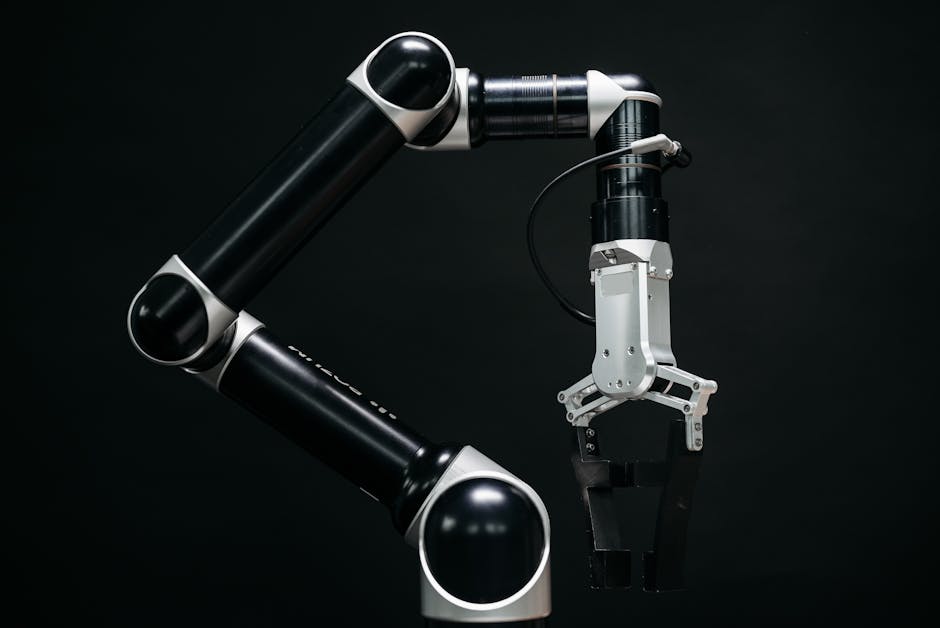
Industrial Robotic Submerged Arc Welding Systems: Technical Integration and Production Optimization
Robotic Submerged Arc Welding: Advanced Automation for Precision Metal Fabrication
Technical Architecture of Robotic SAW Systems
Robotic submerged arc welding (SAW) systems combine multi-axis motion control with specialized welding equipment to deliver consistent weld quality in thick-section metal applications. Core system components include:
- Industrial robotic arms (6-axis articulated or gantry-mounted): Modern 6-axis robots offer full spatial flexibility for complex joint geometries, while gantry systems provide stability for long-axis welds in applications like shipbuilding. Advanced servo motors and harmonic drives enable repeatable positioning accuracy down to ±0.05mm in high-end configurations. Роботизированная система лазерной сварки: решение сложных термических искажений и узких мест в цикле на современных фабриках
- Flux delivery and recovery subsystems: Closed-loop systems utilize vacuum-assisted recovery units capable of reclaiming 95%+ of unfused flux particles. Precision metering valves ensure consistent flux bed depth (typically 25-50mm) across weld zones, critical for maintaining arc stability in thick-section materials.
- High-deposition wire feeding mechanisms: Dual-driven wire feeders with digital control systems operate at speeds up to 30m/min, supporting filler metal diameters ranging from 1.6mm to 6.4mm. Integrated wire straightening modules prevent feeding inconsistencies that could compromise weld bead geometry.
- Process monitoring and control interfaces: Real-time systems integrate arc voltage sensors, wire feed encoders, and travel speed encoders into a centralized PLC. Advanced models employ infrared thermal cameras to monitor weld pool dynamics, adjusting parameters dynamically to maintain optimal penetration.
| Parameter | Typical Range | High-Precision Applications |
|---|---|---|
| Точность позиционирования | ±0.5-1.0mm | ±0.2mm (pressure vessels) |
| Deposition Rate | 8-15kg/h | 20+kg/h (hybrid systems) |
| Material Thickness | 6-60mm | 100+mm (multi-pass) |
Material compatibility extends across carbon steel, stainless steel, and nickel-based alloys through precise flux-wire pairing. Modern systems incorporate closed-loop feedback between wire feed speed, arc voltage, and travel speed to maintain consistent penetration across variable joint geometries. For example, in stainless steel applications, calcium fluoride-based fluxes paired with 309L wire reduce chromium oxidation, maintaining corrosion resistance. In nickel alloys, specialized alumina-silicate fluxes prevent hot cracking during multi-pass welds for pressure vessel fabrication.
Process Advantages in Industrial Applications
Robotic SAW implementation delivers measurable improvements over manual processes:
- 40-60% higher deposition rates with consistent bead geometry: In heavy machinery manufacturing, robotic systems complete 40mm fillet welds in a single pass at 1.2m/min travel speed, compared to three passes at 0.5m/min manually. Будущее высокоскоростной изготовления: почему каждый поставщик уровня 1 переходит на автоматизированную лазерную сварную ячейку волоконно-волоконно-лазерного отдела
- Sub-2% parameter deviation across multi-shift operations: Automotive frame producers report 1.5% variation in weld reinforcement height vs. 8-10% in manual processes, reducing post-weld machining requirements.
- 95% flux recovery rates in closed-loop systems: Shipyard implementations show $120,000 annual savings in flux consumption for high-volume operations.
- 70% reduction in musculoskeletal injuries: Automotive suppliers report 75% fewer workers’ compensation claims after automation.
In wind tower manufacturing, robotic SAW systems complete 50mm thick circumferential welds with 90% less rework. Shipbuilding applications achieve 75% productivity gains through synchronized dual-robot gantry systems maintaining ±0.2mm gap control across 20m weld lengths. A case study from a European boiler manufacturer demonstrates 30% energy savings through optimized arc voltage control, reducing power consumption from 45kW to 32kW per station.
Quantitative benefits extend to quality metrics: aerospace component suppliers reduced X-ray defect rates from 4.2% to 0.3% after implementing robotic SAW for titanium alloy structures. In offshore platform construction, ultrasonic testing reveals 50% fewer lack-of-fusion defects in automated welds compared to manual counterparts.
System Integration Requirements
Successful implementation requires comprehensive workflow analysis:
- Material handling systems with ±2mm positioning accuracy: Robotic gantries integrated with laser-guided positioning tables ensure proper fit-up for large structural components.
- Flux management infrastructure including drying systems: Desiccant-based drying ovens maintain moisture levels below 0.05% in fused quartz fluxes, critical for hydrogen-induced cracking prevention.
- Positioning equipment for optimal weld access: Rotating positioners with 0.01° indexing precision enable full-penetration welds in complex assemblies.
- OPC UA integration with enterprise manufacturing systems: Real-time data exchange with MES platforms allows production tracking and quality control automation.
Key integration challenges include thermal expansion compensation (up to 15mm in 10m beams) and automated joint preparation. Predictive maintenance systems analyze motor current signatures to reduce unplanned downtime by up to 60%. For instance, vibration analysis of wire feed units predicts bearing failures 72 hours in advance, avoiding production halts.
Workflow integration requires precise coordination between welding robots and auxiliary equipment. In a railcar manufacturing plant, synchronized motion between a 6-axis robot and a 3-axis linear track enables continuous welds along 12m seams without compromising travel speed consistency. Safety systems incorporating laser area scanners prevent human intrusion into welding zones, automatically reducing arc power when personnel approach.
Industry-Specific Implementation Guidelines
Application-specific considerations:
- Shipbuilding: Dual-robot gantry systems for longitudinal seams: Two 300kg-payload robots operating in tandem with coordinated motion control reduce distortion in 30mm-thick hull plates by maintaining symmetrical heat input.
- Pipeline construction: Segmented flux dams for girth welds: Modular flux containment systems enable position welding on 48-inch diameter pipes, improving slag removal efficiency by 40%.
- Heavy machinery: Multi-pass programming for 60mm+ sections: Layered bead sequencing algorithms optimize interpass temperature control in excavator boom fabrication, reducing residual stress.
- Wind towers: Rotating positioners with ±0.1rpm speed control: Precision speed regulation maintains consistent deposition rates during 360° welds on 6m-diameter flanges.
Automotive chassis manufacturers utilize collaborative robots (cobots) alongside SAW systems for hybrid welding cells. Force-limited cobots handle fixture adjustments while the primary SAW robot operates, eliminating manual intervention risks. In nuclear containment vessel fabrication, specialized flux formulations with boron carbide additives provide neutron shielding properties while maintaining weld metal toughness at -40°C. Гибридная сварка лазером MIG: эффективный вариант процесса сварки плит средней толщины.
Custom fixturing solutions address unique challenges: a bridge construction project employed electromechanical clamping systems with pressure sensors to maintain 0.5mm gap tolerances across 15m truss joints. Modular fixture designs allow rapid reconfiguration for varying section sizes, reducing changeover time from 8 hours to 45 minutes.
Future-Proofing SAW Automation
Emerging developments include:
- Hybrid SAW-laser systems achieving 25% higher travel speeds: Laser-assisted systems preheat materials to improve weld pool fluidity, particularly beneficial for high-carbon steels.
- AI-driven parameter optimization reducing process development time by 85%: Machine learning models trained on 10,000+ weld datasets predict optimal settings for new material combinations within 15 minutes.
- Nano-additive flux formulations improving slag release: Titanium dioxide nanoparticles enhance slag brittleness, reducing removal time by 30% in multi-pass welds.
- Digital twin technology reducing commissioning time by 40%: Virtual simulations validate robot trajectories and process parameters before physical implementation.
Integration with Industry 4.0 infrastructure enables real-time quality control and predictive maintenance. Cloud-connected systems analyze 200+ process parameters to anticipate component wear and optimize maintenance scheduling. Edge computing nodes perform immediate adjustments to wire feed speed based on arc voltage fluctuations, maintaining weld integrity within 0.1-second response times.
Advanced sensing technologies are transforming process control: hyperspectral imaging systems detect subtle variations in weld pool oxidation, while acoustic emission sensors identify porosity formation in real time. In a recent offshore platform project, these systems reduce post-weld inspection costs by $280,000 annually through early defect detection.
Training and workforce development remain critical for adoption. Augmented reality (AR) systems overlay digital weld quality indicators onto physical joints, enabling technicians to identify issues without specialized NDT equipment. Remote expert guidance via AR headsets reduces troubleshooting time by 50% for operators in distributed manufacturing facilities.