
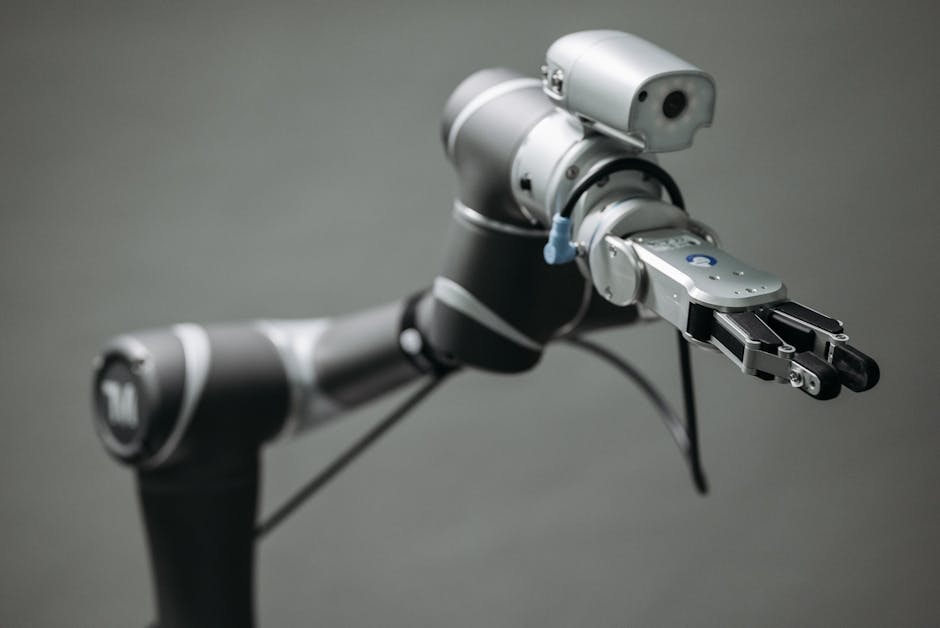
Advanced Techniques in Robotic Laser Seam Tracking for Precision Welding
Robotic Laser Seam Tracking: Engineering Precision for Industrial Welding
Technical Foundations of Laser Seam Tracking
Industrial welding automation requires sub-millimeter precision in joint alignment and weld path execution. Лазерная сварка робота systems combine optical sensing and robotic control to maintain dimensional accuracy in high-tolerance applications. This technology addresses common production challenges through:
- Real-time 3D joint geometry mapping
- Dynamic torch position adjustment
- Thermal distortion compensation
- Adaptive weld parameter control
- Automated quality verification
Consider a case study from an automotive battery pack manufacturer. Their aluminum housings required ±0.05mm weld alignment to prevent electrolyte leakage. Traditional vision systems failed due to reflective surfaces and complex joint geometries. Implementing a dual-axis laser triangulation system enabled real-time 3D profiling at 25,000 data points per second. The system calculated optimal weld paths while compensating for material reflectivity through adaptive laser power modulation. This resulted in 99.3% first-pass yield rates compared to 82% with conventional methods.
The technical implementation relies on laser triangulation principles. A structured blue laser (450nm wavelength) projects a line onto the workpiece surface. High-speed CMOS cameras capture reflected patterns, while proprietary algorithms convert spatial distortions into 3D coordinates. This data feeds into a real-time controller that synchronizes with the robot’s six-axis motion system, achieving closed-loop position adjustments at 1,200Hz update rates. For instance, when welding 1.2mm-thick stainless steel sheets with 0.5mm gap tolerances, the system maintains ±0.015mm path accuracy despite thermal expansion causing 0.2mm dimensional shifts during multi-pass welds.
Limitations of Conventional Welding Methods
Traditional welding processes face inherent accuracy constraints:
- Manual alignment deviations exceeding ±1.0mm
- Thermal distortion in multi-pass welds
- Joint fit-up variations from upstream processes
- Operator-dependent quality consistency
- Time-intensive setup between production batches
| Parameter | Manual Welding | Laser Seam Tracking |
|---|---|---|
| Positional Accuracy | ±1.2mm | ±0,02 мм |
| Rework Rate | 15-25% | 2-5% |
| Throughput | Baseline | +20-35% improvement |
An aerospace component supplier faced recurring quality issues with manual TIG welding of titanium alloy structures. The ±1.5mm average misalignment caused 28% rejection rates in pressure-tested assemblies. Transitioning to automated Продольная лазерная сварка швов eliminated human factors by maintaining ±0.03mm accuracy across 12-meter weld lengths. The system’s thermal compensation algorithm adjusted for material expansion coefficients unique to Ti-6Al-4V, reducing distortion-related rework from 18% to 1.2%.
System Architecture and Operation
Modern laser seam tracking systems integrate multiple components:
- High-speed 3D laser scanners (20,000+ data points/sec)
- Industrial vision systems with 0.01mm resolution
- Real-time control processors (1000Hz+ update rates)
- Robotic axis compensation algorithms
- Thermal monitoring and control systems
The operational workflow follows three critical stages:
- Precise joint geometry mapping prior to welding
- Continuous position correction during weld execution
- Post-weld quality verification through integrated sensors
In a heavy equipment manufacturing scenario, a 200kW fiber laser system integrated with twin-axis scanners processed 25mm-thick structural steel. The pre-weld mapping stage used 3D profiling to detect 0.8mm root gap variations from machining tolerances. During welding, the system dynamically adjusted wire feed rates and laser power (2.4-3.2kW range) based on real-time joint width measurements. Post-weld verification combined laser-induced breakdown spectroscopy (LIBS) with ultrasonic testing to validate weld penetration and chemical composition consistency.
Technical Implementation Considerations
Successful integration requires attention to critical factors:
- Material reflectivity and surface condition analysis
- Weld joint geometry compatibility
- Robot kinematic limitations
- Environmental vibration control
- Safety protocols for laser Class 4 operations
When implementing laser tracking for galvanized steel welding in automotive frame production, engineers encountered issues with zinc vaporization affecting sensor accuracy. The solution involved integrating a predictive algorithm that filtered out transient plasma interference while maintaining tracking stability. Additionally, vibration isolation mounts reduced floor-borne disturbances below 0.005mm amplitude, preventing measurement noise in high-precision joints.
Key safety considerations include:
- Class 4 laser enclosures with interlocked access panels
- Protective eyewear with OD7+ rating at 1064nm wavelength
- Emergency stop systems with 10ms response times
- Beam traps rated for continuous 5kW operation
- Operator training per ANSI Z136.1 standards
Industry Applications and Performance Metrics
Key performance indicators across major applications:
- Automotive battery packs: 98% reduction in sealing defects
- Heavy equipment manufacturing: 90% decrease in tracking errors
- Aerospace titanium welding: 0.001% porosity achievement
- Pipeline construction: 88% process variation reduction between facilities
- Consumer electronics: 0.01mm weld bead consistency
In pipeline construction, a major energy contractor standardized laser tracking across eight fabrication yards. This achieved ±0.05mm weld alignment consistency across 24-inch diameter pipes, compared to ±0.4mm variation between sites using mechanical guides. The system’s data logging capability provided full traceability, meeting ASME B31.8 compliance requirements through automated weld quality reports.
Emerging Technology Trends
Next-generation developments focus on:
- AI-driven predictive tracking algorithms
- Multi-sensor data fusion systems
- Cloud-based process optimization
- Digital twin integration for virtual validation
- Self-calibrating sensor arrays
Recent trials with AI-enhanced systems demonstrate significant improvements. In a robotic welding cell for stainless steel pressure vessels, a neural network learned from 50,000 weld datasets to predict optimal tracking paths. The system reduced setup times by 65% through automatic joint classification while maintaining Cpk values above 2.0. Cloud connectivity enabled remote process monitoring across 12 global facilities, with centralized engineers optimizing parameters based on aggregated production data.
Implementation Challenges and Mitigation Strategies
Adopting laser seam tracking requires overcoming several technical hurdles:
- Material surface condition variability
- Complex joint geometry limitations
- Integration with existing robotic platforms
- Operator training requirements
- Initial capital investment justification
A case in point: a shipbuilder implementing tracking systems for curved hull sections faced challenges with variable paint residue affecting laser reflectivity. The solution combined pre-weld cleaning robots with adaptive thresholding algorithms that adjusted sensitivity based on surface contamination levels. For legacy robotic systems, retrofit kits with EtherCAT interfaces enabled seamless integration without requiring full cell redesign.
Comparative Analysis of Tracking Technologies
| важничать | Laser Triangulation | Structured Light | Machine Vision |
|---|---|---|---|
| Accuracy | ±0.01mm | ±0,05 мм | ±0.1mm |
| торопить | 20,000 pts/sec | 5,000 pts/sec | 1,200 pts/sec |
| Surface Sensitivity | умеренный | значительный | Very High |
| Cost Index | 100 | 75 | 60 |
While machine vision systems offer lower upfront costs, their performance limitations become apparent in high-vibration environments. A comparative study in railcar manufacturing showed laser systems maintained ±0.02mm accuracy despite 0.15mm/sec floor vibrations, whereas vision systems exceeded ±0.2mm deviation under identical conditions. Structured light solutions, while offering good accuracy, proved unsuitable for continuous welds due to slower data acquisition rates.
Process Optimization Techniques
Advanced implementations utilize these optimization methods:
- Dynamic laser power modulation based on joint geometry
- Adaptive welding speed control via PID feedback
- Multi-pass weld profile prediction
- Real-time metallurgical monitoring
- Energy consumption optimization algorithms
In a high-production kitchen appliance factory, implementing adaptive speed control reduced cycle times by 28% without compromising quality. The system adjusted travel speed between 0.8-1.4m/min based on real-time gap measurements, maintaining consistent heat input. Energy optimization algorithms reduced laser idling periods by 35%, achieving 0.45kWh/m weld efficiency while maintaining AWS D17.1 aerospace weld standards.