

Intervalos de mantenimiento de la celda de soldadura y coste anual: una guía de presupuestación
A cell quotation prices the machine. What nobody prices is the cost of keeping it working for ten years, and that number is large enough to change a purchase decision – commonly three to six percent of the original capital value per year for a cell that is genuinely busy. Yet it is almost never written down, which is why the first service invoice tends to arrive as a surprise.
The reason it resists a single figure is that maintenance on a laser welding cell is not one item. It is a set of intervals: daily, weekly, monthly, quarterly and annual tasks spread across the robot, the laser source, the chiller, the optics, extraction and the safety system – plus a wear-parts stream that follows production rather than the calendar. Split it that way and every line becomes estimateable.
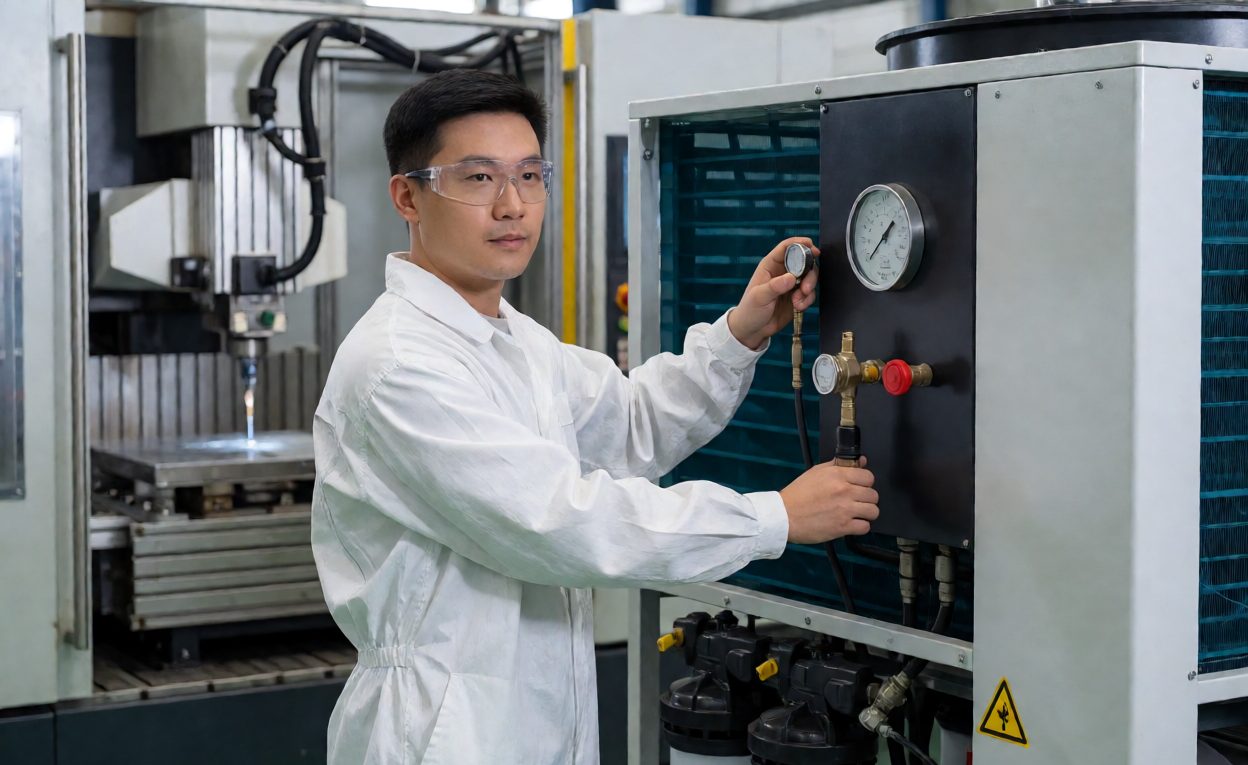
The Interval Structure: Every Shift Through Annual
A useful maintenance plan is organised by frequency, because each frequency has a different owner. Tasks done every shift belong to the operator. The annual visit belongs to whoever holds the service contract. Everything in between needs a named person, and the most common failure is work that everyone assumed belonged to someone else.
- Every shift: nozzle tip check, protective window inspection, wire feeder condition, shielding gas pressure, coolant level and a scan of the cell interior. Minutes rather than hours, and they prevent most of the expensive failures.
- Semanal: clean the wire drive, check extraction filter differential pressure, inspect cable and hose routing for wear, and prove interlocks and light curtains by testing rather than assuming.
- Mensual: purge the chiller strainer, confirm coolant conductivity and concentration, inspect earthing points and controller backup batteries, and verify robot and fixture alignment.
- Trimestral: replace chiller filters and deioniser cartridges, inspect the enclosure seals and optical path cleanliness, and review the alarm history for repeated events.
- Anual: coolant replacement, remaining filter and seal renewals, safety system verification and a full instrumented check of the cooling loop.
The discipline is less about the tasks themselves than about the record. Whether it lives in a paper log or in the controller, a timestamped history is what separates a maintenance budget from a guess – and much of it can be captured automatically, as the artículo de monitoreo remoto explains.
What the Year Actually Costs
Sorted into the categories a finance colleague will accept, annual maintenance has four components:
- Consumables tied to production: shielding gas, wire, nozzles, contact tips, protective windows, filter cartridges and coolant additives, all scaling with laser-on or arc-on hours.
- Scheduled replacement items: backup batteries, belts, seals, deioniser resin and coolant, scaling with the calendar whether the cell is busy or idle.
- Labour for scheduled work: internal time or a contracted visit, priced per visit and honest about the hours.
- Insurance against downtime: held spares and any standby service agreement, planned against failure probability in the first-year spare parts kit.
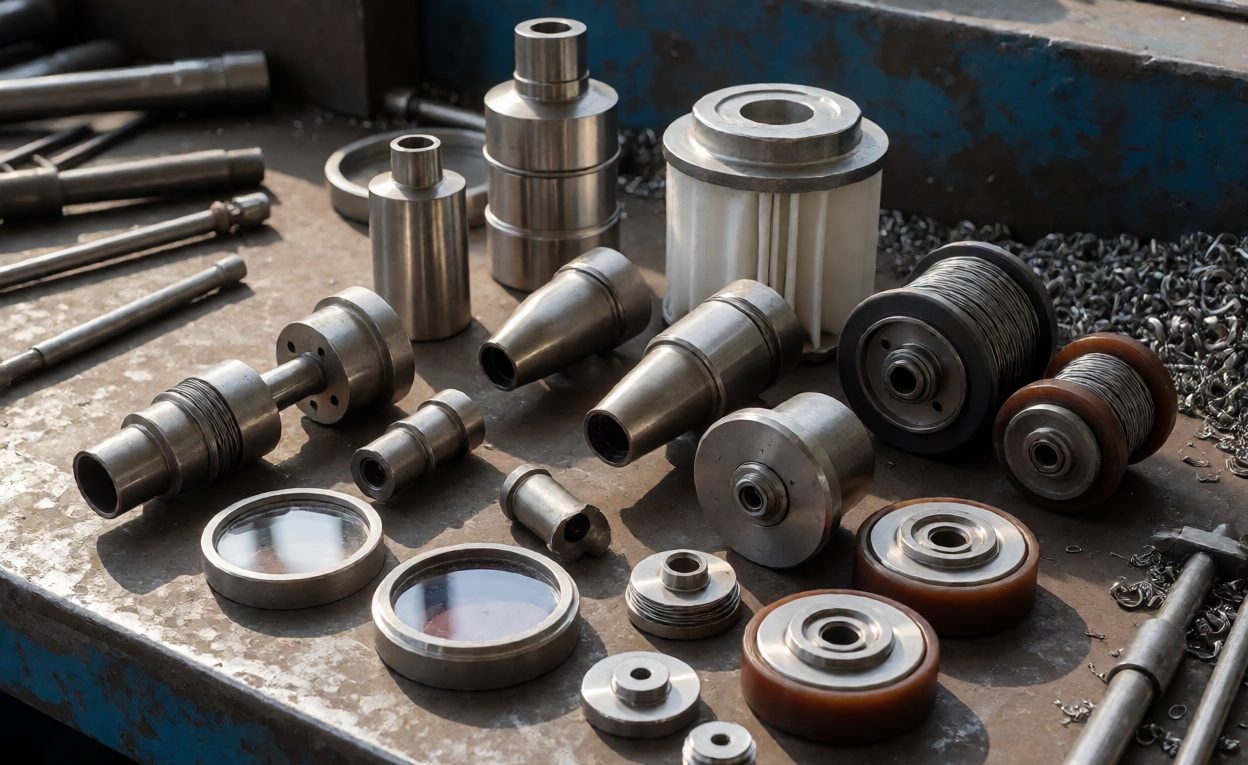
Two variables dominate the total. Duty cycle first: a cell on two shifts and coated steel consumes multiples of one on single-shift stainless. Material second, and discipline third – a plant with neglected extracción de humo y control de proyección pays for it repeatedly through dirty optics and blocked filters. Expressing every category as cost per laser-on hour turns all four into numbers usable in a part quotation, exactly the approach taken in the consumables cost-per-part breakdown.
Service Contracts versus In-House Capability
Every owner eventually decides how much to do themselves. Three inputs decide it, and they are not equally weighted:
- Risk of wrong work: interfering with the laser source or its cooling without the right instruments can destroy modules and void a warranty. Whatever else stays in-house, mantenimiento preventivo on the source generally does not.
- Cost of waiting: a service contract buys response time. If four hours of cell downtime costs more than the annual premium, the arithmetic settles itself.
- Skills already present: plants with maintenance engineers and metrology retain most routine work and call contractors for the source and the safety verification.
The usual landing point – in-house daily and weekly tasks, supplier annual service, negotiated call-out rates – costs less than either extreme. Reliability-centered maintenance supplies the framework for deciding each item by consequence rather than by habit.
In-Warranty, After-Warranty and the Cost Curve
Costs are not flat across ten years. Years one and two are largely consumables under warranty. Years three to five introduce scheduled replacement of wear assemblies and correction of whatever the early years revealed. Beyond that, mechanical components and electrical modules reach end of life, and the curve turns upward at roughly the point where the cell is also technologically dated.
Two habits keep the curve honest. Keeping the documentation pack current means any competent contractor quotes against the real cell instead of padding with contingency. And keeping the safety envelope intact avoids the recurring compliance spend described in the enclosure compliance cost article.

Budgeting It in Four Steps
For a business case, four steps produce a defensible figure:
- Assume a duty cycle expressed in laser-on hours per year, not calendar time.
- Price the wear items at that duty cycle using supplier part prices.
- Add scheduled work: a fixed annual figure for calendar-based items plus contracted service.
- Add contingency, larger for the first year of a new process and smaller once the history exists.
The result belongs inside total cost of ownership alongside capital, energy and labour – assembled the way la plantilla de comparación de cotizaciones assembles every other comparable number, so two competing cells are ranked on ten-year cost rather than on purchase price. That comparison reverses the ranking more often than most buyers expect.
Preguntas frecuentes
¿Cuánto cuesta mantener una celda de soldadura cada año?
Commonly three to six percent of the original capital value for a busy cell, split between production-based consumables, calendar-based replacements, labour and spares.
¿Qué tareas de mantenimiento deben realizarse en cada turno?
Nozzle and window checks, feeder condition, gas pressure and coolant level, plus a visual scan of the cell interior and any visible cabling.
¿Debe mantenerse el enfriador en la propia empresa?
Yes for levels, strainers and filters. No for coolant chemistry and performance verification, which need instruments and protect the warranty.
¿Vale la pena el costo de un contrato de servicio?
Where downtime is expensive and internal skills are thin, yes. Compare the premium against the cost of the hours of production it removes.
¿Qué factor impulsa más el costo anual?
Duty cycle and material, followed by housekeeping discipline. Filter and optics life shorten sharply where extraction is neglected.
¿Cómo deben registrarse los mantenimientos?
By timestamped task completion, either in the controller or a log. A record is what lets simple trends replace assumptions.
When do costs rise over the cell’s life?
Typically after year three as wear assemblies come due, and again later when major modules reach end of life near the technological end of the platform.